 Bellingham Exterior
 Fairhaven's Siding Takes a Different Kind of Beating
Fairhaven sits close to Bellingham Bay, which means homes here deal with a combination of stresses that inland Whatcom County properties don't see nearly as often. Salt-laden air moves in off the water, driving rain arrives sideways during winter storms, and the neighborhood's mature tree canopy keeps large sections of many homes shaded and damp for months at a time. Add in a moss season that can stretch from fall through spring, and siding in Fairhaven ages differently than siding across town.
None of this means your siding is doomed. It means repairs done here need to account for conditions that a generic "patch and paint" approach often misses. When we go out for a siding repair call in Fairhaven, we're not just looking at the damaged board — we're looking at what caused it, because in this climate the cause is rarely just "old age."
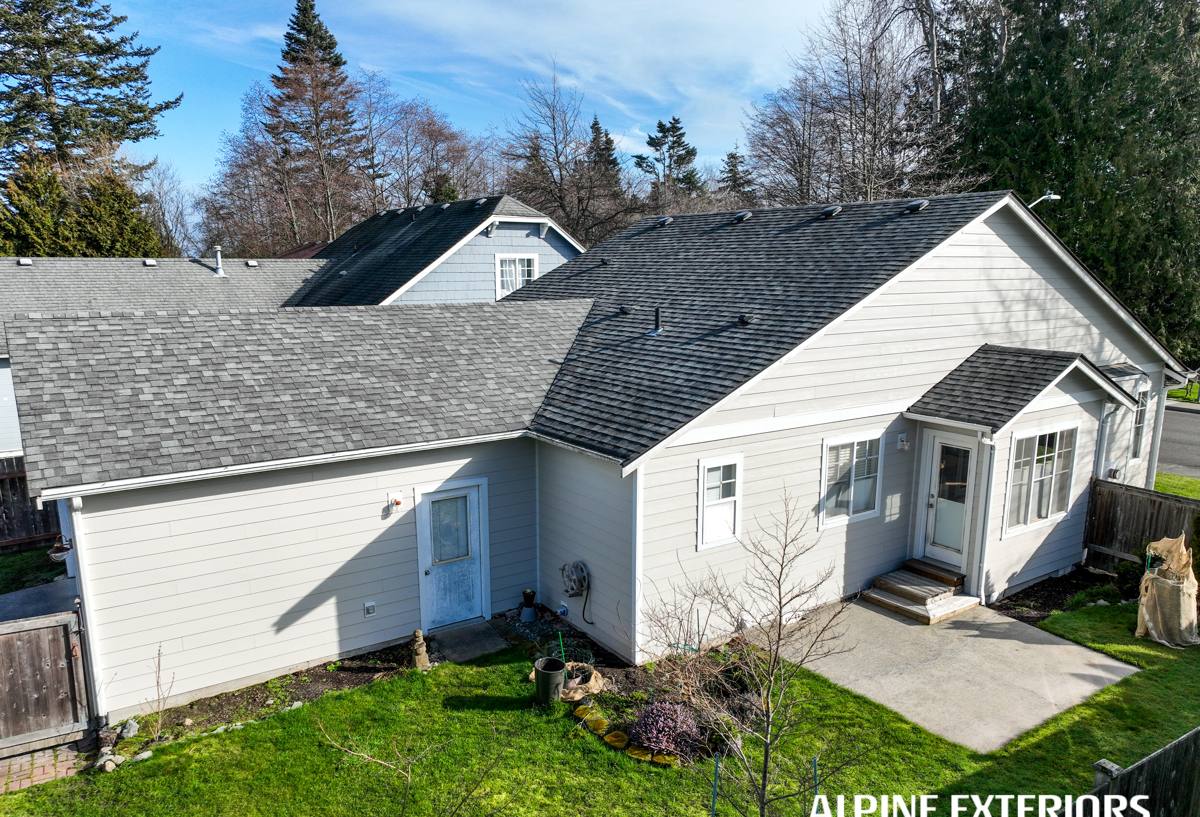
What Salt Air, Rain, and Moss Actually Do to Siding
Salt Air and Metal Fasteners
Homes closer to the water are exposed to airborne salt that accelerates corrosion on fasteners, flashing, and any exposed metal trim. Once a nail or staple starts to corrode, it loses holding power and can streak the siding below it with rust stains long before the siding itself fails structurally.
Driving Rain and Wind-Driven Moisture
Bellingham's winter storms don't always come straight down. Wind-driven rain gets pushed sideways into joints, seams, and the underside of trim boards — areas that are never a problem in calm, direct rainfall but become chronic leak points when storms hit at an angle. Over time, this is how moisture gets behind siding that looks perfectly fine from the sidewalk.
Moss, Algae, and Prolonged Dampness
Shaded, north-facing walls and anything tucked under overhanging trees stay damp far longer after a storm than sun-exposed walls do. That extended dampness is exactly what moss and algae need to take hold, and once organic growth establishes itself on a wall, it holds moisture against the surface even longer — a cycle that speeds up rot in wood-based siding and degrades paint film on almost any material.
Signs Your Fairhaven Home Needs Siding Repair
Most siding failures give warning signs well before they become a real problem. Here's what we tell Fairhaven homeowners to watch for, especially on shaded or bay-facing walls:
- Soft or spongy spots when you press on siding near the bottom courses or around windows
- Persistent black or green streaking that returns shortly after cleaning
- Paint that's bubbling, peeling, or alligator-cracking in patches rather than evenly across the wall
- Visible gaps or separation at seams, corners, or where siding meets trim
- Rust streaks running down from nail heads or metal flashing
- A musty smell near an exterior wall inside the house, which often points to moisture already behind the siding
- Warped, bowed, or cupped boards, particularly on shaded or bay-facing elevations
Any one of these on its own might be minor. Several showing up on the same wall usually means moisture has been getting behind the siding for a while, and that changes the scope of the repair.
What a Correct Siding Repair Actually Involves
A repair that only replaces the visibly damaged board is a temporary fix if the underlying cause isn't addressed. On a proper repair, we go through the same sequence every time:
1. Find the Real Source of the Damage
Damaged siding is usually a symptom, not the root problem. We check flashing above windows and doors, look at how water sheds off trim and rooflines onto the wall below, and check whether landscaping or tree cover is keeping a section of wall wet longer than it should be.
2. Check What's Behind the Siding
Once boards are pulled, we inspect the water-resistive barrier and sheathing underneath. If moisture has reached the sheathing, the repair scope has to expand to include that layer — patching over compromised sheathing just traps the problem.
3. Match Material and Fasteners to the Climate
In a marine-influenced area like Fairhaven, we use corrosion-resistant fasteners and flashing details built for coastal exposure, not standard interior-grade hardware that will corrode again within a few years.
4. Rebuild the Water Path, Not Just the Wall
Every repair gets correct flashing, house wrap integration, and drainage detailing so water sheds away from the wall assembly instead of pooling behind it. This is the step that's most often skipped in a quick patch job, and it's the one that determines whether the repair lasts.
Repair or Replace? How We Make the Call
Not every siding problem in Fairhaven needs a full re-side, but not every problem is a simple patch either. We walk homeowners through the decision using a few honest factors:
| Factor | Points Toward Repair | Points Toward Replacement |
|---|---|---|
| Extent of damage | Isolated to one or two wall sections | Spread across multiple elevations |
| Sheathing condition | Dry, solid when probed | Soft, discolored, or delaminating |
| Age of existing siding | Still within expected service life | Already near or past it |
| Material match available | Close visual and profile match possible | Discontinued or mismatched product |
| Root cause | Isolated flashing or trim failure | Systemic drainage or moisture-barrier failure |
We'd rather tell a homeowner their siding can be repaired for a fraction of a replacement cost than talk them into work they don't need. We'd also rather be upfront if a "repair" would just be a short-term cover for a problem that's going to resurface in a wet Fairhaven winter.
Our Fairhaven Siding Repair Process
- On-site assessment — we inspect the affected area, probe for soft spots, and check flashing, trim, and drainage paths around it.
- Diagnosis and scope — we identify the cause, not just the symptom, and explain what we found in plain terms.
- Written estimate — a clear breakdown of what's being repaired and why, with no pressure to expand the scope beyond what's actually needed.
- Repair work — damaged material removed, sheathing checked and addressed if needed, flashing and drainage details rebuilt correctly, new material installed and finished to match.
- Final walkthrough — we review the completed repair with the homeowner before calling the job done.
Why We Repair With James Hardie Fiber Cement
When a repair calls for new siding material — whether it's a full section replacement or matching in a damaged run of boards — we use James Hardie fiber cement, and only James Hardie. It's the one material we've found holds up consistently in the exact conditions Fairhaven deals with: sustained dampness, salt air, and heavy moss exposure.
Fiber cement doesn't rot, and it isn't a food source for the moss and algae that thrive on shaded, damp walls the way wood-based siding can be. Hardie's HZ5 product line is specifically engineered for wetter, harsher climates, which matters on bay-facing and shaded walls where moisture sits longer. The factory-applied ColorPlus finish also holds color and resists the peeling and cracking we see on repeatedly repainted siding in this climate, and it comes backed by a strong transferable warranty when installed to Hardie's specifications.
We don't install LP SmartSide, vinyl, Cemplank, Allura, primed spruce, or cedar. Each of those products has legitimate strengths, but none of them match fiber cement's combination of moisture tolerance, low maintenance, and long-term performance in a marine-influenced climate like Fairhaven's — and repairing a home with a material we wouldn't stand behind on a full install doesn't make sense to us.
Why Local Experience in Fairhaven Matters
A contractor who's worked on homes throughout Fairhaven already knows which elevations tend to hold moisture longest, how the neighborhood's tree cover affects drying time after storms, and what correct flashing and drainage details look like for homes exposed to bay-driven weather. That's the difference between a repair that gets it right the first time and one that has a crew re-learning the neighborhood's quirks on your dime.
It also matters for scheduling. Siding repair work in a wet climate needs a reasonable weather window to be done correctly — rushing a repair between storms leads to shortcuts. A crew that regularly works Fairhaven and greater Bellingham plans around that reality instead of fighting it.
Get a Straightforward Look at Your Siding
If you're seeing soft spots, moss buildup, streaking, or peeling paint on your Fairhaven home, it's worth having someone take an honest look before the damage spreads to the sheathing underneath. We offer free, no-pressure estimates — we'll tell you plainly whether you're looking at a repair or something bigger, and what it would take to fix it right. Use the form below to get started.