 Bellingham Exterior
 Fairhaven's Roofs Take a Different Kind of Beating
Fairhaven sits right up against Bellingham Bay, and that waterfront location shapes everything about how roofs age here. Salt-laden air off the bay works into shingle granules, metal flashing, and exposed fasteners faster than it does a few miles inland. Add Whatcom County's long, wet storm season — wind funneling in off the Strait of Georgia, driving rain that hits roofs sideways instead of straight down, and a moss season that can run eight months out of the year under Fairhaven's tree canopy — and you get a roof that's under more sustained stress than a textbook install in a drier climate was ever designed for.
None of that means Fairhaven roofs are doomed. It means storm damage repair here has to account for conditions a generic repair crew from outside the area might not think to check.
What Actually Counts as Storm Damage
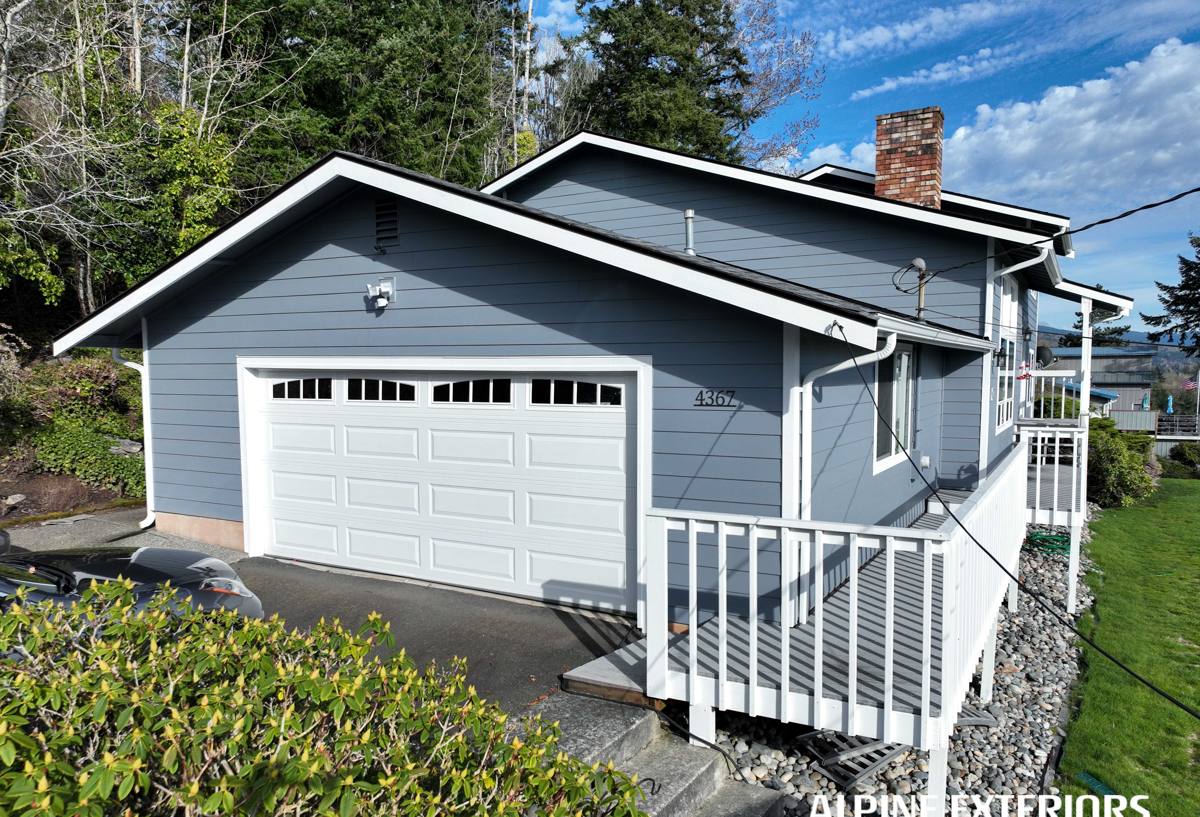
Homeowners often picture storm damage as a tree limb through the roof deck, and sometimes it is that dramatic. More often, it's quieter and easier to miss:
- Wind that lifts shingle tabs just enough to break the seal, without tearing anything off — the roof looks fine from the ground but leaks the next time it rains
- Wind-driven rain forced up and under shingles or flashing at a rate normal drainage design doesn't anticipate
- Impact bruising from wind-flung debris — branches, cones, gravel from a neighbor's roof — that cracks shingle mat without leaving an obvious hole
- Flashing around chimneys, skylights, and roof-to-wall joints knocked loose or bent, which is where the majority of storm leaks actually start
- Moss dams that were building quietly all season, then get shoved by wind and rain into gutters and valleys where they back water up under the roofing
That last one is worth sitting with. A lot of what gets blamed on "the storm" is really storm-triggered — moss and organic debris that had already compromised a section of roof, with the storm just being the event that pushed water past the point of no return.
Why Ignoring It Costs More Than the Repair Would
A roof leak rarely stays a roof problem. Water that gets past the roofing membrane travels — along rafters, down into insulation, behind wall cavities — before it ever shows up as a stain on a ceiling. By the time you can see it inside, the damage usually extends well beyond the visible spot. In a marine climate like Bellingham's, trapped moisture doesn't dry out on its own between rain events the way it might in a drier region; it sits, and it invites rot and mold.
The other cost is structural. Wind that lifts and re-seats shingles without full failure can leave a roof looking intact while its wind resistance is quietly reduced. The next storm doesn't need to be stronger to do more damage — it just needs to hit a spot that's already weakened.
What a Correct Storm Repair Actually Involves
Full Inspection, Not a Spot Check
A proper storm damage inspection covers the whole roof plane, not just the area the homeowner points to. Wind damage is frequently worse on the leeward slope than the side that took the direct hit, and flashing failures show up away from the obvious damage point. We check the roof surface, all flashing and penetrations, the gutter and drainage system, and — where accessible — the attic or roof deck from underneath for signs of moisture that haven't reached the ceiling yet.
Matching Materials, Not Just Patching
A patch that doesn't match the existing shingle's granule color, profile, or age creates a visible seam and, more importantly, a weak transition point where the old and new material don't shed water the same way. Getting a close match — and blending the repair into the existing course pattern — is part of doing the job right, not just cosmetics.
Fixing the Cause, Not Just the Symptom
If moss buildup contributed to the failure, replacing shingles without addressing drainage and moss growth just resets the clock on the same problem. A correct repair looks at why that section failed and corrects the underlying condition — better valley flashing, improved gutter flow, or moss treatment on adjacent areas — alongside the visible fix.
Our Process
- Assessment. We inspect the full roof and document what we find with photos, before any repair work starts. This becomes the record you'd hand to an insurance adjuster if you're filing a claim.
- Emergency protection, if needed. If there's an active leak or exposed deck, our first priority is stopping ongoing water intrusion — tarping or temporary sealing — before the permanent repair is scheduled.
- Scope and options. We explain what's damaged, what caused it, and what the repair options are — spot repair, section replacement, or (rarely, for widespread damage) full replacement — in plain terms, with the trade-offs of each.
- The repair. Work is done to match existing materials and correct the underlying cause, not just cover the visible damage.
- Documentation. You get a written record of what was found and what was done — useful for your files and for insurance, regardless of whether you end up filing a claim.
Repair Scope: Matching the Fix to the Damage
Not every storm-damaged roof needs the same level of work. Here's how we think through scope:
| Repair Approach | When It Fits | What to Expect |
|---|---|---|
| Spot repair | Isolated wind or impact damage in one area, roof otherwise sound | Fastest turnaround, lowest cost, requires a close material match to blend properly |
| Section replacement | Damage concentrated on one slope, or moss/moisture damage found beyond the original complaint | Moderate cost and time, addresses the full extent of a localized problem rather than chasing leaks |
| Full replacement | Widespread damage across multiple slopes, or a roof already near end of service life before the storm | Highest cost and longest timeline, but resets the whole roof rather than leaving older, weathered sections next to new repairs |
We'll always tell you honestly which category your roof falls into rather than defaulting to the largest scope of work.
Insurance Considerations, Handled Straight
Many storm-related roof claims come down to documentation and timing. Photos taken before repairs begin, a clear written description of the damage, and a repair estimate that separates storm damage from pre-existing wear all make for a cleaner claims process. We provide that documentation as a standard part of the job — what you do with it, whether that's filing a claim or just keeping records, is entirely your call. We don't handle claims for you or make promises about what an insurer will approve; that's between you and your policy.
After a Storm: What to Check Before You Call
A few minutes of careful observation from the ground can help you describe the problem accurately and decide how urgent the situation is:
- Look for shingle granules collecting in gutters or at downspout outlets — a sign of accelerated wear or impact damage
- Scan roof edges and ridges for shingles that look lifted, curled, or missing entirely
- Check gutters and valleys for moss or debris buildup that could be damming water
- Note any new ceiling stains, especially near chimneys, skylights, or exterior walls
- Check the attic, if accessible, for damp insulation, dark staining on rafters, or daylight where there shouldn't be any
- Photograph anything unusual before it gets cleaned up or rained on again
- Avoid climbing onto the roof yourself, especially on wet or mossy surfaces — that's how a roof problem turns into a fall injury
Why Local Experience Matters for This Job
A crew that regularly works Fairhaven roofs already knows which conditions to expect before they climb up: the salt exposure off the bay, the shade patterns from mature trees that keep certain roof sections wet and mossy longer than others, and the wind patterns that tend to hit some slopes harder than the storm's overall direction would suggest. That familiarity means less time spent figuring out what's normal for the area and more time spent on an accurate assessment. It also means we're not guessing at what materials and fastening methods actually hold up here — we've seen what does and doesn't over repeated storm seasons in this exact part of Whatcom County.
If your Fairhaven roof took a hit in a recent storm — or you're not sure if it did but want an honest look before the next one rolls in — we're happy to come out for a free, no-pressure estimate. There's a form below to get started.