 Bellingham Exterior
 Siding That Has to Work in Happy Valley's Climate, Not Just Look Good on Day One
Happy Valley is a Bellingham neighborhood, which means its homes deal with the same weather every other part of Whatcom County deals with — but that weather is not gentle on exterior walls. Moist marine air off Bellingham Bay, wind-driven rain that comes in sideways during fall and winter storms, and a shade-and-moisture cycle that keeps moss and algae growing for months at a time all put steady pressure on siding. Some materials tolerate that pressure for a decade or two before problems start showing up. Others are engineered for it from the start. That difference is the whole reason this page exists.
We install fiber cement siding on Happy Valley homes because it holds up to this specific combination of conditions better than the alternatives, and because we've done the work here long enough to know what actually goes wrong on Bellingham exteriors versus what's just a scare tactic in a sales pitch.
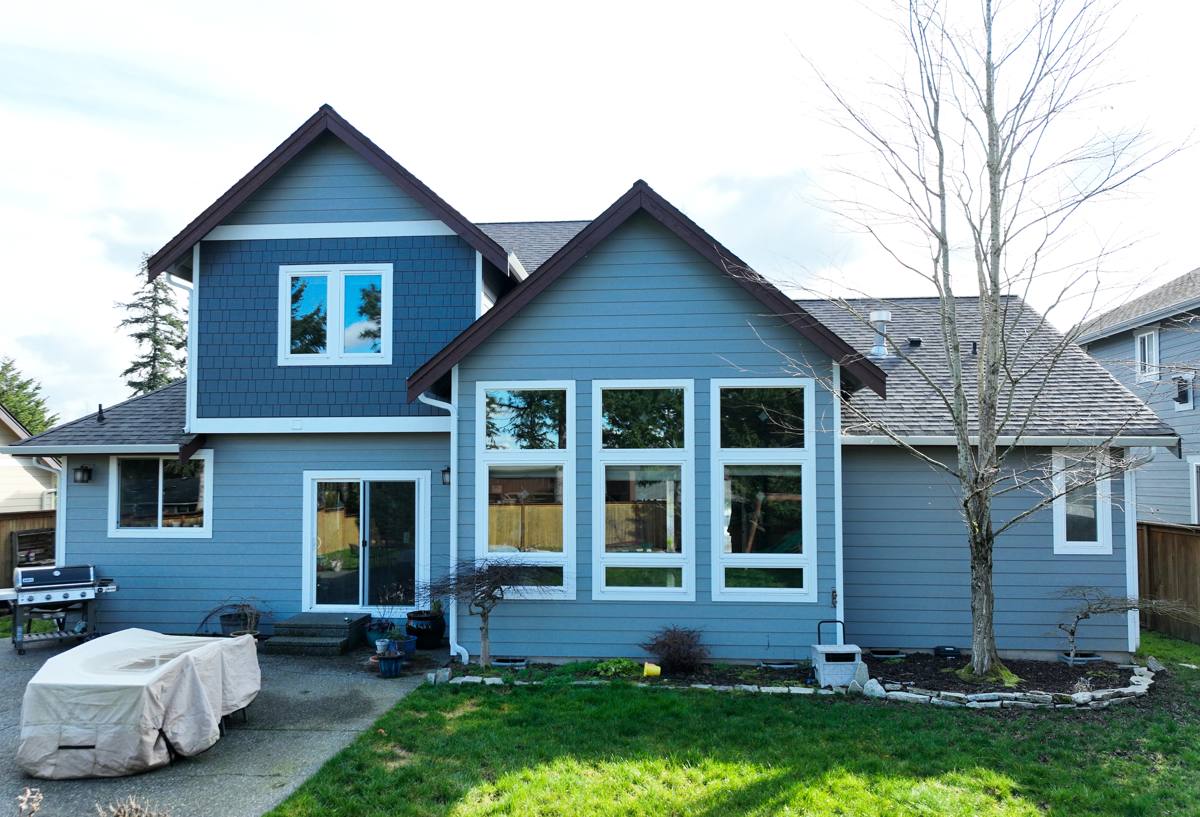
What Bellingham's Weather Actually Does to a Wall
Wind-driven rain and wall assemblies
Whatcom County doesn't get the heaviest rainfall totals in Washington, but it gets a lot of low-intensity, wind-driven rain over many months, and that pattern matters more than total inches. Wind-driven rain gets pushed sideways into laps, joints, and penetrations that vertical rain would never reach. A wall assembly that isn't detailed to shed that water — proper laps, correctly flashed openings, a working drainage plane behind the cladding — will eventually let moisture behind the siding, whether the siding itself is fiber cement, vinyl, or wood.
Moss, shade, and moisture cycling
Bellingham's tree cover and cloud cover keep a lot of exterior surfaces shaded and damp for long stretches, which is exactly what moss and algae need to establish. On siding materials that absorb moisture or have seams that trap organic debris, that growth can hold water against the substrate for weeks at a time. Fiber cement doesn't feed mold or rot the way wood-based products can, but it still needs to be installed with the right clearances and drainage so growth doesn't get a foothold in the first place.
Salt-tinged air near the bay
Homes closer to Bellingham Bay pick up a mild dose of salt-laden air, which accelerates corrosion on unprotected fasteners and metal flashing over time. It's not the aggressive coastal exposure you'd see right on the open ocean, but it's enough that fastener choice and flashing material aren't details to skip past.
What a Correct Fiber Cement Installation Involves
Fiber cement is only as good as the installation behind it. A rushed or under-detailed job can fail in this climate almost as fast as a lesser material, which is why we treat the installation details below as non-negotiable rather than upgrades.
Drainage plane and rain screen gap
Behind the siding, there needs to be a continuous water-resistive barrier and a way for any moisture that gets past the cladding to drain and dry out — typically a rain screen gap created with furring strips or a drainage wrap. This is the single biggest factor in how a wall handles years of wind-driven rain, and it's invisible once the siding is up, which is exactly why it's the step some installers shortcut.
Flashing at every penetration
Windows, doors, hose bibs, light fixtures, and vents all break the plane of the wall, and each one needs flashing detailed to shed water down and out rather than behind the siding. In a climate with this much sustained rain exposure, a missed or reversed flashing detail is one of the most common causes of hidden water damage.
Clearances and fastener pattern
James Hardie's installation instructions specify minimum clearances from grade, roofing, decks, and other transitions, plus a specific fastener spacing and placement pattern. These aren't arbitrary — they control how the panels expand and contract and how water sheds off the bottom edge of every course. Butt joints get flashed or sealed per spec, not just caulked and hoped for.
Caulking, painting, and touch-up done right
Factory-finished panels need the cut edges sealed and any field-applied caulk matched to a product compatible with the finish. Sloppy caulk work is one of the more common cosmetic complaints homeowners have about siding jobs that were otherwise done adequately.
Why We Only Install James Hardie
We don't offer a menu of siding brands. We install James Hardie fiber cement exclusively, and that's a deliberate standard, not a supplier relationship we happened to fall into.
HZ climate-engineered formulation
James Hardie manufactures its siding in different HZ (HardieZone) formulations tuned to regional climate conditions — moisture exposure, freeze-thaw cycling, and humidity. The product specified for the Pacific Northwest is engineered around the wet, moderate-temperature conditions Whatcom County actually experiences, rather than a one-size-fits-all formulation.
ColorPlus factory finish
Hardie's ColorPlus finish is baked on in a controlled factory environment and backed by its own finish warranty, which gives more consistent, longer-lasting color performance than field-applied paint on site-primed siding. In a climate where exteriors spend much of the year damp, a factory-cured finish holds up better against the wear that constant moisture cycling causes.
Non-combustible material
Fiber cement is non-combustible, which matters increasingly across Washington as wildfire smoke and ember exposure become a bigger part of the conversation around home exteriors, even west of the Cascades.
Warranty backing
Hardie backs its siding with a long-term, transferable limited warranty, which matters if a Happy Valley home changes hands — the coverage follows the house, not the original owner.
How We Approach a Happy Valley Project
- Walk-through and assessment — we look at the existing siding, sheathing condition where visible, and any trouble spots like north-facing walls, areas under heavy tree cover, or spots showing past moisture staining.
- Tear-off and sheathing check — once the old siding is off, we can actually see the wall. Any soft or water-damaged sheathing gets identified and addressed before anything new goes back up — covering over a problem is how small issues become expensive ones.
- Weather barrier and drainage plane — the water-resistive barrier and rain screen gap go in before a single piece of Hardie touches the wall.
- Flashing and trim — windows, doors, and penetrations get flashed and trimmed to spec.
- Siding installation — panels or lap boards go up per Hardie's fastening and clearance requirements, with attention to butt joint placement and consistent reveal.
- Final detailing and cleanup — caulk, touch-up paint matched to the ColorPlus finish, and a full site cleanup.
What Drives the Cost of a Siding Project
Every home is different, and we won't put a number on your project without seeing it, but the factors below are the real drivers behind why one job costs more than another.
| Factor | Why It Matters | Cost Impact |
|---|---|---|
| Tear-off scope | Full removal of old siding vs. an already-bare wall changes labor significantly | Medium–High |
| Sheathing repair | Water damage found during tear-off has to be fixed before new siding goes on | Variable |
| Home shape and trim detail | More corners, dormers, and window/door openings mean more cutting, flashing, and labor time | Medium–High |
| Product line and profile | Lap siding, panel siding, and shingle-style profiles carry different material and labor costs | Low–Medium |
| Color and finish | Factory ColorPlus finishes vs. field-primed-and-painted boards affect both material cost and long-term upkeep | Low |
| Access and site conditions | Sloped lots, tight setbacks, or limited staging area affect how efficiently a crew can work | Low–Medium |
Living With Fiber Cement Siding Through Bellingham's Moss Season
Fiber cement doesn't rot and doesn't feed fungal growth the way wood-based siding can, but that doesn't mean it's maintenance-free in a climate like this. Moss and algae can still grow on the surface of any exterior material that stays damp and shaded, including fiber cement. The practical upkeep is straightforward:
- Keep gutters clear so overflow doesn't run down the wall face
- Trim back vegetation that keeps a wall section shaded and damp longer than the rest of the house
- Rinse visible moss or algae buildup with a garden hose or soft wash rather than a high-pressure washer, which can force water behind laps and joints
- Recaulk and touch up trim joints if you notice cracking or gaps over the years
- Watch for any staining or soft spots at the base of the wall, which can signal a drainage or grading issue rather than a siding problem
None of this is unusual maintenance — it's the same kind of upkeep any Bellingham exterior needs, siding aside. The difference with a correctly installed fiber cement system is that the material itself isn't the weak point.
Why Hiring a Crew That Already Works This Neighborhood Matters
Siding installation isn't identical from region to region. A crew that mostly works drier climates can get away with shortcuts on drainage detailing that simply don't hold up under Whatcom County's rain patterns. A crew that works Bellingham and Happy Valley regularly already knows which wall orientations take the worst weather, how local moisture and shade patterns affect siding over time, and what inspection and permitting expectations apply in this jurisdiction. That local familiarity shows up in the details — how the drainage plane is handled, how flashing is sequenced, where extra attention goes on a shaded or exposed wall — not in anything you'd notice from the driveway on installation day.
Questions worth asking before you hire anyone for a siding project
- Will you show me the sheathing before you close the wall back up?
- What's your rain screen or drainage plane detail, specifically?
- How do you handle flashing at windows and doors — walk me through it?
- Is the manufacturer's installation instruction sheet something your crew follows on every job?
- What does the warranty actually cover, and does it transfer if I sell the house?
- Can you point to the specific fastening and clearance spec you're using for this product line?
Get a Straight Answer for Your Happy Valley Home
Every home in Happy Valley has its own mix of sun exposure, tree cover, and wall condition, and that mix affects what your siding project actually needs — not just what it costs. If you're dealing with aging siding, visible moss buildup, or you just want an honest look at whether now is the right time to move to James Hardie fiber cement, we're happy to come take a look. The estimate is free, there's no pressure attached to it, and you'll get a straight answer about what your home actually needs.