 Bellingham Exterior
 Happy Valley's Climate Puts Real Demands on Siding
Happy Valley sits close enough to Bellingham Bay and the Salish Sea that homes here deal with a combination most siding products were never engineered for: salt-laden air off the water, wind-driven rain that hits walls sideways instead of just falling straight down, and a wet season that runs long enough to keep north- and shade-facing walls damp for weeks at a stretch. Add in the mature tree cover common to this hillside neighborhood, and you get siding that rarely gets a full day of direct sun to dry out between storms.
None of that is unusual for Whatcom County. But it does mean siding decisions that work fine in a drier inland climate can fail early here. Paint that would last a decade elsewhere peels in five years. Wood that would hold up in eastern Washington checks and rots. Panel seams that would stay tight in a milder climate open up under repeated wet-dry cycling. Any siding job in Happy Valley has to be planned around this climate, not around a national average.
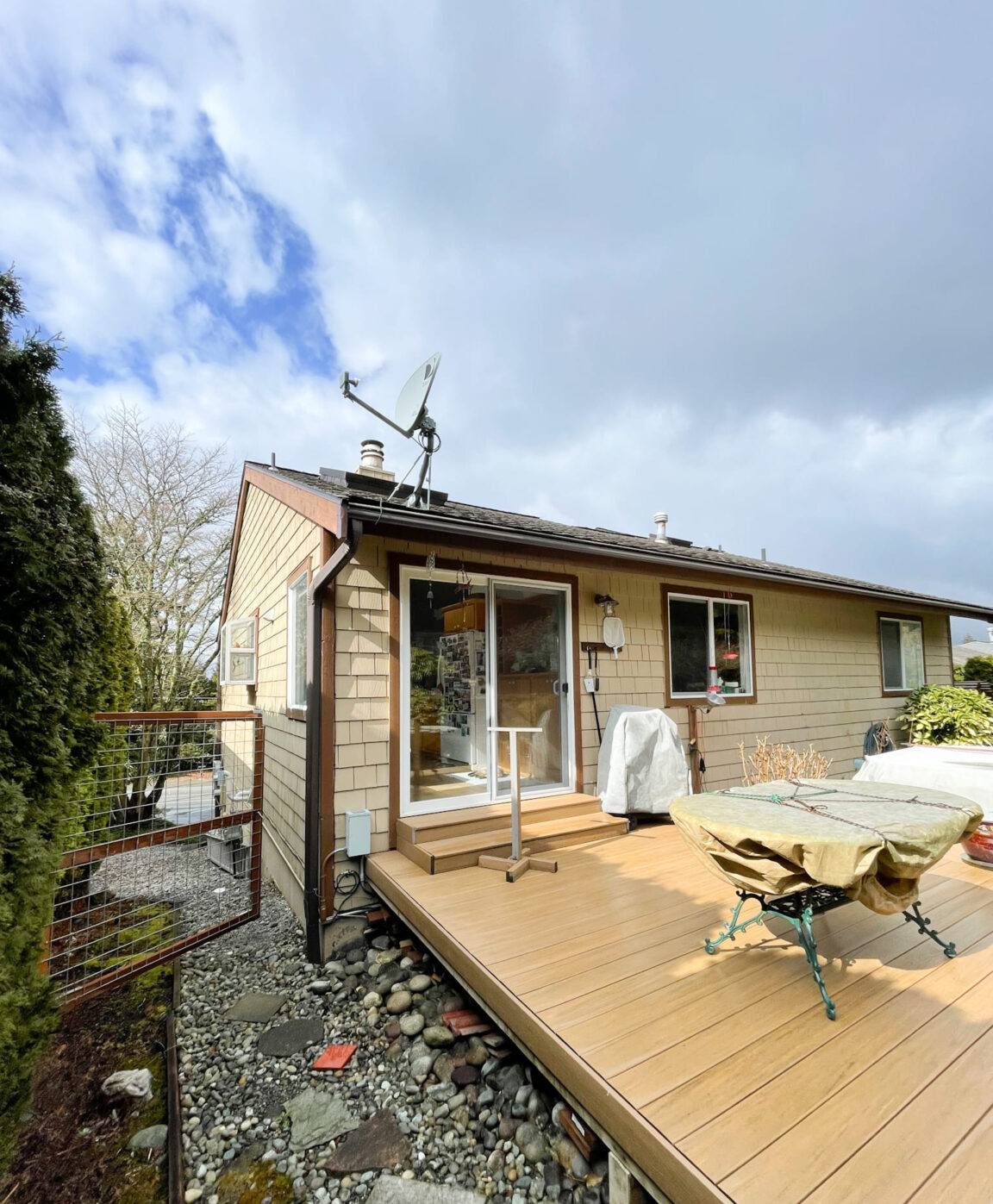
What Salt Air, Driving Rain, and Moss Actually Do to a Wall System
Salt Air and Corrosion
Airborne salt from the bay settles on exterior surfaces and accelerates corrosion of anything metal — fasteners, flashing, trim screws. Over years, corroded fasteners loosen, and loose fasteners let siding panels move, which opens gaps for water. It's a slow problem, which is exactly why it gets missed: nothing looks wrong until the fastening system has already been compromised.
Driving Rain and Wind-Driven Moisture
Bellingham's rain doesn't just fall — a good portion of it arrives at an angle, pushed by wind off the water. That means water gets forced up under laps, into unsealed joints, and behind trim in ways vertical rain never would. A siding system that isn't detailed for wind-driven rain — proper laps, correct flashing, sealed penetrations — will eventually let water behind the cladding no matter how good the material itself is.
Moss, Algae, and Shade
Shaded, damp walls in Whatcom County grow moss and algae almost as a matter of course. On absorbent or textured surfaces, that growth holds moisture against the material for extended periods, which is where a lot of long-term siding damage actually starts — not from the rain itself, but from moisture that never gets the chance to leave.
Why James Hardie Fiber Cement Holds Up Here
The HZ5 Formulation
James Hardie engineers its siding by climate zone, and the Pacific Northwest falls into the HZ5 category — formulated for regions with consistent moisture and moderate temperatures rather than severe freeze-thaw cycling. That distinction matters: a product engineered for the wrong climate zone is one more variable working against the homeowner before the first nail goes in.
ColorPlus Factory Finish
Fiber cement itself doesn't rot, delaminate, or feed mold the way wood-based products can, and it isn't vulnerable to the same corrosion risk as metal panels near salt air. Hardie's ColorPlus finish is baked on at the factory under controlled conditions, which gives it better fade and moisture resistance than most siding paint jobs applied on-site — a real advantage in a climate where the finish rarely gets a long dry stretch to fully cure after field-applied paint.
It's also non-combustible, which matters more each fire season in Washington even in a coastal, wet county like this one.
What a Correct Installation Involves
Prep and Water Management
Correct installation starts before the first piece of siding goes up: house wrap or weather-resistive barrier installed and lapped correctly, flashing at every window, door, and horizontal trim transition, and a drainage plane that gives any water that does get behind the siding somewhere to go. Skip this step and the siding material — even a good one — is fighting a losing battle.
Fastening and Gaps
Hardie specifies exact fastener types, spacing, and clearances for a reason — get it wrong and you undermine the manufacturer's warranty along with the actual performance. Panels need the gaps Hardie specifies at joints and trim to allow for expansion and contraction; installers who butt pieces too tight to look "clean" are setting up cracking down the road.
Trim, Flashing, and Caulking
In a driving-rain climate, the trim and flashing details matter as much as the siding itself. Every penetration — hose bibs, light fixtures, vents — needs to be flashed or sealed correctly, and the caulking used has to be a product rated for exterior movement and UV exposure, not whatever tube happened to be in the truck.
How Hardie Compares to Other Siding Options in This Climate
| Material | Behavior in salt air / driving rain | Behavior in long moss season | Typical field lifespan here |
|---|---|---|---|
| James Hardie fiber cement | Non-combustible, dimensionally stable, resists moisture-driven warping | Doesn't feed mold or rot; factory finish resists staining better than field-applied paint | Decades, with correct install and normal upkeep |
| Vinyl siding | Can warp or become brittle with temperature swings; seams are a common water entry point | Moss and algae stain the surface; panels are hard to fully clean without damage | Variable; appearance often degrades well before the material fails outright |
| Cedar / primed spruce | Absorbs moisture; wind-driven rain accelerates checking and cupping | Prime feeding ground for moss and rot in shaded, damp conditions | Shorter without aggressive, ongoing maintenance |
| Engineered wood (e.g. LP SmartSide) | Engineered to resist moisture better than raw wood, but edges and cut ends remain vulnerable if not field-sealed correctly | Still an organic substrate; sustained damp exposure is its weak point | Depends heavily on installer discipline at seams and cuts |
This is the reasoning behind our decision to install James Hardie exclusively. It's not that the alternatives are worthless products — it's that for this specific climate, the maintenance burden, moisture sensitivity, and long-term appearance of the alternatives are trade-offs we're not willing to put on a Happy Valley home when a better-suited option exists.
Our Process for a Happy Valley Home
We start with an on-site assessment — not a generic estimate, but a look at your home's actual exposure: how much direct sun each wall gets, where tree cover keeps things damp, where wind off the water hits hardest, and what condition your current water-resistive barrier and framing are in underneath the existing siding. That assessment drives the plan, not the other way around.
From there: removal of the old siding, inspection and repair of any sheathing or framing damage found underneath (common on older Bellingham homes that have taken on moisture over the years), correct installation of the weather barrier and flashing package, and then the Hardie panels or lap siding themselves, fastened and gapped to spec. We walk the finished job with you before we call it done.
Keeping Hardie Siding Looking Right Through Moss Season
Fiber cement is low-maintenance compared to the alternatives, but "low-maintenance" isn't "no-maintenance." A short seasonal routine keeps a Hardie install looking and performing the way it should for the long haul:
- Rinse shaded and north-facing walls once a year to keep moss and algae from taking hold — a garden hose is enough; skip the pressure washer, which can drive water behind panels and damage the finish
- Keep gutters clean and downspouts directed away from the foundation so runoff isn't constantly hitting the lower courses of siding
- Trim back branches and shrubs that keep siding shaded and damp longer than the rest of the house
- Check and refresh exterior caulking at trim and penetrations every few years — caulk is the first thing to fail, well before the siding itself
- Watch for any hairline cracking at panel joints or fastener heads, and have it looked at early rather than after a wet winter makes it worse
Why Local Experience in Happy Valley Matters
A siding install detailed for Phoenix or Denver isn't going to hold up in Whatcom County, and a crew that hasn't worked this specific climate won't automatically know to prioritize the flashing details, fastener choices, and drainage planning that actually matter here. A crew that already works Happy Valley and the surrounding Bellingham neighborhoods knows which walls take the worst of the wind-driven rain, which exposures grow moss fastest, and how salt air factors into fastener and hardware choices — because they've seen the results on homes just like yours.
That local pattern recognition is worth as much as the product itself. The best siding in the world, installed without regard for how this specific climate behaves, will still fail early.
If you're weighing a siding project for your Happy Valley home, we're happy to walk the exterior with you, point out what your home's exposure actually needs, and put together a straightforward, no-pressure estimate — no obligation either way.