 Bellingham Exterior
 Why Happy Valley Roofs Take a Different Kind of Beating
Happy Valley sits close enough to Bellingham Bay and the Salish Sea that salt-laden air is a constant factor in how a roof ages, not an occasional nuisance. Add in Whatcom County's long wet season, wind-driven rain that hits roof planes sideways instead of straight down, and a tree canopy that keeps shaded slopes damp for weeks at a stretch, and you have a climate that is genuinely tough on roofing. Moss doesn't just grow here — it thrives, working into seams, lifting shingle tabs, and holding moisture against the roof deck long after a storm has passed.
Metal roofing handles this combination better than most materials, but only when it's specified and installed correctly for this specific environment. A metal roof detailed for a dry inland climate isn't automatically right for a neighborhood two miles from saltwater. The fastener grade, panel finish, and flashing details all need to account for what Happy Valley actually throws at a roof over a 30- or 40-year service life.
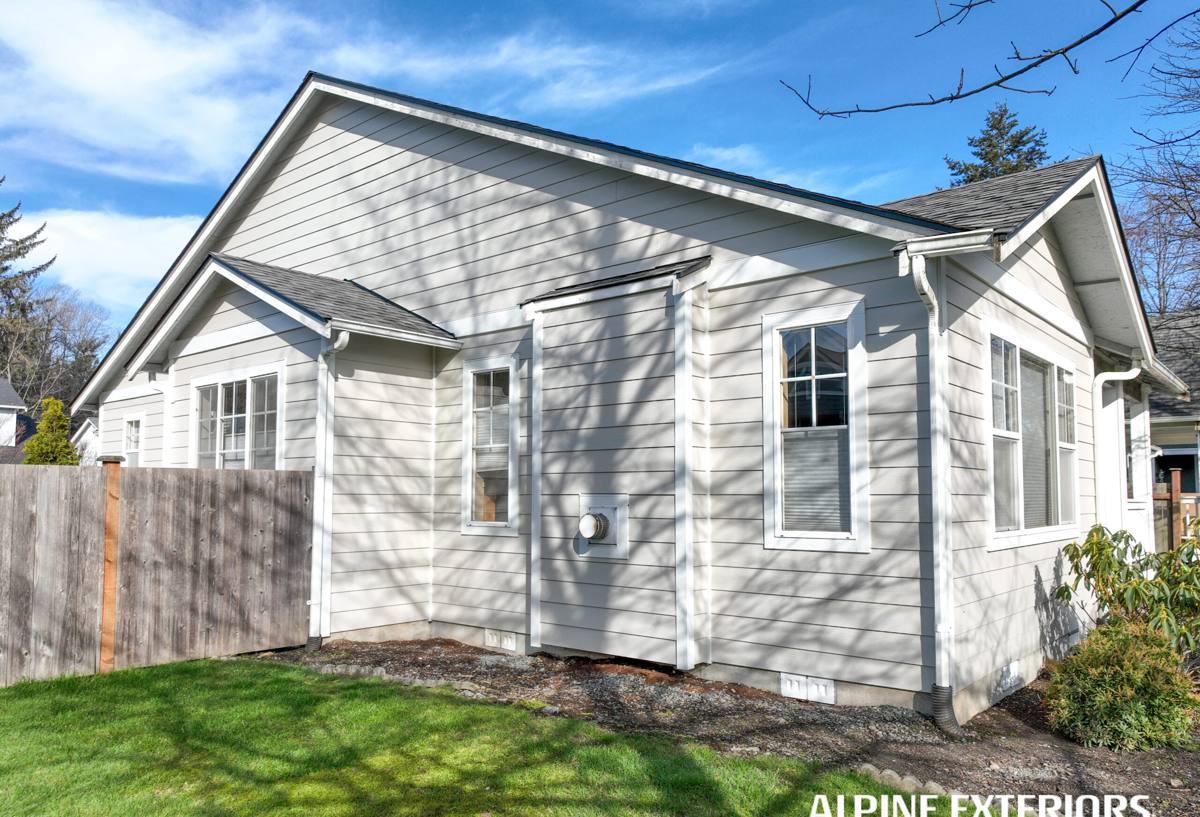
What a Correctly Specified Metal Roof Looks Like Here
There are two broad families of metal roofing, and the difference matters more in a coastal, moss-prone climate than it does in a mild, dry one.
Standing Seam vs. Exposed-Fastener Panels
Standing seam panels use concealed clips and interlocking seams — no fasteners penetrate the panel face. Exposed-fastener panels (often called corrugated or ag-panel style) are screwed directly through the panel, with a rubber washer sealing each penetration. Both can perform well, but they age differently under Happy Valley conditions.
| Factor | Standing Seam | Exposed Fastener |
|---|---|---|
| Fastener exposure to salt air | None — fasteners are hidden under the seam | Thousands of exposed screw heads, each a potential rust point over time |
| Long-term watertightness | Mechanically interlocked seams, no washer to fail | Depends on rubber washers staying compressed and intact |
| Moss and debris shedding | Smooth vertical seams shed moss and needles well | Ribs and fastener heads catch debris more easily |
| Typical upfront cost | Higher material and labor cost | Lower material and labor cost |
| Expected service life | 40–60 years with proper coating | 25–40 years, largely governed by washer and fastener life |
We install both, and exposed-fastener panels are a legitimate choice for outbuildings, shops, and budget-conscious projects. But for a primary residence in a neighborhood this close to salt water, we steer most homeowners toward standing seam, or at minimum toward stainless or specially coated fasteners if they choose exposed-fastener panels.
Panel Gauge and Substrate
Metal roofing is typically steel (usually 24- or 26-gauge, galvanized or Galvalume-coated) or aluminum. Aluminum doesn't rust, which makes it attractive near the water, but it dents more easily and costs more. Coated steel, properly finished, holds up well in this climate and is what we install on the large majority of Happy Valley homes — the key is the coating, not just the base metal, which we cover below.
Our Install Process for This Roof System
A metal roof is only as good as the details underneath it. Here's how we approach a Happy Valley job from start to finish:
- Tear-off and deck inspection. We remove the old roofing down to the deck and check for soft spots, rot, or prior moisture damage — common on shaded, moss-affected slopes where water has been sitting longer than it should have.
- Deck repair. Any compromised sheathing gets replaced before anything else happens. Installing new roofing over a weak deck just hides a problem that gets worse.
- Underlayment. We use a synthetic, high-temperature underlayment rated for metal roofing, with self-adhered ice-and-water shield at eaves, valleys, and any low-slope transitions — the spots where wind-driven rain is most likely to work its way backward under a panel.
- Ventilation check. We confirm intake and exhaust venting is balanced before panels go on, since trapped moisture under a metal roof causes problems that have nothing to do with the metal itself.
- Panel installation. Panels are run, fastened or clipped per the manufacturer's wind and snow-load specs, with attention to consistent reveal lines and properly lapped seams.
- Flashing and penetrations. Valleys, chimneys, vents, and wall-to-roof transitions get custom-formed flashing, not generic trim pieces stretched to fit.
- Final walk-through. We check fastener torque, seam closure, and trim fit before calling the job done, and we point out anything a homeowner should keep an eye on going forward.
Finishes That Actually Resist Moss and Algae
The paint or coating system on a metal roof does more than provide color. In a climate where moss and algae growth is a near-guarantee on shaded or north-facing slopes, the coating affects how much organic growth takes hold and how easily it releases when it does.
- PVDF (often sold under names like Kynar-based finishes) resists fading, chalking, and staining better than baked enamel over a 20–30 year span, and holds a cleaner surface that discourages moss from gaining a foothold.
- SMP (siliconized modified polyester) coatings cost less but fade and chalk faster, giving moss and grime more texture to grip over time.
- Smooth, tightly seamed panels shed water and debris faster than textured or heavily ribbed profiles, which matters directly on shaded slopes near mature trees.
- No coating makes a roof moss-proof. Periodic gentle cleaning and keeping overhanging branches trimmed back still matters, metal roof or not.
We're straightforward with homeowners about this trade-off: a premium coating costs more upfront and pays for itself in reduced staining, fewer cleanings, and a roof that still looks good at year 20 instead of year 8.
Fasteners, Flashing, and the Salt-Air Factor
Corrosion on a metal roof almost never starts on the broad flat area of a panel — it starts at fasteners, cut edges, and flashing laps, the places where a coating is thinnest or bare metal gets exposed. This is where salt air does its damage fastest, and it's the detail that separates a roof that looks great for two years from one that holds up for four decades.
Our standard on Happy Valley jobs is to match fastener and flashing material to the panel system so we're not creating a corrosion point through mismatched metals — mixing bare steel screws into an aluminum panel, for instance, sets up galvanic corrosion that eats away at the softer metal around every screw hole. We also make sure factory-cut panel edges are sealed or protected rather than left exposed, since a cut edge has no factory coating protecting it.
Ventilation and Moisture Management
Metal roofing doesn't breathe the way some other materials do, which makes what happens underneath the panels just as important as the panels themselves. Whatcom County's humidity and long wet stretches mean an under-ventilated attic can trap moisture regardless of what's on top of it. Before we close up any roof, we confirm the attic has balanced intake (typically soffit vents) and exhaust (ridge or roof vents) so warm, moist interior air isn't condensing against the underside of the deck. This step gets skipped more often than it should on quick re-roofs, and it's one of the most common causes of hidden deck rot we find when we tear off an older roof.
What Drives the Cost of a Metal Roof Here
| Cost Factor | Why It Matters in Happy Valley |
|---|---|
| Panel type | Standing seam runs higher than exposed-fastener panels, but reduces long-term fastener corrosion risk near the water |
| Coating grade | PVDF finishes cost more than SMP but resist moss staining and fading much longer under our wet, shaded conditions |
| Roof complexity | Steep pitches, multiple valleys, and dormers (common on older Happy Valley homes) add labor and custom flashing time |
| Deck condition | Moss and moisture-related deck repair, when needed, is priced separately from the roofing itself |
| Tear-off vs. overlay | We don't recommend installing metal over old roofing on this climate — full tear-off lets us address the deck and ventilation properly |
Give a wide range for planning purposes: most full metal roof replacements on a typical Happy Valley single-family home land somewhere in the mid-five-figure range, with the specifics above moving that number up or down. We'll always give a written, itemized estimate before any work starts rather than a single round number.
A Practical Checklist Before You Hire
- Ask what gauge and coating system is being quoted — "metal roofing" alone doesn't tell you the durability level.
- Confirm whether the quote includes full tear-off and deck inspection, not just panel installation over the existing roof.
- Ask specifically how valleys, chimney flashing, and wall transitions will be detailed — this is where most metal roof leaks originate.
- Check that fasteners are rated for coastal/corrosive environments, not a generic interior-grade screw.
- Get the manufacturer's paint finish warranty and the installer's workmanship warranty in writing, and understand what each one actually covers.
- Ask whether attic ventilation will be assessed and corrected as part of the job.
Why a Crew That Already Works Happy Valley Matters
A roofing crew that regularly works this specific neighborhood already knows which slopes hold moss longest, which older homes tend to have deck issues under the existing roofing, and how the salt air off the bay tends to show up first in fastener corrosion rather than panel failure. That local pattern recognition shortens the inspection phase and helps catch problems before they're buried under new panels.
It also means fewer surprises with permitting and inspection through the City of Bellingham and Whatcom County, since a crew working here regularly already understands the local process rather than learning it on your project. And because we work on siding and other exterior systems as well as roofing, we can flag related issues — trim rot, flashing at wall intersections, gutter tie-ins — while we're already up there, instead of treating the roof as an isolated system disconnected from the rest of the exterior.
Get a Straight Answer for Your Roof
If you're weighing metal roofing for a Happy Valley home, we're glad to take a look, walk the roof, and give you an honest assessment of what it actually needs — no pressure, no inflated scope. Request a free estimate below and we'll get back to you with next steps.