 Bellingham Exterior
 Siding Replacement Built for Happy Valley's Conditions
Happy Valley is one of Bellingham's older, well-established residential neighborhoods, with a mix of homes ranging from mid-century originals to newer infill construction, many sitting on sloped lots under mature tree cover. That combination — age, terrain, and shade — means siding here tends to fail differently than it does in newer, more exposed subdivisions elsewhere in Whatcom County. If you're looking into siding replacement for a Happy Valley home, the right answer depends less on generic siding advice and more on understanding exactly what this neighborhood's conditions do to a wall system over time.
We work on homes throughout Bellingham and Whatcom County, and Happy Valley shows up on our schedule regularly enough that we've come to recognize its patterns: siding that looks fine from the street but is soft at the bottom courses, paint that won't hold past a couple of years no matter how well it was applied, and moss creeping up from grade on the shaded side of the house. None of that is bad luck. It's the predictable result of Pacific Northwest coastal weather meeting a specific kind of lot.
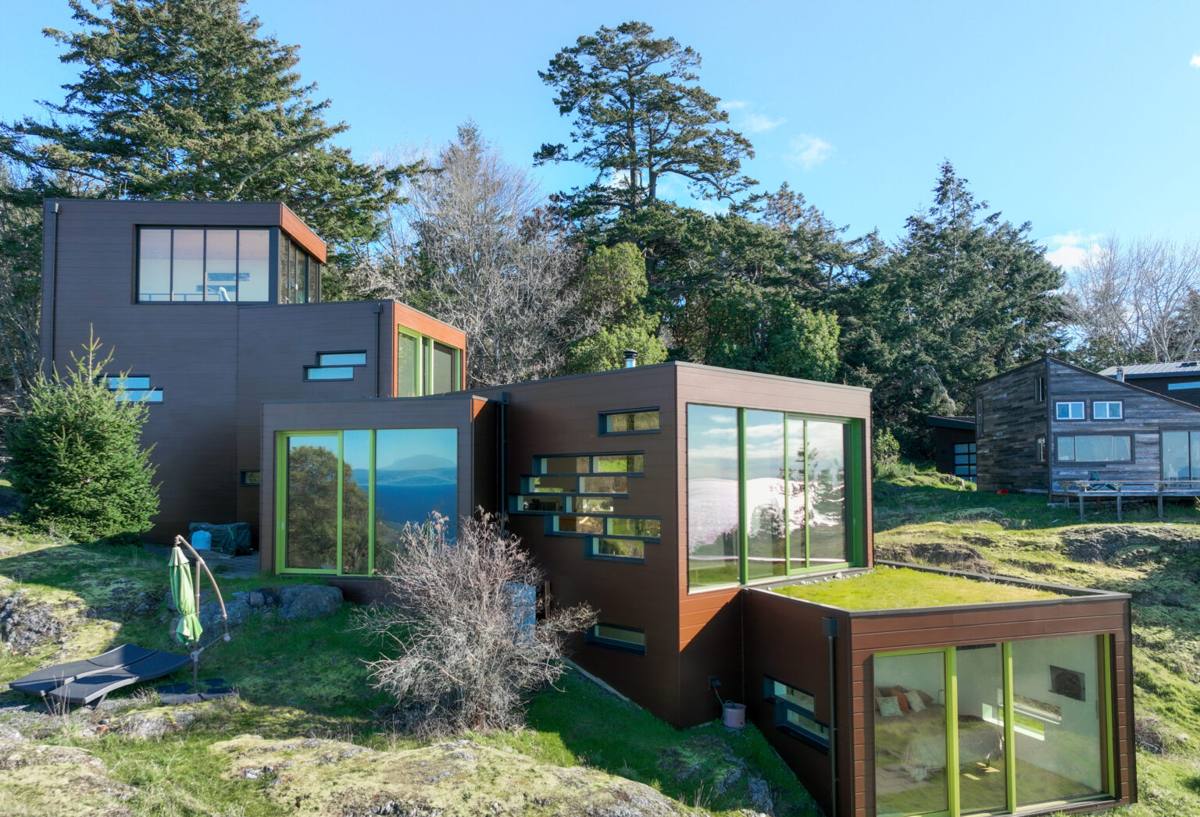
What Bellingham's Climate Does to Siding in This Neighborhood
Bellingham sits on Bellingham Bay, and neighborhoods within a few miles of the water — Happy Valley included — deal with salt-laden air on top of the region's already heavy rainfall. Salt air accelerates corrosion on fasteners, flashing, and any exposed metal trim, and it works into porous or poorly sealed siding surfaces faster than plain moisture alone. Combine that with driving, wind-pushed rain off the Sound and Whatcom County's long, wet winters, and you get a wall assembly that spends a large part of the year saturated rather than drying out between storms.
Then there's shade. Many Happy Valley lots have significant tree canopy, which is a real asset for privacy and character but also means siding on the north and east-facing walls often stays damp for days after a storm has passed. That's the setup for a long moss season — moss doesn't just sit on the surface, it holds moisture against the siding face and, on wood-based products, feeds active decay underneath. We routinely see moss and algae staining as the first visible sign that a home's siding has stopped shedding water the way it's supposed to.
The three conditions working against your siding
- Salt air corrosion: accelerates rust on nails, screws, and metal flashing, and can degrade unprotected finishes faster than inland exposure.
- Driving, wind-driven rain: pushes water sideways into laps, seams, and butt joints that vertical rain would never reach.
- Extended moss and shade exposure: keeps siding wet longer between rain events, which is what actually causes rot — not the rain itself, but how long the material stays saturated.
Signs a Happy Valley Home Needs Siding Replaced, Not Just Patched
Homeowners often ask whether a section can just be repaired instead of replacing the whole run. Sometimes that's a fair option. But there are specific signs that tell us the underlying wall system, not just the surface, has been compromised — and once that's the case, patching is a short-term fix that hides a bigger problem.
- Soft or spongy siding when you press on it, especially near the bottom few feet close to grade or under downspouts
- Paint that fails within a year or two of repainting, even after proper prep — usually a sign moisture is moving through the siding from behind
- Persistent moss or dark streaking that returns within a season of cleaning
- Visible gaps, warping, or cupping at butt joints and corners
- Interior signs — musty smell, peeling paint, or soft drywall on exterior-facing walls
- Rust streaking below nail heads or trim fasteners
If you're seeing two or more of these, it's worth having someone pull a section and look at the sheathing and house wrap underneath before deciding between repair and full replacement.
What a Correct Siding Replacement Job Actually Involves
Siding replacement isn't just removing old boards and nailing up new ones. In a climate like Bellingham's, and especially on a shaded, moisture-prone lot like a typical Happy Valley property, the parts you don't see afterward matter more than the parts you do.
The sequence that actually protects the wall
- Full tear-off and inspection: removing old siding down to the sheathing to check for rot, soft spots, or compromised framing before anything new goes up.
- Sheathing repair: replacing any damaged OSB or plywood — covering rot with new siding just traps the problem.
- Weather-resistive barrier: installing a correctly lapped house wrap or building paper that manages bulk water and lets vapor escape.
- Flashing at every penetration: windows, doors, hose bibs, vents, and any trim transition get proper flashing so wind-driven rain has nowhere to get behind the siding.
- Correct fastening: the right fastener type, length, and placement for the specific siding product and substrate, following the manufacturer's installation spec, not shortcuts.
- Proper clearances: maintaining the manufacturer-specified gap between siding and grade, decks, and roof lines so water has somewhere to go instead of wicking upward.
- Finish and caulking details: sealing only where the manufacturer calls for it — over-caulking traps moisture just as badly as under-caulking lets it in.
Skip any one of these steps and the new siding will eventually show the same symptoms as the old — usually faster, because a failed step often traps water rather than just exposing it to air.
Why We Install Only James Hardie Fiber Cement
We don't install vinyl, LP SmartSide, cedar, primed spruce, or other fiber cement brands like Cemplank or Allura. That's a deliberate standard, not a sales pitch, and it matters more in a neighborhood like Happy Valley than almost anywhere else we work.
Wood-based siding — cedar, primed spruce, engineered wood — depends on an intact factory coating and diligent, ongoing maintenance to keep moisture out. In a shaded, moss-prone microclimate, that coating gets tested constantly, and the margin for a missed repaint or a small gap is thin. Vinyl handles water fine but expands, contracts, and can warp with temperature swings, and its seams and J-channels give wind-driven coastal rain a path in that's hard to fully seal. Other fiber cement brands aren't inherently bad products, but we've standardized on one system, one warranty structure, and one installation spec so we can guarantee the work — rather than juggling different manufacturer requirements across jobs.
James Hardie fiber cement is non-combustible, doesn't support moss or rot the way wood-based products can, and its ColorPlus factory finish is baked on for far more consistent, long-lasting color than field-applied paint — which matters directly here, since repainting is exactly where a lot of siding failures in this area start.
How the products compare on the factors that matter locally
| Factor | Vinyl Siding | Cedar / Primed Wood | James Hardie Fiber Cement |
|---|---|---|---|
| Moisture behavior in wet, shaded lots | Sheds water but seams can leak | Absorbs moisture, prone to rot if coating fails | Engineered to resist moisture and moss growth |
| Salt air / corrosion resistance | Moderate; hardware can corrode | Weak without diligent upkeep | Strong; factory finish holds up well |
| Maintenance burden | Low, but repairs are visible | High — repaint cycle every few years | Low; ColorPlus finish is factory-warranted |
| Fire resistance | Melts/deforms under heat | Combustible | Non-combustible |
| Typical lifespan when correctly installed | 20–30 years | 15–25 years with upkeep | 30+ years |
Choosing the Right Hardie Product for a Happy Valley Home
James Hardie makes climate-specific product lines, and for Whatcom County's rain and humidity, we use their HZ5 formulation, engineered for wetter, cooler climates rather than a generic national spec. On a shaded, moisture-heavy lot, we also pay close attention to which profile makes sense: HardiePlank lap siding is the most common choice and handles wind-driven rain well when lapped correctly, while HardiePanel with battens can suit certain architectural styles but requires extra attention to seam sealing on a wall that stays damp longer than average. We'll walk through which fits your home's exposure, not just its style, before recommending one.
Color matters here too. ColorPlus finishes are factory-cured for UV and moisture resistance, which means the north and east walls that struggle with moss and staining hold their color and resist mildew growth far better than a field-painted surface exposed to the same conditions.
Our Process for Happy Valley Jobs Specifically
A number of Happy Valley properties sit on sloped lots with limited flat staging area and mature landscaping close to the house, which changes how a job needs to be sequenced compared to a flat, open-lot property. We plan material staging and tear-off in sections to avoid leaving a wide area of sheathing exposed to Bellingham's rain for longer than necessary, and we pay close attention to protecting root zones and low branches of established trees during removal and material handling. On homes with heavy shade and moss history, we'll often recommend a closer look at attic and soffit ventilation as part of the same project, since trapped interior moisture compounds the same problem the exterior cladding is fighting.
We also check grading and drainage around the foundation before we button up new siding. If water is pooling near the wall or downspouts are discharging right at grade, no siding product — Hardie included — will hold up long-term without that fixed first.
What Drives the Cost of a Happy Valley Siding Replacement
| Cost Factor | Why It Matters Here |
|---|---|
| Sheathing/framing condition | Hidden rot from long-term moisture exposure often isn't known until tear-off begins |
| Site access and slope | Sloped lots and mature landscaping can require extra staging, protection, and labor time |
| Home size and wall complexity | Dormers, multiple gables, and trim details add cutting and flashing work |
| Product profile chosen | Lap siding, panel systems, and trim packages carry different material costs |
| Ventilation or drainage corrections | Addressing the root moisture cause adds scope but prevents repeat failure |
We won't quote a number without seeing the house, because the condition behind the old siding — not just its square footage — is usually the biggest variable on a home in this kind of climate exposure.
Why Local Experience in Happy Valley Matters
A crew that mostly works dry, open-lot suburbs somewhere inland will approach a Happy Valley home the same way they'd approach any other job — and that's exactly how avoidable moisture problems get built back into a house. Knowing to expect longer drying times on shaded walls, to check ventilation as part of a siding job rather than as an afterthought, and to plan tear-off around this neighborhood's terrain and tree cover isn't generic siding knowledge. It's specific to working this area repeatedly and seeing which shortcuts come back to bite homeowners a few years later.
If your Happy Valley home's siding is showing moss, soft spots, or paint that won't hold, we're happy to take a look and give you an honest assessment — whether that means a repair, a full replacement, or just some ventilation and drainage fixes that buy your current siding more time. Reach out below for a free, no-pressure estimate.