 Bellingham Exterior
 Sunnyland's Climate Is Harder on Siding Than Most Homeowners Realize
Sunnyland is one of Bellingham's older, more established neighborhoods, and that means a lot of homes here are wearing siding that was never designed for what Whatcom County actually throws at it year after year. The marine air off Bellingham Bay reaches every part of the city, and it carries fine salt that slowly attacks fasteners, trim, and paint film. Add in wind-driven rain that comes in sideways during winter storms, and a moss and mildew season that can run from October through June on shaded, tree-covered lots, and you have a climate that punishes any siding material with a weak point.
Most siding failures we see in this neighborhood aren't dramatic. They're slow: paint that stops holding a finish after five or six years instead of ten, trim boards that swell and split at the joints, moss creeping up the north-facing wall behind a fence line or under tree cover, and soft spots low on the wall where splash-back and poor drainage details have been doing damage for years before anyone noticed.
Why Sunnyland's Housing Stock Is Especially Exposed
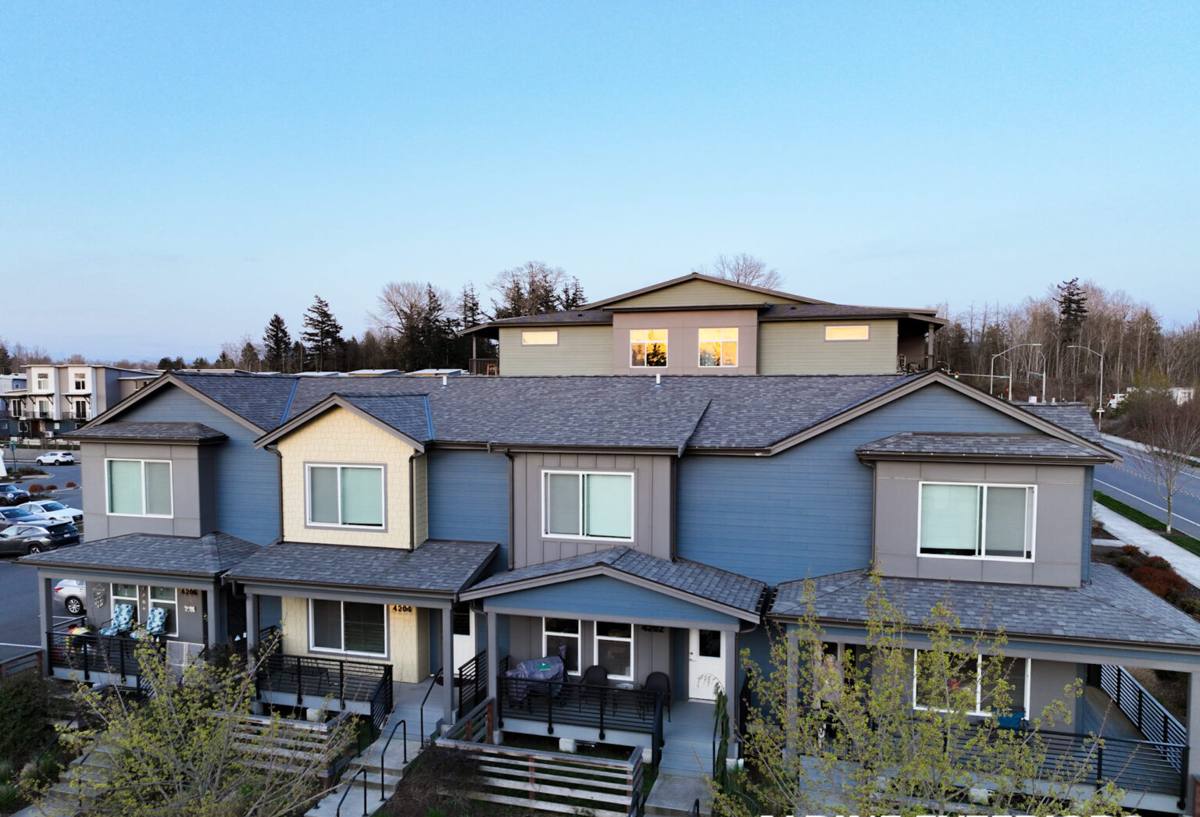
This is a neighborhood with a real mix of home ages — original siding from decades past sitting next to additions and remodels done with whatever material was popular at the time. That mix matters because older wood siding, aging hardboard, and even newer engineered products all depend on paint film and caulking staying perfect to keep water out. In a climate this wet, that's a maintenance commitment most homeowners don't sign up for and don't have time to keep up with.
Mature tree canopy is common on Sunnyland lots, which is part of what makes the neighborhood attractive — but it also means more shade, slower drying after rain, and more organic debris landing on siding and in gutters. Walls that stay damp longer are walls where moss, algae, and rot get a head start.
What James Hardie Siding Solves for This Neighborhood
James Hardie fiber cement siding is engineered specifically for climates like this one. It's made from cement, sand, and cellulose fiber, not wood or wood byproducts, so there's no organic material for moisture to break down over time. It won't rot, it won't delaminate, and it's non-combustible. For a wet, shaded, salt-exposed neighborhood, that's the difference between a wall system that shrugs off the climate and one that's in a constant fight with it.
ColorPlus Technology and the Moss Question
A lot of homeowners assume any siding will eventually grow moss if it's on a shaded wall, and that's true — moss doesn't care what it's growing on. What matters is what happens underneath. With Hardie's factory-applied ColorPlus finish, the color is baked on under controlled conditions and backed by its own finish warranty, so it resists fading and doesn't rely on a homeowner repainting every few years to stay protective. A soft wash removes surface moss and grime without touching a substrate that's already been compromised by moisture the way wood or hardboard can be.
Built for This Specific Climate
James Hardie engineers its products by climate zone, and Western Washington falls into their HZ5 category — built and tested for regions with sustained moisture exposure. That's not a marketing detail; it affects the product's moisture-managed formulation and how it's designed to perform over decades of exactly the kind of weather Sunnyland gets.
Why We Only Install James Hardie
We don't install vinyl, LP SmartSide, Cemplank, Allura, primed spruce, or cedar, and that's a deliberate standard, not an oversight. Vinyl siding contracts and expands with temperature swings and can crack or warp at the fasteners over time, and it has no real fire resistance. Cedar is a beautiful, honest material, but it requires a refinishing schedule that's hard to keep up with in a climate this wet, and once moisture gets behind it, rot can spread before it's visible. Engineered wood products like LP SmartSide use an OSB-based core that performs well when the factory coating and caulking stay intact, but any breach — a missed caulk joint, a cracked corner — gives moisture a path into a wood-based substrate.
None of that means those products are junk. It means we made a judgment call: for a climate that combines salt air, near-constant rain, and long stretches of shade, fiber cement with a factory finish gives homeowners the least to worry about over the life of the siding. That's why James Hardie is the only product we put on a house.
What a Correct Installation Actually Involves
Fiber cement siding performs the way it's supposed to only when it's installed correctly. A rushed or corner-cutting install can undermine even the best product, and in a wet climate the mistakes show up faster.
- Water-resistive barrier installed and lapped correctly over the sheathing before any siding goes up
- Proper flashing at every window, door, deck ledger, and roof-to-wall intersection
- Correct fastener type, spacing, and depth per Hardie's published installation specs
- Factory-cut edges and field cuts sealed with the appropriate primer or sealant
- Manufacturer-required clearance from grade, roofing, and decking to keep splash-back and standing water away from the bottom edge
- Caulk-matched or factory-color-matched sealant at trim joints, not generic caulk that will visibly age differently than the ColorPlus finish
The Rainscreen Gap Matters More Here Than in Drier Climates
One detail that separates a good Hardie installation from a merely acceptable one is a drainage gap — a rainscreen — between the siding and the water-resistive barrier. In a climate with as much driving rain as Whatcom County gets, water will find its way behind the siding occasionally no matter how careful the installation is. A rainscreen gives that moisture a path to drain and dry out instead of sitting against the sheathing. It's not required everywhere in the country, but on a wet, shaded Sunnyland lot, it's the kind of detail that determines whether a wall stays dry for thirty years or develops a moisture problem in ten.
Our Process on Sunnyland Projects
- Assessment — we inspect the existing siding, check for moisture intrusion and soft sheathing, and evaluate how the home's trees, roofline, and grading affect water exposure
- Tear-off and sheathing repair — old siding comes off, and any rotted or compromised sheathing is repaired before anything new goes up
- Weather barrier and drainage plane — water-resistive barrier and rainscreen furring installed to manage the moisture this climate produces
- Hardie installation — panels, lap siding, and trim installed to manufacturer spec, with attention to fastener pattern and clearances
- Flashing and detail work — windows, doors, and roof intersections flashed and sealed
- Finish and walkthrough — caulk-matched joints, cleanup, and a final walkthrough so you know exactly what was done and why
Cost Factors for a Sunnyland Siding Project
Every home is different, and we won't quote a number without seeing the house, but these are the variables that move the price most on projects in this neighborhood:
| Factor | Why It Affects Cost |
|---|---|
| Home size and number of stories | More square footage and taller walls mean more material, labor, and staging/access equipment |
| Condition of existing siding and sheathing | Hidden rot or moisture damage found during tear-off adds repair scope before new siding can go up |
| Trim and architectural detail | Homes with more corners, dormers, and trim work take longer and use more custom-cut material |
| Product line and profile | Lap siding, panel siding, and shingle-style profiles vary in material and labor cost |
| ColorPlus vs. field-applied paint | Factory-finished ColorPlus costs more upfront but eliminates a repaint cycle for years |
| Lot access and site conditions | Mature trees, slopes, and tight lot lines common in Sunnyland can affect staging and labor time |
Keeping a Hardie Exterior Looking Right in This Climate
Fiber cement is low-maintenance compared to wood or hardboard, but "low-maintenance" isn't "no-maintenance" in a climate this wet. A little routine care keeps a Hardie exterior looking like it did on installation day.
- Soft-wash the siding annually to remove surface moss, algae, and pollen buildup, especially on shaded or north-facing walls
- Keep gutters and downspouts clear so water isn't overflowing onto the siding below
- Trim back vegetation and tree limbs that keep walls shaded and slow to dry
- Skip the pressure washer — it can force water behind trim and joints; a gentle wash is enough
- Do a yearly visual check of caulking at trim joints and touch it up before gaps open
Why It Matters That We Already Work in This Neighborhood
A crew that's worked on Sunnyland homes before already knows the housing stock, the drainage quirks of shaded lots, and what Bellingham's permitting process expects for exterior work. That familiarity shows up in small but real ways: knowing which product profiles fit the neighborhood's architectural mix, spotting moisture problems that are common in homes of a certain age here, and not treating every job like it's the first time we've dealt with Whatcom County rain. It also means we're not learning on your house — we're applying what we already know works here.
If you're weighing a siding replacement on a Sunnyland home, we're happy to take a look and walk you through what your specific house needs. Reach out for a free, no-pressure estimate — no obligation, just a straight assessment of your siding and what correct James Hardie installation would look like on your home.