 Bellingham Exterior
 Board & Batten in a Neighborhood That Sees Real Weather
Puget sits close enough to the water and the tree line that its homes take a steady beating most inland Whatcom County properties don't. Salt-laden air off the bay works into fasteners and cut edges. Driving rain off Bellingham Bay hits siding sideways, not just straight down, which matters more than most homeowners realize. And the long, wet moss season here means anything with a horizontal ledge or a shaded north face is going to grow something green if it's not detailed correctly. Board and batten siding is a good fit for a lot of Puget homes — but only when it's built for this specific mix of conditions, not just installed the way it would be in a drier part of the state.
This page covers what board and batten actually needs to hold up in Puget, what a correct installation looks like underneath the surface, and how we approach these projects when we're already working in the neighborhood.
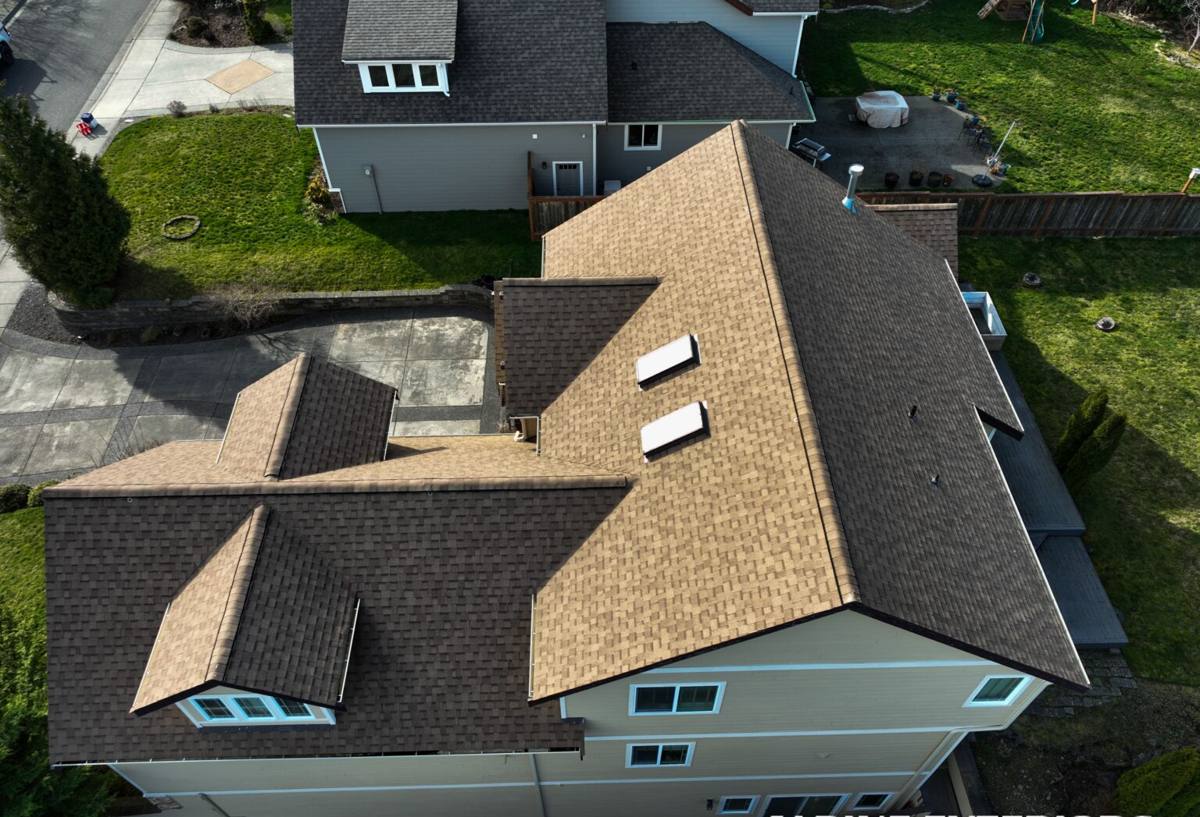
Why Board & Batten Fits Puget Homes
Board and batten is a vertical siding pattern — wide boards with narrower battens covering the seams — that reads as clean and modern on newer builds and fits naturally on the craftsman and farmhouse-influenced homes common around Bellingham. It also does something practical that flat lap siding doesn't do as well: the vertical lines shed water down and off the wall quickly instead of letting it run along horizontal seams where it can find a way in. In a neighborhood with as much sideways rain as Puget gets, that's not a cosmetic detail — it's a drainage advantage.
Where board and batten gets homeowners into trouble is when it's treated as a look instead of a system. The batten strips create dozens of extra vertical seams compared to standard lap siding, and every one of those seams is a potential water entry point if the material, fastening, and flashing underneath aren't handled correctly. That's the part that determines whether a board and batten job lasts twenty-plus years in this climate or starts showing problems in five.
What Puget's Climate Actually Does to Siding
Salt Air
Proximity to Bellingham Bay means airborne salt settles on siding, trim, and fasteners over time. Untreated or poorly coated metal fasteners corrode faster here than they would twenty miles inland, and corroding fasteners are one of the most common hidden causes of siding failure — the board looks fine until the fastener holding it lets go.
Driving Rain
Wind off the water pushes rain sideways into walls, not just down onto roofs. That means vertical seams, window and door transitions, and the bottom edge of the siding near grade all see more moisture pressure than a standard rainfall model would suggest. Any gap in the water-resistive barrier or flashing behind the siding gets tested repeatedly through a Whatcom County winter.
Moss and Sustained Dampness
Bellingham's moss season isn't a minor seasonal nuisance — it's months of sustained dampness that gives organic growth time to establish on any surface that doesn't dry out between rain events. Shaded walls, areas under tree cover, and anything with poor ventilation behind the siding are the first places it shows up. Moss holding moisture against a wall accelerates rot in wood-based products and can stain and degrade coatings on lower-quality materials.
What Correct Board & Batten Installation Involves
A lot of what makes board and batten perform well in Puget is invisible once the job is done. This is the part we don't skip:
Drainage Plane and Rainscreen
Correctly installed board and batten sits over a weather-resistive barrier with a drainage gap — either furring strips or a purpose-built rainscreen product — so any water that gets past the surface has somewhere to go besides straight into the sheathing. Given how much driving rain Puget walls take, skipping this step is one of the most common shortcuts that leads to hidden rot.
Fastener Selection and Placement
Given the salt air here, fastener corrosion resistance isn't optional. We use fasteners rated for the exposure and follow manufacturer-specified spacing and embedment — fastening board and batten wrong (too few nails, wrong placement, fastening through both the board and batten into the same stud line without allowing movement) is a leading cause of premature cracking and gaps.
Flashing at Every Transition
Windows, doors, roof-to-wall intersections, and the base of the wall near grade all need proper flashing detail. Board and batten's vertical seams make careful flashing at horizontal transitions even more important, since water traveling down a batten seam needs somewhere controlled to exit rather than a place to collect.
Batten Spacing and Seam Sealing
Battens need consistent spacing and correct overlap onto the field boards, with seams treated appropriately for the material. Inconsistent batten work is one of the more obvious signs of a rushed installation, and it's usually visible from the street once you know what to look for.
Material Options — Why We Only Install James Hardie
Board and batten is available in several materials, and homeowners in Puget often ask us to weigh in on the differences. Here's the honest comparison:
| Material | Performance in Salt Air / Driving Rain | Moss & Moisture Resistance | Long-Term Maintenance |
|---|---|---|---|
| Vinyl board and batten | Doesn't corrode, but can warp or crack under temperature swings and wind pressure; seams rely heavily on installation quality | Won't rot, but moss and mildew can grow on the surface and are harder to fully clean off without damaging the finish | Low upkeep but limited repair options — damaged panels are often replaced rather than repaired, and color fades over time |
| Engineered wood / primed products | Vulnerable at cut edges and fastener penetrations if not fully sealed; moisture exposure is the main failure point | Wood-based cores are more susceptible to swelling and rot if moisture gets behind the surface, which is a real risk in a long moss season | Requires more diligent caulking, painting, and edge sealing over the life of the siding |
| James Hardie fiber cement | Non-combustible, dimensionally stable, doesn't warp with temperature or humidity swings | Won't rot from moisture exposure; factory-cured material resists the softening that lets organic growth take hold | Factory ColorPlus finish holds color longer than field-applied paint, reducing repaint cycles |
We stopped installing vinyl, engineered wood, and primed wood board and batten products because we were seeing the same climate-driven problems repeat on homes in this exact kind of environment — salt exposure, sustained rain, and moss pressure. James Hardie's fiber cement is engineered specifically for wet, coastal-adjacent climates like ours, and it's the only board and batten product we put our name behind.
What a Board & Batten Project Looks Like With Us
- On-site assessment — we look at wall orientation, shade, drainage around the foundation, and existing moisture damage before recommending anything.
- Tear-off and inspection — when we remove existing siding, we inspect the sheathing underneath for rot or prior water damage before closing the wall back up.
- Weather barrier and drainage plane — installed to current best practice, not just to whatever the previous siding had.
- Board and batten installation — James Hardie boards and battens fastened and spaced to manufacturer specification.
- Flashing and trim detail — every window, door, and transition sealed and flashed correctly.
- Final walkthrough — we go over the finished work with you before we consider the job done.
Living With Board & Batten in Puget's Moss Season
No siding is entirely maintenance-free in a climate this wet, but board and batten done correctly with James Hardie holds up with minimal attention. A few habits matter more here than in drier parts of Washington:
- Keep tree branches and shrubs trimmed back from the siding so walls get airflow and sunlight to dry out between rain events.
- Rinse shaded or north-facing walls periodically during the wetter months if you notice green buildup starting.
- Check caulking at window and door trim annually — sealant is the first thing to age, well before the siding itself.
- Keep gutters clear so overflow isn't running down the wall face, which accelerates staining and moss growth on lower courses.
- Watch for any soft spots, especially near grade, which can indicate moisture getting behind the siding rather than draining off it.
Why It Matters to Hire a Crew That Already Works in Puget
Board and batten installation isn't complicated in principle, but it's unforgiving of shortcuts, and the shortcuts that get away with it in a dry inland climate don't get away with it here. A crew that's already worked walls in Puget and similar Bellingham neighborhoods knows which wall orientations need extra attention to drainage, how far the salt exposure from the bay actually reaches, and how long moss season really runs in this part of Whatcom County. That's not something you can fully account for from a generic installation manual — it comes from having done the work here, on homes dealing with the same conditions yours does.
If you're planning a board and batten project in Puget — new construction, a full re-side, or replacing siding that's already showing moisture or moss problems — we're happy to take a look and give you a straightforward assessment. There's no pressure and no cost to get our take on what your home actually needs.