 Bellingham Exterior
 Windows Built for the Puget Area's Marine Climate
If you own a home in the Puget area of Bellingham, you already know your windows work harder than windows almost anywhere else in the country. This is Whatcom County — a stretch of Washington coastline where salt-laden air off the water, driving rain that comes in sideways during winter storms, and a long, damp moss season put constant pressure on every seam, sash, and sill in a house. Energy-efficient windows here aren't just about a lower power bill. They're about keeping moisture out of your wall cavities, keeping wood trim from rotting, and keeping a house comfortable through a heating season that can stretch from October into May.
A window that performs beautifully in a dry inland climate can fail quietly in a coastal one. Salt air accelerates corrosion on hardware and fasteners. Wind-driven rain finds any gap in flashing or caulk and pushes water uphill, against gravity, into places a dry-climate installer might never think to seal. And the moss and algae that thrive in our humidity don't just grow on roofs — they take hold in window tracks, weep holes, and anywhere water sits instead of draining. Getting windows right in this specific pocket of Bellingham means designing for all of that from day one, not treating it as an afterthought.
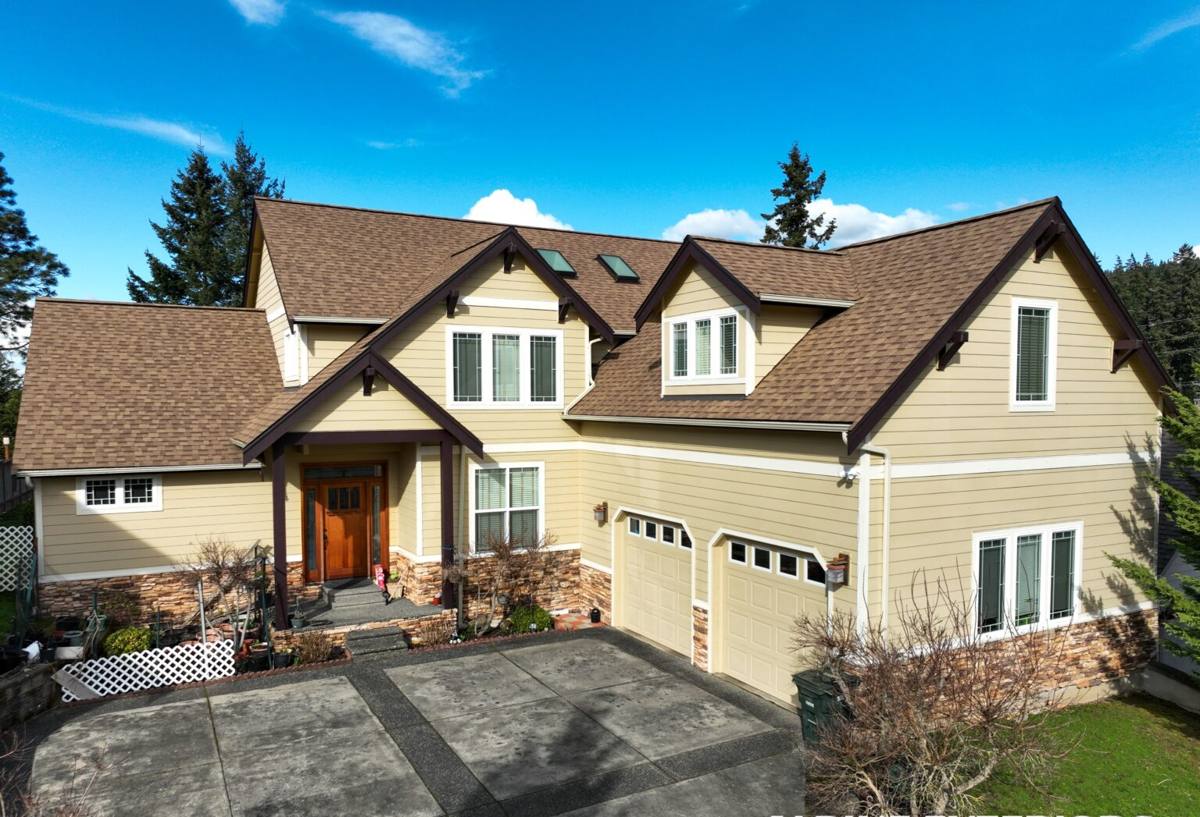
What "Energy-Efficient" Actually Means for a Home Here
Energy efficiency in a window comes down to a handful of measurable properties, and in a marine climate like ours, some matter more than others.
U-Factor: How Much Heat Escapes
U-factor measures how well a window resists heat loss — lower is better. Because Whatcom County winters are mild but long and gray, keeping the U-factor low matters less for surviving extreme cold (we rarely see it) and more for cutting the steady, months-long heat loss that drives up heating bills through a wet, overcast winter.
Solar Heat Gain Coefficient (SHGC)
SHGC measures how much solar heat a window lets in. Bellingham doesn't get the brutal summer sun that inland Washington does, so we're rarely fighting overheating. That means SHGC is a secondary consideration here compared to hotter, sunnier climates — we're not typically chasing the lowest possible number the way a contractor in Spokane or Yakima might.
Condensation Resistance
This is the property that gets overlooked most often, and it's arguably the most important one for this area. High outdoor humidity plus indoor heating creates real potential for condensation on glass and, worse, inside the wall assembly if a window isn't sealed and insulated correctly. A window with poor condensation resistance in a Puget-area home can quietly feed moisture into framing for years before anyone notices a problem.
Washington's Energy Code
Washington State's energy code sets minimum performance requirements for replacement windows, and those minimums have gotten stricter over the years. Any legitimate window installer working in Bellingham should be replacing you into code-compliant glass as a baseline, not an upsell.
Window Types We Recommend for This Exposure
There's no single "best" window material — there's a best fit for your home, your budget, and the punishment this climate delivers. Here's how the common options stack up specifically for salt-air, high-rain conditions.
| Frame Material | Strengths in This Climate | Trade-Offs |
|---|---|---|
| Vinyl | Won't rot, resists salt corrosion, no repainting, good value | Can expand/contract with temperature swings; quality varies a lot by manufacturer |
| Fiberglass | Very stable dimensionally, excellent moisture resistance, strong long-term durability | Higher upfront cost than vinyl |
| Wood-Clad | Classic look, good insulating properties, works well on older or historic-style homes | Cladding seams and interior wood need diligent maintenance to keep water out long-term |
| Aluminum | Strong and slim sightlines | Poor insulator and prone to corrosion in salt air unless specifically treated — we don't recommend it for most homes this close to the water |
Our standard for what we install comes down to how a product handles sustained moisture exposure and salt air over a 20-plus-year lifespan, not just how it performs on a spec sheet in a showroom. We'll walk you through what fits your home rather than pushing one material for every job.
Installation Is Where Energy Efficiency Is Actually Won or Lost
Here's something worth understanding before you hire anyone: the window unit itself is often not where energy-efficient replacements fail. It's the installation. A top-tier window installed with sloppy flashing or an incomplete air seal will underperform a mid-grade window installed correctly — every time, and especially in a climate that tests every seam with wind-driven rain for months at a stretch.
What Correct Installation Actually Involves
- Removing old windows without damaging the surrounding framing, siding, or existing weather barrier
- Inspecting the rough opening for hidden water damage or rot before anything new goes in
- Installing flashing in the correct shingle-lap order so water is always directed outward and down, never trapped
- Using a continuous, compatible sealant system between the window flange and the wall's weather-resistive barrier — not just a bead of caulk around the trim
- Shimming and squaring the unit so the sash operates smoothly and seals evenly for the life of the window
- Insulating the gap between the frame and rough opening without overpacking it, which can bow the frame and cause it to bind
- Sealing and finishing the interior properly so conditioned air isn't leaking out around the trim
Skip or rush any one of those steps and you can end up with a window that looks fine, tests fine at install, and still lets water into your wall two winters later — a much more expensive problem than the window itself.
Our Process for a Puget-Area Window Replacement
We keep the process straightforward and transparent from the first visit to the final walkthrough.
1. On-Site Assessment
We look at your existing windows, note any signs of water intrusion, rot, or drafts, and talk through what's actually driving the discomfort or energy loss you're noticing.
2. Measurement and Product Selection
Every opening gets measured individually — homes settle and openings are rarely perfectly uniform, especially in older Whatcom County housing stock. We help you choose materials and glass packages that fit your home's exposure and your budget.
3. Removal and Opening Inspection
Old windows come out carefully, and we check the framing underneath for any hidden moisture damage before installing anything new. This step matters more here than almost anywhere else — it's often the first real look anyone's had at that framing in decades.
4. Installation and Weatherproofing
New units go in plumb, level, and square, with flashing and sealant applied in the sequence that actually sheds water rather than trapping it.
5. Interior and Exterior Finish Work
Trim, caulking, and touch-up work are finished cleanly on both sides of the wall.
6. Final Walkthrough
We test operation on every window, confirm seals, and walk the job with you before we consider it done.
Signs Your Current Windows Are Costing You Money
Not every window problem is obvious from across the room. Here's what we tell Puget-area homeowners to check for:
- Visible fog or moisture between the panes of a double-pane window — a sign the seal has failed
- Cold air noticeable near the window even when it's fully closed and latched
- Condensation forming on the inside of the glass regularly through fall and winter
- Soft or discolored wood trim or sill, especially on walls that face prevailing wind and rain
- Windows that are difficult to open, close, or latch — a sign the frame has shifted or swollen
- Visible daylight or a draft you can feel by hand around the frame edges
- Paint or finish peeling on interior trim near the window, often an early moisture signal
Cost Factors for Window Replacement in This Area
Costs vary based on several factors specific to a project, and we'll always give you a firm number after seeing your home rather than a rough guess over the phone. In general, the biggest cost drivers are:
| Factor | Why It Affects Cost |
|---|---|
| Frame material | Vinyl, fiberglass, and wood-clad have different material costs and labor requirements |
| Number and size of openings | More windows and larger openings mean more material and labor time |
| Condition of the rough opening | Hidden rot or water damage found during removal adds repair work before a new window can go in |
| Glass package | Upgraded low-E coatings or gas fills add cost but also improve long-term performance |
| Access and site conditions | Second-story openings, tight side yards, or difficult access can add labor time |
| Trim and finish scope | Full trim replacement costs more than reusing sound existing trim |
We're upfront that the cheapest window on the market and the cheapest installation aren't a bargain if either one lets water in behind your siding. We price jobs to reflect the work it actually takes to do it right in this climate — not to win a race to the lowest number.
Maintenance in a Salt-Air, High-Moisture Climate
Even the best window benefits from a little seasonal attention here. Keep weep holes and drainage tracks clear of debris, moss, and algae buildup so water can actually exit the frame instead of pooling. Rinse salt residue off exterior hardware and frames periodically if your home is exposed to onshore wind. Check exterior caulk lines once a year, particularly after a hard winter, since UV and constant moisture cycling break down sealants faster here than in drier regions. Small maintenance now is a lot cheaper than repair work later.
Why It Matters to Hire a Crew That Already Works in Puget
Every neighborhood in Bellingham and greater Whatcom County has its own exposure profile depending on elevation, tree cover, and how directly it faces prevailing wind and water. A crew that regularly works in the Puget area already understands how that exposure behaves on real houses — where water tends to find its way in, which details need extra attention, and what a properly weatherproofed installation looks like on the specific building styles common to this part of Bellingham. That local, repeated experience is hard to replace with a generic installation approach brought in from a drier part of the state.
It also means straightforward accountability. A local crew is here after the job is done, through the next rainy season and the one after that, standing behind the work rather than being a name on an invoice from a company that isn't local to this coastline.
If you're noticing drafts, condensation, or aging windows in your Puget-area home, we're happy to take a look. Reach out for a free, no-pressure estimate using the form below — we'll assess your windows honestly and walk you through what your home actually needs.