 Bellingham Exterior
 Roof Repair for Puget Homes Near Bellingham
Homes in the Puget area sit close enough to the water that the roof over your head is doing a different job than a roof twenty miles inland. Between salt-laden air off Puget Sound, long stretches of driving rain, and a moss season that can run most of the year in the shade, roofing materials here age on a different timeline than the manufacturer's warranty paperwork assumes. Roof repair in this part of Whatcom County isn't just patching a leak — it's understanding why that specific spot failed first, and whether the rest of the roof is a few seasons behind it.
This page is about roof repair specifically — fixing what's failing on a roof that still has useful life left, not a full tear-off and replacement. Most of what we find on service calls in Puget falls into that category: a roof that's 10-20 years in, doing fine overall, but losing a battle in one or two specific areas.
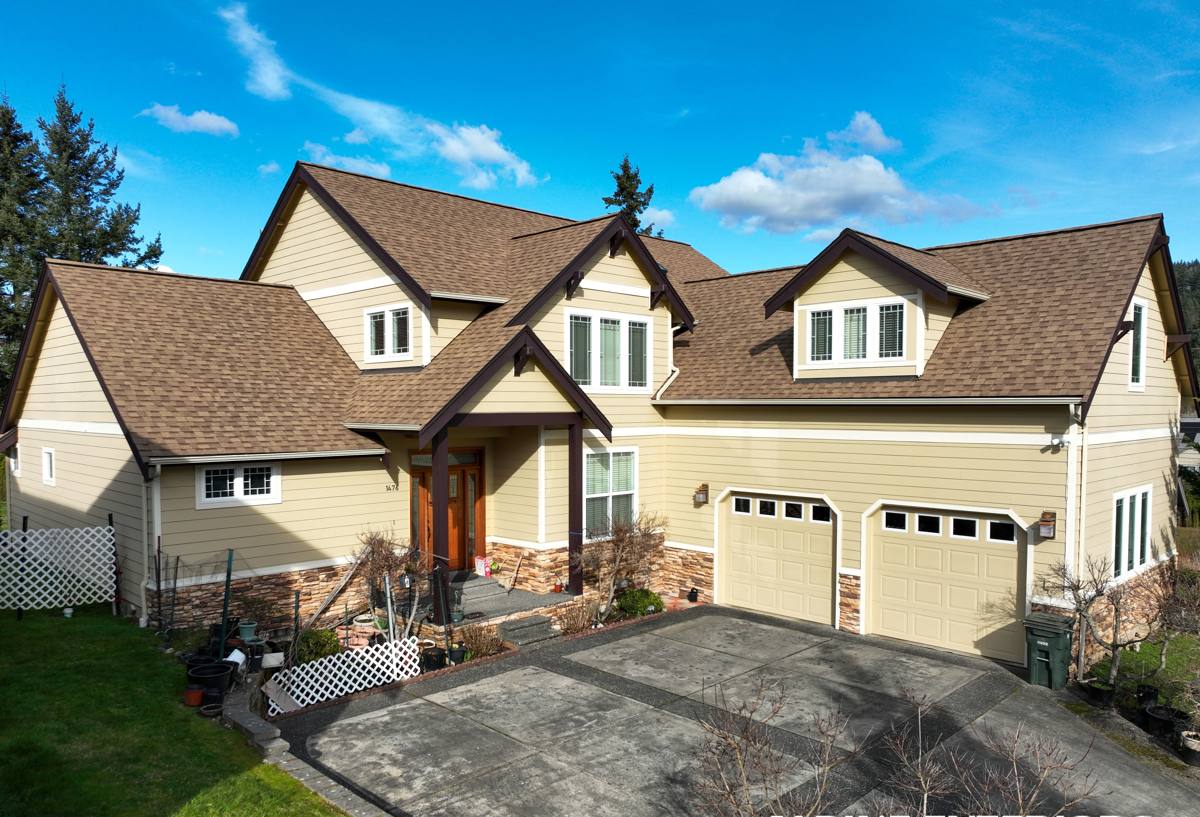
What the Local Climate Does to a Roof
Salt Air and Metal Fasteners
Proximity to Puget Sound means a steady, low-level exposure to salt-carrying air, especially on roofs that face open water or sit up on higher ground where wind carries it further inland. Salt air accelerates corrosion on exposed metal — nail heads, flashing seams, gutter screws, and any steel components in older roofing systems. On composition shingle roofs, this usually shows up first as rust streaking around nail pops or flashing edges. On metal roofing, it can mean coating breakdown at cut edges and fastener points well before the field of the panel shows any wear.
Driving Rain and Wind-Driven Water
Bellingham gets plenty of straight-down rain, but the repair calls we see more often trace back to wind-driven rain — water pushed sideways under laps, around chimneys, and up under shingle edges during a storm rather than simply running off. This is a different failure mode than a slow drip from age, and it means repairs have to account for wind direction and exposure, not just patch the visible gap.
Moss, Shade, and Organic Buildup
Puget's tree cover and marine humidity are a near-perfect combination for moss and algae growth on north-facing slopes and shaded valleys. Moss doesn't just look bad — it holds moisture against the roofing material long after the rest of the roof has dried out, lifts shingle edges as it grows, and works its rhizoids into the granule layer. Left alone through a few wet seasons, a moss mat that started as a cosmetic issue becomes the reason shingles are failing underneath it.
Signs a Puget-Area Roof Needs Repair, Not Just Watching
- Granules collecting in gutters or at downspout outlets — a sign the shingle surface is wearing thin
- Dark streaking or thick moss growth concentrated on shaded or north-facing slopes
- Rust staining around flashing, vent boots, or exposed fasteners
- Curling, cupping, or lifted shingle edges, especially near roof valleys and eaves
- Soft spots or discoloration on interior ceilings after a heavy wind-driven rain event
- Daylight visible through the attic decking, or damp insulation near the roofline
- Flashing that's separated, caulked-over repeatedly, or visibly corroded at chimneys and skylights
- Gutters pulling away from the fascia or overflowing during normal rain, not just downpours
Any one of these on its own might just need monitoring. Two or three together, especially combined with the age of the roof, usually means it's worth a proper look before the next wet season.
What a Correct Roof Repair Actually Involves
A roof repair done right starts with figuring out the actual water path, not just the spot where the stain showed up inside. Water travels — it can enter at a flashing seam three feet from where it eventually drips into a room. Repairing at the visible symptom instead of the real entry point is the most common reason a "fixed" leak comes back the next storm.
Diagnosis Before Repair
This means getting on the roof (not just looking from the ground), checking flashing at every penetration — chimneys, vents, skylights, valleys — and checking the attic side where accessible, since water staining on rafters and decking tells you more about the true path than the ceiling drywall does.
Common Repair Categories We Handle
| Repair Type | Typical Cause in Puget | What's Involved |
|---|---|---|
| Flashing repair/replacement | Corrosion from salt air, thermal movement, failed sealant | Remove and reseat or replace flashing, re-integrate with underlying underlayment |
| Shingle replacement (localized) | Wind lift, granule loss, moss damage | Match existing shingle profile and color as closely as possible, weave into surrounding courses |
| Valley repair | Wind-driven rain, debris damming, moss buildup | Clear debris, inspect valley metal or membrane, reset or replace as needed |
| Vent boot replacement | UV and moisture breakdown of rubber collars | Replace boot, check surrounding shingles for secondary damage |
| Moss remediation | Shade, humidity, organic debris | Manual removal, treatment, and addressing the moisture source, not just a one-time clean |
| Gutter and edge repair | Fastener corrosion, sagging from debris weight | Re-secure or replace hangers, correct pitch, clear blockages |
Repair vs. Replacement: An Honest Read
Not every roof issue on a Puget home needs a full replacement, and we won't push one when a repair will genuinely hold. The decision usually comes down to a few honest questions:
- How much of the roof is affected? Isolated flashing or shingle damage is a repair. Widespread granule loss or multiple failed sections across different slopes points toward replacement.
- What's the age relative to material life? A well-maintained roof at 12-15 years with an isolated problem is usually still worth repairing. The same problem at 22-25 years is a different conversation.
- Is the decking still sound? If water intrusion has been going on long enough to soften or rot the roof deck underneath, that section needs more than a surface patch regardless of shingle age.
- Is this a recurring spot? A third repair to the same valley or flashing point in a few years usually means the underlying detail needs to be rebuilt properly rather than patched again.
Our Process for Puget Roof Repairs
1. On-Roof Inspection
We get up on the roof and into the attic where it's accessible, tracing the actual water path rather than guessing from ground level or from where the ceiling stain appears.
2. Straight Assessment
You get a plain explanation of what's actually wrong, what caused it, and whether it's a repair or something bigger — including the honest cases where a repair now buys a few good years versus where it's a stopgap on a roof that's near the end of its service life.
3. Written Estimate
Scope and cost in writing before any work starts. No surprise add-ons once we're already on the roof.
4. The Repair Itself
Matched materials where possible, proper integration with existing underlayment and flashing rather than surface-only caulk fixes, and attention to the details that matter most in this climate — fastener choice for salt exposure, flashing laps oriented for wind-driven rain, and moss-prone areas addressed at the moisture source.
5. Cleanup and Walkthrough
Debris and old material cleared from gutters and the ground, and a walkthrough of what was done and why, so you know exactly what's now under warranty and what to keep an eye on.
Why It Matters to Hire a Crew That Works This Area
A roofing crew that mostly works drier, inland areas will diagnose a Puget roof the same way they'd diagnose any other roof — and miss the details that matter here. Knowing which slopes take the worst of the wind-driven rain off the Sound, recognizing early-stage moss versus a mat that's already lifted shingles, and choosing fasteners and flashing details that hold up to salt exposure isn't generic roofing knowledge. It's specific to working this stretch of Whatcom County season after season. A crew that's repaired roofs on your street type before will spot the failure pattern faster and fix it in a way that actually accounts for what your roof is up against.
Maintenance That Extends the Life of a Repair
A good repair is only as good as the maintenance around it. For Puget-area roofs, that means:
| Task | Frequency | Why It Matters Here |
|---|---|---|
| Gutter and downspout clearing | 2x per year, more under heavy tree cover | Blocked gutters back water up under eaves during driving rain |
| Moss check on shaded slopes | Annually, before wet season | Catching moss early avoids granule and shingle damage |
| Flashing and fastener visual check | Annually | Salt air corrosion is gradual and easy to miss until it fails |
| Attic moisture check | Annually | Early warning for leaks before ceiling staining appears |
Get a Free, No-Pressure Estimate
If you're seeing moss buildup, a stubborn leak, or just want a straight opinion on whether a repair or something more is the right call for your Puget-area roof, we're glad to take a look. Estimates are free, there's no pressure to commit to anything on the spot, and you'll get a plain-English explanation of what we find either way.