 Bellingham Exterior
 Puget Homes Take a Different Kind of Beating
If you live in the Puget area outside Bellingham, your siding isn't just dealing with rain — it's dealing with rain that comes sideways off the Sound, salt-laden air that never fully lets up, and a moss season that can stretch for most of the year in shaded, north-facing spots. That combination wears exterior materials down in ways homeowners further inland rarely see. Wood fibers swell and split. Fasteners corrode. Caulk joints that looked fine three years ago start pulling away from trim. None of this is a defect in your house — it's just what Whatcom County weather does to siding over time, and it's why repair work here has to be done differently than a generic patch job.
We're not talking about cosmetic touch-ups. Correct siding repair in this area means understanding how moisture moves behind the cladding, not just what it looks like on the surface. A board that looks fine from the driveway can be soft, delaminating, or holding water against your sheathing. Our job on a repair call is to find that out before we ever pick up a caulk gun.
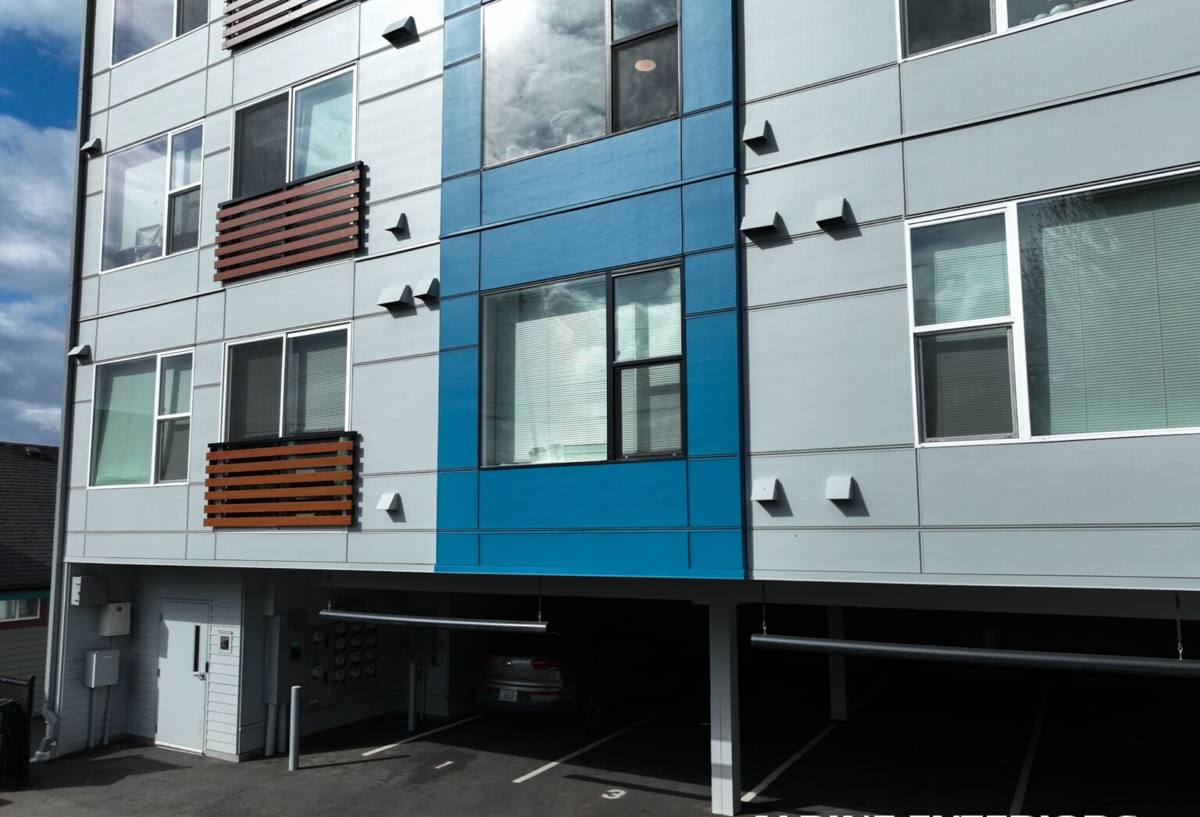
What "Correct" Repair Actually Means Here
A lot of siding repair in this climate is really moisture management wearing a carpenter's hat. The goal isn't just to make a damaged section look new again — it's to figure out why that section failed and make sure the fix doesn't just delay the same failure by a year or two. That means checking flashing, house wrap, and drainage paths behind the siding, not just replacing the visible board and calling it done.
Common Repair Issues We See in Puget-Area Homes
- Moisture-swollen or delaminating boards — especially on wood-based or engineered wood siding that's absorbed water at cut edges or panel seams
- Moss and algae staining that's progressed to actual material breakdown, not just a surface color problem
- Corroded or backed-out fasteners from salt air, letting boards work loose in wind-driven rain
- Failed caulking around windows, trim, and butt joints, which lets water track behind the cladding instead of shedding off it
- Impact damage from storm debris, falling branches, or landscaping equipment
- Rot at the bottom courses near grade, decks, or downspouts where water sits longest
Diagnosing the Damage Before We Touch a Board
Every repair visit starts with an inspection, not an estimate written off a photo. We're looking at more than the damaged spot itself — we're checking the boards around it, the flashing above windows and doors, the condition of the house wrap where it's exposed, and whether water has been getting in somewhere upstream of what you actually noticed. In a climate that drives rain sideways for months at a time, damage almost always shows up downstream of where the actual entry point is. Fixing only the visible symptom is how homeowners end up calling a contractor back out for the "same" repair eighteen months later.
Where we can, we probe soft-looking areas to check for hidden rot before quoting anything. It's a five-minute step that saves everyone a bad surprise mid-repair.
Our Repair Process, Step by Step
- Inspection and diagnosis — identify the full extent of the damage, not just the visible piece
- Check the water management layer — flashing, house wrap, and seams behind the siding get evaluated before anything is closed back up
- Remove compromised material — cleanly, without over-damaging adjacent boards that are still sound
- Repair or replace the water barrier if it's compromised — this step gets skipped by rushed repairs more than any other, and it's the one that matters most long-term
- Install matched or appropriate replacement material, properly fastened and flashed for this climate
- Seal and finish — caulk joints, touch-up coating, and a final check that the repair sheds water the way the rest of the wall does
We don't consider a repair finished until the water management underneath it is sound. A patch that looks good but sits over a flashing gap is a repair that fails again — usually in a spot that's harder to access the second time.
Repair vs. Replace: How We Help You Decide
Not every damaged section needs to come off the whole wall, and not every repair is worth doing if the surrounding siding is near the end of its life. Here's roughly how we walk homeowners through that decision:
| Situation | Usually Repair | Usually Replace |
|---|---|---|
| Isolated impact damage on otherwise sound siding | Yes | No |
| Rot limited to a few boards near grade or a downspout | Yes | No |
| Widespread moisture damage across multiple wall sections | No | Yes |
| Original material is wood, LP-type engineered wood, or vinyl showing broad age-related failure | Sometimes short-term | Yes, long-term |
| Siding is under 10 years old and otherwise performing well | Yes | No |
| Recurring failures in the same area after a prior repair | No | Yes |
We'll always tell you honestly which category your home falls into. A repair we know won't hold isn't a favor to you — it's just a delay before a bigger bill.
Why the Patch Material Matters
One of the most common mistakes in siding repair — anywhere, not just here — is patching damaged sections with whatever material is on hand, regardless of what's already on the wall or how well that material actually holds up in this climate. We don't install vinyl, primed spruce, cedar, or engineered wood products like LP SmartSide as part of our repair or replacement work, and that standard applies whether we're doing a full re-side or patching a section of wall. Those materials each have real strengths, but in a salt-air, high-moisture environment like Puget, they're also the products most likely to bring you back to square one — wood and engineered wood are vulnerable to moisture-driven swelling and rot at cut edges, and vinyl can't be color-matched or repaired invisibly once it fades or cracks.
Where a repair calls for new material, we use James Hardie fiber cement — the same product line we install for full re-sides. It's non-combustible, engineered specifically for wet climates through Hardie's HZ10 product line, and finished with a factory-applied ColorPlus coating that resists moss growth and salt-air fading far better than field-painted wood or engineered wood siding. If your existing siding is Hardie, we can typically match it closely. If it isn't, we'll tell you plainly what a partial repair in a different material will and won't get you, and where a broader re-side with Hardie would actually solve the underlying problem instead of managing it.
What to Expect: Timeline, Access, and Cleanup
Most isolated repairs — a few damaged boards, a section of rotted trim, a failed flashing detail — are a one- to two-day job once material is on hand. Larger repairs involving multiple wall sections or hidden water damage take longer, mainly because we won't close up a wall until the water management layer underneath is actually sound. We'll walk you through access needs (ladders, scaffolding for taller sections) and set expectations on noise and yard access before we start. Cleanup includes removing old material, magnet-sweeping for stray fasteners, and leaving planting beds and walkways clear.
Signs Your Puget-Area Home Needs a Siding Repair Inspection
- Soft or spongy spots when you press on siding near the ground or below windows
- Visible gaps, cracks, or separation at board seams and corner trim
- Persistent moss or algae growth that hasn't responded to a simple wash
- Paint or coating that's bubbling, peeling, or chalking heavily on one side of the house
- Interior signs — musty smell, discoloration on interior walls near exterior corners
- Fasteners visibly rusted, backed out, or leaving streaks down the siding
- Any recent storm impact, even if the damage looks minor from the ground
If more than one or two of these apply, it's worth having someone look before winter's driving rain finds the gap for you.
Why a Crew That Already Works Puget Matters
Repair work rewards local experience more than almost any other exterior job. A crew that's already worked homes in this part of Whatcom County knows which wall orientations take the worst of the wind-driven rain, where moss tends to establish first, and how salt air behaves differently on a home a half-mile from the water versus one further inland. That's not something you learn from a general contracting background — it's learned by doing repair work on this specific coastline, season after season. It also means we're not guessing at what "normal wear" looks like here versus what's an actual failure worth fixing now.
If you're seeing early signs of trouble, or you've already got a section of siding you know needs attention, we're happy to take a look and give you a straight answer — repair, partial replacement, or full re-side — with no pressure either way. A free estimate is a good first step, and it costs you nothing to find out what your home actually needs.