 Bellingham Exterior
 Asphalt Shingle Roofing Built for Sehome's Climate
Sehome sits close enough to Bellingham Bay to catch salt-laden air off the water, and close enough to the surrounding hillside tree cover to stay shaded and damp for long stretches of the year. That combination is harder on a roof than either factor alone. Salt air accelerates corrosion on fasteners and metal flashing. Shade and tree cover slow down drying time after every rain, which is exactly what moss and algae need to take hold. A shingle roof in this neighborhood works harder than the same roof would twenty miles inland, and it needs to be installed and maintained with that in mind.
This page is specifically about asphalt shingle roofing for homes in Sehome — what the climate does to shingles here, what a correct installation looks like, and what ongoing care actually prevents versus what's just marketing. If you're comparing options or trying to understand why a quote looks the way it does, this should give you a straight answer.
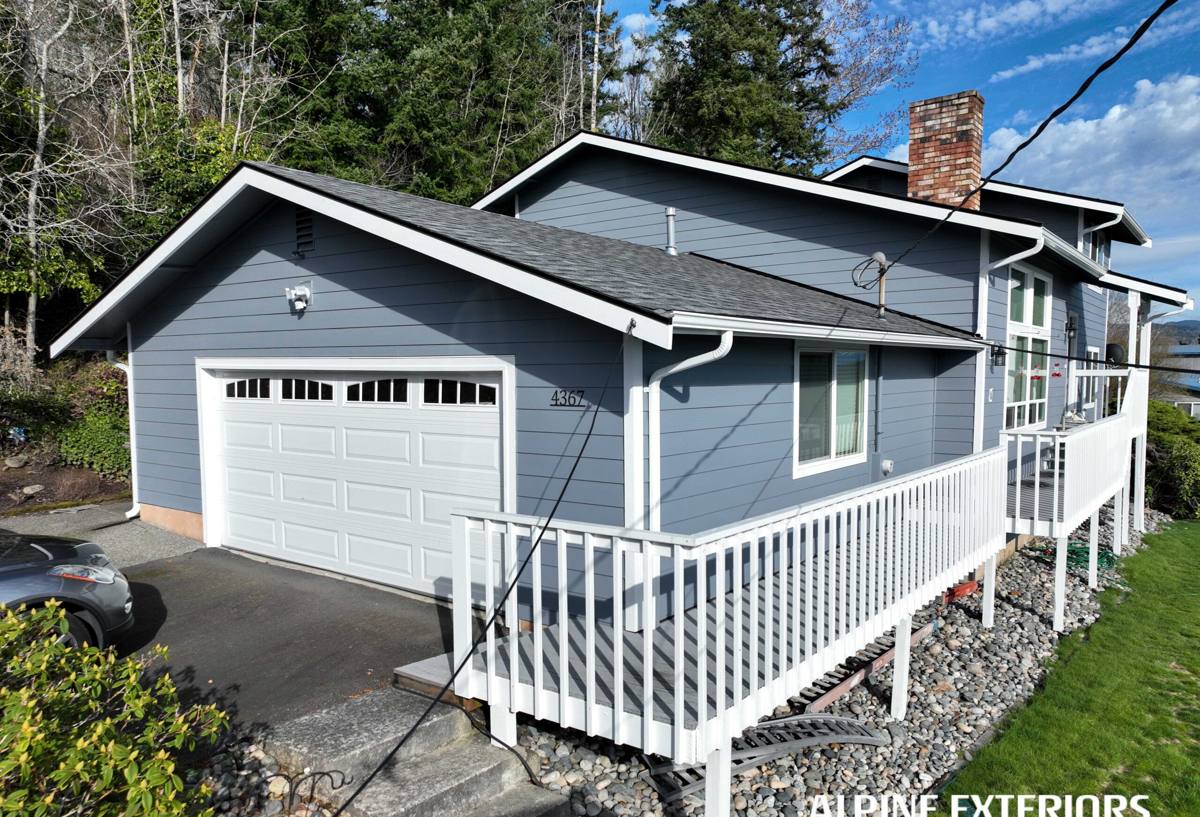
What Bellingham's Climate Does to Asphalt Shingles
Whatcom County doesn't get the heavy snow loads some inland regions deal with, but it makes up for that with sheer duration of moisture exposure. Roofs here spend far more days per year wet than dry, especially from fall through spring. A few specific effects show up consistently on asphalt shingle roofs in this area:
Moss and Algae Growth
Shaded, north-facing slopes and roof sections under overhanging trees stay damp longest. Moss doesn't just sit on the surface — its root structure works into the gaps between shingle tabs and granules, lifting edges over time and creating channels for water to get underneath. Dark streaking from algae is mostly cosmetic, but heavy moss growth is a structural concern if left unaddressed for years.
Granule Loss and UV Fatigue
Even under cloud cover, UV exposure over years breaks down the asphalt binder in shingles, and granules — the protective layer that shields the asphalt mat underneath — wear away faster on roofs that stay wet and then dry repeatedly. Once granule loss is significant, the shingle ages faster from that point forward.
Fastener and Flashing Corrosion
Proximity to the bay means a steady low level of salt in the air, which speeds up corrosion on exposed metal — nail heads, drip edge, step flashing, and vent boots. This is a slower process than moss growth, but it's often the reason a roof develops a leak at a valley or chimney years before the shingle field itself is worn out.
Driving Rain and Wind-Driven Water
Storms coming off the water can push rain sideways rather than straight down, which tests details that a dry-climate roof rarely has to deal with — flashing laps, underlayment overlaps, and how tightly the shingle courses are sealed at edges and penetrations.
Signs a Sehome Roof Needs Attention
Most asphalt shingle failures don't start with a dramatic leak — they start with small, visible signs that get ignored because the roof "still looks fine from the ground." Worth checking, especially after the wetter months:
- Moss or thick green/black growth concentrated on shaded slopes or near tree overhang
- Granules collecting in gutters or at the base of downspouts
- Curling, cupping, or lifted shingle edges, particularly on south and west exposures
- Dark streaking that doesn't wash off with normal rain
- Soft spots, sagging, or staining on interior ceilings below the attic
- Rust streaking around vent pipes, chimney flashing, or valleys
- Shingles missing or visibly out of alignment after a windstorm
Any one of these on its own isn't necessarily an emergency, but a roof showing two or three of them at once usually means it's time for an actual inspection rather than a guess from the driveway.
What a Correct Asphalt Shingle Installation Involves
A shingle roof is a system, not a single product. Skipping or under-building any layer shows up as a problem later, and in a climate like this one, "later" tends to arrive sooner than homeowners expect.
Deck Inspection and Repair
Before anything new goes down, the existing roof deck needs to be checked for soft spots, rot, or delamination — especially around valleys and any area that's had a slow leak. Installing new shingles over a compromised deck just hides the problem instead of fixing it.
Ice and Water Barrier at Vulnerable Points
Even in a climate with mild winters, a self-adhering waterproof membrane belongs at eaves, valleys, and around penetrations — the places most likely to see water back up or drive in sideways during a heavy storm.
Synthetic Underlayment Across the Field
A quality synthetic underlayment, correctly lapped, is the roof's backup layer if wind ever drives water past the shingles themselves. This matters more here than in drier regions given how often the roof deals with saturated conditions.
Proper Flashing at Every Transition
Step flashing at walls, apron flashing at eaves, and counterflashing at chimneys all need to be installed in the correct sequence with the underlayment and shingle courses — not caulked on afterward as a shortcut. Corrosion-resistant flashing matters more this close to the bay.
Ventilation
Balanced intake and exhaust ventilation keeps the attic temperature and moisture level in check, which protects the shingles from underneath and helps prevent condensation issues that show up as mystery staining or mold on the deck.
Nailing Pattern and Fastener Choice
Manufacturer-specified nailing patterns aren't a formality — under-nailing or high-nailing a shingle is one of the most common causes of premature wind damage and voided warranties. Corrosion-resistant fasteners are worth the small added cost this close to salt air.
Choosing a Shingle for This Climate
Not every asphalt shingle product is built the same, and in a moss-prone, salt-exposed neighborhood like Sehome, a few features matter more than they would elsewhere.
| Feature | Why It Matters Here |
|---|---|
| Algae-resistant granules (copper or zinc infused) | Slows the black streaking and algae growth common on shaded, damp roofs |
| Architectural (laminate) profile vs. 3-tab | Thicker, heavier shingles resist wind uplift better and generally shed water more effectively |
| High wind rating | Matters for exposed roof planes that catch wind off the water |
| Manufacturer algae warranty | Confirms the granule treatment is rated to actually reduce algae growth, not just marketed as such |
| Corrosion-resistant accessory metal | Pairs with the shingle choice to protect the weak points — valleys, flashing, fasteners |
We don't push one specific brand as the only acceptable option — several manufacturers make a solid product in the architectural class with algae-resistant granules. What matters more than the brand name is whether the specific product line has a real algae warranty, a wind rating that fits the site, and a track record we've actually installed and followed up on in this region.
Our Process, Start to Finish
- On-site inspection. We look at the roof from the ground and, where safe and useful, up close — checking shingle condition, moss coverage, flashing, ventilation, and any interior signs of past leaks.
- Honest scope and estimate. You get a clear breakdown of what actually needs to happen — full replacement, partial repair, or maintenance — and why, in plain language.
- Material selection. We walk through shingle options with the climate factors above in mind, matched to your budget and the look of the home.
- Deck prep and tear-off. Old material comes off, the deck gets inspected and repaired as needed, and any rotted sections are replaced before anything new goes down.
- System installation. Ice and water barrier, underlayment, flashing, ventilation, and shingles installed in the correct sequence and to manufacturer specification.
- Site cleanup. Magnetic sweep for stray fasteners, debris removal, and a final walkthrough with you before we consider the job done.
Maintenance That Actually Matters in Sehome
Given the tree cover and moisture in this neighborhood, a shingle roof here benefits from a bit more attention than one in a drier, more open location. A few things worth doing on a regular basis:
- Keep gutters and downspouts clear so water isn't sitting against the roof edge
- Trim back branches that overhang the roof to reduce shade, debris, and physical abrasion on shingles
- Have moss growth treated and removed properly rather than pressure-washed, which can strip granules and shorten shingle life
- Schedule a roof check after major windstorms, not just on a fixed annual schedule
- Address small flashing or granule issues early — they're inexpensive to fix now and expensive to ignore
What Affects the Cost of a Sehome Roofing Project
| Factor | Why It Changes the Price |
|---|---|
| Roof size and number of planes | More area and more valleys/hips mean more material and labor |
| Existing deck condition | Rot or soft decking found during tear-off adds repair work not always visible beforehand |
| Pitch and access | Steeper roofs and limited access (tight lots, tall trees) slow the job and affect safety setup |
| Shingle tier chosen | Basic 3-tab, mid-grade architectural, and premium algae-resistant lines all price differently |
| Number of layers being removed | Tearing off multiple old layers takes more time and disposal cost than a single-layer tear-off |
| Ventilation or flashing upgrades needed | Bringing an older roof's ventilation or flashing up to current standards adds scope but reduces future problems |
We'd rather walk your roof and give you real numbers than throw out a broad range that doesn't mean much. Most homeowners want to know what's driving the cost, and we'll break that down clearly in the estimate itself.
Why It Matters That We Already Work in This Neighborhood
A crew that regularly works Sehome and the surrounding Bellingham neighborhoods already knows which roof orientations hold moss longest, which older homes tend to have undersized ventilation, and how the salt air off the bay tends to age flashing and fasteners faster than the shingles themselves. That's not a sales pitch — it's the difference between a generic install and one that's actually sized to how this specific area weathers a roof over time.
We're a Bellingham-based crew serving Whatcom County, and Sehome is part of our regular service area, not an occasional stop. That means faster response if something needs a look after a storm, and a realistic read on your roof's condition from people who've seen how the local climate affects roofs like yours.
If your Sehome roof is showing moss, wear, or you're just due for an honest look, we're happy to come out for a free, no-pressure estimate — no obligation, just a clear picture of where things stand and what your options are. The form below is the easiest way to get started.