 Bellingham Exterior
 Sehome's Climate Is Harder on Siding Than It Looks
Sehome sits close enough to Bellingham Bay to catch salt-laden air off the water, and far enough into the hills to hold onto shade and moisture longer than the flatter parts of town. That combination is tough on exterior materials. Salt air accelerates corrosion on fasteners and trim, driving rain off the Sound finds every gap in a poorly flashed wall, and the long, mild, wet stretch that runs from fall through spring gives moss and algae months to establish themselves on anything that stays damp. None of this is unique to one street or one block — it's the general character of siding a home in Whatcom County, and it's why the products and installation details that work fine in a drier climate often fall short here.
Homes in Sehome tend to sit on wooded or hillside lots with real tree canopy, which is part of what makes the neighborhood pleasant to live in — and part of what keeps north-facing walls and shaded corners damp well after a storm has passed. Siding on those walls needs to shed water fast and dry out fast, or it becomes a long-term moss and mildew problem rather than a one-season nuisance.
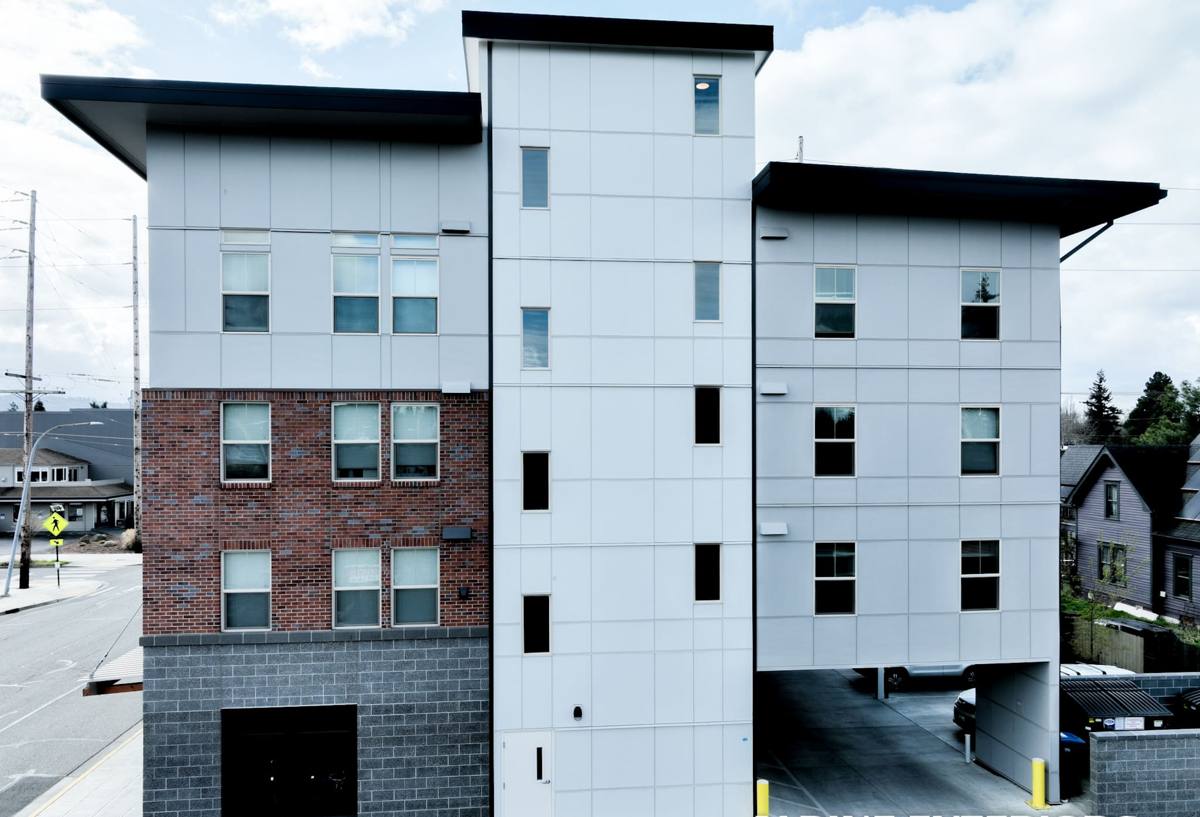
What "Correct" Fiber Cement Installation Actually Involves
Fiber cement siding is only as good as the wall assembly behind it. We've seen plenty of siding jobs — not always ours — where the board itself was fine but the installation shortcuts created problems that showed up two or three winters later. For a Sehome home, the details that matter most are:
Drainage plane and rainscreen gap
A weather-resistant barrier goes on the sheathing first, lapped correctly from bottom to top so water always drains down and out, never into a seam. Behind the siding itself, a furring strip or engineered rainscreen product creates a small air gap so any moisture that does get behind the boards can drain and the wall can dry out instead of staying wet against the siding's back side.
Flashing at every penetration
Windows, doors, hose bibs, light fixtures, and vents all break the drainage plane. Each one needs proper flashing integrated with the water-resistive barrier — not just a bead of caulk covering a gap. Caulk fails; correctly lapped flashing doesn't depend on staying intact for the life of the siding.
Fastening to manufacturer spec
James Hardie publishes specific nailing patterns, fastener types, and minimum embedment depths for each product line. Over- or under-driven nails, wrong fastener spacing, or fastening into sheathing instead of framing are common causes of boards cracking, popping, or working loose over time — especially in a climate with this much seasonal wood movement from moisture.
Gaps, caulking, and paint lines
Manufacturer-specified gaps at trim and butt joints, backed with the right sealant, let the assembly handle normal expansion and contraction without cracking the paint film or opening a path for water.
Every one of these steps is invisible once the job is finished. That's exactly why the crew doing the installation matters more than the brand name on the product — a great board installed wrong will still fail early.
Why We Install Only James Hardie
We get asked regularly why we don't offer vinyl, LP SmartSide, or other fiber cement brands as cheaper alternatives. The honest answer is that we standardized on James Hardie after weighing how each option performs over a 20-30 year horizon in exactly this kind of coastal, wet, moss-prone climate — not because other products are unusable everywhere, but because the trade-offs didn't hold up for the homes we install on.
| Material | Where it struggles here | Why we passed on it |
|---|---|---|
| Vinyl siding | Can warp or buckle with temperature swings; seams and panels give wind-driven rain more entry points | Lower upfront cost, but shorter realistic service life and limited repair options once a panel is damaged |
| LP SmartSide (engineered wood) | Wood-based substrate is more vulnerable to sustained moisture exposure than fiber cement | Performs well when maintained perfectly, but our region's wet season leaves less margin for maintenance lapses |
| Other fiber cement brands | Formulation and factory finish quality vary by manufacturer | James Hardie's HardieZone system and ColorPlus finish are engineered specifically for climates like ours |
| James Hardie fiber cement | Requires correct installation to reach its full lifespan | Non-combustible, dimensionally stable, and backed by a strong transferable warranty when installed to spec |
James Hardie's HZ10 product line is engineered for wetter, more humid climates — which describes Whatcom County well — and its ColorPlus factory-applied finish resists fading and holds up to moisture better than field-applied paint on other substrates. That's the product we stand behind, and it's the only one we put our name on.
What This Means for Sehome's Housing Stock
Sehome has a mix of older homes with mature landscaping and newer construction filled in among them. Older homes in this kind of neighborhood often carry layers of past siding repairs, aging trim, or a water-resistive barrier that's decades out of date — all of which need to be addressed during a re-side, not just covered over. Homes tucked under heavier tree cover deal with more shade, more standing moisture, and more moss pressure on north and west-facing walls specifically. Newer homes generally have better underlying wall assemblies but still benefit from the same rainscreen and flashing discipline, since even a well-built wall needs the siding installed correctly to perform.
A crew that regularly works this neighborhood learns which walls on which lot orientations take the worst of the weather, and plans the drainage details and moss-resistant practices accordingly rather than applying a one-size-fits-all approach.
Our Process, Start to Finish
- On-site assessment — We walk the exterior, check existing siding and trim condition, look at drainage patterns around the foundation, and note any water staining, soft spots, or moss buildup that points to an underlying issue.
- Scope and estimate — You get a written estimate covering material, tear-off (if needed), water-resistive barrier, flashing details, and the specific James Hardie product and color chosen.
- Prep and tear-off — Old siding comes off, sheathing is inspected and repaired where needed, and any rot or moisture damage is addressed before anything new goes up — covering a damaged wall never solves the problem underneath.
- Weather barrier and rainscreen installation — The drainage plane and furring or rainscreen system go on correctly lapped and fastened.
- Flashing at every penetration — Windows, doors, and fixtures get flashed before the siding closes in around them.
- Hardie siding installation — Installed to manufacturer fastening and gapping specifications.
- Trim, caulking, and touch-up — Final detailing, including ColorPlus touch-up where any field cutting exposed raw edges.
- Final walkthrough — We go over the finished job with you before calling it complete.
Living With Fiber Cement Through a Long Moss Season
Even a correctly installed wall benefits from basic upkeep in this climate. Fiber cement itself doesn't rot or feed moss the way wood-based siding can, but moss and algae can still form a film on the surface, especially on shaded walls under tree cover. A soft wash once a year or two — never a high-pressure blast that can drive water behind boards or strip the ColorPlus finish — keeps growth from taking hold. Keeping gutters clear and trimming back vegetation that holds moisture against a wall goes a long way toward protecting the investment, whether the siding is ours or anyone else's.
Signs your current siding may already be past its useful life
- Persistent moss or dark streaking that returns within weeks of cleaning
- Soft or spongy spots when you press on the siding, especially near the bottom courses
- Visible gaps, cracked caulk lines, or warped panels around windows and doors
- Paint that's peeling or bubbling rather than just fading
- Interior signs like musty smells or discoloration on walls that back up to exterior siding
What Drives the Cost of a Sehome Siding Project
| Factor | Why it matters here |
|---|---|
| Tear-off vs. new construction | Removing and disposing of old siding, plus repairing any hidden sheathing damage, adds labor and material cost |
| Wall complexity | Homes with more corners, dormers, or multiple stories take longer to flash and fit correctly |
| Access and lot terrain | Sloped or wooded lots common in the neighborhood can require more staging and care around landscaping |
| Product line and profile | Lap siding, board-and-batten, and shingle-style Hardie profiles carry different material and labor costs |
| Trim and detail work | Window and door trim, fascia, and soffit work are often bundled into a full exterior project |
We give firm, itemized estimates after seeing the home in person — broad ranges without an on-site look tend to be misleading in either direction.
Choosing a Contractor for This Kind of Work
- Ask whether they install a rainscreen or drainage gap behind the siding, not just a weather barrier alone
- Ask which fastening pattern they follow and whether it matches James Hardie's published specs for the product line
- Ask how they handle flashing at windows, doors, and penetrations specifically
- Confirm they're a factory-trained or certified installer for the brand they're recommending
- Ask how the warranty works if you sell the home — a transferable warranty protects resale value
- Get references or examples of similar homes they've sided in this climate, not just photos from a catalog
If you're weighing a siding replacement or a repair on a Sehome home, we're happy to take a look and walk you through what your walls actually need — no pressure, no obligation. Use the form below to request a free estimate.