 Bellingham Exterior
 Why Sehome Homes Take a Beating From the Weather
Sehome sits close enough to Bellingham Bay to catch salt-laden air on windy days, and like the rest of Whatcom County, it gets months of steady, driving rain every year. Add a shade-heavy tree canopy over parts of the neighborhood and a moss season that can run from fall through spring, and you've got a combination that's genuinely hard on exterior building materials. Siding here isn't just cosmetic — it's the first line of defense against moisture intrusion, and the wrong product or a sloppy install shows its weaknesses fast.
Salt Air and Coastal Exposure
Bellingham isn't a heavy salt-spray coastal town the way some Pacific coast communities are, but proximity to the bay still means airborne salt and moisture reach homes throughout Sehome, especially on exposed elevations. Over years, that combination accelerates corrosion on fasteners and hardware, and it degrades paint finishes that aren't formulated to handle it. Siding with a factory-applied, baked-on finish holds up far better here than field-painted materials that rely on a homeowner's repaint schedule to stay protected.
Driving Rain and Moisture Management
Whatcom County's rain doesn't just fall straight down — wind-driven storms push water sideways into wall assemblies, testing every seam, lap, and penetration in a siding system. If water gets behind the cladding and doesn't have a way to drain and dry, you end up with rot in the sheathing and framing long before the siding itself looks like a problem. This is where installation detail matters as much as the product choice.
Moss, Mildew, and the Shade Factor
Mature trees are part of what makes Sehome a pleasant place to live, but shaded, damp siding is exactly where moss, algae, and mildew take hold. Materials that absorb moisture stay damp longer and give organic growth more time to establish. Siding that resists moisture absorption and sheds water efficiently simply has less to work with.
Why James Hardie Fiber Cement Fits This Climate
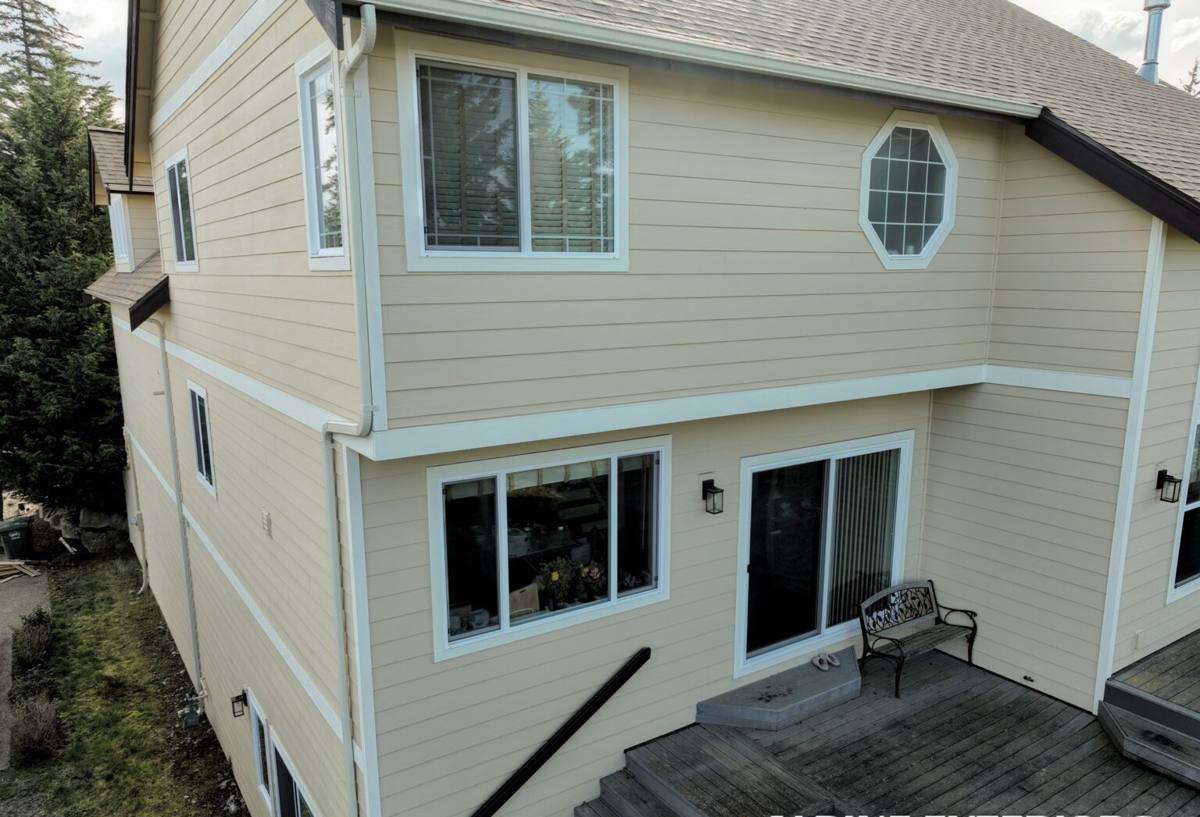
James Hardie siding is a fiber cement product engineered from cement, sand, and cellulose fibers, then finished at the factory rather than painted on site. That construction gives it real advantages in a climate like Bellingham's: it doesn't swell, rot, or delaminate the way wood-based products can, and it's non-combustible, which matters given the wildfire smoke seasons the Pacific Northwest has seen in recent years.
Climate-Engineered HZ Product Lines
James Hardie makes region-specific versions of its siding, engineered for the moisture and temperature patterns of different parts of the country. The HZ5 line, built for the wetter, cooler climate zones that include Western Washington, is formulated to perform against exactly the freeze-thaw and moisture cycling that Whatcom County sees. That's a meaningful distinction from a generic siding product — it's been engineered for conditions like the ones Sehome homes actually face.
A Finish That Doesn't Depend on Repainting
ColorPlus Technology, Hardie's factory finish system, bakes color onto the board through multiple coats under controlled conditions, producing a finish that's more consistent and more fade- and moisture-resistant than field-applied paint. In a climate where exterior paint jobs take a beating from year-round rain, that's a real maintenance advantage, not just a marketing point.
James Hardie Product Lines: What's Actually Available
Hardie makes several distinct product lines, and picking the right one for a given wall, elevation, or architectural style is part of doing the job correctly. Here's a general comparison of the lines we most commonly install:
| Product | Typical Use | Look |
|---|---|---|
| HardiePlank lap siding | Most exterior walls | Traditional horizontal lap, smooth or woodgrain texture |
| HardiePanel vertical siding | Accent walls, gables, modern designs | Clean vertical lines, often paired with battens |
| HardieShingle siding | Accent areas, Craftsman-style detailing | Staggered or straight-edge shingle profile |
| HardieTrim boards | Corners, window and door surrounds, fascia | Crisp, paintable trim that resists moisture better than wood |
Color selection matters too. ColorPlus finishes come in a curated palette designed to hold up outdoors, and Hardie also offers primed boards for homeowners who want a custom paint color — though we generally steer people toward ColorPlus for the durability advantage in this climate.
What a Correct James Hardie Installation Actually Involves
The siding itself is only part of the equation. Most siding failures we see on older homes trace back to installation shortcuts, not the material. A correct James Hardie job includes several details that are easy to skip and expensive to fix later.
Water-Resistive Barrier and Drainage Plane
Behind the siding, a properly lapped weather-resistive barrier and, in many cases, a rain screen or furring strategy give bulk water a way to drain and the wall assembly a way to dry. Skipping or shortcutting this layer is one of the most common ways moisture problems start, regardless of what siding product sits on top.
Fastening and Clearances
James Hardie publishes detailed installation specifications covering fastener type, spacing, and penetration depth, as well as minimum clearances from grade, roof lines, decks, and other siding-to-material transitions. Those clearances exist specifically to keep splash-back and standing moisture away from the bottom edge of the siding — a detail that matters more in a wet climate than a dry one.
Flashing, Caulking, and Penetrations
Every window, door, vent, and utility penetration is a place water can find its way behind the siding if it's not flashed and sealed correctly. Butt joints, corners, and trim intersections need the right sealant and technique — not just caulk smeared over a gap. This is the kind of detail that separates a siding job that lasts decades from one that starts showing problems in five years.
How Our Process Works for Sehome Homeowners
We keep the process straightforward and give homeowners a clear picture of what's happening at each stage:
- On-site inspection of your current siding, trim, and any visible moisture or rot issues
- Assessment of wall assembly and drainage needs specific to your home's exposure and shade conditions
- A written estimate outlining product lines, color options, and scope of work
- Removal of old siding and inspection of sheathing, with repairs addressed before anything new goes up
- Installation of water-resistive barrier, flashing, and James Hardie siding to manufacturer specification
- Final walkthrough so you understand what was done and how to maintain it
Because we install exclusively in this climate and region, we're familiar with how Whatcom County's rain and moss patterns actually behave on a wall over time — not just what a spec sheet says in theory.
Signs Your Sehome Home's Siding Needs Attention
Some warning signs are easy to spot from the ground; others take a closer look. If you notice any of the following, it's worth having your siding evaluated before small issues become structural ones:
- Soft or spongy spots when you press on the siding, especially near the bottom courses
- Persistent moss or dark streaking that comes back shortly after cleaning
- Peeling, bubbling, or chalky paint on wood or composite siding
- Visible gaps at trim joints, corners, or window and door surrounds
- Warping, cupping, or boards that no longer sit flat against the wall
- Interior signs like musty smells or discoloration on walls that back up to exterior siding
Cost Factors for a James Hardie Siding Project
Every home is different, and we don't publish blanket per-square-foot pricing because the real cost drivers vary house to house. In general terms, these are the factors that move the number up or down:
| Factor | Why It Matters |
|---|---|
| Amount of sheathing repair needed | Rot or moisture damage found during tear-off adds labor and material |
| Home size and wall complexity | More corners, gables, and dormers mean more cutting, trim, and labor time |
| Product line and finish selection | Panel, shingle, and trim combinations cost more than a straightforward lap job |
| Accessibility and site conditions | Steep lots, tight setbacks, or limited staging area affect labor time |
| Existing siding removal | Multiple layers or hazardous materials like old paint can add scope |
The only way to get an accurate number for your home is a walkthrough, but we're always upfront about what's driving the cost and where a homeowner has real choices.
Why We Only Install James Hardie
We made a deliberate decision to install James Hardie fiber cement exclusively rather than also offering vinyl, LP SmartSide, or other composite products. That's not because those products have no legitimate use — it's because we'd rather stand fully behind one system we trust than split our expertise across several. Hardie's non-combustible core, factory-applied finish, and climate-specific engineering line up with what homes in this part of Washington actually need to hold up over decades, not just look good on install day. Standardizing on one product also means our crews install it constantly, which is exactly the kind of repetition that prevents the installation mistakes described above.
Why Hiring a Crew That Already Works in Sehome Matters
Siding installation specs are the same on paper everywhere, but the judgment calls — how much rain screen a shaded, moss-prone wall needs, where extra flashing attention pays off, how a particular elevation handles wind-driven rain — come from experience with this specific climate and this specific neighborhood's housing stock. A crew that's worked on homes throughout Bellingham and Whatcom County has already seen how these details play out over years, not just at the moment of installation.
If your Sehome home's siding is showing its age, or you're planning ahead rather than waiting for a problem, we're happy to take a look and talk through what your home actually needs. Reach out for a free, no-pressure estimate using the form below.