 Bellingham Exterior
 Why Fairhaven Siding Has to Work Harder Than Siding Anywhere Else in Bellingham
Fairhaven sits close enough to Bellingham Bay that its homes take on a different set of exterior stresses than houses further inland in Whatcom County. Salt-laden air moves off the water and settles on siding, trim, and fasteners. Driving rain off Puget Sound hits west- and south-facing walls at an angle, not straight down, which means it finds gaps that a calmer climate would never expose. And the long, damp shoulder seasons that define this part of Washington keep exterior surfaces wet for weeks at a time, which is exactly what moss, mold, and algae need to take hold.
None of that is a reason to panic about your siding. It is a reason to be precise about material choice and installation detail. A siding job that would hold up fine in a drier, more sheltered part of the county can fail early in Fairhaven if it's not built for these specific conditions. This page walks through what that actually means for a siding installation project in this neighborhood, and what we do differently because of it.
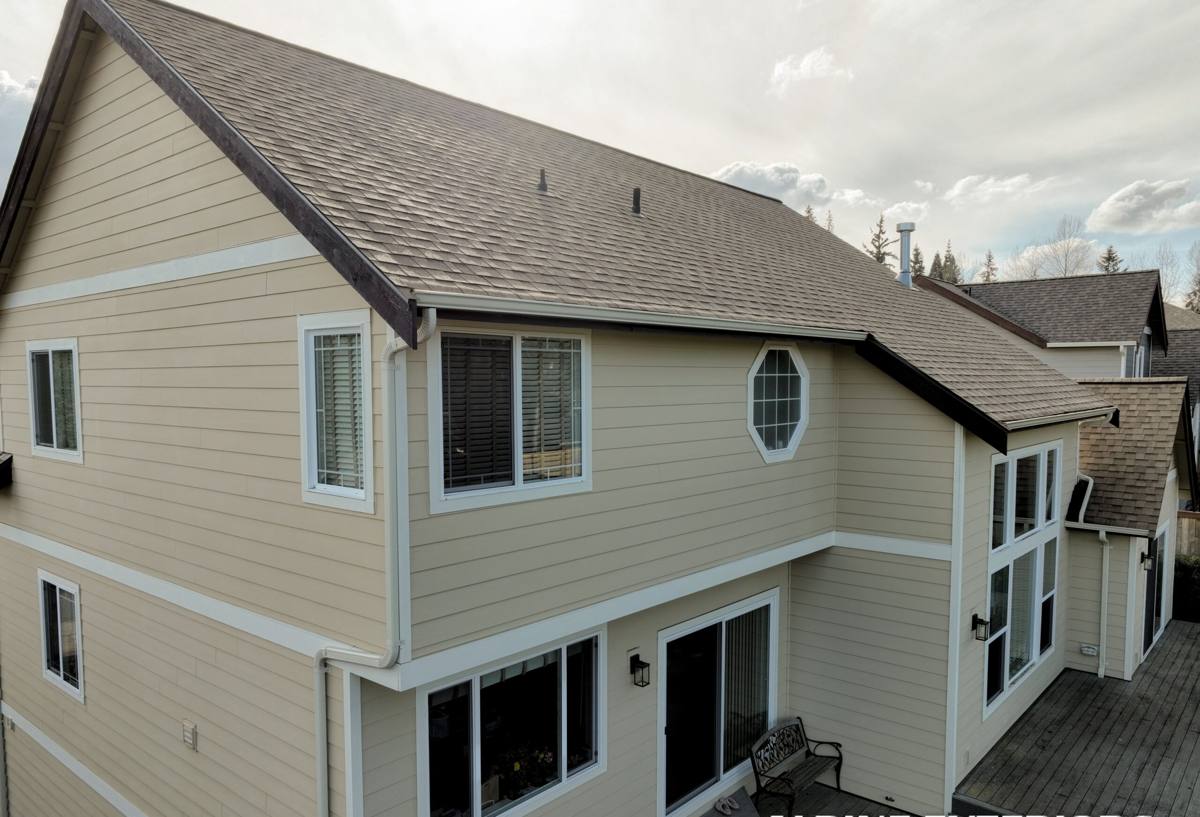
What Salt Air, Driving Rain, and Moss Season Actually Do to a House
Salt Air and Corrosion
Airborne salt is corrosive to unprotected metal — fasteners, flashing, and trim accessories all take more of a beating in a neighborhood this close to the water than they would a few miles inland. Over years, corroded fasteners can loosen siding, and corroded flashing can fail quietly behind the wall where nobody sees it until there's a stain or a soft spot.
Driving Rain and Wind-Driven Moisture
Wind off the water pushes rain sideways and upward under laps, around corners, and into any seam that isn't properly lapped, caulked, or flashed. A siding system depends on gravity to shed water downward — wind-driven rain works against that assumption, which is why water management details (not just the siding material itself) matter so much here.
Moss, Algae, and the Long Wet Season
Whatcom County's marine climate means long stretches of overcast, damp weather, especially on north-facing walls and anything shaded by trees or neighboring structures. Moss and algae don't just look bad — sustained moisture against a wall surface accelerates rot in wood-based products and slowly degrades finishes that weren't built to handle it.
Why We Install Only James Hardie Fiber Cement Siding
We made a deliberate decision, years back, to stop installing several common siding products — vinyl, LP SmartSide, primed wood, and other fiber cement brands among them — and install James Hardie exclusively. That's not a marketing position; it's a response to what we consistently saw happen to those materials on homes in this exact climate.
Vinyl siding is inexpensive and low-maintenance in mild, dry conditions, but it expands and contracts significantly with temperature swings, and its seams and J-channels are only as good as the water management behind them. In a wind-driven rain environment, that's a weak point we'd rather not build around. LP SmartSide and primed wood products are wood-based, and wood-based siding is fundamentally more vulnerable to the moisture and rot pressure that a damp marine climate creates — the engineered strand and resin treatments help, but they don't remove the underlying vulnerability of a wood substrate sitting wet for weeks at a time.
James Hardie fiber cement is non-combustible, dimensionally stable across temperature and moisture swings, and comes with a factory-applied ColorPlus finish that's baked on rather than field-applied, which matters a great deal in a climate where a field-applied paint job gets tested hard every winter. Hardie also engineers specific product lines for different climate zones (their HZ5 and HZ10 designations), which lets us match the product to Whatcom County's moisture and temperature profile rather than installing a one-size-fits-all product. We stand behind it because we've watched it hold up here, and because Hardie backs it with a real transferable warranty rather than a prorated one that shrinks in value over time.
What a Correct Siding Installation Actually Involves
The siding board itself is maybe half the story. The other half is everything installed behind and around it, which is where most premature siding failures actually start — not in the material, but in the details.
- Weather-resistive barrier: a continuous, properly lapped house wrap or building paper behind the siding, installed so every seam sheds water downward.
- Flashing at every penetration: windows, doors, hose bibs, vents, and any other wall penetration get flashed so water is directed out and away from the sheathing, not into it.
- Rain screen or drainage gap where appropriate: a small air gap behind the siding lets any moisture that does get past the cladding drain and dry instead of sitting against the wall.
- Correct fastener type and placement: corrosion-resistant fasteners, placed and set to Hardie's blind-nailing or face-nailing specifications, not just "close enough."
- Proper clearances: siding held up off decks, patios, and grade per manufacturer spec, so it isn't sitting in standing water or splash-back.
- Caulking and sealant only where specified: Hardie's install specs call for sealant at specific joints, not as a blanket fix for gaps that should have been cut tighter in the first place.
Skip or shortcut any one of these, and the siding can look fine for a year or two while a problem builds behind it. That's exactly the kind of failure that's hard to catch until it's expensive.
Our Installation Process, Start to Finish
1. On-Site Assessment
We walk the exterior of the home, looking at wall orientation, existing moisture damage, trim and window conditions, and anything specific to the lot — tree cover, shade patterns, proximity to the water — that affects how that particular house needs to be detailed.
2. Tear-Off and Substrate Check
Old siding comes off and we inspect the sheathing underneath for rot, soft spots, or prior water damage. Anything compromised gets repaired before new siding goes on — covering a damaged substrate with new siding just delays the problem and hides it.
3. Water Management Installation
House wrap, flashing, and drainage details go in first, following manufacturer specifications for the product lines and wall assembly on that specific home.
4. Hardie Siding Installation
Boards, panels, or shingle-style siding (depending on what the homeowner chose) go up to Hardie's fastening and clearance specs, with attention to the exposure and orientation of each wall.
5. Trim, Caulk, and Detail Work
Trim boards, corner details, and manufacturer-specified sealant points are finished, and every penetration is checked.
6. Final Walkthrough
We walk the finished exterior with the homeowner, point out what was done and why, and answer questions before calling the job complete.
Signs a Fairhaven Home May Need New Siding Now
Some warning signs are obvious; others build slowly enough that homeowners get used to them before realizing they're a problem.
- Visible moss or algae growth that returns quickly after cleaning, especially on shaded or north-facing walls.
- Soft spots, bubbling, or warping in wood-based or older composite siding.
- Paint that's peeling, chalking, or needs repainting far more often than it should.
- Visible gaps, cracked caulk lines, or siding that's pulling away from trim.
- Interior signs like musty smells, stained drywall, or damp insulation near exterior walls.
- Rust streaks near fasteners or metal trim, a common sign of salt-air corrosion.
Any one of these on its own may not mean full replacement is needed. Together, or left unaddressed for a few seasons, they usually do.
What Drives the Cost of a Siding Installation Project
Every home is different, but the same handful of factors drive most of the cost variation we see on Fairhaven projects. We don't publish blanket prices because these factors genuinely change the number — but this is what to expect a quote to weigh.
| Cost Factor | Why It Matters |
|---|---|
| Home size and wall complexity | More square footage and more corners, gables, and dormers mean more material and labor. |
| Substrate condition | Rot or water damage found during tear-off requires repair before new siding goes on. |
| Siding profile and finish | Lap, shingle, and panel styles, plus ColorPlus color selection, price differently. |
| Water management upgrades | Adding a rain screen gap or upgrading flashing details adds labor but improves long-term performance. |
| Access and site conditions | Steep lots, limited access, or tight neighboring setbacks affect crew time. |
| Trim and detail scope | Full trim replacement versus reusing sound existing trim changes both cost and finished look. |
What to Ask Before Hiring a Siding Contractor in Fairhaven
- Are you a manufacturer-recognized installer, and can you explain why you install the products you do?
- Will you inspect and repair the sheathing before installing new siding, not just cover what's there?
- What water management details — house wrap, flashing, rain screen — are included in the bid?
- Do you carry current liability insurance and workers' compensation coverage?
- Can you walk me through the manufacturer's warranty and what voids it?
- Have you worked on homes in this specific neighborhood, and do you understand its exposure to wind and salt air?
Why Local Fairhaven Experience Matters
A siding crew that mostly works drier, more sheltered parts of Whatcom County can do a technically fine installation and still miss the details that matter most a few blocks from the water. Wall orientation relative to prevailing wind, how much shade a lot gets and for how long, how aggressively moss establishes on a given elevation — these are things you learn by working the neighborhood repeatedly, not by reading a spec sheet once. We work in and around Bellingham regularly enough to know which walls on a Fairhaven home need the most attention before a single board goes up, and we build every installation around that knowledge rather than a generic checklist.
If your Fairhaven home needs new siding, or you're not sure whether what you have is holding up the way it should, we're happy to take a look. Our estimates are free and there's no pressure — just an honest assessment of your home's exterior and what it actually needs.