 Bellingham Exterior
 Why York Homes Take a Beating from Bellingham's Climate
Houses in the York neighborhood deal with a specific combination of punishment that a lot of siding products simply weren't designed for. Bellingham sits on salt water, and homes anywhere near the bay pick up airborne salt that settles on exterior surfaces and accelerates corrosion of fasteners, trim, and lower-grade siding materials over time. Add in driving rain that comes sideways off the Sound during fall and winter storms, and you get moisture pushed into seams, laps, and butt joints that would stay dry on a house in a drier climate.
Then there's moss. Whatcom County's moss season isn't a two-month nuisance — it's closer to eight or nine months of the year when conditions are damp and shaded enough for moss, algae, and mildew to take hold on north-facing walls, under eaves, and anywhere siding stays wet longer than it stays dry. Combine that with the area's freeze-thaw swings in the colder months, and siding on a York home is working harder, more often, than siding almost anywhere else in the country.
None of this means a York home is doomed to premature siding failure. It means the material and the installation both have to be matched to the job. That's the whole reason this page exists.
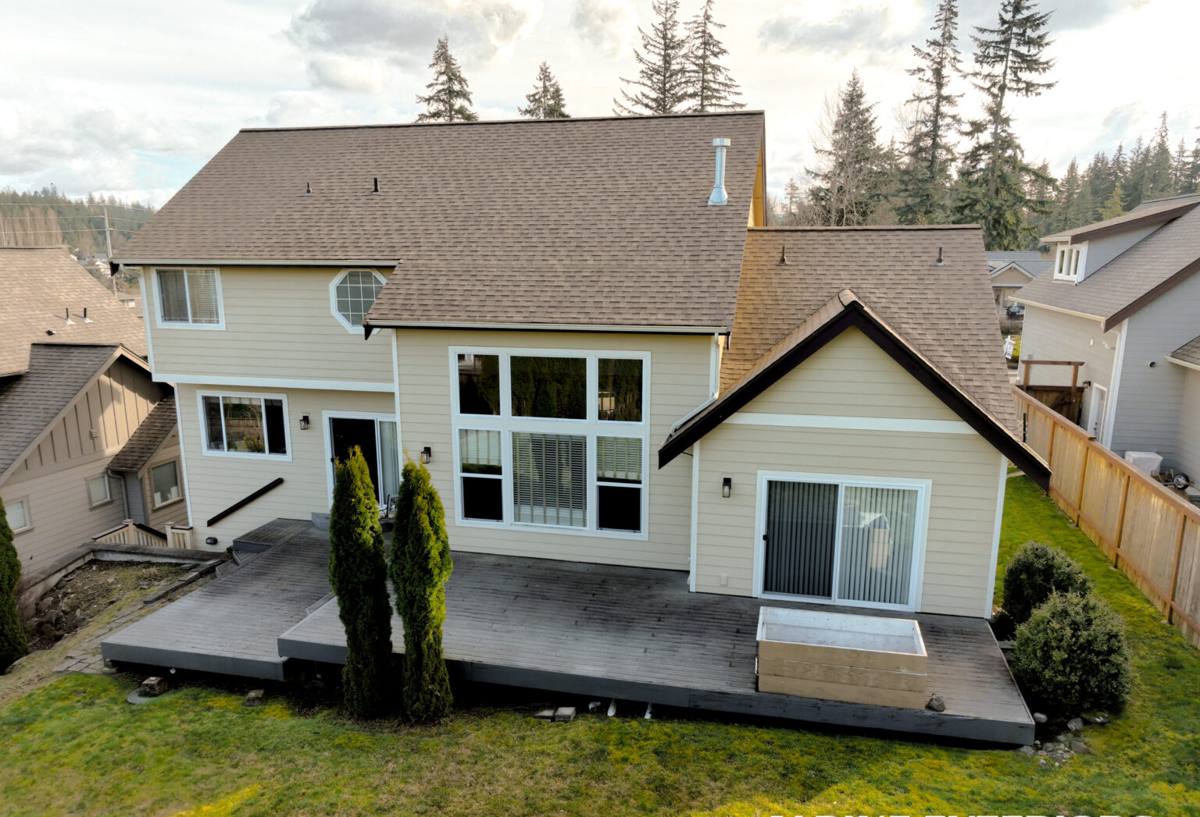
Signs Your York Home's Siding Is Failing
Moisture Damage Indicators
Moisture problems in siding rarely announce themselves loudly. They show up as soft spots you can press a thumb into, dark staining that keeps coming back after cleaning, paint that bubbles or peels in the same spots year after year, or a faint musty smell near exterior walls inside the house. By the time you can see rot at the bottom edge of a board, there's a good chance the sheathing behind it has already been absorbing moisture for a while.
Cosmetic vs. Structural Clues
Not every issue is structural. Chalky or faded paint, minor hairline cracking, and surface moss that wipes off are cosmetic and don't necessarily mean replacement is due. The distinction matters because it changes whether you're looking at a repaint, a repair, or a full tear-off — and a contractor who tells you "replace everything" without explaining which category your problem falls into isn't doing you a favor.
- Boards that flex, feel spongy, or crumble at the edges when pressed
- Persistent moss or black streaking that returns within weeks of cleaning
- Visible gaps, warping, or cupping at panel seams and corner boards
- Peeling paint or caulk failure concentrated on north- and west-facing walls
- Rising utility bills or noticeably drafty rooms along exterior walls
- Siding that's original to a home built more than 20-25 years ago, especially older cedar or early-generation composite products
Why We Only Install James Hardie Fiber Cement
This company installs one siding system: James Hardie fiber cement. We don't install vinyl, LP SmartSide, Cemplank, Allura, primed spruce, or cedar, and in a climate like Bellingham's, that's a deliberate professional standard, not a sales pitch.
Cedar looks great going up, but it's an organic material in a region that gives it near-constant moisture exposure — it needs regular refinishing to keep water out, and once it starts absorbing water past its finish, rot follows. Vinyl is affordable and low-maintenance in the sense that it doesn't need painting, but it expands and contracts with temperature swings, can crack in cold snaps, and doesn't hold up structurally the way a rigid material does over decades. LP SmartSide uses an engineered wood strand core, which performs well when installation and maintenance are followed to the letter, but any wood-based core is more sensitive to sustained moisture exposure than fiber cement — and sustained moisture is exactly what a York-area house deals with for most of the year.
James Hardie fiber cement is a cement, sand, and cellulose fiber composite — it doesn't rot, it's non-combustible, and it doesn't provide a food source for the mold and moss spores that thrive in this climate. Hardie's ColorPlus factory-applied finish is baked on under controlled conditions rather than field-painted, which gives it better fade and moisture resistance than a job-site paint job, and it comes backed by a strong transferable warranty when installed to spec. Hardie also makes climate-engineered HZ product lines specifically for damp, temperature-variable regions like the Pacific Northwest — which is exactly the profile this part of Whatcom County fits.
What a Correct Siding Replacement Actually Involves
Tear-Off and Sheathing Inspection
A siding replacement is not just a re-skin. Once the old siding comes off, the sheathing underneath gets inspected for water damage, soft spots, and rot — because installing new siding over damaged sheathing just locks the problem inside the wall. Any compromised sheathing gets replaced before anything new goes up.
Weather-Resistive Barrier and Flashing
This is the step that determines whether a siding job holds up in Bellingham's climate or fails early. A correctly lapped weather-resistive barrier, properly integrated flashing at windows, doors, and roof intersections, and correct drainage planes behind the siding are what actually keep driving rain from reaching the framing. Skipping or rushing this step is the single most common cause of early siding failure in this region, regardless of what material sits on the outside.
Installation to Manufacturer Spec
James Hardie siding has specific fastener patterns, clearances from grade and roof lines, gapping at butt joints, and caulking requirements that have to be followed for the product warranty to remain valid and for the siding to actually perform as engineered. This is precise, unglamorous work — and it's where a lot of the difference between a siding job that lasts and one that doesn't actually gets decided.
Comparing Siding Options for a Marine Climate
| Material | Moisture Resistance | Maintenance | Typical Lifespan |
|---|---|---|---|
| James Hardie Fiber Cement | Excellent — won't rot, resists moss growth | Occasional wash; factory finish reduces repainting | 30-50 years with proper install |
| Cedar | Fair — needs sealed finish maintained regularly | Refinishing every few years; prone to rot if neglected | 15-30 years, highly maintenance-dependent |
| Vinyl | Good on the surface, but seams and expansion gaps can trap moisture | Low, but cracks/fades over time and can't be repainted easily | 20-30 years |
| LP SmartSide / Engineered Wood | Moderate — wood-strand core sensitive to sustained moisture | Requires diligent caulk and paint upkeep | 20-30 years if maintenance is kept up |
This table reflects general industry performance characteristics, not claims about any specific manufacturer's product failing — every material on this list can perform well when it's installed correctly and maintained on schedule. The differences are about margin for error, and in a climate that gives siding as little rest as this one does, margin for error matters.
What Drives the Cost of a York Siding Replacement
Every home is different, and we don't publish blanket pricing because the honest answer depends on the specifics of your house. That said, these are the main factors that move the number up or down:
| Factor | Why It Matters |
|---|---|
| Sheathing condition | Rot or water damage found during tear-off adds repair scope before new siding goes up |
| Home size and wall complexity | More corners, gables, and dormers mean more cutting, flashing, and labor time |
| Siding profile and trim selection | Lap width, trim boards, and accent details all affect material and labor cost |
| Access and site conditions | Tight lots, mature landscaping, or multi-story walls can affect staging and scaffolding needs |
| Existing paint or coatings | Lead-safe practices are required on homes built before 1978, which adds handling steps |
The only way to get a real number is a walk-through of your specific home, which is what a free estimate is for.
Our Process, Start to Finish
- Free on-site walk-through to assess current siding condition, sheathing risk areas, and scope
- Written estimate with a clear breakdown of materials and labor — no pressure, no hard sell
- Scheduling that accounts for weather windows, since tear-off exposes sheathing to the elements
- Tear-off and sheathing inspection, with any damaged sheathing flagged and addressed before moving forward
- Weather-resistive barrier and flashing installed per code and manufacturer requirements
- James Hardie siding installed to manufacturer spec, including fastener pattern and clearances
- Final walk-through with the homeowner before the job is considered complete
Why a Crew That Already Works in York Matters
York is a close-in, established Bellingham neighborhood, which means a mix of home ages and construction styles — and older housing stock in particular tends to have sheathing and moisture-barrier details that were fine for their era but don't match current best practice for a marine climate. A crew that regularly works this neighborhood has seen that pattern before and knows what to check for before it becomes a surprise mid-project.
There's also the practical side: permitting through the City of Bellingham, navigating tighter urban lots and mature landscaping common in older neighborhoods, and scheduling around the wetter stretches of the Whatcom County calendar. None of that is complicated, but it's easier to get right the first time when it's not the first time you've done it in this specific area.
Ready for a Straight Answer on Your Siding
If your York home's siding is showing its age — or you just want an honest read on whether repair, partial replacement, or a full re-side makes sense — we'll come take a look and give you a straightforward, no-pressure estimate. Use the form below to get started.