 Bellingham Exterior
 Why Silver Beach Homes Wear Out Their Roofs Differently
Silver Beach sits close enough to Bellingham Bay and Lake Whatcom that the air carries a steady dose of moisture year-round. Add in the tree cover that shades many lots in this part of Whatcom County, and you get a combination that's tough on roofing: salt-tinged marine air that accelerates corrosion on metal fasteners and flashing, driving rain off the water that finds its way into any weak seam, and a moss season that can run eight or nine months out of the year in shaded, north-facing sections of a roof. A roof system built for a drier inland climate simply doesn't hold up the same way here. When we install a new roof in this neighborhood, we're not just following a generic spec sheet — we're accounting for the specific way this local environment attacks a roof over time.
None of this means Silver Beach is a bad place to own a home. It means the roof over it needs the right materials, the right details at every seam and penetration, and installation that respects how water and wind actually move across a roof plane in this part of Bellingham. That's the difference between a roof that looks fine for a few years and one that actually performs for its full service life.
Signs You Need a Full Replacement, Not Another Repair
A lot of homeowners call us after a leak, expecting a patch. Sometimes a patch is the right call. Often, once we're up on the roof, it's clear the underlying material is past the point where repairs make financial sense. Common signs we look for on Silver Beach roofs specifically:
- Granule loss on shingles severe enough that you can see bare asphalt, especially on south- and west-facing slopes that take the brunt of driving rain
- Moss growth that's lifted shingle edges rather than just sitting on the surface — this is a sign moisture has been working underneath, not just on top
- Soft spots or sag in the decking when walked, usually meaning sustained moisture intrusion has reached the wood
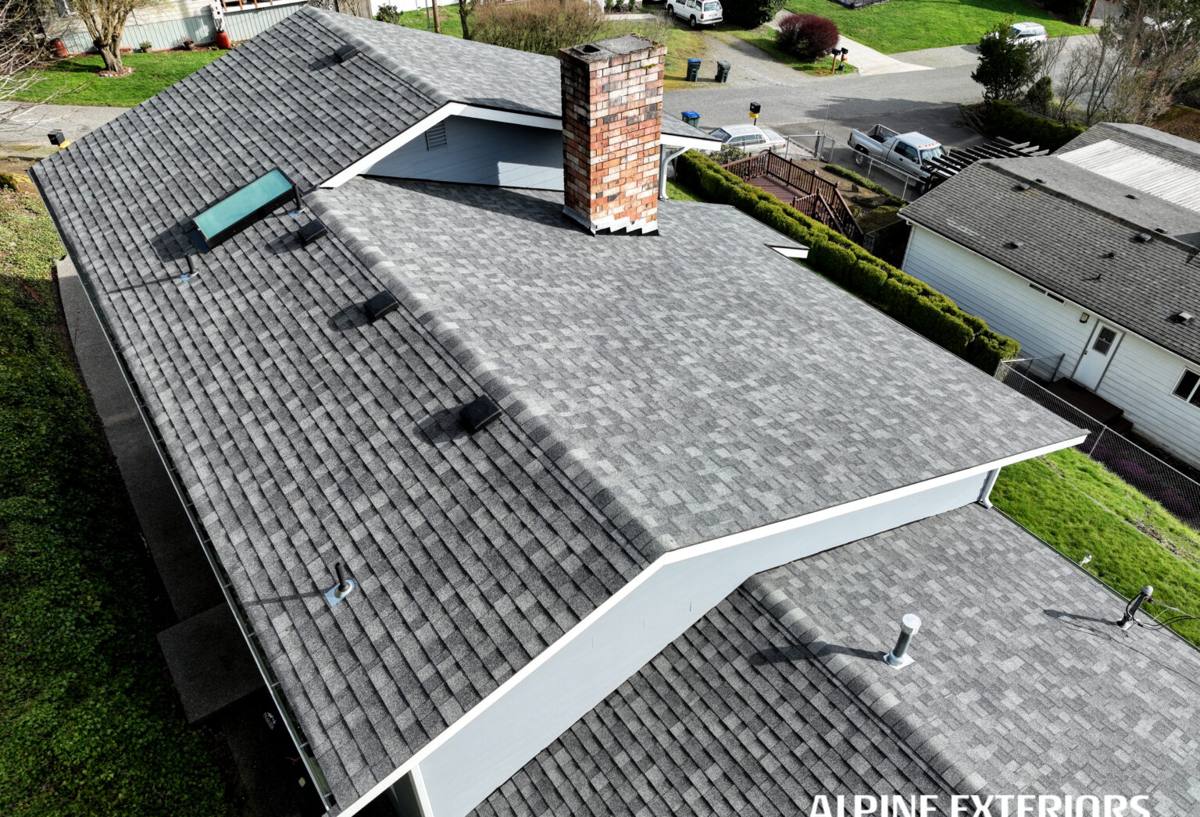
- Rusted or failing flashing around chimneys, skylights, and roof-to-wall transitions — a common failure point in salt-influenced air
- A roof approaching or past 20 years old (asphalt) with no documented history of proper maintenance
If a roof is under 10-12 years old with isolated damage, repair is usually the honest recommendation. We'll tell you that. If it's showing multiple issues from the list above, patching becomes a short-term fix on a system that's already failing broadly, and we'll explain why replacement is the more responsible spend.
What a Correct New Roof Installation Actually Involves
Tear-Off and Decking Inspection
We remove the existing roofing down to the deck rather than layering over it. Overlaying hides problems and voids most manufacturer warranties. Once the deck is exposed, we inspect every sheet of sheathing for soft spots, delamination, or rot — this is often where a roof that's been slowly absorbing moisture from moss and driving rain shows its real condition. Any compromised decking gets replaced before anything new goes down. Skipping this step is the single most common shortcut that leads to problems five or ten years later.
Underlayment and Water Management
Given how much driving rain this area sees, we don't treat underlayment as an afterthought. We use synthetic underlayment across the field for better tear resistance and water shedding than older felt products, and we install ice-and-water shield membrane at eaves, valleys, and any low-slope transitions — the spots where wind-driven rain is most likely to work its way backward under shingles.
Flashing Details
Flashing failure is one of the top causes of roof leaks we see on service calls in this neighborhood, and it's almost always because the original flashing was reused, undersized, or installed with the wrong lap direction. On every new roof install, we install new step flashing at wall intersections, new counter-flashing at chimneys, and corrosion-resistant materials suited to a marine-air environment rather than standard-grade steel that will rust prematurely.
Ventilation
A roof deck that can't breathe traps moisture from inside the home, which speeds up rot from the underside — separate from anything happening on the surface. We check that intake and exhaust ventilation are balanced and sized correctly for the attic volume, and we correct it as part of the install when it's inadequate, which is common on older Silver Beach homes that predate current ventilation standards.
Choosing the Right Material for This Microclimate
There's no single "best" roofing material — there's the right material for your home's exposure, budget, and how long you plan to stay in it. Here's how the common options actually compare for a shaded, moisture-heavy lot near the water:
| Material | Moss & Moisture Resistance | Typical Lifespan | Maintenance Burden |
|---|---|---|---|
| Standard architectural asphalt shingle | Moderate — moss-resistant (algae-resistant, or "AR") granule versions perform noticeably better than standard | 20-30 years | Periodic moss/debris removal, especially on shaded slopes |
| Metal roofing (standing seam) | High — sheds moss and moisture well due to slick surface and steep water flow | 40-60+ years | Low, but fastener and flashing corrosion resistance matters near salt air |
| Synthetic/composite shingle | Good — many products include algae/moss resistance built in | 30-50 years | Low to moderate |
| Cedar shake | Lower without diligent upkeep — organic material in a moist, shaded environment is naturally more moss-prone | 20-30 years with maintenance | High — regular treatment and cleaning needed to control moss and rot |
We're not going to tell you a product is "bad" — every material on that list has a place. But we'll be direct with you: on a heavily shaded Silver Beach lot with significant moss pressure, we generally steer homeowners away from untreated cedar unless they're committed to an ongoing maintenance schedule, simply because the moisture-retention and upkeep tradeoffs are real. For most homes in this area, an algae-resistant architectural shingle or a metal roof gives the best balance of performance and manageable long-term care.
Our Installation Process, Start to Finish
- On-site inspection and estimate — we walk the roof, check the attic, and give you a written scope, not a verbal guess
- Material selection — we talk through options based on your home's exposure, budget, and how long you're planning to stay
- Permitting — we handle the permit through the appropriate local jurisdiction before work starts
- Protection of the property — landscaping, siding, and gutters get covered or protected before tear-off begins
- Tear-off and deck inspection — full removal, with any compromised decking replaced
- Underlayment, flashing, and material installation — installed to manufacturer spec plus the added detailing this climate calls for
- Ventilation check and correction — confirmed balanced and adequate for the attic space
- Cleanup and magnetic nail sweep — full site cleanup, including yard and driveway
- Final walkthrough — we go over the finished roof with you before calling the job done
Why Local Experience in Silver Beach Actually Matters
A crew that's worked this specific pocket of Bellingham knows things a general contractor coming in from outside the county won't automatically catch. They know which slopes on Silver Beach lots tend to hold moss because of tree shade patterns. They know which older homes in the area are more likely to have outdated or inadequate attic ventilation. They know the local permitting process and inspection expectations for Whatcom County and the City of Bellingham, so there are no surprises mid-project. And because we're not driving in from out of the area, scheduling for follow-up service — should you ever need it — is straightforward, not a multi-week wait for someone to come back through town.
That local familiarity translates into fewer callbacks and a roof that's installed correctly for the conditions it will actually face, not just the conditions a generic install checklist assumes.
Cost Factors Worth Understanding Before You Get Quotes
Roofing costs vary by roof size, pitch, number of layers being removed, decking condition, material choice, and complexity of the roofline (valleys, dormers, chimneys). Rather than quote a number that won't mean much without seeing your roof, we'll walk your property and give you a real, itemized estimate. A few honest cost drivers to keep in mind as you compare bids from any contractor:
- A steep or complex roofline takes longer and requires more safety setup than a simple gable roof
- Decking replacement is priced by the sheet once we see actual condition — a low bid that assumes zero deck replacement is a red flag if your roof has known moisture history
- Material cost differences (asphalt vs. metal vs. composite) are usually the single biggest line-item swing
- Proper ventilation correction, if needed, adds cost but prevents moisture problems that cost far more to fix later
Maintaining Your New Roof in a Wet, Shaded Climate
A correctly installed roof still needs basic upkeep to hit its full lifespan in this environment. We recommend:
- Clearing gutters at least twice a year, more often if you're under heavy tree cover
- Having moss growth treated or gently removed before it lifts shingle edges — don't wait until it's thick
- Keeping overhanging branches trimmed back to reduce shade, debris buildup, and physical damage risk
- Scheduling a roof check after major windstorms, which are common off the water in fall and winter
- Watching for granule buildup in gutters, which can signal accelerated shingle wear
If you'd like a free, no-pressure estimate on a new roof for your Silver Beach home, the form below gets you started — we'll walk the roof, answer your questions honestly, and give you a clear, written scope with no obligation.