 Bellingham Exterior
 Siding Repair Built for Silver Beach's Climate
Silver Beach is one of the neighborhoods where Bellingham's weather does the most quiet damage to a home's exterior. It's not usually one dramatic storm that causes a siding problem here — it's the accumulation. Salt-laden air moving in off the water, driving rain that hits siding sideways for days at a time, and a moss season that stretches from fall through spring all work on a house year-round. None of it looks urgent from the curb. By the time a homeowner notices a stain, a soft spot, or a gap at a trim board, the underlying damage has usually been building for a season or two already.
That's the case for repair as a distinct skill, not just a smaller version of a full siding job. A repair has to correctly diagnose what Whatcom County's climate actually did to the wall assembly, fix the cause and not just the symptom, and blend into the surrounding siding well enough that it doesn't stand out — or invite the same failure again in a different spot. This page covers what that looks like specifically for Silver Beach homes.
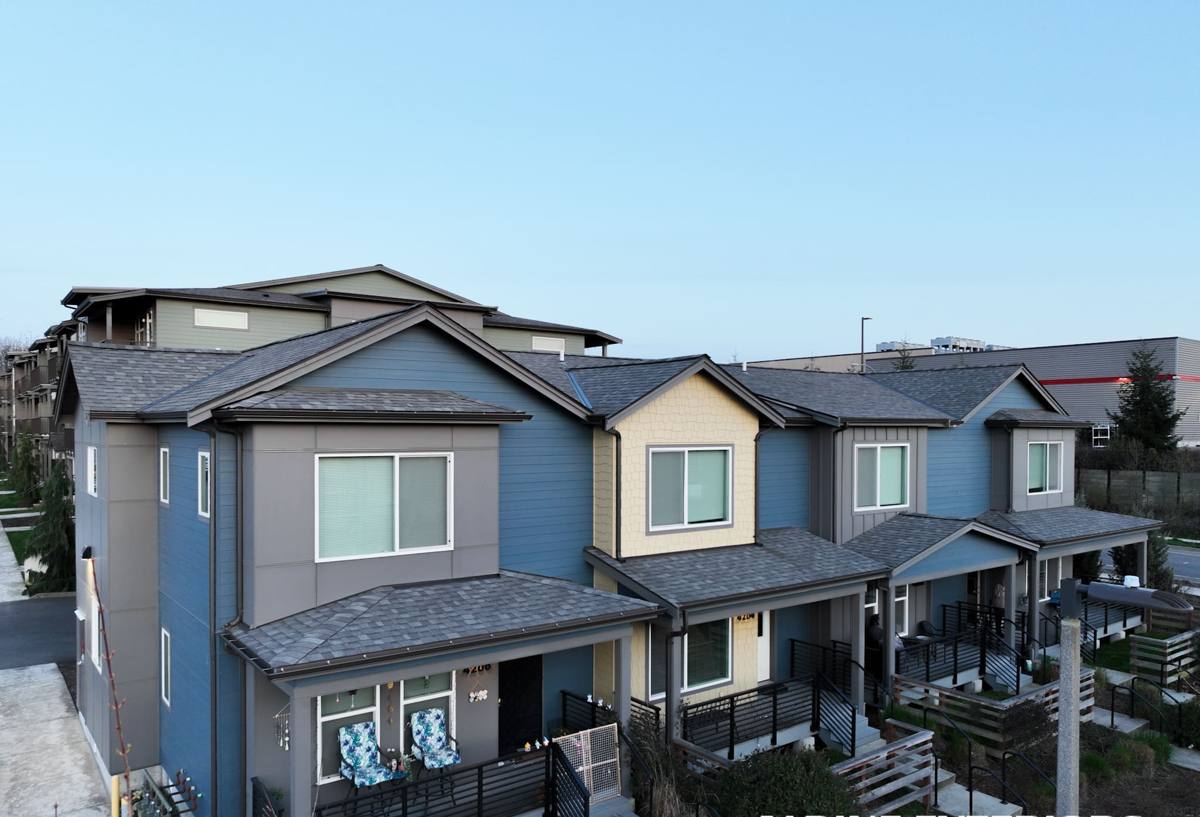
Signs Your Silver Beach Home Needs Siding Repair
Most siding repair calls in this neighborhood start with one of the following. None of these are emergencies on their own, but each one is worth a look before the next wet season sets in.
- Soft, spongy, or spring-feeling siding when you press on it near the bottom edge of a wall or below a window
- Peeling or bubbling paint concentrated at seams, corners, or butt joints rather than spread evenly across a wall
- Dark staining or streaking that keeps returning in the same spot even after cleaning
- Visible gaps opening up between siding and window or door trim
- Persistent moss or algae growth on north-facing or shaded walls that keeps the siding damp longer than the rest of the house
- Cracked, split, or warped boards, especially on walls exposed to wind-driven rain
- Nail heads popping or working loose from the siding face
Any one of these can be a simple, contained repair. Several of them together, especially on the same wall, usually means water has been getting behind the siding for a while and the repair needs to go deeper than the visible board.
What a Correct Repair Job Actually Involves
Finding the Real Source of the Damage
The most common mistake in siding repair isn't bad workmanship — it's stopping the diagnosis too early. Replacing a damaged board without figuring out why it failed just resets the clock on the same problem. A correct repair starts by pulling the affected siding and checking what's underneath: the house wrap or building paper, the flashing above windows and at trim, and the sheathing itself. If water has been tracking behind the siding, that path needs to be corrected — better flashing detail, a repaired weather barrier, or a change in how the siding meets a window or door — before any new material goes back on.
Matching Material and Finish
The second half of a good repair is making it disappear. That means matching board profile, exposure, and color as closely as the original material allows, and paying attention to caulking and paint lines so a repaired section doesn't read as an obvious patch from the street. On homes with factory-finished siding, this is easier and more durable than on field-painted siding, since the replacement piece can be color-matched at the source rather than touched up by hand.
Repair or Replace? How We Make the Call
Not every siding problem in Silver Beach needs a full re-side, and not every problem should be patched and left alone. The honest answer depends on how much of the wall is affected, how old the existing siding is, and whether the damage is cosmetic or has already reached the sheathing. Here's how we generally think through it:
| Factor | Repair usually makes sense | Replacement usually makes sense |
|---|---|---|
| Extent of damage | Isolated to one or two boards or a single wall section | Recurring across multiple walls or the whole exterior |
| Cause of failure | A single identifiable issue (flashing, caulking, impact damage) | Systemic moisture intrusion or a material that's failing broadly |
| Age and material condition | Siding is otherwise sound and mid-life | Siding is original, brittle, or near the end of its service life |
| Sheathing condition | Sheathing underneath is dry and solid | Sheathing shows rot or soft spots in more than one area |
| Cost over time | Repair cost is a fraction of a full re-side | Repeated repairs are approaching the cost of replacement |
We'll always give a straight answer on which side of that line a given home falls on, including when the honest recommendation is to spend less and repair it.
Why the Material Behind the Repair Matters
What we're repairing changes what we can promise. We stand behind James Hardie fiber cement for every full installation we do, but repair calls in Silver Beach come in on every kind of siding — and each one behaves differently once you open it up.
Vinyl siding can usually be unlocked and swapped panel-for-panel, but it's prone to becoming brittle with age and UV exposure, and older profiles are frequently discontinued, which makes finding an exact match difficult. LP SmartSide and other wood-based composite panels can be patched, but any repair on that material only holds up long-term if the original moisture problem is fully resolved first — the strand-based core is more sensitive to sustained dampness than fiber cement is. Cedar and primed wood siding can be repaired almost indefinitely in theory, but each repair is a maintenance commitment: bare wood exposed during the fix needs to be primed and painted promptly, and matching weathered cedar's color is more art than science.
James Hardie fiber cement is the one material in that list that we'll repair with full confidence, because it's also what we install. Damaged boards can be replaced with the same HZ5 product line engineered for this region, and ColorPlus factory-finished sections can be matched by ordering the same color code rather than mixing paint on-site. For homes already sided in Hardie, that makes repair straightforward. For homes in other materials, we'll repair what's there honestly and tell you plainly if the underlying material is working against you — that's a conversation worth having before deciding whether to patch again or plan a future replacement.
Our Silver Beach Repair Process
- On-site inspection of the damaged area and a check of surrounding walls for related issues
- Diagnosis of the cause — flashing, caulking, grading, ventilation, or material failure — not just the visible symptom
- Moisture check of the sheathing behind the affected siding before any repair is scoped
- A written scope and estimate that separates the repair itself from any underlying fix it depends on
- Sourcing matching material, including factory-finish color matching where the existing siding allows it
- Careful removal of damaged siding and repair of the weather barrier, flashing, or sheathing underneath
- Installation of new material to manufacturer specifications, including proper fastening and clearances
- Sealing and finishing to blend the repair into the surrounding wall
- Final walkthrough so you can see exactly what was fixed and why
Why a Crew That Already Works in Silver Beach Matters
Siding repair is more accurate when the crew doing it already understands how a specific neighborhood's homes tend to fail. In Silver Beach, that means recognizing which wall orientations hold moisture longest, which trim and window details on the mix of home styles and ages in the area are common culprits for water intrusion, and how much moss and algae pressure a given lot's tree cover creates compared to a more open site nearby. It also means being realistic about access — driveway space, tight side yards, and the kind of staging a repair actually needs on a given lot.
None of that replaces a proper inspection on your specific house. But a crew that's already worked on several homes in the neighborhood starts that inspection with a head start instead of guessing from scratch, and that shows up in both the accuracy of the diagnosis and how quickly the repair gets scheduled and finished before the next wet stretch rolls in off the water.
After the Repair: Keeping Silver Beach Siding Ahead of the Weather
A repair holds up longer with a small amount of upkeep, especially in a climate that doesn't give siding much of a break between wet seasons. A few habits go a long way:
- Rinse moss and algae off shaded or north-facing walls before it builds up a heavy mat
- Keep tree branches and shrubs trimmed back so walls get airflow and sunlight to dry out between rains
- Check gutters and downspouts each fall so overflow isn't running down a wall repeatedly
- Inspect caulking at trim, windows, and butt joints once a year and refresh it before it fails
- Watch the repaired area and the rest of the siding for new staining after the first full wet season
- Schedule a quick exterior check-up before the rainy season starts, especially on older siding
If you're seeing any of the warning signs above, or you just want an honest opinion on whether a section of siding needs a repair or something more, we're happy to take a look. We offer free, no-pressure estimates for Silver Beach homeowners — no obligation, just a straight assessment of what your siding actually needs.