 Bellingham Exterior
 Siding That Holds Up on South Hill
South Hill sits up above the flatter parts of Bellingham, and that elevation cuts both ways. The views are part of why people love living there, but the same exposure that opens up a view also opens the walls of a house to weather that lower, more sheltered lots don't deal with as directly — wind off the water, driving rain that comes in sideways instead of straight down, and salt-tinged marine air that settles on every exterior surface year-round. Add in the mature tree canopy that shades a lot of the older lots on the hill, and you get long stretches where north- and east-facing walls barely dry out between storms. That combination is exactly the kind of thing that separates a siding job that looks fine on install day from one that actually holds up through a decade of Bellingham winters.
We install James Hardie fiber cement siding exclusively, and on South Hill specifically, we build every detail of the job — flashing, fastening, clearances — around what this hillside actually does to a wall over time, not around a generic install checklist.
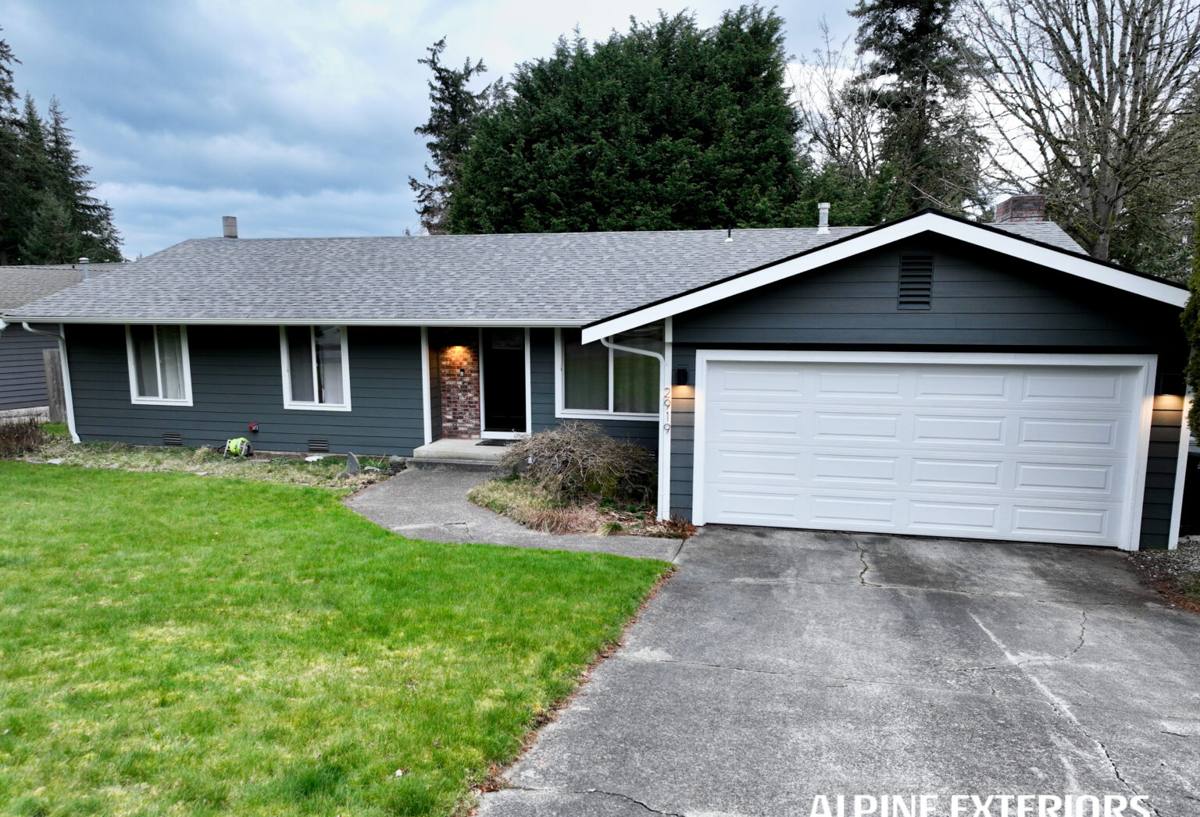
What South Hill's Conditions Actually Do to a Wall
Elevation and Wind Exposure
Homes higher on the hill catch more direct wind than those tucked into lower, more sheltered parts of Bellingham. Wind-driven rain doesn't just wet a wall — it forces water sideways and upward into laps, seams, and trim joints that would stay dry in a straight-down rain. Siding that isn't lapped, fastened, and flashed with that in mind will eventually show it, usually first at the horizontal joints and around window and door trim.
Salt Air on Exposed Metal and Fasteners
The marine air common across this part of Whatcom County carries salt that accelerates corrosion on anything metal — fasteners, flashing, trim screws. On a home with bay exposure, the fastener spec matters more than it would further inland. Under-spec'd or improperly coated fasteners can start failing years before the siding material itself would, and once a fastener corrodes, the seal around it goes with it.
Shade, Tree Cover, and a Long Moss Season
A lot of South Hill's character comes from mature trees, and mature trees mean shade. Shaded walls dry out slower after every rain, and in a climate where it can rain for months at a stretch, "slower to dry" can mean "doesn't fully dry" for long periods. That's the environment moss and mildew thrive in, and it's also the environment where any gap, crack, or failed caulk joint in the siding turns into a place moisture sits and works at the wall behind it instead of running off.
Why We Only Install James Hardie Fiber Cement Here
Fiber cement doesn't expand, contract, warp, or absorb water the way wood-based and some engineered siding products do. That matters everywhere, but it matters more on a hill with this much wind exposure and this much shade — the material isn't fighting the climate on top of everything else the installation has to get right. We made the call years ago to install James Hardie exclusively rather than also offering LP SmartSide, vinyl, Cemplank, Allura, primed spruce, or cedar. Those are all real products, and other contractors install them competently. We simply concluded that on homes exposed to this much wind, salt, and shade, standing behind one system we trust completely serves our customers better than splitting our attention — and our warranty confidence — across several.
| Material | Behavior in Wind-Driven Rain | Behavior in Shade / Moss Exposure | Realistic Lifespan Here |
|---|---|---|---|
| James Hardie fiber cement | Dimensionally stable at laps and joints | Factory finish resists moss growth and staining | 30+ years with proper install |
| LP SmartSide (engineered wood) | Vulnerable at cut edges and fastener points | Needs consistent edge sealing to resist moisture | 15-25 years, climate-dependent |
| Vinyl | Can flex or gap under sustained wind loading | Doesn't feed moss growth itself, but hides moisture behind it | 20-30 years, variable |
| Cedar | Absorbs wind-driven moisture without regular sealing | High susceptibility to moss and mildew in shade | 15-25 years with consistent upkeep |
Hardie's ColorPlus factory finish is also part of why it holds up on shaded, moss-prone walls — a baked-on finish resists the staining and dulling that field-applied paint struggles with over the same years, especially on surfaces that don't get much direct sun to help them dry and cure.
Climate-Engineered HZ Product Lines
James Hardie builds its HardieZone products for specific climate conditions, and Western Washington falls into the HZ5 zone — engineered around sustained moisture exposure rather than heat or dry-climate concerns. That's not marketing language; it affects the actual formulation and moisture-management engineering of the board, and it's one more reason we don't treat Hardie as interchangeable with siding built for a different climate.
What a Correct Installation Involves on This Hill
The finished look of good fiber cement siding is deceptively simple — clean, straight lap lines. What holds that look together for thirty years happens behind the surface:
- A properly lapped weather-resistive barrier installed before any siding goes up, sequenced correctly with window and door flashing
- Flashing at every horizontal transition — window heads, trim boards, deck ledgers — detailed to shed wind-driven rain rather than just straight-down rain
- Corrosion-resistant fasteners at Hardie's specified spacing, sized correctly for the board thickness and wind exposure of the specific wall
- Correct minimum clearance between the bottom of the siding and grade, decks, or roofing to keep splashback and standing moisture away from the board's cut edge
- Field-cut edges primed before installation, since the factory finish only covers the original board faces
- Caulking used only where Hardie's spec calls for it — over-caulking a wall that's supposed to drain can trap moisture instead of shedding it
Skip any one of these on a wind-exposed, shaded South Hill wall and the consequences don't show up right away. They show up two or three wet seasons later, as staining at a lap joint, a soft spot near grade, or moss establishing itself where a drainage gap should have kept things dry.
Our Process for a South Hill Project
Walking the Property First
Before we talk products or pricing, we look at the specific walls involved — which ones take direct wind, which stay shaded most of the day, whether there's existing moisture damage under the current siding that needs addressing before anything new goes up. A home on South Hill can have one wall that's dried out fine for twenty years and another, ten feet away, that's been fighting moss the whole time.
Planning the Details
We work out flashing details, fastening patterns, and clearances for that specific home before crews start cutting board. Planning it on paper first means the crew isn't making judgment calls in the field about details that actually affect how the wall performs for decades.
Installing to Manufacturer Spec for This Climate Zone
Every fastener, gap, and flashing lap follows James Hardie's published installation requirements for the HZ5 climate zone — not a generic national standard. That's what keeps the manufacturer's warranty valid and what actually determines how the wall holds up against this hill's wind and moisture over time.
Final Walkthrough
We walk the completed job with you, point out anything worth knowing about the specific product line installed, and cover what little maintenance fiber cement actually requires so you know what normal looks like going forward.
Signs a South Hill Home's Siding Needs a Closer Look
- Dark streaking or green/black staining that returns shortly after cleaning, especially on shaded or north-facing walls
- Soft or spongy spots near the bottom of the wall, close to grade or a deck
- Paint or finish that's peeling, bubbling, or chalking unevenly across the wall rather than uniformly
- Visible gaps, warping, or cupping at horizontal seams
- Caulk that's cracked, shrunk, or pulled away from trim and window edges
- Rust streaks below fastener heads or trim screws
Any one of these on its own might be minor. Several together, especially on the more exposed or shaded sides of the house, usually mean moisture has been getting behind the siding for a while.
Cost Factors for South Hill Fiber Cement Projects
Fiber cement siding costs vary by home, and a few things move the number on South Hill specifically:
| Factor | Why It Matters Here |
|---|---|
| Wall exposure and orientation | Wind-facing walls often need more detailed flashing and fastening attention than sheltered ones |
| Existing wall condition | Shaded, moisture-prone walls are more likely to need repair during tear-off before new siding goes on |
| Access and site slope | Hillside lots can mean more setup time and equipment for scaffolding or lifts |
| Trim and window count | More openings mean more flashing details and finish work per wall |
| Product line and profile | Lap width, texture, and color selection affect material cost |
We'll walk your specific home and give you real numbers based on what your walls actually need — square footage alone doesn't tell the whole story on a hill where two houses can face very different wind and moisture conditions.
Why Hire a Crew That Already Works South Hill
A lot of what makes siding hold up on this hill isn't on a spec sheet — it's judgment built from having worked the specific conditions before. Knowing which orientations on South Hill need extra flashing attention because of wind, which shaded walls need a closer look at drainage because of tree cover, and how much clearance actually matters in a climate this consistently damp is the kind of thing a crew learns by doing the work here repeatedly, not by reading a national installation guide. That's the difference between a wall that still looks and performs the same in twenty years and one that's showing moss and staining in five.
If you're considering fiber cement siding for a home on South Hill, we're glad to come take a look, talk through what your specific walls are dealing with, and put together a straightforward, no-pressure estimate. There's a form below — reach out and we'll set up a time to walk the property with you.