 Bellingham Exterior
 Why South Hill's Exposure Is Tougher on Siding Than It Looks
South Hill sits above Bellingham Bay, and that elevation is a mixed blessing for exterior materials. The same open exposure that gives the neighborhood its views also means homes catch salt-laden air off the bay, wind-driven rain that hits siding sideways instead of running straight down, and the deep shade pockets from mature trees and hillside lots that keep north- and east-facing walls damp for weeks at a stretch. In Whatcom County, that combination adds up to one of the longer moss seasons in the state — moss doesn't just grow on roofs here, it takes hold in siding seams, behind trim, and anywhere water sits instead of shedding.
Older siding materials weren't engineered for that specific mix of salt, saturation, and shade. Wood and engineered wood products can hold moisture long enough for rot to start behind a painted surface long before it's visible from the ground. Vinyl doesn't rot, but it flexes and gaps with age, and gaps are exactly what let driving rain get behind a wall. None of that is a defect in those products — it's simply a mismatch between what they were built to handle and what a hillside home near Bellingham Bay actually experiences year-round.
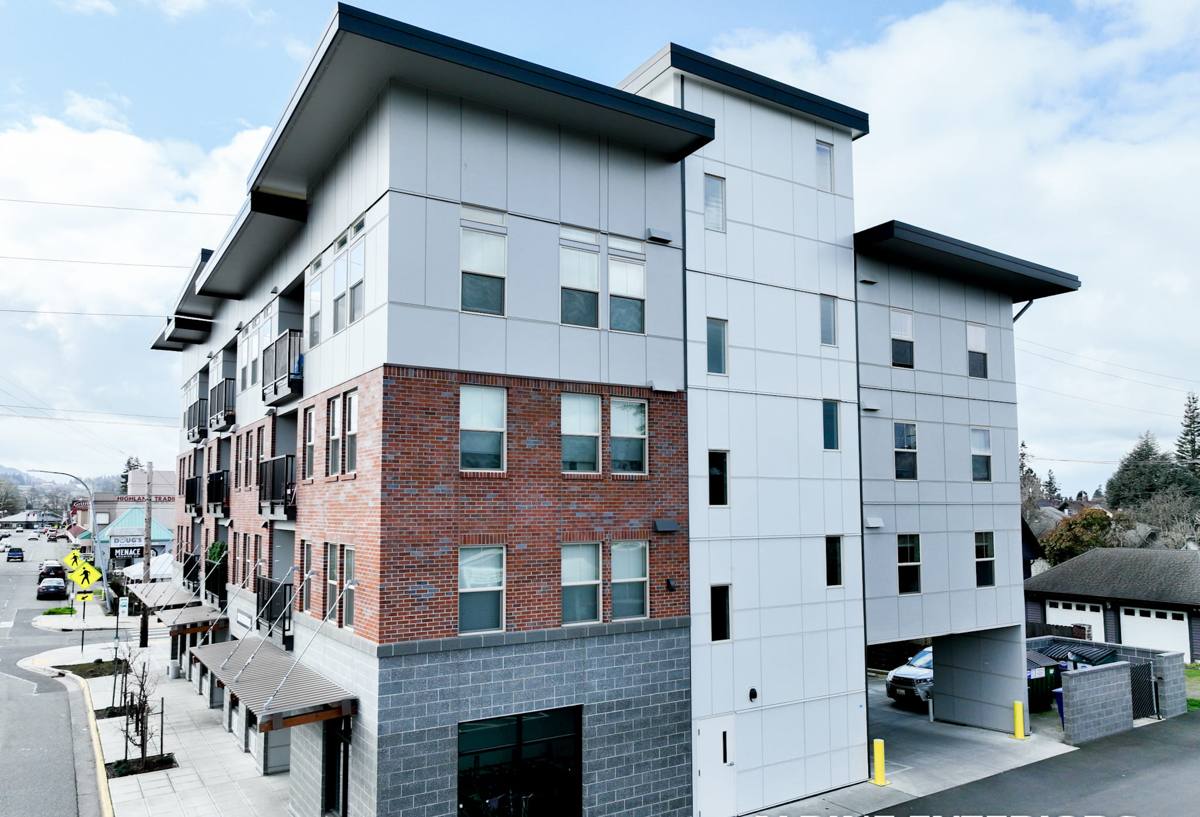
Why We Install James Hardie Fiber Cement on These Homes
We install James Hardie fiber cement siding exclusively, and neighborhoods like South Hill are a large part of why. Fiber cement is made from cement, sand, and cellulose fiber — it doesn't rot, it isn't a food source for moss the way wood fiber can be, and it holds its shape through freeze-thaw and wet-dry cycling far better than vinyl. That matters on a hillside lot where one wall can bake in afternoon sun while the wall twenty feet away stays shaded and damp all day.
Built for Marine Exposure
James Hardie's HZ5 product line is engineered specifically for climates with heavy moisture exposure, which covers most of western Washington and fits a bay-facing, salt-air environment like South Hill's particularly well. The ColorPlus factory finish is baked on under controlled conditions rather than applied on-site, which gives it better adhesion and color retention against sun and salt exposure than a field-painted surface — and it means touch-ups stay rare instead of routine.
Non-Combustible
Fiber cement is non-combustible, which is a real consideration anywhere in Whatcom County with nearby vegetation, dry summer stretches, or wood-frame homes built close together on older hillside lots. It's not the main reason we standardized on Hardie, but it's a genuine advantage over wood and vinyl siding that a homeowner should know about.
What a Correct James Hardie Installation Actually Involves
Fiber cement siding performs the way it's supposed to only when it's installed to Hardie's published specifications — and on a wet, salt-exposed site, those specs aren't optional details, they're the difference between siding that lasts decades and siding that traps water behind it. A correct installation includes:
- A weather-resistive barrier installed as a continuous, properly lapped water plane behind the siding — not just a wrap stapled up and covered over
- Rigid flashing at every window, door, and roof-to-wall intersection, integrated with the water-resistive barrier so water sheds outward, not inward
- A minimum 1/4-inch gap maintained where siding meets trim, corners, and any dissimilar material, so panels can shed water instead of wicking it up from a sealed joint
- Fasteners set at the correct depth and spacing per Hardie's fastening schedule — overdriven nails crack a board's edge and create a moisture entry point that isn't visible until it's already causing damage
- Field-cut edges primed or sealed before installation, since a raw cut edge is the one place factory ColorPlus protection doesn't reach
- Starter strips and clearance from grade, decks, and roof lines set correctly so the bottom course never sits in standing water or snow load
Skip any one of these and the siding itself can look flawless while the wall behind it fails anyway. This is the part of the job that never shows up in a photo, which is exactly why it has to be right the first time.
How Our Process Works on a South Hill Home
We start with a walk of the whole exterior, not just the elevation a homeowner called about. On a hillside property that means checking how water actually moves across the lot — where runoff concentrates, which walls stay shaded longest, and where existing moss or discoloration is already telling us something about drainage. We check the current siding's condition wall by wall, inspect trim and flashing at every penetration, and note anything the roof or gutter system is contributing, since siding failure and roof or drainage issues are often the same root cause showing up in two different places.
From there we give a straight assessment: what needs full replacement, what can be handled with targeted repair, and what's cosmetic versus structural. We plan the water-resistive barrier and flashing details around the specific exposures we found on that house — a bay-facing wall catching driving rain gets treated differently than a shaded wall dealing with prolonged dampness and moss. Because this part of Washington sees significant rainfall much of the year, we also plan installation windows around weather rather than rushing panels up between downpours — sealing a wall before flashing and barrier work has cured properly just recreates the moisture problem we're trying to prevent. We walk the finished job with the homeowner before we call it done.
Comparing Siding Options for This Kind of Exposure
| Factor | James Hardie Fiber Cement | Vinyl | Wood / Engineered Wood |
|---|---|---|---|
| Moisture behavior | Doesn't rot; holds shape when wet or dry | Doesn't rot but flexes and gaps with age and temperature swings | Can absorb and hold moisture, risking rot behind the surface |
| Moss and organic growth | Cement-based, not an organic food source | Resistant, but seams and laps trap moisture and debris | Wood fiber can support moss and mildew growth over time |
| Salt air exposure | Factory ColorPlus finish holds color and adhesion | Can fade, chalk, or grow brittle after years of UV and salt | Paint or stain breaks down faster, needing more frequent recoating |
| Fire performance | Non-combustible | Combustible | Combustible |
| Long-term maintenance | Occasional wash; touch-ups rare | Low, but color-matching replacement pieces later can be difficult | Regular repainting or staining and moisture checks needed |
This isn't a claim that vinyl or wood products are poorly made — it's why, after years of doing exterior work on homes exposed to Bellingham Bay's air and rain, we chose to install one product system and install it correctly, rather than offer several products and let a climate mismatch become the homeowner's problem five years down the road.
Matching the Right Hardie Product Line and Color to Your Home
James Hardie makes several distinct siding profiles — horizontal lap siding, shingle-style panels, and vertical board-and-batten among them — and South Hill's mix of older character homes and newer builds means the right choice depends on what's already on the house and what the surrounding street calls for. Matching profile and reveal width to a home's existing lines matters almost as much as the material itself; a lap width or shingle pattern that doesn't fit a home's era can look obviously wrong even with a flawless installation underneath it.
ColorPlus finishes come in a range of factory-baked colors designed to hold up under UV and moisture exposure without fading or chalking the way field-applied paint often does over time. We help homeowners pick a color and trim combination that fits both the house and the street it sits on, rather than defaulting to whatever's fastest to order and install.
Living With Hardie Siding in This Climate: What Maintenance Looks Like
Fiber cement is low-maintenance, not no-maintenance, and South Hill's long moss season means a little attention goes further here than it would in a drier part of the state. A soft wash once a year — a garden hose and a soft brush, never a pressure washer aimed directly at seams or under laps — keeps moss and grime from building up on shaded walls. Trimming back vegetation that's crowding a wall helps that side of the house dry out between rain events instead of staying damp for days at a time. It's also worth a yearly walk around the exterior checking caulk lines at trim and window returns, since caulk is a maintenance item on any siding system and is usually the first thing worth refreshing once it's cracked or pulling away.
Compared to repainting a wood exterior every several years, or dealing with UV-brittle vinyl that cracks on impact, this is a modest maintenance load — but it isn't zero, and any contractor who tells a homeowner otherwise isn't being straight with them.
Signs Your South Hill Home's Siding Needs a Closer Look
- Soft or spongy spots when you press on the siding, especially near the bottom courses or below windows
- Persistent moss or dark streaking on shaded walls that returns quickly after cleaning
- Visible gaps, warping, or cracked panels, particularly on the wall facing the prevailing wind and rain
- Peeling or bubbling paint on wood trim or siding, which often signals moisture trapped underneath
- Rising energy bills or noticeable drafts, which can point to a compromised weather barrier behind the siding
- Staining or discoloration around window and door trim, a common sign flashing isn't doing its job
Any one of these is worth a professional look before it turns into a larger repair. On a hillside, wind-exposed home, small gaps get exploited by driving rain faster than they would on a sheltered, inland property.
Why It Matters to Hire a Crew That Already Works This Neighborhood
South Hill's mix of older homes, steep lots, and bay-facing exposure isn't something a crew learns from a manual — it's something you learn from doing the work here repeatedly. Knowing which walls in this neighborhood take the worst of the driving rain, how drainage typically behaves on a hillside lot, and what Whatcom County's permitting and inspection process expects for exterior work all comes from local, hands-on experience rather than a generic installation checklist. A crew unfamiliar with coastal, hillside exposure can install a technically fine product and still get the water-management details wrong for the specific site.
We also stand behind the work with James Hardie's manufacturer warranty on the product itself, backed by our own installation workmanship — which only means something if the crew doing the installing genuinely understands the conditions the siding has to perform in.
If your South Hill home's siding is showing its age, or you're planning ahead for a replacement, we're happy to take a look and walk you through exactly what your home needs — no pressure, no obligation. Request a free estimate below and we'll schedule a time to assess your exterior in person.