 Bellingham Exterior
 Storm Damage Roof Repair in South Hill
South Hill sits up on the hillside above downtown Bellingham, which means the homes here catch weather a little differently than houses down closer to the water or out on flatter ground. Wind pushes harder across exposed rooflines, mature tree canopy sheds limbs and debris during storms, and older homes in this part of town often have roofing systems that have been through more than one hard winter. When a storm damages a roof up here, the fix needs to account for all of that — not just patch the obvious hole and move on.
We work on roofs throughout Bellingham and Whatcom County, and South Hill is one of the neighborhoods we're in regularly. This page covers what storm damage actually looks like on a South Hill roof, what a repair done right involves, and how our process works from the first call to the final inspection.
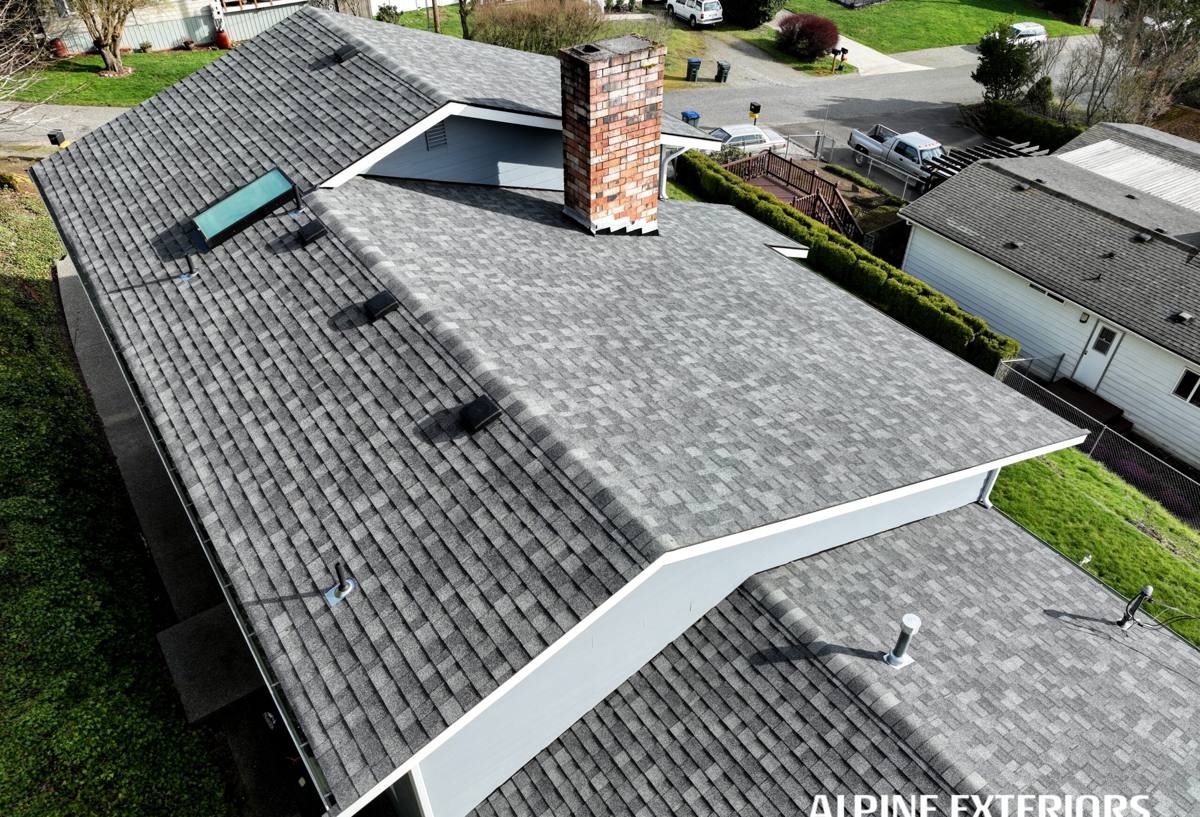
Why South Hill Roofs Take a Beating
Three things define roofing conditions in this part of Whatcom County, and South Hill gets all three at once.
Salt Air and Moisture
Bellingham sits on Bellingham Bay, and even homes well up the hill still get exposure to salt-laden air moving in off the water. Salt air accelerates corrosion on exposed metal — flashing, fasteners, gutter hardware, and vent caps age faster here than they would inland. Once corrosion starts on a fastener or a flashing seam, that's exactly where wind-driven rain finds its way in during the next storm.
Driving Rain
Pacific storms coming through Whatcom County don't just drop rain straight down — they push it sideways. On a hillside neighborhood like South Hill, wind-driven rain gets forced up under shingle tabs, around ridge caps, and into any gap in the flashing that a calmer rain would never reach. A roof that's held up fine for years under normal rainfall can suddenly leak the first time a storm hits with real wind behind it.
A Long Moss Season
Whatcom County's mild, wet climate means moss has a long growing window — often close to year-round on north-facing slopes and shaded sections of roof. South Hill's tree cover adds shade and drops organic debris into valleys and gutters, which gives moss and algae even more to work with. Moss holds moisture against the roofing material, lifts shingle edges over time, and turns a roof that looks intact into one that's already compromised underneath.
None of these factors cause damage on their own overnight. But after a storm, they're usually why a roof that seemed fine suddenly isn't.
What Counts as Storm Damage
Not all storm damage is a dramatic hole in the roof. Some of the most common issues we see after a South Hill storm are easy to miss from the ground.
- Wind-lifted or torn shingles — tabs pulled loose or creased at the edge, often on the windward side of the roof
- Fallen limbs and debris impact — bruised, cracked, or punctured shingles under tree cover, sometimes with no visible hole until it leaks
- Flashing displacement — around chimneys, skylights, and roof-to-wall junctions, where wind can work metal loose over one storm cycle
- Gutter and downspout damage — clogged or torn loose by wind and wet debris, which backs water up under the roof edge
- Underlayment exposure — where the top layer is gone but the leak hasn't shown up inside yet
- Ridge cap separation — one of the most exposed parts of the roof in high wind, and one of the easiest to miss from the ground
The tricky part is that interior leaks often show up days or weeks after the storm that caused them, once enough water has worked through. That lag is one of the biggest reasons we recommend a roof check after any significant wind or rain event, even if nothing looks obviously wrong from the driveway.
What a Correct Storm Repair Actually Involves
A storm repair that's done right is more than swapping out a few shingles. It has to address the damage itself and whatever let the damage happen in the first place.
Full Inspection, Not a Spot Check
We look at the whole roof, not just the area the homeowner points us to. Wind damage on one slope often means the opposite slope took stress too, and a single visible tear can be a sign of loosened fasteners across a wider section.
Matching Materials Honestly
Shingle color and profile change over the years, and an exact match isn't always possible on an older South Hill roof. We'll tell you upfront if a perfect match isn't realistic and lay out the honest options — a close match on the damaged section, or a broader repair area to blend the transition — rather than promising something we can't deliver.
Flashing and Underlayment First
Replacing shingles without checking the flashing and underlayment underneath just resets the clock until the next storm. If the flashing around a chimney or vent has corroded or shifted, that gets addressed as part of the repair, not left for next time.
Deck Condition
If water has been getting in for a while, the roof deck underneath can be soft or delaminated. A repair that skips checking the deck and just re-covers a weak spot won't hold up. We check for this on any repair where there's been active leaking, not just after obvious storm impact.
Our Process
- Call or request an estimate. Tell us what you're seeing — a leak, missing shingles, visible debris damage — and we'll get a time scheduled.
- Emergency tarping, if needed. If a roof is actively letting water in, our first priority is stopping further damage with a proper tarp-down, not a rushed patch.
- On-site inspection. We walk the full roof, check attic and interior ceilings where accessible, and document what we find.
- Written scope and honest pricing. You get a clear explanation of what's damaged, what needs to happen, and what it costs — before any work starts.
- Repair. We fix the actual problem: shingles, flashing, underlayment, or deck, in whatever combination the damage calls for.
- Final walk-through. We show you what was done and flag anything else worth keeping an eye on, like early moss growth or aging flashing nearby.
Repair or Replace? What Actually Drives That Decision
Storm damage doesn't automatically mean a full re-roof, and it doesn't automatically mean a small patch either. A few honest factors decide which direction makes sense.
| Factor | Leans Toward Repair | Leans Toward Replacement |
|---|---|---|
| Roof age | Under 12-15 years, otherwise sound | Near or past typical service life for the material |
| Extent of damage | Isolated to one section or slope | Spread across multiple areas or slopes |
| Deck condition | Solid, dry underneath | Soft, delaminated, or water-stained in multiple spots |
| Prior repair history | First significant issue | Repeated patches over several years |
| Material match | Close match available | Discontinued or badly weathered material, poor match |
If a roof is otherwise healthy and the damage is contained, repair is the right call and usually the more economical one. If the roof was already near the end of its life or has taken damage in several spots, we'll say so directly rather than stacking repairs on a roof that's due for replacement anyway.
Working With Insurance on a Storm Claim
Most storm damage repairs in this part of Whatcom County involve a homeowners insurance claim. A few things help that process go smoother:
- Document the damage with photos as soon as it's safe to do so, before any repair work covers it up
- Get a written inspection report that clearly separates storm damage from pre-existing wear like moss growth or age-related granule loss
- Ask for an itemized scope of work rather than a lump-sum estimate — adjusters generally want to see the breakdown
- Keep any tarping or emergency mitigation documented too, since insurers typically expect reasonable steps to prevent further damage
We're not a public adjuster and we won't promise a claim outcome, but we can give you a straightforward, honest inspection report that reflects what we actually see on the roof — which is what most adjusters are looking for.
Moss, Debris, and Preventing the Next Round of Damage
South Hill's tree cover and Whatcom County's long wet season mean moss and organic debris are an ongoing issue, not a one-time cleanup. A few things make a real difference between storms:
- Clearing gutters and valleys of needles and leaf debris before the fall storm season ramps up
- Keeping tree limbs trimmed back from roof edges, especially over shaded, moss-prone sections
- Addressing moss growth before it lifts shingle edges, rather than after
- Checking flashing and fasteners for early corrosion, particularly on roofs with more direct salt air exposure
None of this prevents every storm from causing some kind of damage — that's just the climate here — but it does reduce how much a given storm can exploit weak points that were already building.
Why It Matters to Hire a Crew That Already Works South Hill
A roof up on South Hill's slope behaves differently than a roof on flat, open ground, and it behaves differently again than a roof right down at sea level near the water. Wind exposure changes with elevation and tree cover, drainage patterns change with slope, and older homes in this neighborhood often have roofing details — chimney flashing, valley work, ridge details — that reflect the era they were built in rather than current standard practice.
A crew that regularly works this neighborhood has already seen how these homes hold up to Bellingham's specific mix of salt air, wind-driven rain, and moss, and knows what to look for beyond the obvious storm damage. That's the difference between a repair that solves today's problem and one that also protects against next season's storm.
Get a Free, No-Pressure Estimate
If your South Hill home has visible storm damage, a slow leak you can't quite pin down, or you just want a roof checked after a recent windstorm, we're glad to take a look. Use the form below to request a free estimate — no pressure, no obligation, just an honest read on what your roof actually needs.