 Bellingham Exterior
 Asphalt Shingle Roofing Built for Sunnyland's Climate
Sunnyland sits close enough to Bellingham Bay that salt-laden air is a daily fact of life, and far enough into the Pacific Northwest weather pattern that driving rain and long, damp winters are just as much a factor. Add in the deep shade from mature conifers and big-leaf maples that cover a lot of this neighborhood's older lots, and you've got a roofing environment that's genuinely tougher on shingles than what you'd find twenty miles inland. Asphalt shingle roofs still make sense here — they're affordable, proven, and easy to repair in sections — but only when they're specified and installed with this specific climate in mind. A shingle roof installed the same way you'd install one in Spokane or Phoenix will not perform the same way in Sunnyland.
This page covers what an asphalt shingle roof actually needs to hold up in this neighborhood, what a correct installation or repair looks like, and how we approach the work when we're on a Sunnyland roof.
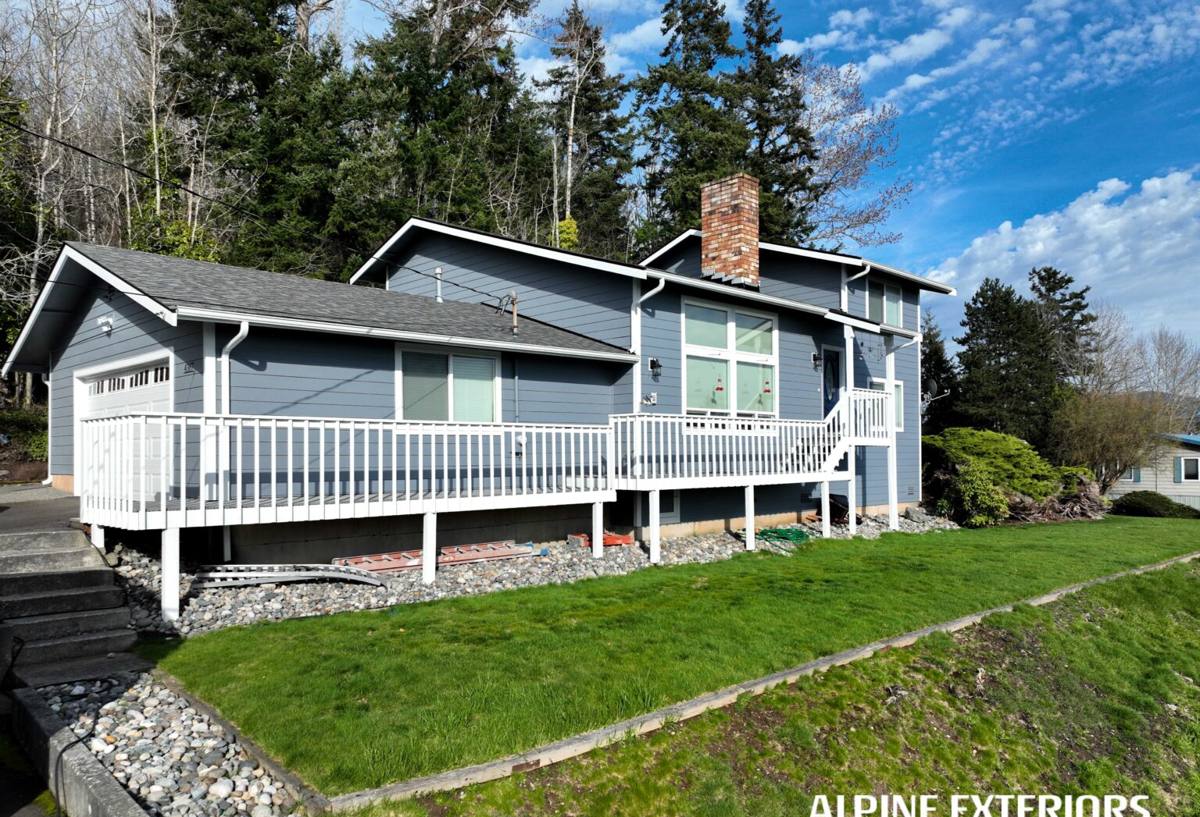
Why Sunnyland Roofs Wear Differently Than Roofs Elsewhere in Whatcom County
Every roof in Whatcom County deals with rain. What makes Sunnyland's asphalt shingle roofs age the way they do is the combination of three things happening at once, year-round.
Salt Air and Moisture Together
Proximity to the bay means airborne salt settles on roofing materials and metal components. On its own, that's a slow process. Combined with near-constant moisture, it accelerates corrosion on exposed fasteners, flashing, and any metal roof-mounted hardware faster than dry-climate corrosion rates would suggest. Shingles themselves aren't destroyed by salt air directly, but the metal that holds a roof system together — nail heads, drip edge, valley flashing, vent flashing — is.
Driving Rain, Not Just Rain
Wind-driven rain off the water pushes water sideways and upward under normal circumstances, not just straight down. That matters because a shingle roof relies on gravity and overlap to shed water. When rain arrives at an angle, water can find its way under shingle tabs, into exposed nail heads, and around flashing details that would be perfectly fine in a calm, straight-down rain. This is why underlayment quality and flashing detail matter more here than in drier, calmer regions.
Moss Season Runs Long
Between the shade cover common in Sunnyland's older, tree-lined streets and the extended wet season, moss and algae have a long window to establish themselves — often eight months or more out of the year. Moss isn't just cosmetic. It holds moisture directly against the shingle surface, works into the granule layer, and over time lifts shingle tabs enough to let water underneath. A roof that looks fine from the ground can have moss doing real damage underneath the surface layer.
What a Correctly Built Shingle Roof Needs Here
None of this means asphalt shingles are the wrong product for Sunnyland — they're used successfully on the large majority of homes in this neighborhood. It means the details around the shingle matter as much as the shingle itself.
- A high-quality synthetic or self-adhered underlayment — the layer under the shingles is your real waterproofing barrier; the shingles are the wear layer on top of it.
- Ice-and-water shield at eaves, valleys, and penetrations — the spots where driving rain and moss buildup cause the most trouble, and where a small gap becomes an interior leak.
- Corrosion-resistant fasteners and flashing — standard galvanized components can start showing rust well ahead of schedule this close to salt air; we account for that in what we spec.
- Proper attic and roof ventilation — trapped moisture from below is just as damaging as water from above, and it's a common cause of premature shingle failure that has nothing to do with the shingles themselves.
- Algae-resistant shingle products where the lot has heavy shade — these use copper-infused granules to slow moss and algae growth, which matters more on a shaded Sunnyland lot than almost anywhere else in the county.
Moss, Algae, and Debris: The Maintenance Reality
Homeowners in Sunnyland deal with more roof debris and organic growth than most of Bellingham simply because of tree cover. A few things are worth knowing:
Moss Removal Done Wrong Causes Damage
Pressure washing or aggressive scraping strips granules off the shingle surface, which shortens the roof's remaining life rather than extending it. Moss should be removed with low-pressure methods and the right tools, not blasted off.
Gutters and Valleys Need More Attention Here
Conifer needles and maple leaves collect in valleys and gutters faster in a shaded, tree-heavy neighborhood. Blocked valleys back water up under shingles during heavy rain, which is one of the more common causes of leaks we find on older Sunnyland roofs that otherwise look to be in decent shape.
Zinc or Copper Strips Help, But Aren't a Substitute for Inspection
Preventive metal strips near the ridge can slow moss regrowth over time, but they don't replace a periodic look at the roof surface, especially on lots with heavy shade where moss pressure is highest.
Repair, Re-Roof, or Replace: How We Help You Decide
Not every roofing call in Sunnyland ends in a full replacement, and we don't approach it that way by default. A lot of what we see is:
- Isolated flashing failures around chimneys, skylights, or vent pipes — repairable without touching the rest of the roof.
- Wind or debris damage to a section of shingles — patchable if the surrounding shingles are still in reasonable shape and a close color match is available.
- Granule loss and shingle curling from age and long-term moss exposure — usually a sign the roof is genuinely near the end of its service life.
- Interior moisture or staining with no obvious external cause — this needs a real inspection, since the source is often ventilation or flashing, not the shingles themselves.
We look at the roof's age, the underlayment condition where we can access it, the decking underneath, and how much of the damage is localized versus widespread before recommending anything. A roof with 5-8 years of reasonable life left rarely needs full replacement just because of one bad valley.
Comparing Shingle Options for a Shaded, Coastal-Influenced Lot
| Shingle Type | Moss/Algae Resistance | Wind Performance | Typical Fit for Sunnyland |
|---|---|---|---|
| Standard 3-tab | Low — no algae-resistant granules | Adequate on sheltered lots | Budget option; needs more frequent moss maintenance under tree cover |
| Architectural (laminated) | Moderate to high with algae-resistant granules | Strong, rated for higher gusts | Most common recommendation for shaded, wind-exposed Sunnyland lots |
| Algae-resistant premium laminate | High — copper-infused granules slow growth | Strong | Best fit for heavily shaded lots with a history of moss buildup |
| Impact-rated shingle | Varies by product | High, rated for debris impact | Worth discussing if the lot has a lot of overhanging limb risk |
Cost differences between these tiers are real but modest relative to the total job — the bigger cost driver is almost always roof size, pitch, number of penetrations, and how much of the decking needs replacing, not which shingle tier you choose.
Our Process on a Sunnyland Roofing Job
1. Inspection and Honest Assessment
We get on the roof, check the decking where it's exposed, look at flashing and valley condition, and check the attic side for ventilation and moisture issues. You get a straight answer on whether this is a repair, a partial re-roof, or a full replacement — we're not going to sell you a full roof if a repair genuinely solves the problem.
2. Clear, Written Estimate
You'll see the shingle product, underlayment, flashing approach, and ventilation plan spelled out, not a vague lump sum. If there are decking repairs that might come up once old shingles are off, we tell you that's a possibility up front rather than surprising you mid-job.
3. Tear-Off and Deck Inspection
Old roofing comes off, and the decking gets checked for soft spots, rot, or prior water damage — common on older Sunnyland homes where a roof may have been leaking slowly for longer than anyone realized.
4. Underlayment, Flashing, and Ventilation First
This is the layer that actually keeps water out. We install ice-and-water shield at vulnerable areas, corrosion-resistant flashing throughout, and make sure ventilation is correct before a single shingle goes down.
5. Shingle Installation to Manufacturer Spec
Nailing pattern, exposure, and sealant strip activation all matter for wind and water performance — this is where a lot of shortcuts happen on rushed jobs, and it's where we don't cut corners.
6. Final Walkthrough
We walk the job with you, cover care and moss-prevention basics specific to a shaded lot, and make sure you know what your warranty actually covers.
Why Local Experience in Sunnyland Specifically Matters
A contractor who works across Whatcom County generally understands Pacific Northwest roofing. A contractor who has worked Sunnyland specifically understands which streets sit under heavy tree cover and need algae-resistant products as a default rather than an upsell, which lots catch the most wind off the bay, and what the moss pressure looks like on a shaded roof eight months into the wet season versus a roof with more open sun exposure a few blocks away. That local pattern recognition shows up in fewer callbacks and roofs that are specified right the first time, not just installed correctly on paper.
Simple Maintenance Checklist for Sunnyland Homeowners
- Clear gutters and valleys of needle and leaf debris at least twice a year, more often under heavy tree cover.
- Have visible moss addressed with low-pressure methods before it spreads across a full slope.
- Check attic ventilation isn't blocked by insulation — trapped moisture damages shingles from underneath.
- After any significant windstorm, do a visual check from the ground for lifted or missing shingles.
- Get flashing around chimneys, skylights, and vents inspected every few years — this is the most common leak source, not the shingle field itself.
- Don't ignore a small ceiling stain — trace it before it becomes a decking repair.
If your Sunnyland roof needs a repair, a re-roof, or you're just not sure which one it is, we're glad to take a look and give you a straight, no-pressure estimate — use the form below to get started.