 Bellingham Exterior
 Metal Roofing for York Homes in Bellingham
York is one of Bellingham's older, well-established neighborhoods, and that means a lot of roofs in the area are due for a serious look — either a first metal roof or a replacement of one that's reaching the end of its service life. Metal roofing has become the go-to upgrade for homeowners here who are tired of re-treating or replacing asphalt shingles every decade or two. It's not the right fit for every house or every budget, but for the climate we live in — cool, wet, and salt-tinged this close to the water — it solves problems that other roofing materials simply can't.
This page covers what metal roofing actually involves for a York property specifically: the climate stresses your roof deals with, what a correct installation looks like, how we run the job from first call to final walkthrough, and what to expect on cost and maintenance. No sales pitch, just what we'd tell a neighbor.
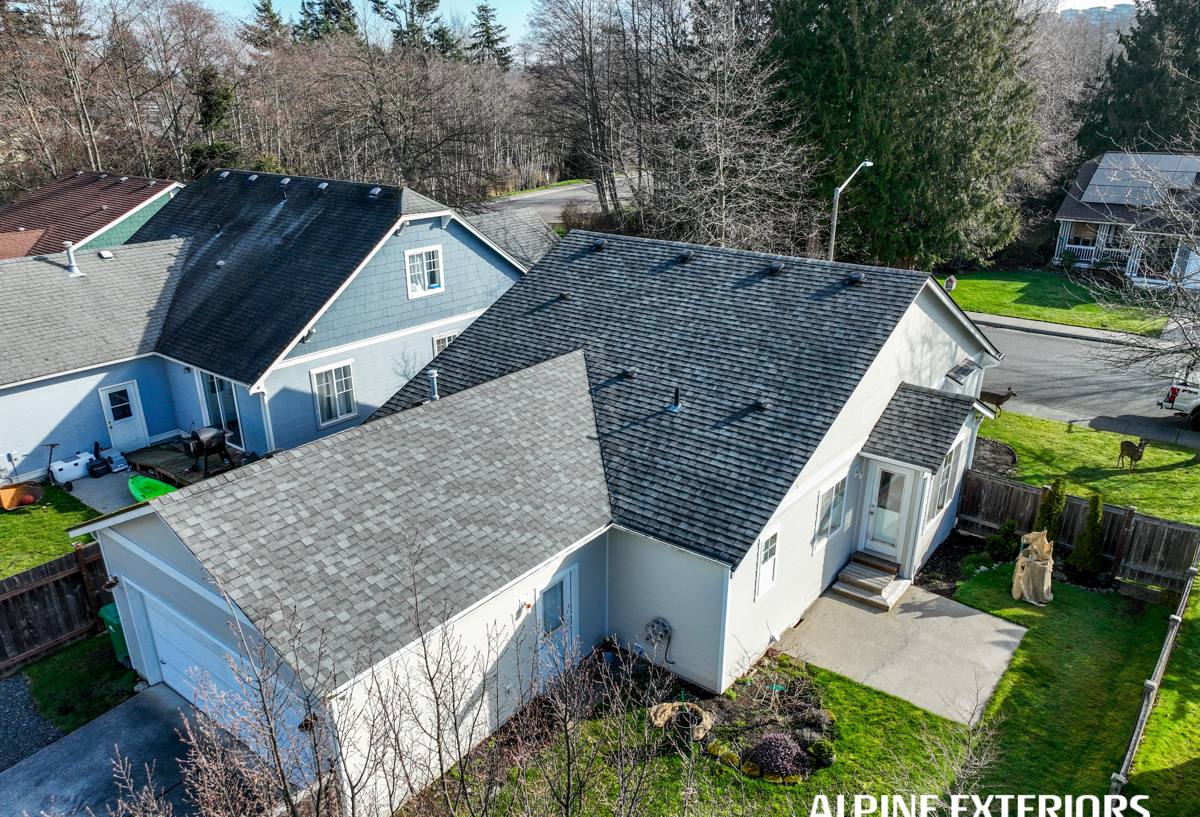
Why Bellingham's Climate Is Hard on Roofs
Whatcom County doesn't get the extreme weather some regions do, but it makes up for it with relentless, grinding exposure. Three things drive most of the roofing problems we see on York homes:
Salt Air
Being close to the Puget Sound and Bellingham Bay means airborne salt is a constant, low-level presence, even a few miles inland. Salt air accelerates corrosion on any exposed metal — flashing, fasteners, gutters — and it's part of why we're particular about which metal alloys and coatings we use on roofs in this area. Not all "metal roofing" is built for a marine-influenced climate, and using the wrong product here shortens its life considerably.
Driving Rain
Bellingham's rain isn't just frequent, it's often wind-driven, which pushes water sideways under laps, around penetrations, and into any gap a fair-weather installation would get away with. A roof that would perform fine in a drier climate can leak here simply because the underlayment, flashing details, or seam spacing weren't built for wind-driven rain.
Moss Season
Our long, damp shoulder seasons give moss and algae months at a time to get established, especially on north-facing slopes and shaded sections under trees, which are common throughout York's mature tree canopy. Moss holds moisture against a roofing surface and, on older asphalt shingles, works its way under tabs and lifts them. Metal roofing doesn't stop moss from landing on it, but it gives moss nothing to root into, which is a meaningful difference over the life of the roof.
Why Metal Roofing Makes Sense Here
We're not going to tell you metal is the only good roofing material — it isn't, and it isn't the right budget fit for every homeowner. But for the specific conditions in this part of Whatcom County, here's what it offers:
- Sheds wind-driven rain more reliably than lapped shingle systems when the seams and flashing are done correctly
- Nothing organic for moss or algae to grip onto, which cuts down on the growth that plagues shaded, north-facing roof sections
- Coated steel and aluminum systems, properly specified, resist the corrosive effects of salt air far better than bare or lightly coated metals
- Sloughs snow and ice loads more effectively than most shingle roofs, reducing ice-dam risk during our occasional cold snaps
- Long service life reduces how often you're dealing with tear-offs, disposal, and the disruption of a full re-roof
What a Correct Metal Roof Install Actually Involves
Metal roofing has a reputation for being "install it and forget it," but that reputation only holds if the job is done right the first time. A metal roof is far less forgiving of shortcuts than asphalt shingles — problems with fastening, underlayment, or flashing don't show up as a minor leak years later, they show up as trapped moisture, panel movement, or corrosion that's expensive to correct after the fact.
Deck Inspection and Prep
Before any metal goes down, the roof deck needs to be sound. Given how much moisture this region sees, we check for soft spots, rot, and prior water damage around penetrations and valleys. Any compromised decking gets replaced — covering a bad deck with a new metal roof just hides the problem.
Underlayment
For a house in York, we use a high-temperature synthetic or self-adhering underlayment suited to metal roofing, with extra attention at eaves, valleys, and any low-slope transitions where wind-driven rain is most likely to test the system. This layer is your backup defense — it matters more here than in drier climates.
Fastening and Panel Layout
Panel type dictates fastening method. Exposed-fastener panels use gasketed screws set to correct torque — overdriven or underdriven fasteners are a common source of leaks on poorly installed metal roofs. Standing seam panels use concealed clips that let the metal expand and contract with temperature changes without stressing the fasteners. Layout also accounts for prevailing wind direction on the property, since seam orientation affects how well a roof resists wind-driven rain.
Flashing and Penetrations
Flashing detail work is where most roof failures actually originate, on any material. Chimneys, vents, skylights, and valleys all get custom-formed flashing designed for the specific panel profile, sealed and layered so water is always directed down and out, never trapped.
Fastener and Coating Selection
Because of the salt air exposure common throughout the York area, we match fasteners and panel coatings to resist corrosion rather than defaulting to whatever is cheapest. Mismatched metals (for example, the wrong fastener alloy against a given panel type) can cause galvanic corrosion over time, which is a preventable mistake we design around from the start.
Panel and Material Options
There isn't one "correct" metal roofing product for every house — the right choice depends on your roof's slope, your budget, and how the house looks architecturally. Here's a general comparison of the options we most commonly discuss with homeowners in this area:
| Option | Typical Look | Best Suited For | Maintenance Notes |
|---|---|---|---|
| Standing Seam Steel | Clean vertical panels, concealed fasteners | Most roof pitches; premium, long-term choice | Very low; occasional debris and gutter checks |
| Exposed-Fastener Steel | Ribbed panel look, visible screws | Budget-conscious projects, outbuildings, some homes | Fastener washers should be inspected periodically |
| Aluminum Panels | Similar to steel systems, lighter weight | Homes closest to the water needing extra corrosion resistance | Low; naturally corrosion-resistant |
| Stone-Coated Steel | Mimics shingle or tile appearance | Homeowners wanting a traditional look with metal's performance | Low; coating adds an extra protective layer |
For most properties in salt-air-influenced areas like York, we lean toward steel or aluminum systems with marine-grade coatings, and we're upfront when a particular product isn't a good match for a given roof's exposure or slope.
What Drives the Cost
We won't quote a number here because every roof is different, but these are the real factors that move the price on a metal roof in this area:
- Panel type — standing seam runs higher than exposed-fastener panels due to material and labor
- Roof complexity — valleys, dormers, chimneys, and multiple pitches all add flashing labor
- Tear-off requirements — removing old roofing versus installing over an approved existing layer
- Deck condition — any rot or damage found during tear-off adds repair scope
- Coating and gauge selection — heavier gauge metal and marine-grade coatings cost more upfront but pay off in corrosion resistance near the water
- Access — steep pitches or difficult site access affect labor time
Metal roofing typically costs more upfront than asphalt shingles, but the calculation homeowners in this area usually care about is total cost over the life of the roof — fewer replacements, less moss-related maintenance, and less corrosion-driven repair work over the decades ahead.
Our Process, Start to Finish
- On-site assessment — we walk the roof (or inspect from the ground and attic where access is limited), check the deck, flashing points, ventilation, and note any moss or moisture damage specific to your property's exposure
- Honest recommendation — we tell you what your roof actually needs, including if metal isn't the best fit for your budget or roof structure
- Detailed proposal — panel type, coating, underlayment spec, and flashing plan laid out clearly, no vague line items
- Scheduling around weather — we plan installs to work with Bellingham's rain patterns rather than fight them
- Installation — deck prep, underlayment, panel installation, and custom flashing work, done in sequence with quality checks at each stage
- Final walkthrough — we go over the finished roof with you, including care and maintenance specific to a metal roof in a moss-prone, salt-air climate
Maintaining a Metal Roof in a Marine Climate
Metal roofing is genuinely low-maintenance compared to shingles, but "low-maintenance" doesn't mean "no maintenance," especially this close to the water. A few habits go a long way:
- Clear debris from valleys and around penetrations after fall leaf-drop, since trapped organic matter holds moisture against the panel
- Keep gutters clear so water isn't backing up against eave flashing during heavy rain events
- Do a visual check after major windstorms for any lifted flashing or debris impact
- Trim back tree limbs that overhang the roof to reduce shade, debris, and moss pressure on north-facing slopes
- Have fasteners on exposed-fastener panels checked periodically, since gaskets can wear over many years of temperature cycling
Why a Locally Experienced Crew Matters
Metal roofing is unforgiving of generic, one-size-fits-all installation. A crew that mostly works in drier inland climates may not think twice about seam spacing, flashing overlap, or fastener coatings — details that matter enormously once you're dealing with Whatcom County's combination of salt air, driving rain, and long moss seasons. Working regularly on homes throughout Bellingham and the York area means we've seen how these specific conditions actually wear on a roof over years, not just what a manufacturer's spec sheet says in ideal conditions. That local pattern recognition — knowing which slopes hold moss, which exposures corrode fastest, where wind-driven rain tends to find weak points — is what separates a metal roof that performs for decades from one that needs early repairs.
Get a Straight Answer About Your Roof
If you're weighing metal roofing for a home in York or elsewhere in Bellingham, we're happy to take a look and give you an honest read on what your roof needs — no pressure, no upsell. Fill out the form below to schedule a free estimate.