 Bellingham Exterior
 Roof Replacement in York, Bellingham
York is one of Bellingham's older, well-established neighborhoods, and that shows up in its roofs. A lot of homes here were built decades before today's underlayment, ventilation, and flashing standards existed, and many are on their second or third roof covering already. When a York homeowner calls us about a roof, it's rarely a surprise — it's usually the tail end of years of watching moss creep across the north-facing slope, granules collecting in the gutters, or a slow stain spreading across a bedroom ceiling. Roof replacement here isn't just swapping shingles; it's correcting whatever the original build or a past re-roof got wrong so the next roof actually lasts.
This page covers what roof replacement means specifically for York homes — the climate factors that matter, what a correct tear-off and install looks like, how we run the job, and what to expect for cost and timeline.
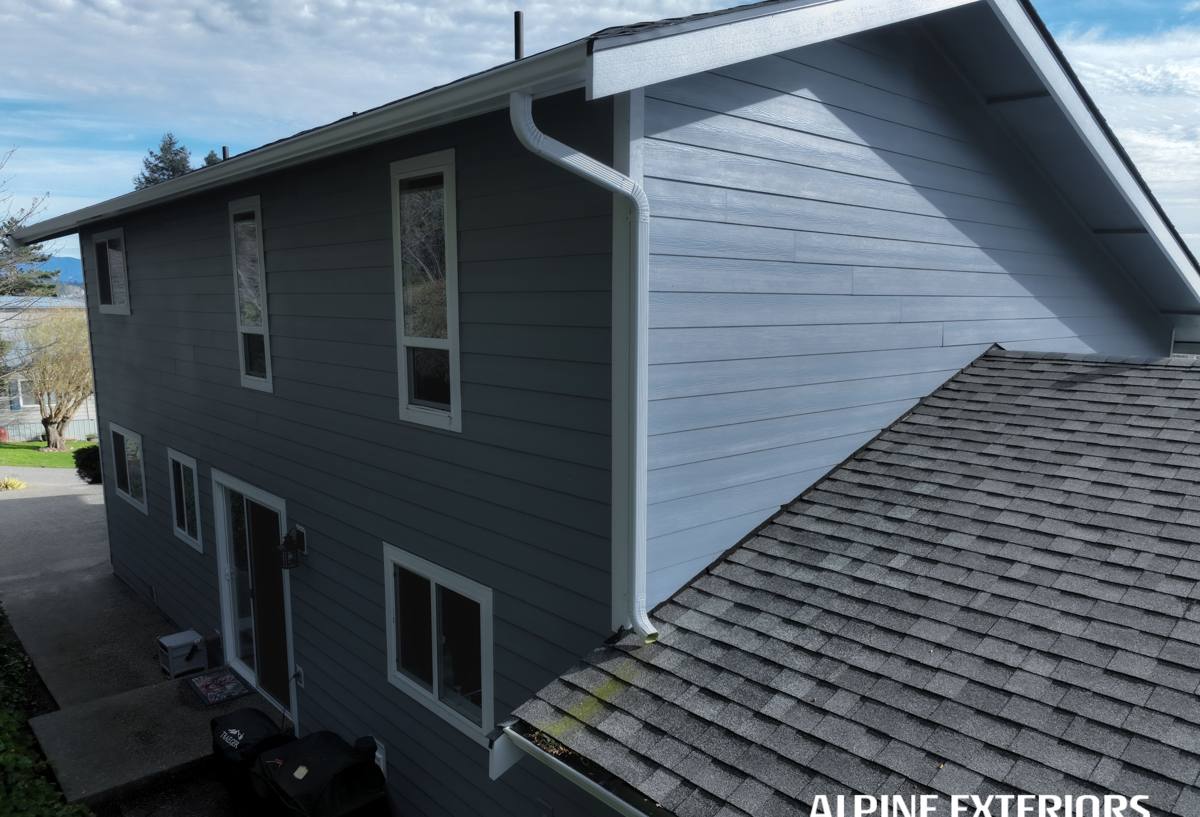
Why York Roofs Wear Differently
Bellingham sits close enough to Bellingham Bay and the Salish Sea that salt-laden air is a real factor for roofs in older, closer-in neighborhoods like York — it accelerates corrosion on exposed metal fasteners, flashing, and vent caps faster than you'd see further inland. Combine that with Whatcom County's long, wet fall-through-spring stretch of driving rain, and you get two compounding problems: moisture that wants to find every gap in a roof system, and hardware that corrodes and loosens over time, opening up exactly those gaps.
Then there's moss. Bellingham's moss season runs long — realistically most of the year on shaded, north-facing, or tree-covered roof planes, which describes a good number of York's mature, tree-lined lots. Moss isn't just cosmetic. It holds moisture against the roof surface, lifts shingle edges as it grows, and works its way under flashing and into nail lines. A roof that looks "just dirty" from the ground is often already losing material underneath the moss.
What This Means for a Replacement
- Fastener and flashing metal should be corrosion-resistant, not the cheapest gauge available — this matters more here than in a dry inland climate.
- Underlayment needs to be a real synthetic or self-adhered ice-and-water product at vulnerable areas, not the bare minimum felt some older Bellingham roofs still have.
- Ventilation has to actually move air, not just exist on paper — trapped moisture under a roof deck in this climate leads to rot and mold, not just a shorter shingle life.
- Any moss-prone plane needs a plan for reducing future buildup, since a new roof on a shaded lot without addressing airflow or overhanging limbs will grow moss again on the same timeline as the last one.
Signs a York Home Needs Roof Replacement, Not Another Repair
Not every roof problem means a full replacement, and we'll tell you honestly when a repair is the right call. But there are signs that mean patching is just delaying a bigger bill:
- Shingles that are cupping, curling, or losing granules across large sections rather than one isolated spot
- Moss that has been scraped or treated before and has already come back thick within a season or two
- Soft spots or noticeable sag when walking the roof or viewing the deck from the attic
- Daylight visible through the roof deck, or staining on multiple rafters/sheathing boards in the attic
- Repeated leaks in different spots each winter, rather than one consistent failure point
- A roof covering that's at or past its realistic service life for the material, especially if it was installed with older, thinner felt underlayment
- Flashing around chimneys, skylights, or dormers that's rusted, lifted, or was never properly step-flashed to begin with
What a Correct Roof Replacement Involves
A roof replacement is a system, not a single product. Doing it right in this climate means every layer is pulling its weight, not just the shingles on top.
Tear-Off and Deck Inspection
We remove the existing roofing down to the deck rather than layering over it. This is the only way to actually see the condition of the sheathing — soft, delaminated, or water-stained boards get replaced before anything new goes down. Covering over a compromised deck is one of the most common shortcuts that leads to a second premature replacement.
Underlayment and Ice-and-Water Protection
Valleys, eaves, and any low-slope transitions get self-adhered waterproof underlayment as a baseline, with synthetic underlayment across the rest of the field. In a climate with as much sustained rainfall as Bellingham sees, this layer is doing real work — it's the backup when wind-driven rain gets past the surface layer, which happens more often than most homeowners realize.
Flashing
Chimneys, skylights, sidewalls, and roof-to-wall transitions get new step and counter flashing rather than reused or caulk-patched flashing. This is one of the most common weak points we find on older York roofs, and it's also one of the most preventable — flashing failure accounts for a large share of the leaks we get called out for on roofs that are otherwise still structurally fine.
Ventilation
Proper intake at the eaves and exhaust at the ridge or through vents keeps the attic space at a stable temperature and moisture level year-round. Without it, moisture gets trapped under the deck regardless of how good the roof covering is, and that shortens the life of everything above it — sheathing, insulation, and the roofing material itself.
Roof Covering Installation
Correct nailing patterns, proper exposure, and manufacturer-specified starter courses and ridge caps. This sounds basic, but installation quality is the single biggest factor in whether a roofing material hits its expected lifespan or fails early — more than the brand of shingle chosen.
Choosing a Roofing Material for a York-Area Home
There's no single "best" roofing material — the right choice depends on the home's roof pitch, budget, and how much moss and moisture exposure the specific lot deals with. We'll walk through the honest trade-offs rather than push whatever has the best margin.
| Material | How It Handles Moss & Moisture | Maintenance | Typical Lifespan |
|---|---|---|---|
| Architectural asphalt shingle | Good with proper ventilation and algae-resistant granules; still needs periodic moss removal on shaded planes | Low to moderate | 20–30 years |
| Standing seam metal | Sheds moisture fast, sheds moss well due to smooth surface and slope | Low | 40–60+ years |
| Composite/synthetic shake | Resists moisture absorption better than real wood shake; still benefits from moss prevention | Low to moderate | 30–50 years |
| Cedar shake | Attractive but absorbs moisture and is more moss-prone in shaded, damp conditions without diligent upkeep | High | 20–30 years with upkeep |
For heavily shaded or north-facing York roofs specifically, we lean toward recommending materials and details (like zinc or copper strips near the ridge) that actively discourage moss regrowth, since the underlying tree cover and orientation that caused moss buildup the first time usually isn't changing.
Our Process for a York Roof Replacement
- On-site inspection and estimate. We look at the roof, attic, and any interior damage, and give you a straight assessment of whether it's a repair or replacement situation.
- Written scope and pricing. You get a clear breakdown of materials, underlayment, flashing work, and any deck repair allowances — no vague lump-sum guessing.
- Scheduling around weather. Given how much of the year sees active rain in this region, we plan tear-off in stages so your home isn't left exposed to an open deck overnight.
- Tear-off, deck repair, and system installation. Full removal, deck inspection, and installation of underlayment, flashing, ventilation, and the roof covering in sequence.
- Cleanup and walkthrough. Magnetic sweep for nails, full site cleanup, and a final walkthrough so you can see the completed work and ask questions before we consider the job done.
Cost Factors for York Roof Replacement
We don't post fake price ranges because roof cost genuinely varies by size, pitch, layer count, deck condition, and material — but the factors that move the number most are worth knowing upfront:
- Roof size and number of planes/valleys — more cuts and seams means more labor and material
- Steepness of pitch, which affects both labor difficulty and safety requirements
- Number of existing layers to remove (some older Bellingham homes have two roofing layers stacked)
- Deck condition — rot or soft sheathing found during tear-off adds material and labor
- Material choice, from standard architectural shingle up through metal or composite systems
- Complexity of flashing work around chimneys, skylights, and dormers
We give you the real number after inspecting the roof, not a phone-quote guess, and we flag likely deck repair costs before we start so there are no surprise change orders mid-job.
Why Local Experience in York Matters
Roofing crews who work regularly in Bellingham and across Whatcom County know what this climate does to a roof over time, not just what a product spec sheet claims. That means recognizing moss patterns tied to a specific lot's tree cover and sun exposure, knowing which flashing details actually hold up against sustained wind-driven rain off the bay, and not being surprised by what's under an older York roof's layers when tear-off starts. It also means being realistic with homeowners about timelines — scheduling roofing work around this region's weather patterns rather than promising a schedule that gets blown by a wet week.
If you're seeing moss coming back fast, granule loss, or a leak that's been patched more than once, it's worth getting a straight, no-pressure look at the roof before winter rain finds the next weak spot. Fill out the form below and we'll set up a time to come take a look and give you an honest assessment.