 Bellingham Exterior
 Asphalt Shingle Roofing Built for Columbia's Bellingham Climate
Homes in the Columbia neighborhood sit close enough to Bellingham Bay and the surrounding hillside tree cover that a roof here works harder than a roof in a drier inland town. Salt-laden air off the water, driving rain that comes in sideways during winter storms, and a moss season that can stretch eight or nine months out of the year all put steady pressure on asphalt shingles. A roof that's installed correctly for this specific mix of conditions will outlast one that was put on using generic, one-size-fits-all methods. That's the difference we aim for on every Columbia roof we touch.
This page covers what asphalt shingle roofing actually needs to hold up here, what a correct installation looks like from tear-off to final inspection, and why working with a crew that already knows this neighborhood's houses and weather pattern matters more than it might seem.
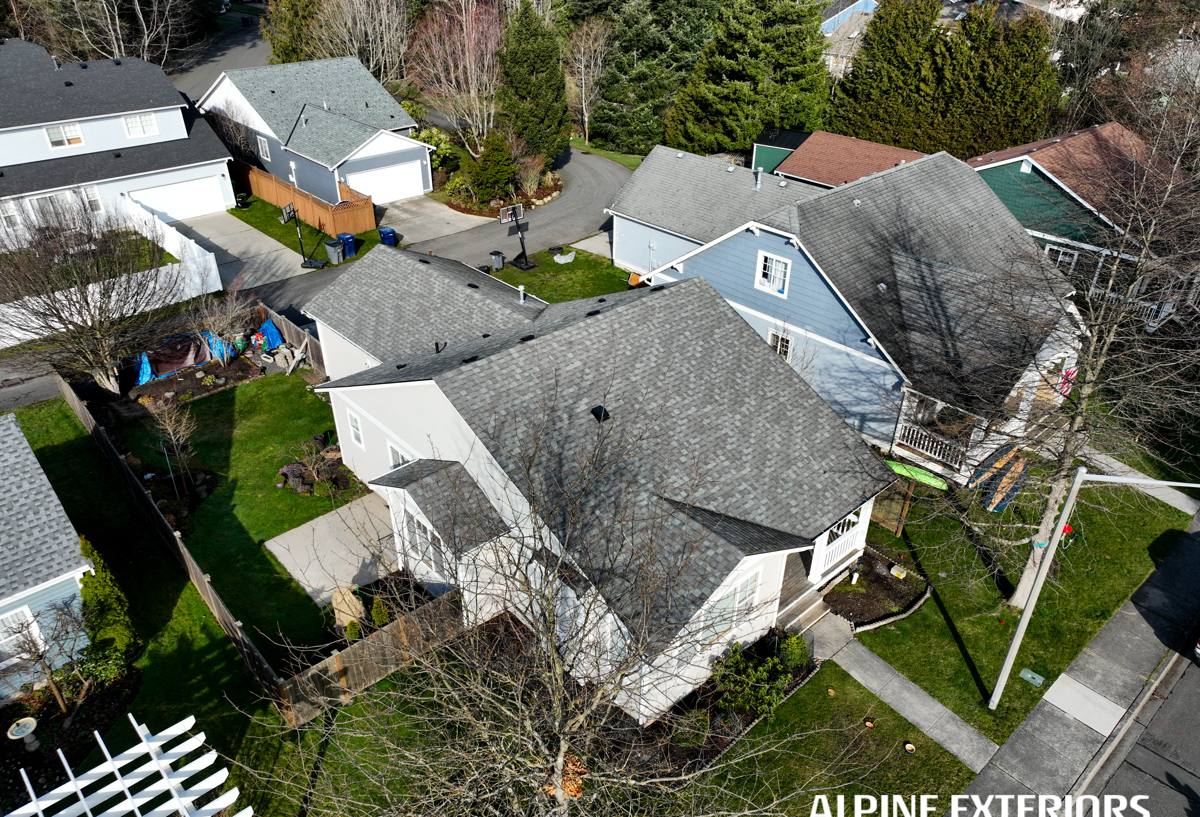
What Local Roofs Are Up Against
Moss and Algae
Whatcom County's damp, shaded conditions are close to ideal for moss growth, and Columbia's mix of mature trees and moisture-holding air gives moss plenty of chances to take hold. Moss isn't just cosmetic — as it grows under shingle edges and in the gaps between tabs, it holds water against the roofing material and lifts shingles away from the deck. Over time that trapped moisture accelerates granule loss and can work its way into the underlayment.
Wind-Driven Rain
Storms coming off the Strait of Georgia and the Sound don't always arrive as a gentle vertical rain. Wind-driven rain pushes water sideways and upward under shingle tabs, which is exactly the scenario that exposed nail heads, thin underlayment, or poorly lapped flashing can't handle. A roof that would be fine in a calmer climate can leak here if the install skipped the details meant for wind-driven exposure.
Salt Air and Corrosion
Proximity to the water means airborne salt settles on roofing hardware over the years. Fasteners, flashing, and vents that aren't rated for coastal exposure corrode faster than they would inland, and once a nail head starts to rust, it's a slow leak waiting to happen. This is a detail that's easy to overlook and expensive to ignore.
What a Correct Asphalt Shingle Installation Involves
A roof that's going to perform well in this climate depends on the layers underneath the shingles as much as the shingles themselves. Skipping or shortcutting any of these steps is where premature leaks and moss problems usually start.
Tear-Off and Deck Inspection
We remove old roofing down to the deck rather than layering over it, because that's the only way to actually see the condition of the sheathing. Soft spots, rot, or old water staining get addressed before anything new goes down — covering that kind of damage just hides a problem that keeps getting worse underneath.
Ice and Water Barrier, Then Underlayment
Vulnerable areas — eaves, valleys, and anywhere water tends to pool or back up — get a self-adhering water-resistant barrier before the synthetic underlayment goes over the rest of the deck. This combination is what actually stops wind-driven rain from finding a way in, rather than just shedding water under normal conditions.
Flashing at Every Transition
Chimneys, skylights, sidewalls, and roof valleys are where most leaks actually originate, not in the open field of shingles. Properly formed and lapped metal flashing at each of these transitions matters more to long-term dryness than almost anything else in the job.
Ventilation
A roof deck that can't breathe traps heat and moisture in the attic, which shortens shingle life from underneath and can contribute to moss growth by keeping the roof surface damp longer after rain. Balanced intake and exhaust ventilation is part of a correct install, not an upsell.
Nailing Pattern and Fastener Choice
Manufacturer-specified nailing patterns exist for a reason — under-nailed or misplaced fasteners are one of the most common causes of shingles lifting or blowing off in wind events. Corrosion-resistant fasteners matter more here than in a drier, inland climate given the salt air exposure.
Choosing the Right Shingle for This Area
Not every asphalt shingle product is a good match for a coastal, moss-prone, wind-exposed roof. The table below outlines the general tiers homeowners in Columbia typically weigh against each other.
| Shingle Type | Typical Lifespan | Moss Resistance | Wind Rating | Best Fit For |
|---|---|---|---|---|
| 3-Tab (economy) | 15-20 years | Standard, no built-in resistance | Lower | Budget-conscious re-roofs on simpler rooflines |
| Architectural / Dimensional | 25-30 years | Standard, algae-resistant options available | Higher | Most Columbia homes; better wind and impact performance |
| Algae-Resistant (AR) Architectural | 25-30 years | Copper- or zinc-infused granules resist streaking and moss buildup | Higher | Homes under heavy tree cover or with a history of moss issues |
| Premium / Designer | 30+ years | Typically includes AR granules | Highest | Homeowners prioritizing appearance and maximum durability |
For most Columbia homes, we steer people toward an algae-resistant architectural shingle. The upfront cost difference over a basic 3-tab is modest compared to the labor cost of a re-roof, and the payoff in reduced moss staining and longer service life is real in this climate.
Our Process, Start to Finish
- On-site assessment: we walk the roof (weather permitting) or inspect from the ground and attic to check deck condition, ventilation, flashing points, and current moss or moisture damage.
- Written estimate: a clear breakdown of materials, scope, and price — no vague allowances or surprise add-ons later.
- Material delivery and protection: landscaping, gutters, and exterior surfaces get covered or protected before work starts.
- Tear-off and deck repair: old roofing removed, deck inspected, any damaged sheathing replaced.
- Underlayment, flashing, and shingle installation: installed in the sequence and pattern the manufacturer specifies, adjusted for this climate's wind and moisture exposure.
- Ventilation check: intake and exhaust venting confirmed or corrected as part of the job, not treated as a separate project.
- Cleanup and magnetic sweep: job site cleared of debris and swept for stray nails before we consider the job done.
- Final walkthrough: we go over the finished roof with the homeowner and answer any questions before wrapping up.
Maintenance That Actually Matters Here
A well-installed roof still needs some upkeep in this climate. Most of it is simple and inexpensive if it's done consistently, and most of the emergency calls we see trace back to one of these being skipped for a few years.
- Keep gutters clear of needles and leaf debris so water isn't backing up under the eave edge
- Trim back overhanging tree limbs to cut down on shade, debris, and moss spores landing on the roof
- Have moss growth removed properly (not pressure-washed, which can strip granules) rather than left to spread
- Check attic ventilation isn't blocked by insulation or stored items
- Look at flashing around chimneys and skylights each fall before the heavy rain sets in
- Address small leaks or missing shingles right away rather than waiting for dry weather to "deal with it later"
Repair or Replace? Signs to Watch For
Not every roofing issue in Columbia means a full replacement. A localized leak from a single failed flashing point or a section of storm-damaged shingles can often be repaired if the rest of the roof is in reasonable shape. On the other hand, widespread granule loss, shingles that are curling or cracking across large areas, persistent moss regrowth despite cleaning, or a roof already past its expected service life usually point toward replacement being the more cost-effective long-term choice. An honest assessment up front is what tells you which category your roof falls into — and we'll always tell you if repair is the more sensible option, even when it's the smaller job.
Why a Local Bellingham Crew Makes a Difference
Roofing crews that work across many different climates apply the same general playbook everywhere. A crew based in and around Bellingham sees the same moss patterns, the same wind-driven rain events, and the same salt air exposure on a regular basis, which shapes real decisions — where extra flashing attention goes, which ventilation setup actually keeps a Whatcom County attic dry, which fasteners hold up over time near the water. That familiarity isn't a marketing point, it's the difference between a roof that's technically installed correctly and one that's installed correctly for Columbia specifically.
We also know that in a coastal Washington climate, work sometimes needs to be scheduled around weather windows, and that homeowners appreciate a crew that's straightforward about timelines rather than overpromising during the wetter months.
Get a Free, No-Pressure Estimate
If your roof is showing moss buildup, aging shingles, or you just want an honest read on how much life it has left, we're happy to take a look. Use the form below to request a free estimate for your Columbia-area home — no pressure, no obligation, just a straight assessment of what your roof actually needs.