 Bellingham Exterior
 Siding That Has to Work in Barkley's Climate, Not Just Look Good on Install Day
Barkley sits close enough to Bellingham Bay and the surrounding wetlands that homes here deal with a steady combination of moist air, driving rain off the water, and long stretches of the year when direct sun barely reaches north- and east-facing walls. That combination is hard on siding. It is not just about rain hitting the wall — it is about how long a wall stays wet after the rain stops, and what grows on it while it does.
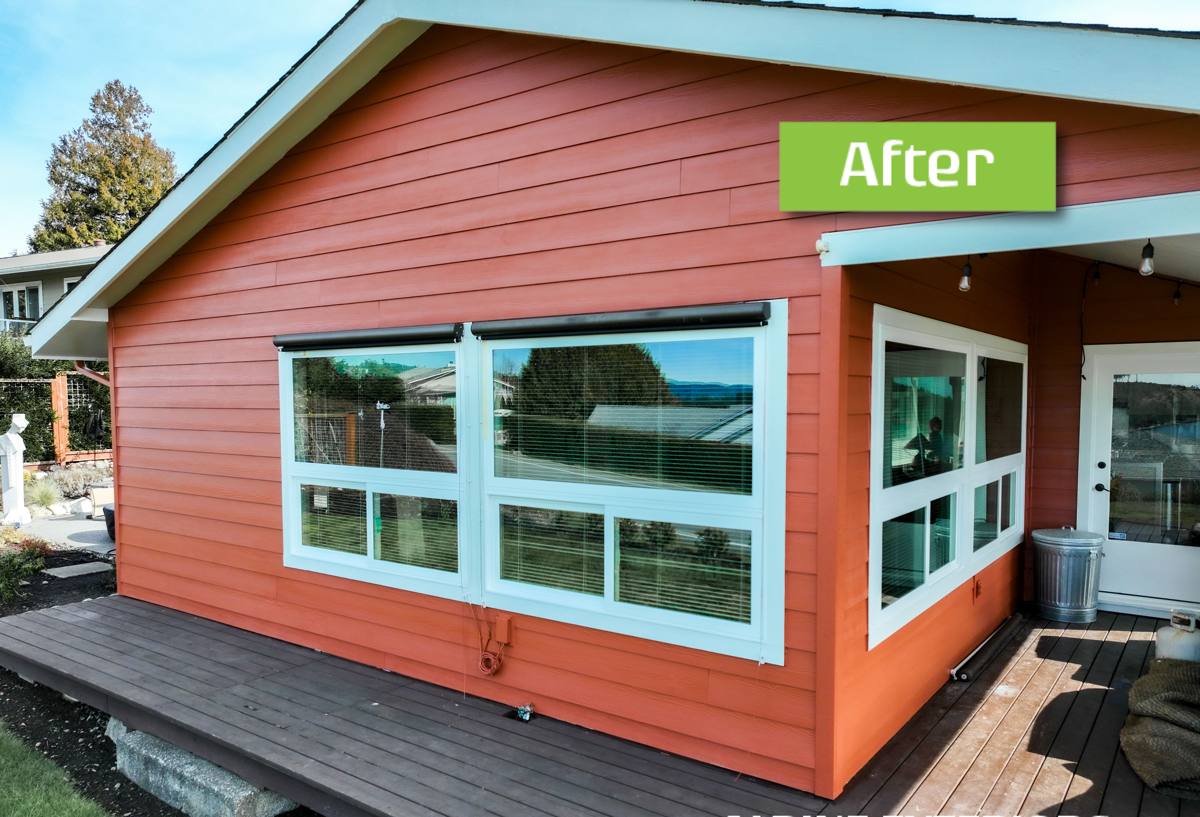
We install fiber cement siding in Barkley because it is one of the few products that handles that cycle without becoming a maintenance project every couple of years. Wood-based products swell, cup, and rot when they stay damp. Vinyl can hold its shape but does nothing to stop moss and algae from taking hold in the shade and low-airflow spots that are common on Barkley lots with mature trees and closer-set homes. Fiber cement gives us a non-combustible, dimensionally stable material that we can detail correctly for this specific climate.
What Whatcom County's Coastal Climate Actually Does to Siding
Whatcom County's marine climate is often described as mild, and it is — but mild and easy on building materials are not the same thing. A few specific stresses show up again and again on Barkley homes:
- Salt-influenced air: Proximity to Bellingham Bay means airborne salt and moisture accelerate corrosion on exposed fasteners and metal trim, and it keeps painted and coated surfaces working harder to hold up.
- Driving rain: Wind-driven rain off the water doesn't just wet the siding surface — it pushes moisture toward laps, joints, and penetrations where water intrusion actually starts.
- Long moss and algae season: Cool, shaded, and often damp conditions for much of the year give moss and algae a long window to establish on north-facing walls, under eaves, and near landscaping that blocks airflow.
- Limited drying time: Even between storms, walls in shaded or tree-covered yards don't get the sun exposure needed to dry out quickly, which extends how long moisture sits against the cladding.
None of these are exotic problems. They're just the ordinary conditions of living near the water in this part of Washington. The issue is that a lot of siding products and a lot of installations are not detailed with these specific stresses in mind.
Why This Matters More on Certain Barkley Lots
Homes on wooded or landscaped Barkley lots with limited direct sun exposure see moss and algae growth faster than homes on open, sun-exposed sites. Homes closer to the bay see more salt exposure on fasteners and trim. When we walk a property, we're looking at the specific exposure of each wall — not just quoting one generic siding package for the whole house.
Why We Only Install James Hardie Fiber Cement — Not Alternatives
We get asked why we don't offer LP SmartSide, vinyl, Cemplank, Allura, or primed wood siding options. It's a fair question, and the honest answer is that we made a standard for our own installs and we stick to it.
| Material | Where It Falls Short in This Climate |
|---|---|
| Vinyl siding | Can warp or fade over time, doesn't stop moss/algae growth in shaded areas, and seams and panels can allow water behind the cladding without obvious warning signs |
| Engineered wood (LP SmartSide) | Wood-based core is more vulnerable to moisture-related swelling and edge damage if caulking, paint, or flashing details aren't maintained precisely over the years |
| Primed cedar or spruce | Natural wood movement, higher long-term maintenance (repainting, caulk renewal), and greater susceptibility to rot in a wet, low-sun climate |
| Other fiber cement brands (Cemplank, Allura) | May be reasonable products, but we haven't built our installation training, flashing details, and warranty relationships around them |
| James Hardie fiber cement | Non-combustible, engineered for damp climates in the HZ5 product line, factory-baked ColorPlus finish resists fading and chalking, strong transferable warranty |
We're not going to tell you those other products are junk — some of them are decent materials when installed and maintained well. But every one of them asks the homeowner to accept a trade-off we don't want to install into a Barkley home: more upkeep, more sensitivity to moisture, or less certainty about how the wall behaves ten and twenty years out. James Hardie's fiber cement lines are engineered specifically for wet climates, and standardizing on one product means our crew knows its installation details cold — no guessing between different manufacturers' flashing requirements or fastener schedules.
What a Correct Fiber Cement Install Actually Involves
Fiber cement siding is only as good as the installation behind it. The board itself is durable; most of the failures we get called out to inspect on other people's installs trace back to details, not the material.
The Parts That Matter Most
- Weather-resistant barrier: A correctly lapped and sealed water-resistive barrier behind the siding, so any moisture that does get past the cladding has a drainage path instead of a place to sit.
- Rainscreen gap: In a climate with this much sustained moisture, a ventilated gap between the barrier and the siding lets walls dry from both sides instead of trapping dampness against the back of the boards.
- Flashing at every penetration: Windows, doors, hose bibs, vents, and any other wall penetration need proper flashing and correct lap sequencing — this is where wind-driven rain actually finds its way in if it's skipped or rushed.
- Fastener placement and spacing: James Hardie has specific nailing patterns and clearances; getting these wrong affects how the boards handle moisture cycling and can void warranty coverage.
- Caulking and joint treatment: Butt joints, corners, and trim intersections need the right sealant applied correctly — not as an afterthought to hide a gap.
- Factory-finished ColorPlus panels where possible: Factory-applied finish holds color and resists the kind of surface staining and mildew growth that field-painted siding is more prone to in shaded, damp conditions.
A Quick Checklist for Homeowners Comparing Bids
- Does the bid specify a rainscreen or drainage gap, or just "house wrap and siding"?
- Is flashing at windows, doors, and penetrations called out specifically, or lumped into "standard install"?
- Are they installing to James Hardie's published fastener and clearance specifications?
- Is the crew factory-trained/certified on Hardie products, or is this their first run with the material?
- Does the quote separate siding, trim, and any necessary sheathing or barrier repair, or is it one vague lump sum?
Our Process for a Barkley Siding Job
We keep the process straightforward and try not to surprise anyone once the crew is on site.
- Walk and assessment: We look at each wall's exposure — sun, shade, proximity to landscaping, and any existing moss, staining, or moisture damage — and check the condition of the sheathing underneath where accessible.
- Written estimate: A clear scope covering removal of old siding, any sheathing or barrier repair needed, the Hardie product line and color, trim details, and timeline.
- Tear-off and inspection: Once old siding comes off, we inspect the sheathing and framing for hidden moisture damage before anything new goes on — this is often the point where a homeowner learns whether their old siding was actually doing its job.
- Weather barrier and rainscreen installation: Installed and lapped correctly for this climate, before a single piece of siding goes up.
- Hardie siding and trim install: To manufacturer fastener specs, with attention to every flashing point and joint.
- Final walkthrough: We go over the finished work with you, including care and maintenance basics specific to a moss-prone, shaded property if that applies to your lot.
Why Hire a Crew That Already Works in Barkley
A siding crew that mostly works drier inland climates can still do competent work, but they're not necessarily thinking about rainscreen detailing, salt exposure on fasteners, or how much shade a particular Barkley lot gets in December. A crew that works Bellingham and Whatcom County regularly has already seen what happens when those details get skipped — and has already adjusted for it. That's not a marketing point, it's just what repeated exposure to the same climate conditions teaches a crew over time.
We're also close enough to be responsive if something needs a follow-up look after a job is done — a caulk line to check, a question about moss on a north wall, whatever it is. That's easier to promise credibly as a local outfit than as a crew that has to schedule a special trip back.
What to Expect Cost-Wise
Fiber cement siding costs more upfront than vinyl and is generally in a similar range to or somewhat above engineered wood siding, depending on trim complexity, the amount of tear-off and repair work involved, and the specific Hardie product line and finish chosen. Every Barkley property is different — lot size, wall complexity, existing damage, and access all affect the number — which is why we don't quote a number without walking the property first.
Factors That Move the Price
| Factor | Effect on Cost |
|---|---|
| Extent of tear-off / disposal of old siding | More layers or larger surface area increases labor and disposal cost |
| Sheathing or framing repair needed | Hidden moisture damage found during tear-off adds repair scope |
| Trim and architectural detail | More corners, gables, and window/door trim increases labor time |
| Product line and finish selected | HZ5 lines and factory ColorPlus finishes vary in material cost |
| Site access | Tight lots, fencing, or limited staging area can add labor time |
If you're weighing siding options for a home in Barkley, we're glad to walk the property, look at your specific exposure and existing siding condition, and put together a straightforward estimate — no pressure, no obligation. Use the form below to get started.