 Bellingham Exterior
 Barkley's Siding Problem Isn't Hypothetical
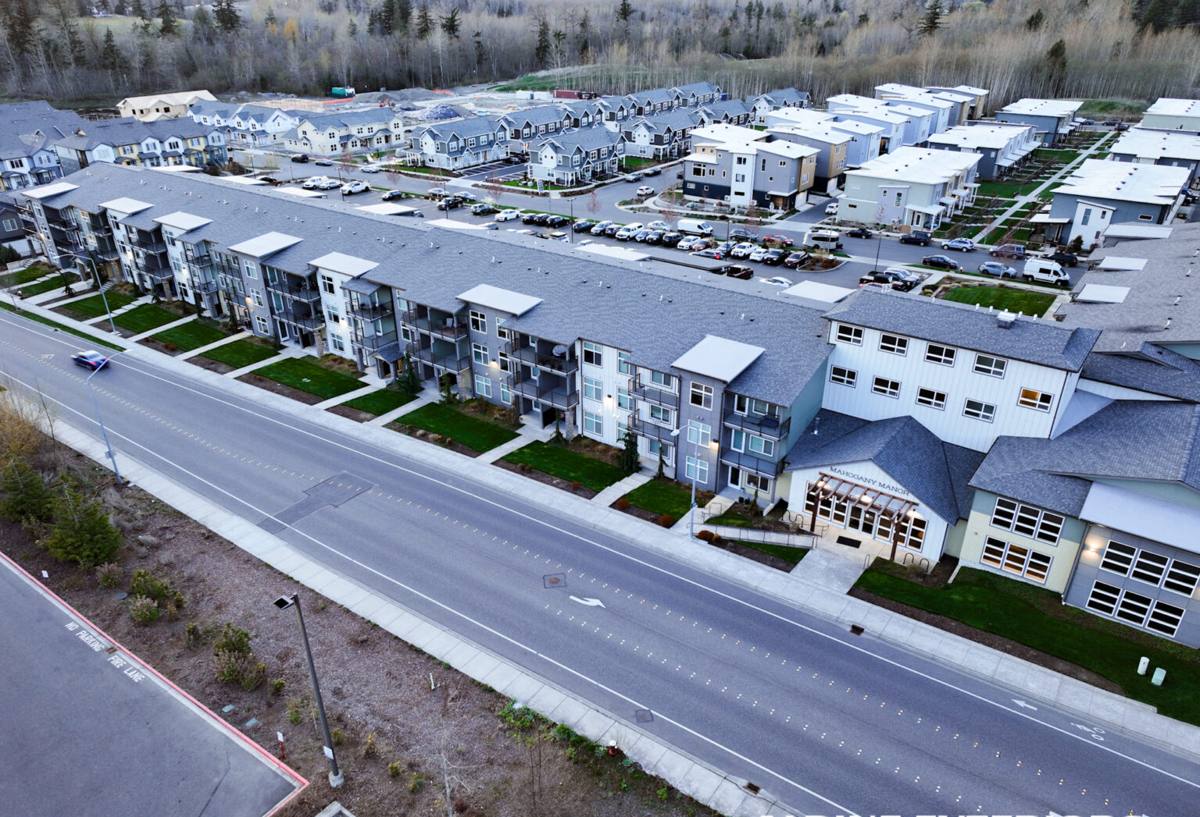
Barkley sits close enough to Bellingham Bay and the Salish Sea that salt-laden air is a daily fact of life for the homes there, not an occasional nuisance. Add Whatcom County's long wet season — months of low-intensity rain punctuated by wind-driven storms off the Strait of Georgia — and you have a climate that never really gives siding a break. Mix in the tree cover and shaded lots common around Barkley's residential streets, and you get extended dampness that feeds moss and algae on anything that holds moisture at the surface.
None of this is unique to one house. It's a neighborhood-wide condition, and it shows up on siding the same way year after year: paint that fails early on the west and south exposures, trim that stays damp long after a storm has passed, and green-black streaking on north-facing walls that never get direct sun to dry them out. Siding that isn't engineered for this specific combination of salt exposure, sustained rain, and shade-driven moisture will show its weaknesses faster here than it would in a drier inland climate.
Why We Only Install James Hardie in This Climate
We install James Hardie fiber cement siding exclusively — not vinyl, not LP SmartSide, not primed wood, not cedar. That's a deliberate standard, and Barkley's climate is a good example of why we hold it. Fiber cement is non-combustible and dimensionally stable, meaning it doesn't expand, contract, warp, or absorb water the way wood-based or engineered-wood products can. In a climate where a siding product spends a large share of the year damp, that stability matters more than it would somewhere drier.
Built for This Region, Not Just This Continent
James Hardie engineers its HZ5 product line specifically for climates like ours — the Pacific Northwest's combination of high moisture, moderate temperatures, and salt-air exposure near the water. That's a meaningful distinction from a one-size-fits-all siding product. The HZ5 formulation and factory-applied ColorPlus finish are built to hold color and resist moisture intrusion in exactly the conditions Barkley homes deal with every winter.
What ColorPlus Actually Buys You
ColorPlus is a baked-on, factory-cured finish applied under controlled conditions, rather than a field-applied paint job exposed to wind, humidity, and temperature swings during application. In a neighborhood where job-site paint has to fight damp air and short weather windows to cure properly, a factory finish removes that risk entirely and holds color consistency far longer than most site-applied coatings.
What a Correct James Hardie Installation Actually Involves
Hardie siding performs the way it's supposed to only when it's installed correctly. In a wet climate, installation mistakes don't just look bad — they create paths for water to get behind the siding, where it can sit against sheathing and framing for months without drying. Getting it right involves several details that are easy to skip and hard to spot once the wall is buttoned up.
- Correct nail placement and fastener spacing per Hardie's published specifications — not generic siding nailing patterns
- Proper clearance gaps at trim, corners, and butt joints so the material can handle seasonal movement without cracking
- Weather-resistant barrier and flashing installed and lapped correctly at every penetration, window, and door
- Kick-out flashing at roof-to-wall intersections to direct runoff away from the wall assembly instead of behind it
- Minimum ground clearance maintained so splash-back and standing moisture don't sit against the bottom course
- Caulking used only where Hardie specifies it — over-caulking traps moisture instead of shedding it
- Cut edges and field-cut ends properly sealed before installation, since factory edges are treated but field cuts are not
Every one of these details is more consequential in Barkley's climate than it would be somewhere dry. A gap that's slightly too tight, or flashing that's lapped the wrong direction, might not cause a visible problem for a year or two — but sustained rain and shade-driven dampness will find that mistake eventually, usually as rot in the sheathing behind the siding rather than as anything visible from the street.
How Our Process Works on a Barkley Home
Assessment and Walk-Through
We start with a full exterior walk-through, looking at existing siding condition, moisture staining, trim and flashing details, and any signs of past water intrusion — especially around windows, roof lines, and north- or shade-facing walls where Barkley homes tend to show the most wear first.
Tear-Off and Sheathing Check
Once old siding comes off, we inspect the sheathing underneath. This is often the step that reveals whether a home's problems were cosmetic or structural. Any soft, water-damaged, or compromised sheathing gets addressed before a single piece of new siding goes up — installing over a damaged substrate just hides a problem, it doesn't fix it.
Weather Barrier and Flashing
We install a continuous weather-resistant barrier and detail flashing at every window, door, and penetration before siding starts. This is the step that does the most work over the life of the siding, and it's also the step that's completely invisible once the job is finished — which is exactly why it has to be done right the first time.
Installation to Manufacturer Spec
Hardie panels, planks, and trim go up following James Hardie's fastening, clearance, and sealing requirements — the same standards outlined above, applied consistently across the whole home rather than treated as optional on the less visible elevations.
Final Walk-Through
We finish with a punch-list walk-through, checking caulking, trim lines, corner details, and overall fit before calling the job complete.
Comparing Siding Options for a Barkley Home
| Siding Type | Moisture Behavior in Wet Climates | Salt Air Durability | Finish Longevity |
|---|---|---|---|
| James Hardie Fiber Cement | Dimensionally stable, engineered moisture resistance (HZ5) | Strong — non-combustible, doesn't corrode | Factory ColorPlus finish, long color retention |
| Vinyl | Can warp or distort with temperature swings; seams allow water tracking | Can become brittle over time near salt air | Color fades and chalks with UV/salt exposure |
| Primed Wood / Cedar | Absorbs moisture; prone to rot without diligent maintenance | Needs frequent refinishing near salt air | Requires repainting or restaining every few years |
| LP SmartSide (engineered wood) | Better than raw wood but still moisture-sensitive at cut edges and seams | Moderate — edge sealing is critical and easy to miss | Field-applied or factory finish varies by installer |
This is exactly why we don't install the alternatives listed above. Each one can perform reasonably well in the right conditions, but Barkley's combination of salt air, sustained rain, and shaded lots plays to the specific weaknesses of vinyl, wood, and engineered wood products more than it does to Hardie's.
What Drives the Cost of a Hardie Siding Job
| Factor | Why It Matters |
|---|---|
| Home size and wall complexity | More corners, gables, and trim details mean more labor and material cuts |
| Sheathing condition | Rot repair discovered during tear-off adds material and labor before new siding goes up |
| Product line and profile | Lap, shingle, and panel styles carry different material costs |
| Trim and accessory scope | Corner boards, window trim, and fascia detailing add to overall scope |
| Site access | Tight lots, slopes, or landscaping close to the house affect staging and labor time |
We don't publish blanket per-square-foot pricing because the sheathing condition alone can swing a project significantly once tear-off starts. What we can tell you honestly, upfront, is what we find during the assessment and walk-through, before any contract is signed.
Maintenance and What to Expect Over Time
Properly installed Hardie siding is low-maintenance, not no-maintenance. In Barkley's climate, an occasional gentle wash — particularly on shaded, north-facing walls where moss and algae are most likely to take hold — keeps the ColorPlus finish looking like it did on installation day. Because the finish is baked on rather than field-applied, it doesn't need the repainting cycle that wood siding does. James Hardie backs its products with a strong transferable warranty, which matters in a market like Bellingham's where homes change hands and buyers want documented siding history, not just a verbal assurance.
Why Hiring a Crew That Already Works in Barkley Matters
Siding installation isn't uniform across climates, and it isn't even uniform across Whatcom County's own microclimates. A crew that already works Barkley and the surrounding Bellingham neighborhoods has seen firsthand where moisture problems tend to start on homes like yours — which elevations take the worst weathering, which older homes in the area tend to have specific sheathing or flashing issues, and how local shade patterns and lot layouts affect drying time after a storm. That's the kind of judgment that shows up in the details: where extra flashing attention gets paid, which corners get double-checked, and what gets flagged during the initial walk-through instead of discovered as a problem two years later.
If your Barkley home's siding is showing early paint failure, moss buildup that won't stay gone, or you're simply planning ahead for a replacement, we're happy to walk the exterior with you and give you a straight, no-pressure assessment. Use the form below to request a free estimate.