 Bellingham Exterior
 Windows Built Into the Wall From Day One
New-construction window work is a different job than swapping out an old window in an existing wall. When a home in Barkley is framed, the window opening, the weather-resistive barrier, the flashing, and the window unit itself all have to be installed as one integrated system before siding ever goes on. Get that sequence wrong and the mistake gets buried behind trim and siding for years, showing up later as a soft spot in the wall sheathing or a stain creeping down from a window corner. Get it right, and the window becomes one of the strongest, most weathertight points in the entire wall assembly.
Barkley is one of the more active new-construction areas in Bellingham, with a steady mix of new single-family homes, townhomes, and infill builds going up over the past several years. That means a lot of window openings are being framed, flashed, and glazed right now — and a lot of opportunity for shortcuts to get taken by crews that don't do this specific work often.
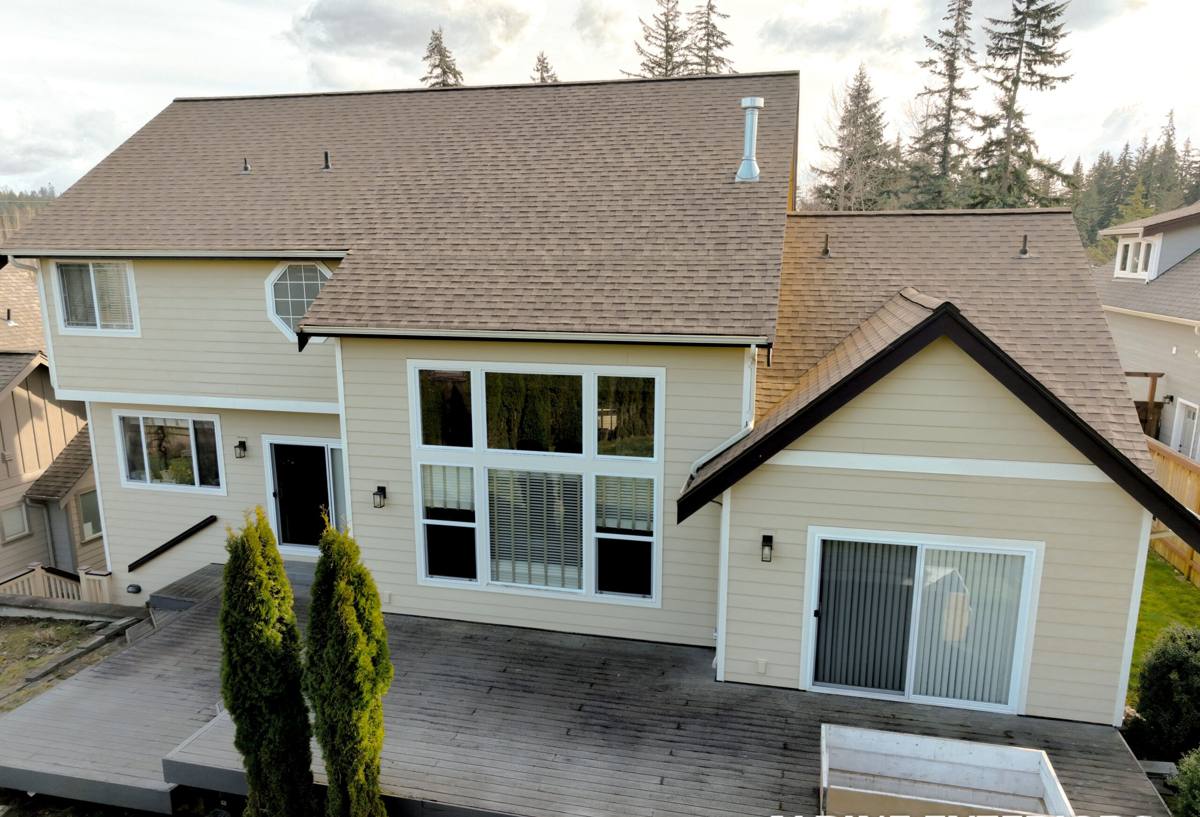
What Bellingham's Climate Actually Does to a Window Assembly
Whatcom County sits in a marine west coast climate, and Bellingham's location near the bay adds a few specific stresses that inland builders don't always plan for.
Salt Air
Proximity to Bellingham Bay means airborne salt and moisture reach exterior hardware, fasteners, and metal flashing components. Over time, salt exposure accelerates corrosion on the wrong grade of fastener or flashing metal. New-construction installs need corrosion-resistant fasteners and flashing rated for coastal exposure, not standard interior-grade hardware.
Driving Rain
Bellingham gets sustained, wind-driven rain, especially in fall and winter. Rain doesn't just fall on a window — it gets pushed sideways and upward under wind pressure, testing every seam in the flashing. A window that's been "caulked shut" instead of properly flashed will eventually let water in during a hard driving-rain event, even if it looks fine in dry weather.
Moss and Algae Season
The long wet season in this part of Whatcom County supports moss and algae growth on any horizontal or slow-draining surface, including window sills and trim. A window sill that doesn't shed water cleanly becomes a growth surface, which holds moisture against the frame and trim longer than it should. Sill slope and drainage matter as much as the flashing tape.
None of this means new-construction windows in Barkley need to be exotic or over-engineered. It means the standard installation details — the ones that get skipped when a crew is moving fast — actually matter here more than they would in a drier inland climate.
The Correct Installation Sequence
A proper new-construction window install follows a specific order. Skipping or reversing steps is the single biggest cause of hidden water intrusion behind newly built walls.
- Rough opening is checked for square, level, and correct size before the window arrives on site.
- A sloped sill pan is installed at the bottom of the opening so any water that does get past the window has a way out, not a place to pool.
- Self-adhered flashing tape is applied at the sill first, then up the jambs, integrating with the weather-resistive barrier already on the wall.
- The window unit is set, leveled, shimmed, and fastened per the manufacturer's nailing schedule — not just however many nails happen to hit.
- The head flashing goes on last, lapping over the top flange so water is always directed outward and downward, never trapped behind the unit.
- Housewrap or WRB is integrated over the top flashing to complete the drainage plane before siding goes on.
That order — sill, jambs, unit, head, then WRB integration — is what makes the whole assembly shed water the way it's supposed to. Reverse the sequence and water that hits the top of the window can work its way behind the flashing instead of over it.
Choosing the Right Frame Material for a Barkley Build
Frame material is a real decision for new construction, not just an aesthetic choice. Each option has honest trade-offs worth weighing against Bellingham's wet, salt-influenced climate.
| Frame Material | Moisture/Salt Performance | Maintenance | Typical Cost Position |
|---|---|---|---|
| Vinyl | Good — won't rot or corrode, but can expand/contract with temperature swings | Low | Lower |
| Fiberglass | Very good — dimensionally stable, holds up well to moisture cycling | Low | Mid to higher |
| Wood-Clad | Good exterior protection from the cladding, but interior wood core needs the cladding seal to stay intact | Moderate | Higher |
| Aluminum | Prone to corrosion in salt-influenced air unless marine-rated and properly finished | Moderate | Varies |
For most new-construction homes in Barkley, vinyl and fiberglass are our default recommendations because they hold up reliably in this climate with the least ongoing maintenance. Wood-clad units are a fine choice for a homeowner who wants a specific interior wood look and is comfortable with periodic finish inspection. We steer away from bare or lower-grade aluminum frames near the bay specifically because of the corrosion exposure — that's a maintenance-burden judgment call on our part, not a claim that aluminum windows are defective everywhere.
Performance Ratings That Actually Matter Here
Washington's state energy code is one of the stricter ones in the country, and Whatcom County new construction has to meet it. Two ratings matter most for a marine climate like Bellingham's:
- U-factor — measures how well the window resists heat loss. Lower is better for our cool, wet winters. This is the number that matters most for comfort and energy bills here.
- SHGC (Solar Heat Gain Coefficient) — measures how much solar heat passes through the glass. Bellingham doesn't get intense year-round sun like inland climates, so SHGC is a secondary concern compared to U-factor, but it still affects summer comfort on south- and west-facing walls.
Look for the NFRC label on any new-construction window before it goes in — it's the independent rating sticker that lists U-factor, SHGC, and other performance numbers, and it's what the local building inspector will want to see documentation for during energy code review.
Common Mistakes We See on New-Construction Window Installs
Most of the problems that show up years later trace back to a handful of repeated shortcuts:
- Caulk used as a substitute for proper flashing tape and sill pan drainage
- Flashing installed out of sequence, so water gets directed behind the WRB instead of over it
- Fasteners that aren't corrosion-resistant, especially on homes closer to the bay
- Nailing schedule not followed, leaving the unit under-fastened for wind load
- Sill pans left flat instead of sloped, so water sits instead of draining
- Window rough openings that were slightly out of square, forcing the unit and stressing the seal over time
Every one of these is avoidable with a crew that treats the flashing sequence as non-negotiable, not as a step to speed through when the schedule is tight.
How We Work With Builders and Homeowners in Barkley
New-construction window work usually means coordinating with a general contractor's framing and siding schedule, not working on an isolated home. We show up at the point in the build when the rough openings are framed and the WRB is ready, install the sill pans, flashing, and window units in the correct sequence, and document the install before it gets covered by siding — because once trim and siding go on, that flashing work isn't visible again for the life of the house.
For homeowners managing their own build or working alongside a GC, we're happy to walk through the flashing details before drywall and siding close everything in, so there's a clear record of how the windows were installed.
Checklist: What to Confirm Before Siding Goes On
Whether you're a homeowner, GC, or just want peace of mind on a Barkley build, these are the things worth confirming before the wall gets closed in:
- Rough openings were checked for square and correct size before window delivery
- Sloped sill pans are installed under every window, not just flat flashing tape
- Flashing was installed sill-first, then jambs, then head — in that order
- Fasteners are corrosion-resistant, appropriate for salt-air exposure
- The nailing schedule matches the manufacturer's specification for the unit
- WRB is properly lapped over the head flashing, maintaining a continuous drainage plane
- NFRC labels and energy code documentation are on file for inspection
Why Local Experience on This Kind of Build Matters
A crew that's already worked new construction in Barkley knows the pace of that neighborhood's builds, the inspection expectations Whatcom County applies, and how the area's wind and rain exposure should shape flashing decisions on a given lot. That's different from general handyman-level window setting, and it's different from a replacement-window specialist who mostly works from the outside of an already-finished wall. New construction is a framing-stage trade, and it rewards a crew that treats the sequence — sill, jamb, unit, head, WRB — as the whole job, not a formality on the way to hanging siding.
If you're planning a new build or working through a punch list with your GC in Barkley, we're glad to take a look at the window openings, talk through frame and glass options for a Bellingham marine climate, and give you a straightforward, no-pressure estimate. Just fill out the short form below to get started.