 Bellingham Exterior
 Why Siding Installation Matters for Birchwood Homes
Birchwood homes sit inside one of the more demanding climates on the West Coast for exterior building materials. Bellingham's proximity to the water means salt-laden air works its way into siding seams and fasteners year-round, while Whatcom County's long wet season keeps exterior walls damp for weeks at a stretch. Add in a moss and algae season that can run from fall through spring, and it's easy to see why siding here fails faster than the manufacturer's brochure suggests it should — if it was installed generically, without accounting for this specific climate.
Siding installation in Birchwood isn't just a cosmetic upgrade. It's the layer standing between your home's structure and a climate that combines constant moisture, wind-driven rain, and biological growth pressure most of the year. Getting the installation right — material choice, water management details, and fastening — determines whether your siding protects the house for decades or becomes a recurring maintenance problem within five to ten years.
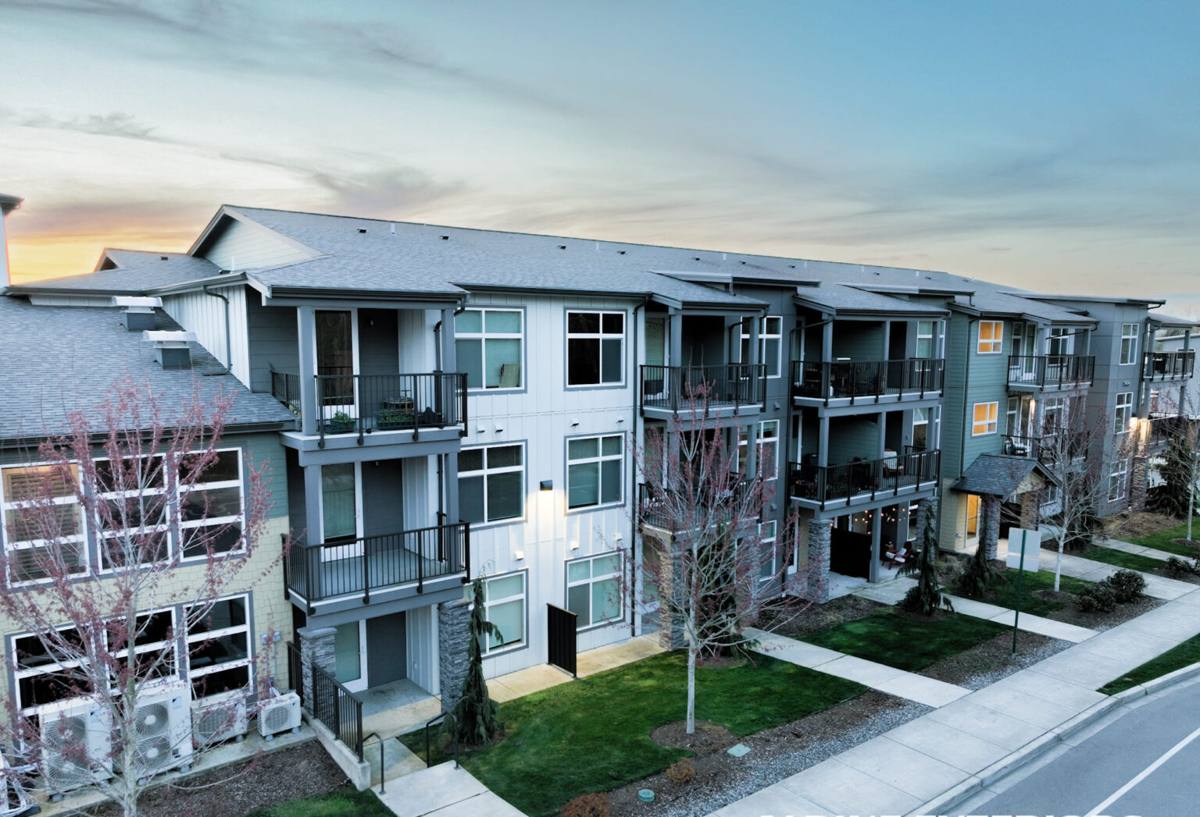
The Whatcom County Climate Your Siding Has to Handle
Salt Air and Corrosion
Homes throughout the greater Bellingham area, including neighborhoods like Birchwood, are close enough to Bellingham Bay and the Salish Sea that airborne salt is a real factor in material selection and fastener choice. Salt air accelerates corrosion on unprotected metal trim, fasteners, and flashing, and it degrades some paint and coating systems faster than inland exposure would. Siding and trim materials that aren't rated for coastal or near-coastal exposure can show chalking, fading, or corrosion-related staining well ahead of schedule.
Driving Rain
Bellingham's weather pattern regularly pushes rain sideways, not just down. Wind-driven rain finds every gap in a siding system — unsealed laps, poorly flashed windows, missed caulk joints — and pushes water behind the cladding rather than letting it run off the surface. A siding system that looks fine from the street can still be letting moisture into the wall assembly if the water-resistive barrier and flashing details underneath weren't installed correctly.
Moss and Algae Season
Shaded, moisture-retentive conditions common in Whatcom County give moss and algae a long growing window on exterior surfaces. Wood-based and some engineered wood sidings absorb enough moisture to become a growth surface themselves, which speeds up rot from the inside of the material out. Siding that resists moisture absorption at the material level, not just at the paint layer, holds up dramatically better against this kind of biological growth pressure.
What a Correct Siding Installation Actually Involves
A siding job that looks acceptable and a siding job that will actually perform in this climate for 30-plus years are not the same thing. The visible siding is the last step — everything underneath it is what determines whether the house stays dry.
Water-Resistive Barrier and Drainage Plane
Correct installation starts with a continuous water-resistive barrier behind the siding, lapped properly from bottom to top so any water that gets past the cladding drains down and out instead of pooling behind it. In a climate with this much sustained rainfall, a drainage gap or rainscreen detail behind the siding is often the difference between a wall assembly that dries out between storms and one that stays chronically damp.
Flashing at Every Penetration
Windows, doors, hose bibs, vents, and any other penetration through the siding need dedicated flashing that directs water up and over, never allowing it to sit against an unprotected edge. This is the single most common place corner-cutting installations fail — not because the siding material was wrong, but because the flashing detail around a window or a light fixture was skipped or done poorly.
Fastening and Clearances
Fiber cement siding has specific fastener spacing, fastener type, and butt-joint requirements that differ from wood or vinyl. Manufacturer clearance requirements — from grade, from roof lines, from decks and patios — exist specifically to keep the bottom edge of the siding from sitting in standing water or splashback. Skipping these clearances is one of the fastest ways to void a warranty and to cause the exact rot problems the siding was supposed to prevent.
Why We Install Only James Hardie Fiber Cement
We install James Hardie fiber cement siding exclusively. We don't install vinyl, LP SmartSide, Cemplank, Allura, primed spruce, or cedar, and that's a deliberate standard, not a lack of options. Each of those alternatives has real strengths, but each also carries trade-offs — moisture sensitivity, maintenance burden, impact resistance, or long-term appearance — that we're not willing to install on a home in this specific climate and then stand behind.
James Hardie's fiber cement is non-combustible, which matters for wildfire-adjacent risk and insurance considerations, and it's engineered specifically for wet, coastal-influenced climates through its HZ5 product line — the version designed for the Pacific Northwest's moisture and temperature profile. The ColorPlus factory finish is baked on under controlled conditions rather than field-applied, which gives it better fade and chip resistance than most job-site painted sidings, and it comes with a genuinely strong, transferable warranty. Fiber cement doesn't absorb moisture the way wood-based products do, which directly addresses the moss and rot pressure common throughout Whatcom County. When it's installed to spec, it holds up under salt air, driving rain, and a long wet season better than any alternative we've been willing to put our name on.
Our Installation Process in Birchwood
- On-site assessment: We inspect existing siding, sheathing, and trim condition, and check for any moisture or rot already present behind the current cladding.
- Tear-off and sheathing check: Old siding comes off and the sheathing underneath gets inspected and repaired as needed before anything new goes on.
- Water-resistive barrier installation: A continuous, properly lapped barrier goes on with attention to every seam, corner, and penetration.
- Flashing at all openings: Windows, doors, and penetrations get flashed individually before siding installation begins.
- Hardie siding installation: Panels or lap siding go on per manufacturer fastening and clearance specifications, not shortcuts.
- Trim, caulking, and final detailing: Trim boards, corner details, and sealant joints are finished to shed water correctly at every edge.
- Final walkthrough: We review the completed job with the homeowner before calling it done.
Signs Your Birchwood Home May Need New Siding
- Visible moss or algae growth that returns quickly after cleaning
- Soft spots, bubbling, or warping in the current siding material
- Paint that's peeling or blistering repeatedly in the same areas
- Gaps opening up at seams, corners, or trim boards
- Rising heating or cooling costs with no other clear cause
- Staining or streaking that suggests water is tracking behind the siding rather than off it
- Visible rot or soft wood at the base of walls or around window trim
Any one of these on its own might be minor. Several showing up together, especially near ground level or around windows, usually means water has been getting behind the siding for a while.
What Affects the Cost of Siding Installation
| Factor | Why It Matters |
|---|---|
| Home size and wall complexity | More linear footage, corners, and gables mean more material and labor |
| Tear-off vs. installation over existing siding | Removing old siding adds labor but allows a full sheathing and moisture check |
| Siding profile and finish | Lap siding, panel siding, and shingle-style profiles have different material and labor costs |
| Trim and detail work | Window trim, corner boards, and fascia detailing add time but improve water-shedding performance |
| Existing moisture or rot damage | Sheathing repair or replacement, if found during tear-off, is a separate cost driver |
| Access and site conditions | Multi-story sections, tight lot lines, or difficult access affect labor time |
We give straightforward, itemized estimates so homeowners can see exactly what's driving the cost, rather than a single lump number that hides what's included.
Why Local Experience in Birchwood Matters
A crew that already works in and around Bellingham understands how the Whatcom County climate actually behaves against a house — not in general terms, but through the specific combination of salt exposure, wind-driven rain direction, and moss growth patterns that show up here. That local pattern recognition shows up in small decisions during installation: where extra flashing attention pays off, which wall orientations take the worst weather, and how much drainage capacity a wall assembly really needs in this climate versus a drier region's minimum code requirement.
Working locally also means accountability. A contractor based in and around Bellingham has a reputation in this community to maintain, and is available for follow-up if a question comes up after the job is finished — not a crew that installed siding here once and moved on to the next region.
If you're weighing a siding project on a Birchwood home, we're happy to walk the property, look at what's there now, and give you a straightforward, no-pressure estimate on what a correctly installed James Hardie siding system would look like for your house. Use the form below to get started.