 Bellingham Exterior
 Board & Batten Siding for Columbia Homes
Columbia is one of the older, more established neighborhoods inside Bellingham, and it shows in the housing stock — a mix of early-1900s bungalows, mid-century additions, and newer infill homes sitting under mature tree canopy. Board and batten siding shows up a lot in this kind of neighborhood because it fits the architecture: the vertical lines read as classic Craftsman or farmhouse styling, and it works equally well on a full exterior or as an accent on gables, dormers, and porch faces. We install board and batten in Columbia regularly, and the details that make it hold up here are specific to this part of Bellingham — not generic siding advice that applies anywhere in the country.
This page focuses on one thing: what it takes to get board and batten siding right on a Columbia home, given Whatcom County's climate, and why the installation details matter more here than in drier parts of the country.
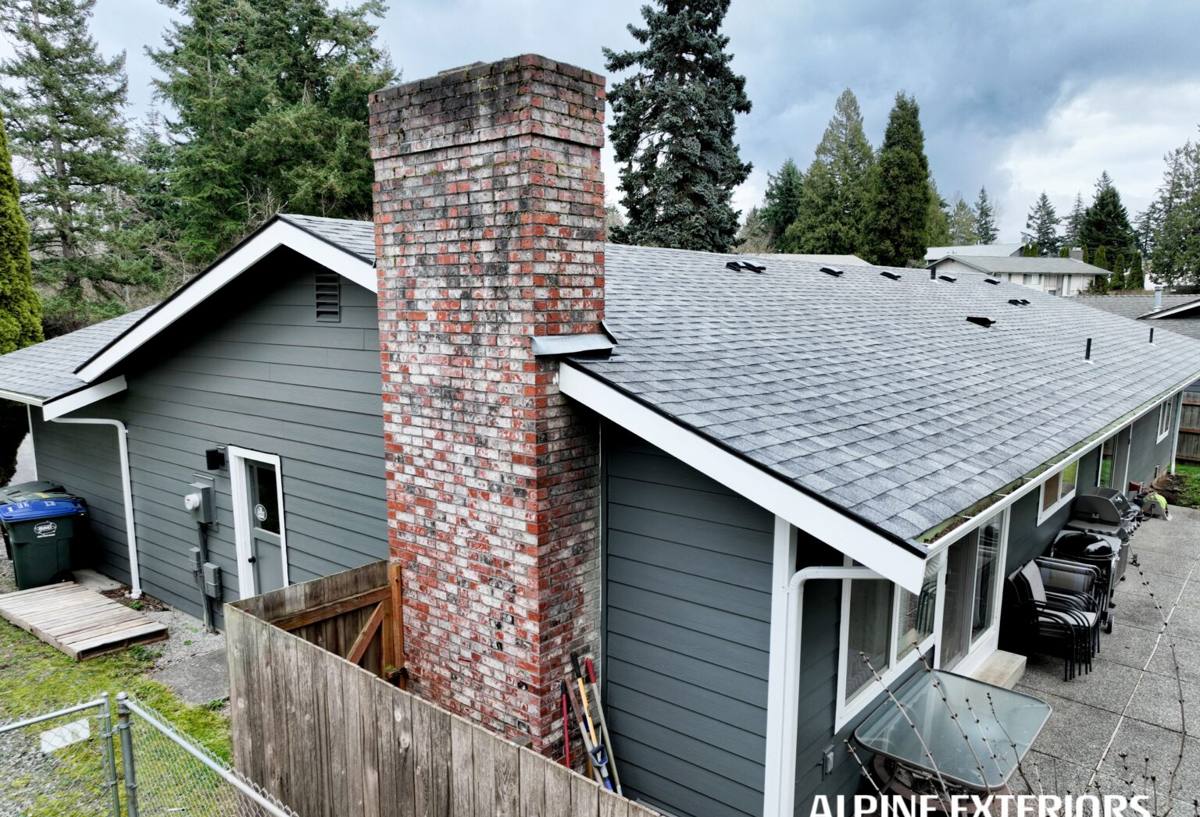
Why Bellingham's Climate Is Hard on Vertical Siding
Board and batten siding has more vertical seams than horizontal lap siding, and every one of those seams is a place water can find its way behind the cladding if it's not detailed correctly. In a place like Columbia, that matters for a few reasons specific to our region:
- Salt air off Bellingham Bay accelerates corrosion on fasteners, flashing, and any metal trim that isn't rated for coastal exposure.
- Driving rain during fall and winter storms doesn't just fall straight down — wind-driven rain gets pushed sideways into vertical battens and gaps if the wall assembly doesn't have a way to shed it.
- Long moss season — Columbia's tree cover keeps shaded wall sections damp for extended stretches, which is exactly the environment moss and mildew need to take hold on siding that traps moisture instead of letting it dry.
- Extended cool, wet months mean a wall assembly that gets wet has fewer warm, dry days to actually dry back out compared to a drier climate.
None of this means board and batten is a bad choice for Columbia — it means the installation has to account for these conditions instead of following a generic spec sheet.
What Correct Board & Batten Installation Actually Involves
A Rainscreen Gap, Not Face-Nailed Direct to Sheathing
The single biggest factor in whether board and batten siding lasts in a wet climate is whether there's a drainage gap — a rainscreen — between the back of the siding and the weather-resistive barrier. Without that gap, any moisture that gets past the siding face sits directly against the sheathing with nowhere to go. With a proper gap (typically furring strips creating a 3/8" to 1/2" air space), water drains down and out, and the wall assembly can actually dry.
Batten Spacing and Fastening
Battens need consistent spacing over the panel joints, and fasteners need to land in solid framing or furring — not just in the panel field. Fastener pattern, type, and depth all affect how the assembly performs over 20-plus years, not just how it looks on install day.
Flashing at Every Transition
Windows, doors, roof-to-wall intersections, and the bottom termination at the foundation are where board and batten siding fails first if it's rushed. Proper head flashing, kick-out flashing at roof lines, and a clean starter detail at the base are non-negotiable in a climate that gets this much sustained rain.
Quick Checklist: What to Ask About Any Board & Batten Bid
- Is there a rainscreen gap behind the siding, or is it face-nailed directly to the sheathing or old cladding?
- What's the fastening schedule, and are fasteners corrosion-resistant for coastal exposure?
- How is flashing handled at windows, doors, and roof intersections?
- What's the manufacturer's minimum clearance from grade, decks, and roofing at the base of the wall?
- Is the product rated and warrantied for a marine/high-moisture climate, or a generic warranty?
James Hardie Board & Batten: The Only System We Install
We install James Hardie fiber cement exclusively, and board and batten is one of the styles where that decision matters most. We don't install vinyl board and batten, LP SmartSide, or primed wood battens — not because those products can't be installed at all, but because we've standardized on the one system that we're confident will hold up to Whatcom County's climate over the long term without the maintenance trade-offs those alternatives carry.
How the System Works
Hardie's board and batten look is built using HardiePanel vertical siding with HardieTrim battens installed over the panel joints, or true individual boards and battens depending on the look a homeowner wants. The panels are fiber cement — a non-combustible mix of cement, sand, and cellulose fibers — engineered specifically for the wet, cool Pacific Northwest climate under Hardie's HZ5 product designation.
Why That Matters Here
Fiber cement doesn't rot, doesn't attract wood-boring insects, and doesn't swell and delaminate the way engineered wood products can when they take on repeated moisture over years of Bellingham winters. It also holds up to the sustained damp shade that Columbia's tree canopy creates, which is exactly the condition that promotes moss and mildew growth on more moisture-sensitive materials.
ColorPlus Factory Finish
Most Hardie board and batten installations we do use the ColorPlus factory-applied finish rather than field paint. It's baked on and warrantied by the manufacturer, which means better color retention and fewer repaint cycles than site-applied paint has to fight through our overcast, high-moisture months.
Board & Batten Material Comparison
| Material | Moisture Behavior in Wet Climate | Maintenance Over Time | Typical Warranty Structure |
|---|---|---|---|
| James Hardie Fiber Cement (HZ5) | Non-combustible, dimensionally stable, engineered for wet climates | Low — occasional wash, factory finish holds color | Strong transferable product + finish warranty |
| Vinyl Board & Batten | Won't rot but can warp, fade, and doesn't breathe behind the panel | Low upfront, but replacement panels can be hard to match after fading | Varies widely by manufacturer |
| LP SmartSide / Engineered Wood | Wood-based core is moisture-sensitive at cut edges and joints | Requires diligent caulking and edge sealing to avoid swelling | Often conditional on installation compliance |
| Primed Spruce / Cedar Boards | Natural wood — absorbs moisture, prone to cupping and rot over time | Highest — repainting, caulk maintenance, moisture monitoring | Typically limited or none from the material itself |
What Drives Cost on a Board & Batten Project
Every Columbia home is different, so we don't quote sight unseen, but the main cost factors on a board and batten job are consistent:
- Wall condition underneath — whether existing sheathing needs repair before new siding and rainscreen can go on.
- Amount of trim and flashing detail — homes with more windows, gables, and roof transitions need more flashing labor.
- Full re-side vs. accent application — board and batten on gables or a porch face costs less than a full-home installation.
- ColorPlus color selection — factory finish colors are priced consistently, unlike field-painted options that vary by prep and coats needed.
Our Process on a Columbia Job
We start with an on-site walkthrough of the home, not a phone estimate, because the condition of the existing wall assembly changes the scope. From there:
- We assess the sheathing and existing weather barrier for damage, especially on shaded or moss-prone wall sections.
- We plan the rainscreen and flashing details specific to that home's rooflines, windows, and grade clearance.
- We install James Hardie panels and battens to manufacturer spec, including fastening and clearance requirements.
- We walk the finished job with the homeowner and confirm flashing, trim, and termination details before calling it done.
Because we already work in Columbia and the surrounding Bellingham neighborhoods, we know what these older wall assemblies typically look like once the old siding comes off, and we price and plan around that instead of being surprised by it mid-project.
Why a Local Crew Matters for This Job
Board and batten siding lives or dies on installation details — the rainscreen gap, the flashing, the fastening schedule — and those details need to match the actual climate the home sits in. A crew that installs primarily in drier regions and treats Bellingham as just another job site is more likely to default to a generic install spec instead of one built around Whatcom County's rain load, salt air, and moss season. Working in and around Columbia regularly means we're not guessing at how these homes and this climate interact — we're applying what we already know works here.
If you're considering board and batten siding for a home in Columbia or elsewhere in Bellingham, we're happy to walk the property and give you a straightforward, no-pressure estimate — just fill out the form below.