 Bellingham Exterior
 Windows Built for Columbia's Particular Weather
Columbia sits close enough to Bellingham Bay that salt-laden air is a daily fact of life, not an occasional nuisance. Add Whatcom County's driving rain off the Sound and a moss season that can stretch from October well into spring, and you've got a neighborhood where window materials, seals, and installation details matter more than they would somewhere inland and dry. Homes here take a slow, steady beating from moisture and salt that most manufacturers' standard warranty language never quite accounts for.
We've worked on enough Columbia homes to know the pattern: older wood-frame windows that swelled and stuck decades ago, aluminum-frame replacements from the 80s and 90s that pit and corrode faster than their vinyl counterparts, and even newer vinyl units that were installed without proper flashing and are now feeding water into the wall cavity behind them. None of that is unique to any one house — it's what this climate does to windows over time, regardless of brand.
What Columbia's Housing Stock Means for Window Work
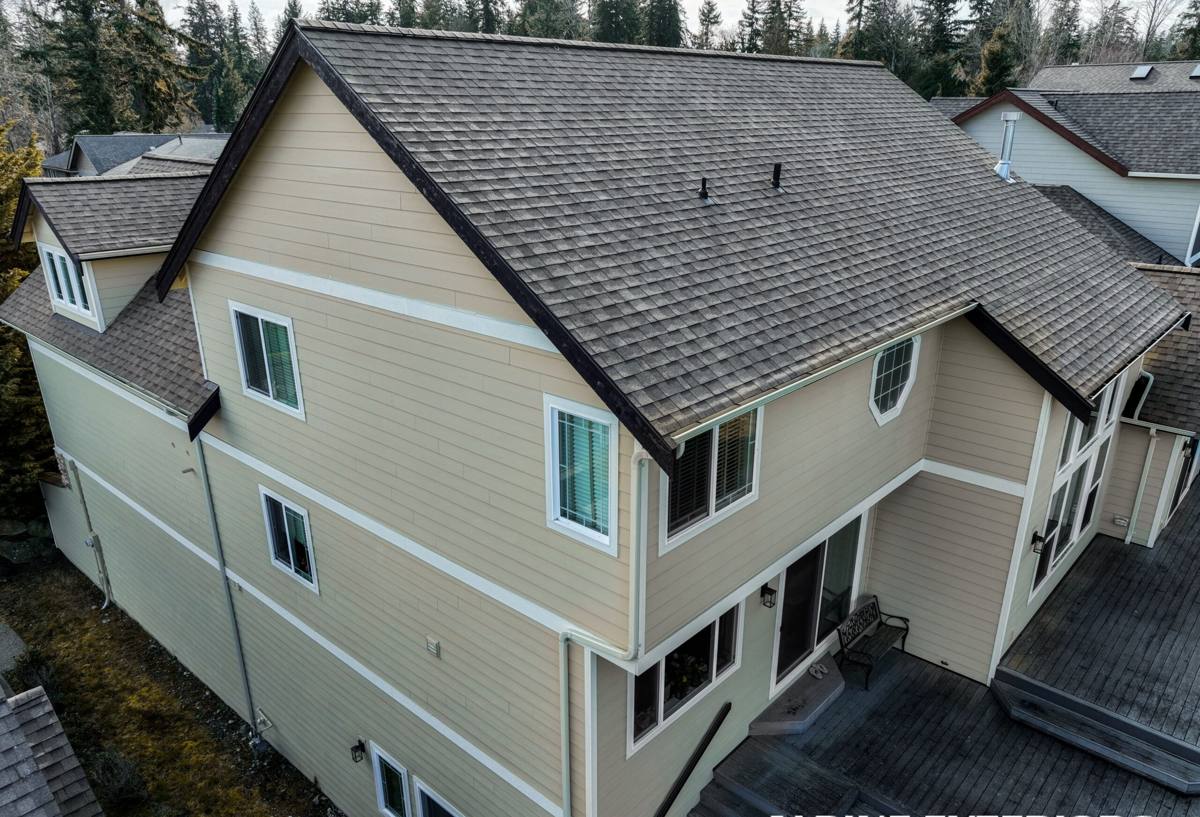
The neighborhood has a real mix — older bungalow and craftsman-style homes with original wood window openings, mid-century additions, and newer construction filled in over the decades. That mix matters because it changes the job in front of us before we even talk about glass or frame material.
Older Homes with Original Openings
Houses built before modern energy codes often have window openings that are slightly out of square, with wood trim and siding details that were never designed around today's window flanges. A custom window replacement here isn't a catalog swap — it's measuring the actual opening, accounting for settling, and either building the new unit to fit the existing opening or doing the carpentry work to bring the opening back to true.
Newer Construction and Additions
Homes built or added onto in the last few decades usually have squarer openings but sometimes have shortcuts in the original flashing and moisture barrier work. When we pull an old window out of one of these openings, we're checking that hidden work before anything new goes in — because a beautiful new window installed over a bad moisture barrier just delays the same rot problem by a few years.
Why Salt Air and Moss Season Change the Job
Salt air is corrosive to hardware — hinges, locks, balance systems, and especially any exposed aluminum or steel components. On a Columbia home, that means we lean toward corrosion-resistant hardware and frame materials as a default, not an upgrade. It also means exterior finishes matter: a painted wood exterior facing the bay needs a coating system that can stand up to salt exposure, and we won't cut corners there just to save a step.
Moss is a moisture problem wearing a cosmetic disguise. When moss and algae colonize the exterior trim and sill areas around a window, they hold water against the wood and caulk joints far longer than rain alone would. That constant dampness is what breaks down sealant, swells wood trim, and eventually opens a path for water behind the window unit. A correct installation in this climate has to assume moss growth will happen nearby and account for it — proper slope at the sill, back-dammed flashing, and sealant details that don't rely on a perfect caulk bead lasting forever.
Driving rain off the Sound adds wind-driven water intrusion to the list, which is why flashing sequence and integration with the house's water-resistive barrier matter as much as the window itself. A premium window installed with lazy flashing will leak. A modest window installed correctly won't.
What a Correct Custom Window Job Actually Involves
"Custom" doesn't mean expensive for its own sake — it means the window is built and installed to match the actual opening, the actual wall assembly, and the actual exposure of that specific wall on that specific house. Here's what that looks like in practice:
- Precise measurement of the existing opening, including checking for square, level, and plumb
- Inspection of the sill, jamb, and header framing for rot or moisture damage before ordering anything
- Selection of frame material and glazing package based on the wall's sun and rain exposure
- Correct flashing sequence — sill pan first, then integration with the house wrap or building paper, shingle-lapped so water sheds outward
- Proper shimming and fastening so the window operates smoothly and doesn't rack over time
- Interior and exterior sealant details that allow for some drainage rather than depending on a single unbroken caulk line
- Exterior trim and finish work that matches the home's existing look, especially important on older Columbia homes with distinct trim profiles
Skip any one of those steps and you can still end up with a window that looks fine for a year or two before a leak shows up in the wall below it.
Frame Material Trade-Offs for This Climate
There's no single "best" window material for every Columbia home — it depends on the wall exposure, the home's age and style, and the owner's maintenance appetite. Here's how the common options actually perform in salt air, driving rain, and moss-prone conditions:
| Material | Salt Air Resistance | Maintenance | Best Fit |
|---|---|---|---|
| Vinyl | Good — doesn't corrode | Low — no painting needed | Most homes prioritizing low upkeep |
| Fiberglass | Very good — dimensionally stable | Low to moderate | Larger openings, extreme temperature swings |
| Wood (clad exterior) | Good on the clad side, needs monitoring at joints | Moderate — interior finish care | Historic-style homes wanting real wood interior look |
| Aluminum | Poor to fair — prone to pitting near salt air | High — repainting and corrosion checks | Rarely our first recommendation this close to the bay |
We don't push one material on every job. We explain the trade-offs for that specific wall and let the homeowner decide, but we'll be upfront if a material is a poor match for a bay-facing wall — that's a maintenance conversation, not a sales pitch.
Glass and Sealed-Unit Considerations
Insulated glass units (the sealed double- or triple-pane assemblies inside the frame) are only as good as their edge seal. In a marine climate with constant humidity swings, a failing edge seal shows up faster — usually as fogging or condensation between the panes. When we spec glass for a Columbia home, we're looking at:
- Low-E coatings tuned for the Pacific Northwest's mix of overcast days and low winter sun angle
- Warm-edge spacer systems, which hold up better to condensation cycling than older aluminum spacers
- Appropriate gas fill and pane count for the wall's exposure — a bay-facing wall often warrants a heavier glazing package than a sheltered interior wall on the same house
None of this is exotic. It's just matching the glass package to the wall it's going into instead of installing the same window everywhere on the house.
Our Process for a Columbia Window Project
The process is the same discipline every time, adjusted for what we find on site:
- On-site assessment. We look at every window opening being considered, check for existing rot or moisture damage, and note sun/rain exposure differences wall by wall.
- Honest scope and estimate. If we find hidden damage, we tell you before ordering material, not after demo has started.
- Material selection. We walk through frame and glass options with real trade-offs, not a single default recommendation.
- Removal and opening prep. Old units come out carefully so we can inspect and repair framing as needed before anything new goes in.
- Flashing and installation. Sill pan, flashing integration, shimming, and fastening done in the correct order — this is where most window failures actually originate, so we don't rush it.
- Exterior and interior finish. Trim, caulk, and paint or stain matched to the home's existing style.
- Final walkthrough. Operation check on every window, plus a look at the surrounding trim and siding for anything that needs attention while we're already there.
Why a Crew That Works Columbia Already Matters
A contractor who's replaced windows across Bellingham neighborhoods and along Whatcom County's coastline has already seen how this specific stretch of climate ages a house. That's not a small thing. It means we're not guessing at flashing details or hardware choices — we've seen what happens when they're done wrong on a house facing the same wind and rain your house faces. It also means we're familiar with the older trim profiles and window proportions common in this neighborhood, so a replacement window looks like it belongs on the house rather than like an obvious retrofit.
Local experience also means faster, more accurate estimates. We're not learning the neighborhood's quirks on your project — we already know what to check for before we ever pull a window out.
Signs Your Columbia Home's Windows Need Attention
| What You Notice | Likely Cause |
|---|---|
| Fogging or moisture between panes | Failed insulated glass seal |
| Soft or discolored trim around the window | Water intrusion behind flashing, often worsened by nearby moss |
| Window sticks or won't stay open | Corroded hardware or a swollen/warped frame |
| Drafts even with the window closed | Failed weatherstripping or a settled, out-of-square opening |
| Paint peeling or bubbling on exterior trim | Moisture trapped behind the finish, common on bay-facing walls |
A Quick Checklist Before You Call Anyone
- Note which windows face the bay or prevailing weather versus which are more sheltered
- Check for soft spots by pressing gently on exterior trim near the sill
- Look for moss or algae buildup directly below or beside window openings
- Write down which windows are hardest to open or close
- Have a rough sense of how many windows you want addressed now versus later
None of this requires special tools or expertise — it just gives us a head start when we come out to look.
Let's Take a Look at Your Windows
If you're weighing a full window replacement or just want an honest read on whether your current windows are holding up to Bellingham's salt air and rain, we're happy to come take a look. The estimate is free, there's no pressure, and you'll get a straight answer about what your Columbia home actually needs — use the form below to get started.