 Bellingham Exterior
 Deck Building in Columbia: Built for What Bellingham Weather Actually Does
Columbia is one of Bellingham's older, established neighborhoods, with a mix of homes ranging from early-1900s bungalows to mid-century additions and newer infill. A lot of that housing stock has decks and porches that were never built with today's understanding of Pacific Northwest moisture management. When we talk to homeowners in this part of Whatcom County, the story is usually the same: a deck that looked fine for years, then started showing soft spots, green film, or squeaky boards all at once. That's not bad luck. It's what nine months of damp weather a year does to a structure that wasn't detailed for it.
Bellingham sits close enough to the water that salt-laden air is a real factor, not just a coastal-town cliché. Combine that with driving rain that comes in sideways off Bellingham Bay during winter storms, and a moss and algae season that can run from October through May, and you've got a climate that is genuinely tough on exterior wood structures. A deck built the way it might be built in a drier climate simply won't hold up here the same way.
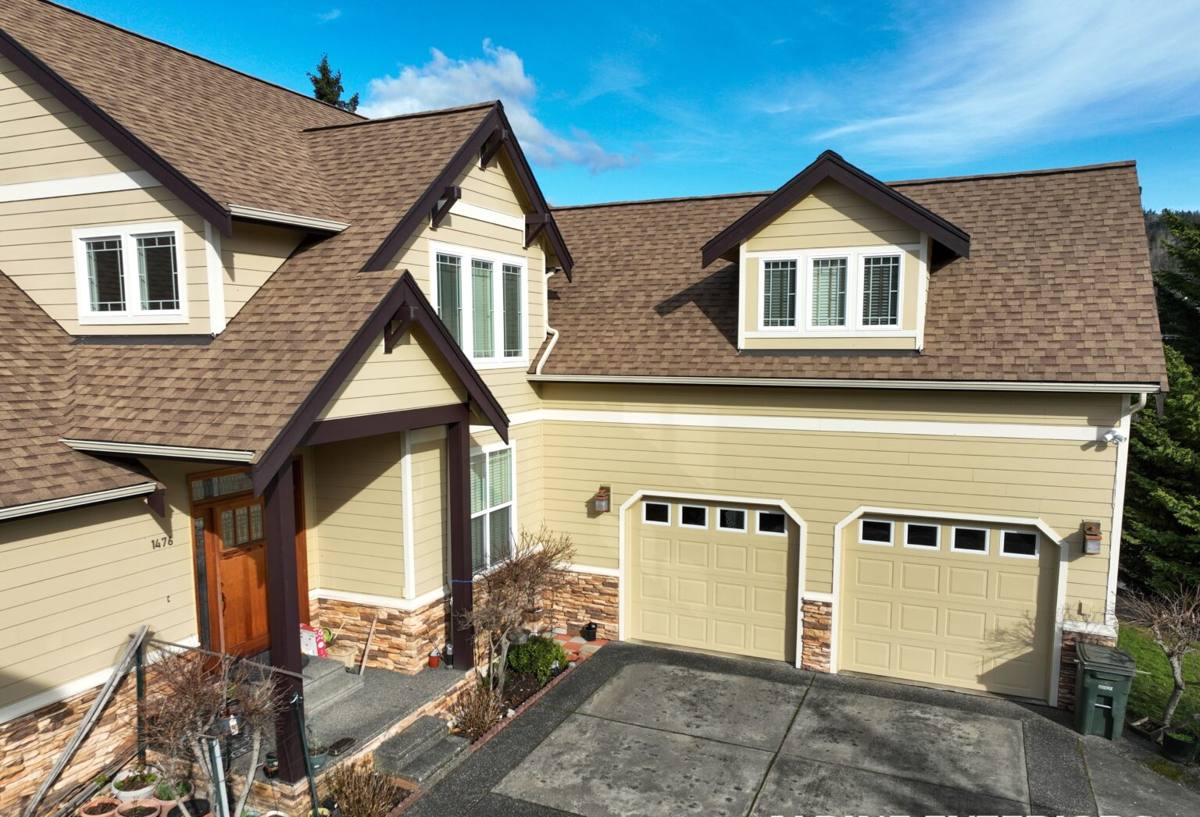
What Columbia Homes Need From a Deck
Every deck we build or rebuild in this neighborhood has to answer to three local conditions at once: moisture, salt air, and organic growth. These aren't separate problems — they compound each other. Trapped moisture feeds moss and algae, and moss and algae hold moisture against the wood even longer, which accelerates rot in framing and decking alike.
Moisture Management Comes First
The single biggest predictor of how long a deck lasts in this climate is how well it sheds and drains water — not the brand of decking on top. That means proper slope away from the house, gapping between boards sized for our humidity, flashing at the ledger board where the deck meets the house, and joist protection so the framing underneath isn't silently rotting while the surface still looks fine.
Salt Air and Fastener Corrosion
Standard fasteners and hardware corrode faster here than they would inland. We use fastener and hardware ratings appropriate for coastal exposure, because a deck is only as strong as its weakest connection, and a rusted-out joist hanger doesn't announce itself until something fails.
Moss, Algae, and Surface Traction
A shaded, north-facing, or tree-covered deck in Columbia will grow moss almost no matter what decking material you choose — the question is how easily it can be managed and how dangerous it gets underfoot. Board spacing, surface texture, and drainage all affect how fast moss establishes and how slick a deck gets in a January rain.
What a Correct Deck Build Actually Involves
A deck that's going to hold up in Whatcom County weather is built in layers, and most of what determines its lifespan is invisible once the project is finished.
- Footings sized and set below frost depth, on soil that's been checked for drainage, not just eyeballed
- Ledger board attached and flashed correctly where the deck meets the house — this is the single most common failure point we find on older decks
- Joists and beams sized for the actual span and load, not the minimum that happens to fit lumber on hand
- Joist tape or equivalent protection on top of framing members to stop water from wicking into end grain
- Corrosion-appropriate fasteners and structural hardware throughout
- Decking gapped and installed to allow drainage and airflow underneath
- Railings and stairs built to current code, with attention to how they'll hold up to repeated wet-dry cycling
Skip any one of these and the deck can still look good on installation day. The failures show up in year three, five, or eight — usually right around when a homeowner assumed they'd gotten a decade of life out of it.
Decking Material Options for This Climate
There's no single "best" decking material for Columbia — there's a best material for a given budget, sun exposure, and maintenance appetite. Here's how the common options actually compare under our conditions.
| Material | How it handles our rain and moss | Maintenance | Typical lifespan here |
|---|---|---|---|
| Pressure-treated wood | Needs consistent sealing to resist moisture; moss grows readily if shaded | Annual cleaning, periodic sealing/staining | 10–15 years with upkeep |
| Cedar | Naturally rot- and insect-resistant, but still needs finish maintenance to resist graying and moisture uptake | Regular cleaning and refinishing | 15–20 years with upkeep |
| Composite decking | Won't rot, but can still grow surface algae/moss film in shaded, damp spots | Periodic washing, no sealing/staining | 25+ years |
| PVC/capped polymer | Best moisture and algae resistance of the manufactured options | Occasional washing | 25–30+ years |
We're honest with clients that composite and PVC decking cost more up front but remove wood's ongoing sealing and staining cycle almost entirely, which matters a lot in a climate where that maintenance window can be short between rain events. Wood decking isn't wrong for Columbia — plenty of homeowners prefer the look and are willing to keep up with it — but it needs to be a deliberate choice, not a default one.
Framing and Substructure: Where Most Deck Failures Actually Start
Homeowners tend to judge a deck by its surface, but the framing underneath is what determines whether that surface has anything solid to sit on in ten years. In our experience working on older Bellingham homes, deck framing failures are almost always moisture failures — end grain that wicked water for years without any protective tape or flashing, ledger connections that were never properly sealed against the house, or joists sitting directly on grade without any airflow underneath.
Pressure-treated lumber is standard for framing because it resists rot better than untreated wood, but "pressure-treated" isn't a substitute for good detailing. We still protect cut ends, still tape joist tops, and still make sure air can move under the deck rather than letting it become a permanently damp, dark cavity where rot and moss both thrive.
Railings, Stairs, and Code Compliance
Deck railings and stairs aren't optional extras — they're structural and safety-critical, and Bellingham's building department reviews them as part of permitting on most deck projects. Beyond meeting code minimums for height and baluster spacing, we think about how railings will actually perform in our weather: metal components rated for coastal exposure, wood railings detailed to shed water rather than trap it at joints, and stair treads with enough texture or drainage to stay safe when they're wet — which, in this climate, is most of the year.
Our Process for a Columbia Deck Project
We keep the process straightforward because deck projects don't need to be complicated to be done right.
- On-site assessment — we look at existing structure (if there is one), drainage, sun/shade exposure, and how the deck will tie into the house
- Honest scope and material conversation — what your budget actually buys, and the real maintenance trade-offs between options, before any contract is signed
- Permitting — most deck work in Bellingham requires a permit; we handle that process rather than leaving it to the homeowner
- Demolition (if replacing an existing deck) — including a real look at the ledger and framing once the old decking is off, since that's where hidden problems usually surface
- Framing and structural work — footings, ledger, joists, protective detailing
- Decking, railing, and stair installation
- Final walkthrough — we go over care and maintenance specific to the material you chose, so there are no surprises
Repair, Rebuild, or Replace?
Not every aging deck in Columbia needs to be torn out. If the framing is sound and the problems are cosmetic or limited to surface boards, a repair or resurfacing can extend the life of a deck for a reasonable cost. If the ledger connection has failed, if joists are soft or showing rot, or if the footings were never adequate to begin with, patching the surface just delays a bigger problem — and hides it under new boards in the meantime. Part of our job on any existing deck is telling you honestly which situation you're in before you spend money on it.
Signs a Deck Needs More Than a Cosmetic Fix
- Boards that feel spongy or flex more than they used to
- Visible gaps or rust streaking at the ledger board where the deck meets the house
- Persistent moss or algae that returns within weeks of cleaning
- Railings that wiggle or stair stringers that feel loose
- Any framing member you can probe with a screwdriver and feel it give
Why a Crew That Already Works This Neighborhood Matters
A deck built to a generic national standard isn't automatically wrong for Bellingham, but it's not automatically right either. Working regularly in Whatcom County means we already know which detailing choices actually matter here — where moss tends to establish first on a given lot orientation, how much slope is realistic given a particular home's grade, and which hardware holds up to years of salt air rather than just passing inspection on day one. That's not something you get from a spec sheet; it's something you get from having built and repaired decks through several Bellingham winters.
We also know the local permitting process, which keeps projects from stalling out waiting on paperwork we've never dealt with before. And because we're local, we're the ones you call if something needs attention five years down the road — not a crew that did one job in the area and moved on.
Get a Free Estimate
If you're planning a new deck or trying to figure out whether an existing one in Columbia needs repair or replacement, we're happy to come take a look. There's no pressure and no obligation — just a straight assessment of what your deck needs and what it would cost to do it right. Use the form below to request your free estimate.