 Bellingham Exterior
 Windows Built for Cordata's Climate, Not Just Its Style
Cordata sits inland enough from Bellingham Bay to feel a little sheltered, but it still gets the same weather pattern that defines Whatcom County: long stretches of driving rain, damp air that never fully dries out between storms, and a moss season that seems to start earlier every year. Windows here don't just need to look good — they need to keep water out of a wall assembly that's wet more months than it's dry, and they need to do it without trapping moisture behind the trim where nobody can see it happening.
We've replaced and installed windows across Cordata and the surrounding Bellingham neighborhoods long enough to know which failure points show up first in this climate. It's rarely the glass. It's almost always the flashing, the sealant joints, or a sill pan that was never properly integrated with the house wrap. Get those details right and a window will outlast its warranty. Get them wrong and you're looking at rot inside the wall cavity within a few years, hidden behind drywall until it isn't.
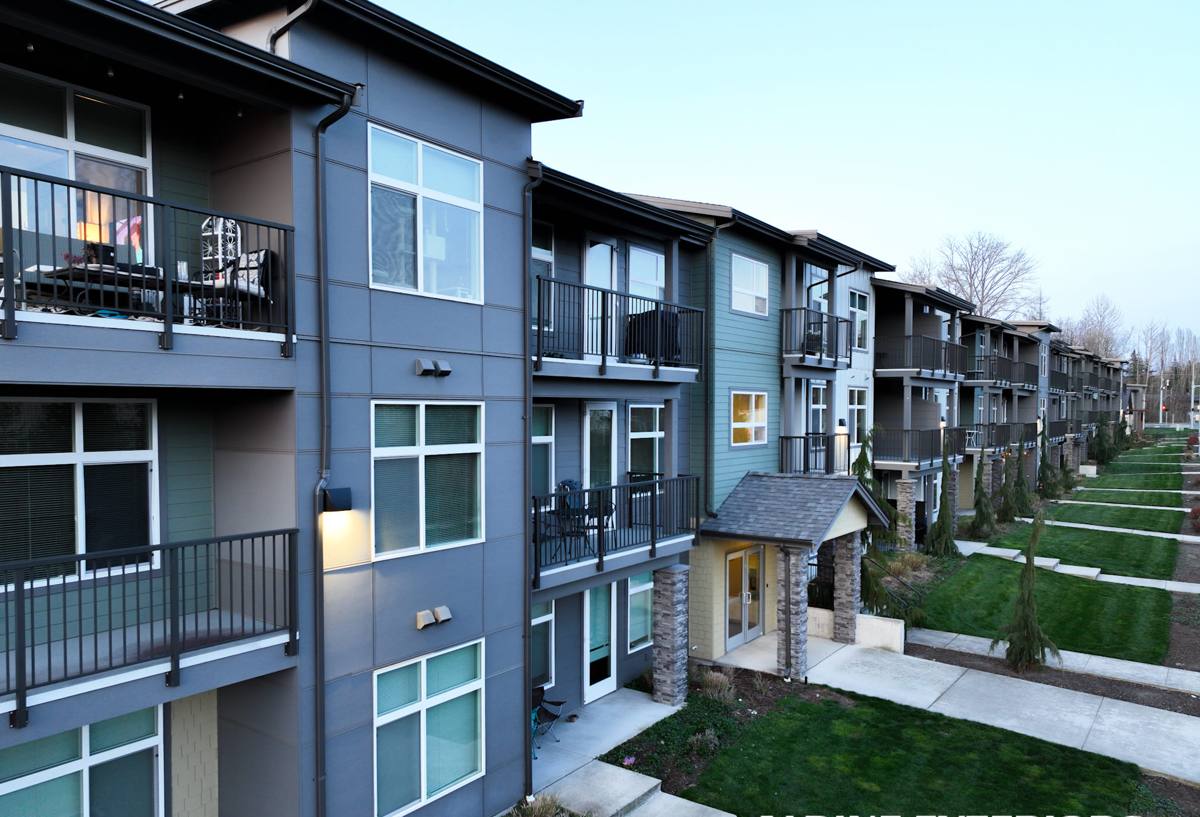
What Cordata Homes Actually Need From Their Windows
Cordata is a mix of housing stock — newer construction along with older homes that have been through a remodel or two. Both categories share the same regional stressors, but they fail differently.
Moisture Management First
Salt air off the Sound combined with near-constant regional humidity accelerates corrosion on hardware and fasteners that aren't rated for coastal exposure, and it keeps wood trim wet long enough for rot to set in around poorly sealed frames. A correct installation treats water management as the whole job, not a finishing step. That means a sloped sill pan, properly lapped flashing tape integrated with the water-resistive barrier, and a drainage path so any water that does get behind the cladding has somewhere to go besides your wall studs.
Moss and Organic Growth
Whatcom County's moss season isn't limited to roofs. Window sills, meeting rails, and exterior trim that stay damp for weeks at a time will grow moss and algae just like a north-facing roof slope does. Frame materials and finishes that resist organic growth, and window designs that shed water instead of pooling it on horizontal surfaces, matter more here than in drier parts of the state.
Thermal Performance in a Marine Climate
Bellingham's marine climate means fewer extreme temperature swings than inland Washington, but it also means near-constant humidity working against your insulation and window seals year-round. A window with a poor thermal break will condense on the interior glass through a damp Cordata winter, and that condensation drips onto sills and trim, adding another moisture source on top of what's already coming from outside.
Comparing Frame Materials for This Climate
There's no single "best" window material — the right choice depends on the home's exposure, existing trim details, and budget. Here's how the common options hold up specifically against Whatcom County's rain and salt air:
| Frame Material | Moisture & Salt Air Resistance | Maintenance Burden | Typical Fit for Cordata Homes |
|---|---|---|---|
| Vinyl | Good — won't rot or corrode; seams are the weak point if not welded well | Low | Strong value option for most Cordata remodels and replacements |
| Fiberglass | Excellent — dimensionally stable, resists warping in damp cycles | Low | Good fit for homes with larger window openings or higher-exposure walls |
| Aluminum-clad wood | Good exterior protection, but interior wood core still needs a sound seal | Moderate | Works when the homeowner wants a wood interior look |
| Bare wood | Weakest in this climate without diligent upkeep | High | We only recommend this with a clear-eyed conversation about the maintenance schedule it requires |
We're not going to tell you bare wood windows are a bad product — plenty of homeowners love the look and are willing to keep up with refinishing. Our job is to be honest about what each material asks of you in a climate that stays wet from October through May, so you're not surprised later.
What a Correct Installation Actually Involves
The window unit itself is often the easiest part of the job. The installation sequence is where quality gets decided, and it's the part homeowners can't easily inspect once the trim goes back on.
- Remove and inspect. Old windows come out carefully so we can see the actual condition of the framing, sill, and sheathing underneath — this is where hidden rot or old water damage shows up.
- Repair before you cover. Any soft wood, compromised sheathing, or failed old flashing gets addressed before a new window goes in. Installing a new window over a damaged opening just delays the same problem.
- Sill pan first. A sloped, sealed sill pan is installed so any water that finds its way to the sill drains outward instead of sitting against the frame.
- Flashing integration. Flashing tape is lapped correctly with the house wrap — top over bottom, sides overlapping the sill pan — so the whole assembly sheds water downward and outward, the way shingles do on a roof.
- Set, shim, and level. The window is set plumb and level with proper shimming so the sash operates correctly and the seal isn't stressed by an out-of-square opening.
- Insulate the gap correctly. The space between the frame and rough opening gets a low-expansion foam or backer rod and sealant — packed too tight, foam can actually bow the frame and cause operational problems.
- Exterior sealant and trim. A quality, paintable, weather-rated sealant closes the perimeter, and trim is reinstalled or replaced to match the home.
- Interior finish and function check. Every window gets tested for smooth operation, proper locking, and a clean, gap-free interior finish before we call the job done.
Skip step three or four and you can still end up with a window that looks perfect on installation day and starts leaking behind the wall two winters later.
Signs Cordata Homeowners Should Watch For
Because window failures often start hidden, it helps to know the early warning signs before they become a bigger repair:
- Fogging or condensation between panes of double- or triple-glazed glass — a sign the seal has failed
- Soft or discolored wood trim around the window exterior
- Paint bubbling or peeling near the frame, often a sign of moisture trapped underneath
- Visible moss or algae buildup on sills and horizontal trim surfaces
- Drafts or noticeably cold spots near the window in winter
- Difficulty opening, closing, or locking a window that used to operate smoothly
- Musty smell near the window that doesn't go away with cleaning
Any one of these on its own isn't necessarily an emergency, but a couple showing up together usually means it's worth a closer look before the next wet season.
New Construction vs. Replacement Windows
The right approach depends on whether the surrounding wall assembly is being opened up or staying intact.
Full-Frame Replacement
When we remove the old window down to the rough opening, we can fully inspect and repair the framing, install a proper sill pan, and integrate new flashing with the house wrap from scratch. This is the more thorough option and the one we recommend whenever there's already visible trim damage or the home is due for siding work at the same time.
Insert (Pocket) Replacement
An insert replacement fits a new window into the existing frame without disturbing the surrounding trim or siding. It's faster and less invasive, and it's a reasonable option when the existing frame and flashing are still sound. The tradeoff is that any hidden moisture damage in the old frame doesn't get addressed — it just gets covered up again. We'll tell you honestly during the estimate which situation your home is in.
Cost Factors for Cordata Window Projects
Every home and project scope is different, so we won't quote a number here that doesn't apply to your situation — but these are the factors that actually move the price:
| Factor | Why It Matters |
|---|---|
| Frame material | Vinyl, fiberglass, and clad-wood carry different material costs and lead times |
| Full-frame vs. insert replacement | Full-frame involves more labor and often trim or siding repair |
| Hidden damage found during removal | Rot or old water damage discovered behind the old window adds repair scope |
| Window size and configuration | Large picture windows, bays, or custom shapes cost more than standard sizes |
| Number of openings | Whole-house projects typically bring a better per-window rate than single replacements |
| Access and second-story work | Upper-floor windows can require additional equipment and labor time |
We walk through all of this during the estimate so you know what's driving the number, not just what the final total is.
Why a Crew That Already Works Cordata Matters
Window installation looks straightforward on paper, but the details that actually matter — how much slope to build into a sill pan, how aggressively to seal against salt-laden air, which trim details hold up against a moss season that can run half the year — are things you learn by doing this work repeatedly in this exact climate. A crew that mostly installs windows in a drier region can do a technically fine job and still miss the specific moisture patterns that Whatcom County homes deal with.
We're on Cordata streets regularly, working on homes that face the same rain, the same humidity, and the same moss cycle as yours. That familiarity shows up in small decisions — the sealant we reach for, how we detail a sill pan, when we recommend full-frame replacement over an insert — and those small decisions are what determine whether a window installation is still performing well in fifteen years.
Getting Started
If you're noticing drafts, fogged glass, sticking sashes, or trim that's starting to look rough around your windows, it's worth having a straightforward, no-pressure conversation before the next stretch of Whatcom County rain sets in. We'll take a real look at your home's windows and give you honest options — no upsell, no scare tactics. Use the form below to request a free estimate for your Cordata home.