 Bellingham Exterior
 Fiber Cement Siding Built for Cordata's Climate
Cordata sits in the northwest corner of Bellingham, close enough to Bellingham Bay and the Puget Sound airshed that homes here deal with a specific combination of weather stresses: salt-tinged marine air, wind-driven rain that hits siding sideways instead of straight down, and long stretches of gray, damp months where moss and algae get every advantage they need. Siding in this neighborhood isn't just a cosmetic layer — it's the first and most-tested line of defense between the house and a climate that rarely gives materials a dry season to recover in.
We install James Hardie fiber cement siding exclusively, and Cordata is a good example of why. This is a neighborhood where the wrong siding choice doesn't fail dramatically — it fails slowly, quietly, behind the paint, until a homeowner is looking at soft trim boards or bubbling panels they didn't see coming.
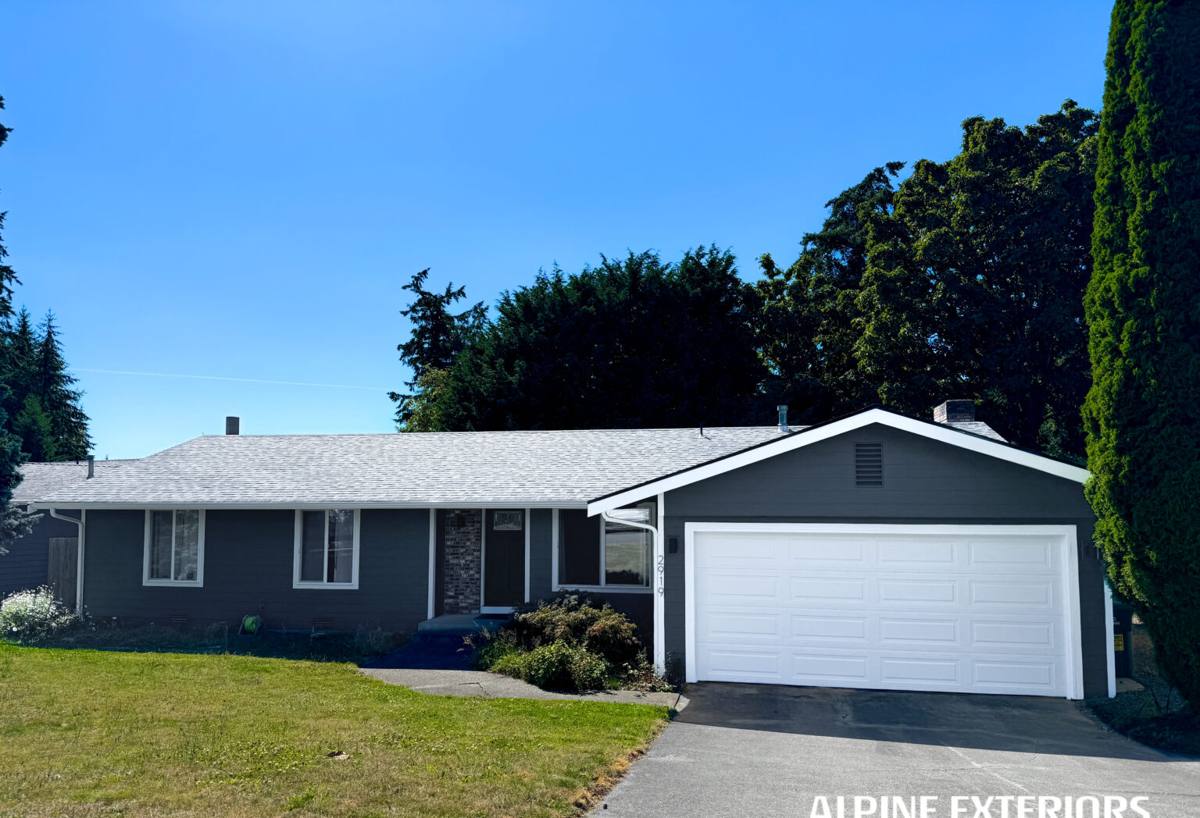
What Whatcom County Weather Actually Does to Siding
It helps to be specific about what "driving rain and moss season" means for a wall assembly, because the mechanisms matter more than the general idea of "it rains a lot here."
Wind-Driven Moisture
Bellingham's storms frequently come in off the water with enough wind to push rain laterally against west- and southwest-facing walls. That means water isn't just sheeting down and off — it's being forced into laps, seams, and butt joints under pressure. Siding materials that rely on paint film or a factory coating alone to stay watertight are more exposed here than in a drier, calmer climate.
Extended Moss and Algae Season
Whatcom County's combination of shade, moisture, and mild temperatures gives moss and algae a growing window that runs most of the year, not just a few weeks. Any siding material that stays damp longer than it should — because it absorbs water, or because airflow behind it is restricted — becomes a host surface faster than homeowners expect.
Salt-Influenced Air
Cordata isn't waterfront, but it's close enough to the Bay that homes on the west side of the neighborhood get periodic exposure to salt-laden air, especially during winter storm systems. Salt exposure accelerates the breakdown of some fasteners, coatings, and composite materials over time, which is part of why fastener choice and coating quality matter as much as the siding panel itself.
Why We Only Install James Hardie in This Neighborhood
James Hardie fiber cement is engineered from cement, sand, and cellulose fibers — it doesn't absorb water the way wood-based composite products do, and it's non-combustible. For Cordata specifically, the properties that matter most are moisture stability and finish durability under repeated wet-dry cycling. Hardie's HZ5 product line is engineered for cold, wet Pacific Northwest conditions, and the ColorPlus factory-applied finish is baked on and cured under controlled conditions rather than field-applied — which means the color layer is more consistent and better bonded than a job-site paint job can achieve.
We don't install LP SmartSide, vinyl, Cemplank, Allura, primed spruce, or cedar. Each of those has legitimate uses somewhere, but for this climate and for the standard we hold our installs to, we've standardized on one product line so we can guarantee the work behind it.
Fiber Cement vs. Common Alternatives in This Climate
| Material | How it handles driving rain | How it handles moss/algae season | Long-term concern here |
|---|---|---|---|
| James Hardie fiber cement | Dense, low-absorption; factory finish sheds water | Doesn't feed moisture-loving growth the way wood fiber can | Requires correct install detailing to perform to spec |
| Vinyl siding | Can flex and gap at seams under wind pressure | Surface growth is common; panels can trap moisture behind them | UV and cold-cycle brittleness over decades |
| LP SmartSide (wood strand) | Relies on edge sealant and coating integrity | Wood-based substrate is more vulnerable if water gets in | Edge swelling if any seal point fails |
| Cedar | Natural material, but absorbs and releases moisture constantly | Needs regular refinishing to resist moss and rot | Ongoing maintenance burden in a wet climate |
What a Correct Fiber Cement Install Involves
Fiber cement siding is only as good as the assembly behind it. A quality install in a neighborhood like Cordata means paying attention to details that don't show up in a walk-by inspection but decide how the wall performs in year eight, not year one.
- Weather-resistive barrier (WRB): A correctly lapped and sealed housewrap or building paper behind the siding, so any water that does get past the cladding has somewhere to go besides the sheathing.
- Rainscreen gap: A drainage gap between the siding and the WRB lets bulk water drain and lets the wall assembly dry out between storms — critical in a climate where "dry season" is relative.
- Correct fastener pattern and type: Hardie specifies fastener spacing, embedment depth, and corrosion-resistant fastener types; skipping this is one of the most common causes of premature siding failure.
- Proper flashing at every penetration: Windows, doors, hose bibs, light fixtures, and vents all need flashing details that shed water down and out, not into the wall.
- Butt joint and seam treatment: Joints are caulked or flashed per manufacturer spec — this is exactly where wind-driven rain finds weak points if it's rushed.
- Clearance from grade, decks, and roofs: Hardie requires minimum clearances from ground level, roof lines, and horizontal surfaces to keep the bottom edge of the siding from sitting in standing moisture.
Our Process for a Cordata Siding Project
1. On-Site Assessment
We walk the exterior and look at what's actually happening on the walls today — moss buildup patterns, soft spots, failed caulk lines, and which elevations are taking the worst of the wind and rain. This tells us where the existing assembly is already struggling.
2. Tear-Off and Sheathing Check
Old siding comes off and we inspect the sheathing underneath. Any rot, soft wood, or water staining gets addressed before anything new goes up — covering a compromised wall with new siding just hides the problem.
3. WRB and Rainscreen Installation
We install the weather-resistive barrier and rainscreen system correctly lapped, sealed, and detailed around every penetration before a single piece of Hardie board goes on.
4. Hardie Panel Installation to Manufacturer Spec
Fastening, spacing, joint treatment, and clearances follow James Hardie's published installation guidelines — this is what keeps the manufacturer warranty valid and what actually determines how the siding performs in Whatcom County weather over the next few decades.
5. Trim, Caulk, and Final Detailing
Trim boards, corner details, and caulk lines get finished to shed water at every transition — the places where two materials meet are where most failures start.
6. Walkthrough
We review the completed work with the homeowner and go over basic care so the siding performs the way it's designed to.
Why Local Experience in Cordata Matters
A crew that already works this neighborhood knows which elevations take the worst wind-driven rain, how close houses sit to mature tree cover that keeps north and east walls shaded and slow to dry, and what the moss growth pattern looks like on homes that haven't been resided recently. That's not something you get from a general spec sheet — it comes from doing the work here, on this kind of lot, in this kind of weather, repeatedly. It also means we're not guessing at flashing details or clearance requirements; we're applying the same standard we hold across every Bellingham-area job to your specific walls and exposure.
Maintenance Expectations After Installation
One advantage of fiber cement over wood-based or vinyl alternatives is a lighter maintenance load, but "lighter" doesn't mean "none" — especially in a climate that supports moss growth most of the year.
- Rinse siding periodically to keep organic growth from establishing, particularly on shaded north- and east-facing walls.
- Keep gutters clear so overflow doesn't run down the siding face repeatedly.
- Trim back vegetation and tree cover that keeps any section of wall shaded and damp longer than the rest of the house.
- Inspect caulk lines at trim and penetrations every year or two, since caulk is the one component that ages faster than the siding itself.
- Address any impact damage or chips in the factory finish promptly so the substrate underneath stays protected.
What This Costs to Do Right
Every Cordata home is different — square footage, number of stories, existing wall condition, trim complexity, and how much sheathing repair is needed all move the number. In general terms, a full fiber cement siding replacement is a significant exterior investment, and the honest range depends heavily on what we find once tear-off starts. What we can tell you without a site visit: the cost difference between doing the WRB, rainscreen, and flashing details correctly versus cutting corners on them is small compared to the cost of redoing a wall assembly that failed in five years instead of lasting decades. We'll give you a clear, itemized estimate after we've actually looked at your walls — not a number pulled from a phone call.
If you're weighing a siding replacement in Cordata, we're happy to come take a look and give you a straightforward, no-pressure estimate — including what we see on your specific walls and how it should be addressed. Use the form below to get started.