 Bellingham Exterior
 Why Cordata Siding Takes More Punishment Than People Expect
Cordata sits in north Bellingham, close enough to Bellingham Bay and the Strait of Georgia that homes here deal with a steady mix of moist marine air, wind-driven rain, and long stretches of gray, low-sun weather. That combination is hard on exterior siding in ways that aren't always obvious from the street. Salt-laden air accelerates corrosion on fasteners and trim metal. Driving rain finds its way into seams, laps, and butt joints that were installed a few degrees off from spec. And Whatcom County's mild, damp winters give moss and algae months at a time to take hold on north-facing walls and anything shaded by trees or neighboring structures.
None of this is dramatic on its own. It's cumulative. A siding system that would hold up fine in a drier climate can start failing here in half the time if it wasn't installed with this specific weather pattern in mind. That's the core issue we see over and over on Cordata siding repair calls: the damage isn't random, it's climate-driven, and it tends to show up in the same spots on home after home.
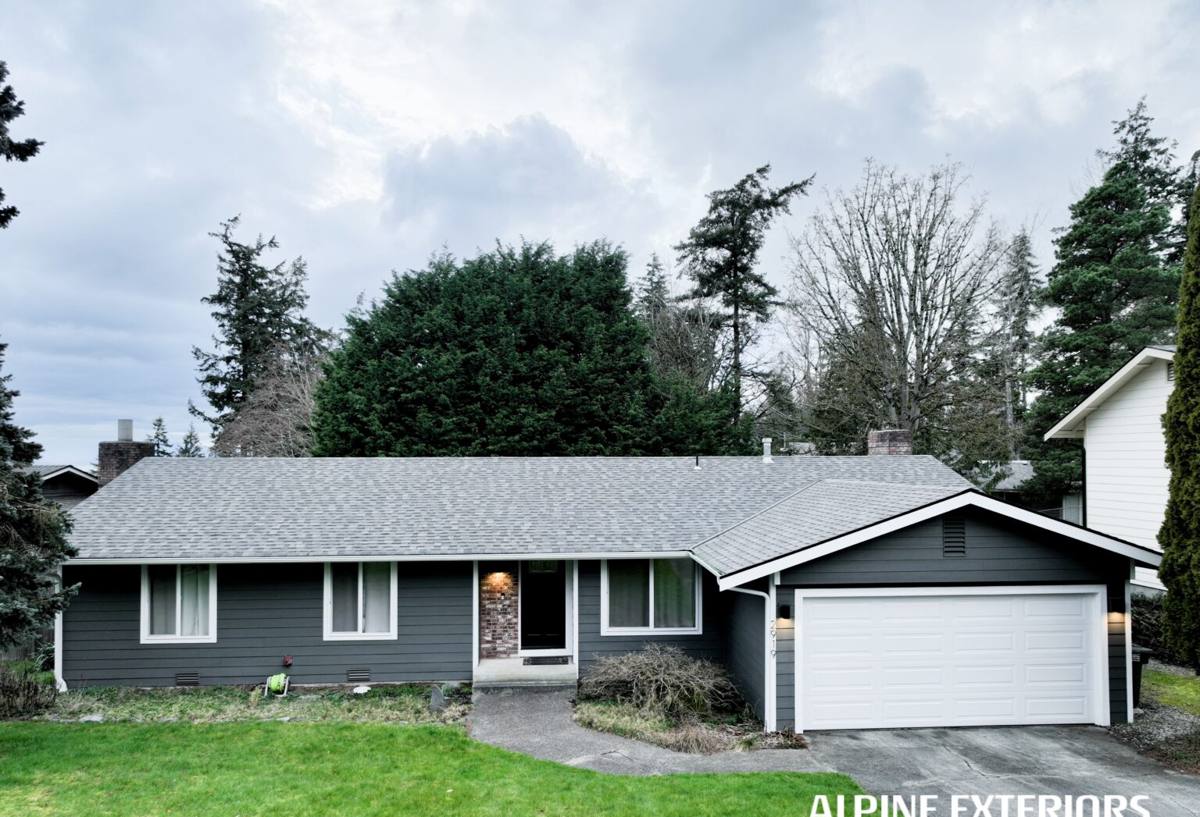
Signs a Cordata Home Needs Siding Repair, Not Just Cleaning
Homeowners often assume dark streaking or soft-looking boards are a cosmetic problem that pressure washing will fix. Sometimes that's true. Often it isn't. Here's what actually warrants a repair inspection rather than a garden hose:
- Soft, spongy, or crumbling siding when pressed with light hand pressure
- Visible gaps opening up at butt joints, corners, or around window and door trim
- Persistent moss or black algae growth that returns within weeks of cleaning
- Paint that's peeling, bubbling, or chalking heavily on one section of wall but not others
- Staining or discoloration on interior walls near exterior corners, especially after heavy rain
- Visible warping, cupping, or separation between siding boards
- Rust streaks running down from nail heads or trim fasteners
- A musty smell in a room that backs up to an exterior wall
Any one of these on its own might be minor. Two or three together, especially on the north or west side of the house where wind-driven rain and shade both concentrate, usually means moisture has already gotten past the surface layer and into the wall assembly.
Why Localized Damage Isn't a Localized Problem
Siding is a system, not a collection of individual boards. Water that gets behind one damaged section doesn't stay put — it travels along the weather-resistive barrier, framing, and sheathing until it finds a way out or a place to pool. That's why a repair job that only addresses the visibly bad board, without checking what's happening behind it, tends to fail again within a season or two.
What a Correct Siding Repair Actually Involves
A proper repair is diagnostic work first, carpentry second. Before any siding comes off, the goal is to understand why that section failed in the first place — because replacing a board without fixing the underlying cause just buys a few more years before the same spot fails again.
Step One: Find the Actual Moisture Path
This means checking flashing above windows and doors, looking at how siding terminates at trim and corners, checking kick-out flashing where roof lines meet walls, and inspecting the condition of the weather-resistive barrier once siding is pulled back. In our experience, a large share of "siding failures" in this climate are actually flashing or barrier failures that siding was just the visible symptom of.
Step Two: Assess What's Salvageable
Sheathing and framing that's been wet long enough to soften or show fungal growth needs to be addressed before any new siding goes back up. Skipping this step is the single most common shortcut that leads to repeat failures — new siding over compromised sheathing just hides the problem for a while.
Step Three: Match Materials and Method
Repairs need to match the existing siding's profile, exposure, and finish as closely as possible, and they need to be installed with the same attention to caulking, fastening pattern, and flashing detail as a full installation. A patch job that ignores manufacturer installation specs is a repair in name only.
Repair vs. Replacement: How We Make the Call
Not every problem area needs a full re-side, and we're not going to tell a Cordata homeowner they need whole-house replacement when a targeted repair will genuinely hold up. But there's a point where patching stops making financial sense. Here's how we generally think through it:
| Situation | Usually Repair | Usually Replace |
|---|---|---|
| Damage limited to one or two wall sections | Yes | No |
| Underlying sheathing is sound | Yes | No |
| Damage is widespread across multiple elevations | No | Yes |
| Original siding material is failing systemically (not just one spot) | No | Yes |
| Home has recurring moisture intrusion history | Sometimes, with added flashing correction | Often, for a clean reset |
| Siding is nearing the end of its practical service life | No | Yes |
When damage shows up in isolated spots with sound framing behind it, a well-executed repair is the honest, cost-effective answer. When we're finding moisture problems in three or four different areas of the same house, that's usually a sign of a systemic installation or material issue, and patching around it stops being a good use of a homeowner's money.
Why We Repair Exclusively With James Hardie Fiber Cement
We install and repair with James Hardie fiber cement siding only — we don't carry vinyl, LP SmartSide, cedar, primed spruce, or other fiber cement brands. For repair work specifically, that standardization matters for a practical reason: consistency. When a repair section is Hardie's HZ5 product line, engineered for wetter, harsher climates like ours, it behaves the same way the surrounding original siding does — same moisture tolerance, same expansion and contraction characteristics, same factory-applied ColorPlus finish options for a color match that doesn't visibly fade differently over time.
Fiber cement doesn't absorb water the way wood-based siding products can, and it's non-combustible, which matters more each year as wildfire smoke and dry-season risk become a bigger part of Pacific Northwest summers even in a generally wet region like Whatcom County. It also doesn't feed moss and algae growth the way some organic and composite siding materials do, which is a direct answer to the moss problem Cordata homes deal with for a good chunk of the year. Hardie backs its products with a strong transferable warranty, which matters on a repair — a patch job with a mismatched, lesser-warrantied product can quietly void or complicate coverage on the rest of the wall.
What This Means for a Repair Estimate
If your existing siding isn't Hardie, we'll be straightforward with you: we can still assess the underlying issue and, in many cases, complete a repair using Hardie product that's compatible in profile and reveal, but a perfect visual match to a different manufacturer's product isn't something we'll promise. In some cases, the more honest recommendation is a full re-side of the affected elevation rather than a repair that will always look like a patch.
Our Process for a Cordata Siding Repair
The process is straightforward, but each step exists for a reason we've learned from doing this work in this exact climate.
1. On-Site Inspection
We look at the whole exterior, not just the area you called about. Damage in this climate rarely stays isolated, and it's common to find a second problem area a homeowner hadn't noticed yet.
2. Diagnosis and Written Plan
You get a clear explanation of what's causing the damage, what needs to be repaired versus replaced, and a written scope before any work starts. No vague verbal estimates.
3. Careful Removal
Affected siding comes off carefully so we can inspect the weather-resistive barrier, flashing, and sheathing underneath without causing more disruption than necessary to the surrounding intact siding.
4. Structural and Moisture Correction
Any compromised sheathing or framing gets addressed, and flashing details get corrected — this is the step that actually prevents the problem from coming back.
5. Reinstallation to Manufacturer Spec
New Hardie siding goes in following James Hardie's installation specifications for fastening, clearances, and caulking — the same standard we hold ourselves to on full installations.
6. Site Cleanup and Walkthrough
We walk the completed repair with you, explain what was found and fixed, and leave the site clean.
Why a Crew That Already Works in Cordata Matters
Siding repair isn't just a materials question — it's a local-conditions question. A crew that regularly works in Cordata and the surrounding Bellingham neighborhoods already knows which elevations tend to take the worst weather exposure, how local permitting and inspection with the City of Bellingham and Whatcom County typically works, and what the practical realities are of scheduling exterior work around this region's rain patterns rather than fighting them. That familiarity shows up in fewer surprises mid-project and a repair that's planned around this climate instead of a generic playbook.
It also matters for accountability. A contractor with an ongoing local presence has a reason to stand behind the work years down the road, not just get through the punch list and move on to the next city.
Maintaining a Repair Through Whatcom County's Moss Season
A well-executed repair still needs basic upkeep to get its full lifespan, especially given how long moss season runs here. A few habits go a long way:
- Keep gutters clear so overflow doesn't run down the face of the siding
- Trim back vegetation and tree branches that keep siding shaded and damp
- Rinse north- and west-facing walls periodically to slow moss and algae buildup
- Check caulking at trim and window edges annually, since it's the first thing to fail
- Address small paint or finish issues promptly rather than letting them expand
None of this requires special equipment or a big time investment — it's mostly about not letting small issues sit through an entire wet season unaddressed.
What Repair Costs Depend On
Every repair is different, but the same few factors drive cost on most Cordata jobs:
| Factor | Why It Matters |
|---|---|
| Extent of moisture damage behind the siding | Sheathing or framing repair adds labor and material beyond the siding itself |
| Accessibility of the damaged area | Second-story or hard-to-reach sections take more time and equipment |
| Color and profile matching needs | Matching existing Hardie ColorPlus finishes may require specific product runs |
| Flashing or trim correction required | Fixing the actual water path, not just the siding, is what prevents repeat calls |
| Number of separate damaged areas | Multiple smaller repairs across the house add mobilization and setup time |
We won't quote a number without seeing the actual condition of the wall, but we'll always explain what's driving the cost before you commit to anything.
If you're seeing soft spots, gaps, or persistent moss on your Cordata home's siding, it's worth having someone take an honest look before it turns into a bigger repair. We offer free, no-pressure estimates — use the form below to get a time on the schedule.