 Bellingham Exterior
 Windows in Barkley Deal With a Specific Kind of Weather
Barkley sits in a part of Bellingham that gets the full range of what Whatcom County weather can throw at a house over the course of a year. Salt-tinged air off the Sound, long stretches of driving rain in the fall and winter, and a moss season that seems to run longer every year all put steady pressure on window frames, sills, and seals. None of that damage happens overnight. It shows up slowly, as a sticky sash, a frame that's started to swell, or a corner bead of caulk that's finally given up after a decade of freeze-thaw cycles and constant dampness.
Custom windows aren't about luxury upgrades or unusual shapes, though we do plenty of that too. Most of the work we do in Barkley is about getting a window built to the exact dimensions of an opening that's shifted slightly over the years, and installing it in a way that actually keeps water out of the wall cavity. That second part is where a lot of window jobs quietly fail, and it's the part we spend the most time getting right.
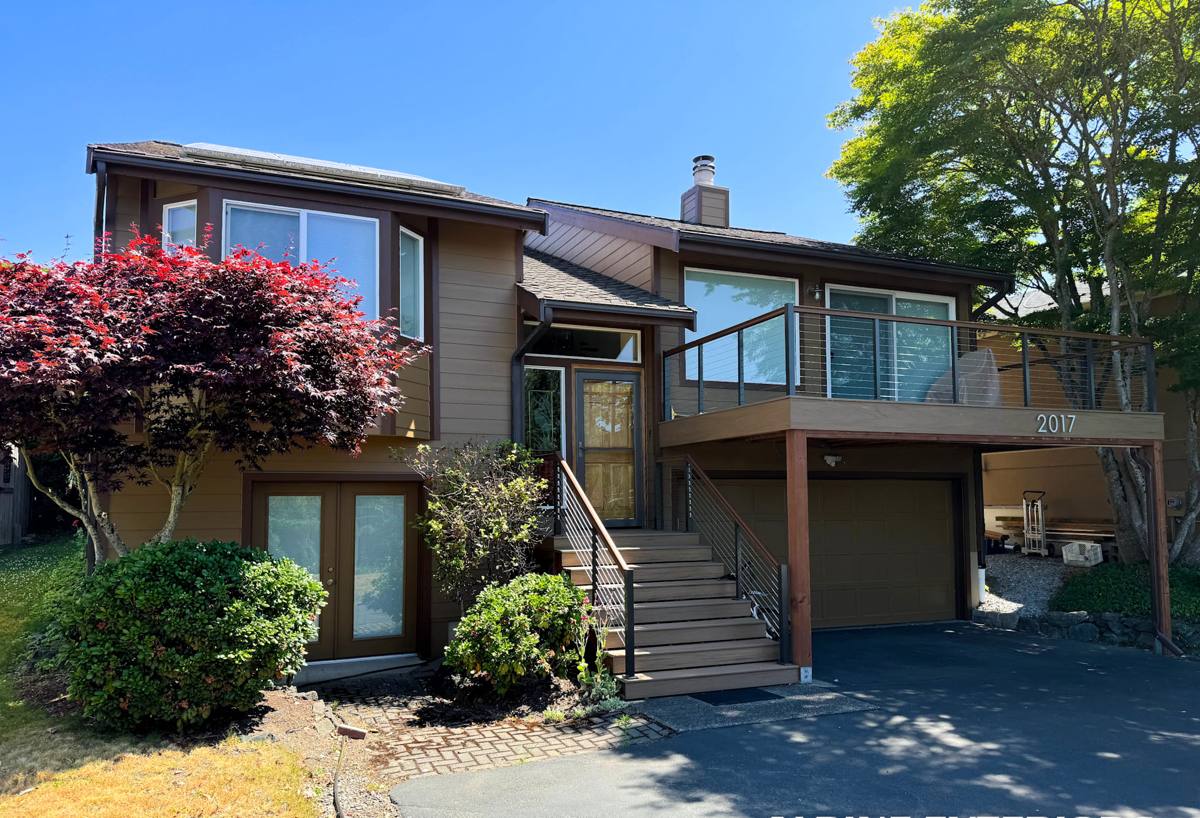
What "Custom" Actually Means When We Say It
A lot of homeowners hear "custom windows" and assume it means unusual shapes or high-end finishes. Sometimes it does. But the more common reason a window needs to be custom-built rather than pulled off a shelf is much simpler: houses settle, framing shifts, and older openings are rarely perfectly square anymore. A stock-size replacement window forced into an opening that's a half-inch off in one corner is a callback waiting to happen — gaps get packed with extra sealant instead of solved properly, and that's exactly the kind of shortcut that lets water in during a hard winter storm.
For us, "custom" means:
- Field-measuring every opening individually, not assuming uniformity across a house
- Building or ordering windows sized to the actual opening, not the nearest standard size
- Matching sightlines and sash proportions so replacement windows don't look mismatched next to originals you're keeping
- Accounting for out-of-square or out-of-plumb openings, which are common in homes that have settled over decades
Why This Matters More in Barkley Than in a Brand-New Subdivision
Barkley includes a mix of housing stock — some newer construction near the developed core, and a good number of older homes on the surrounding residential streets. Older framing has had more time to move, and it's also more likely to have been patched, re-sided, or partially updated over the years in ways that changed the rough opening slightly. Measuring twice and building to the actual opening, rather than trusting the original spec sheet, is standard practice for us here — not an upsell.
What Salt Air, Rain, and Moss Actually Do to a Window
Each of these three factors attacks a window differently, and understanding which one is doing the damage helps explain why the fix isn't always "just buy a better window."
Salt Air
Airborne salt accelerates corrosion on exposed metal — hinges, cranks, screen frames, and lower-quality hardware finishes. It also breaks down certain sealants and coatings faster than they'd wear in a drier inland climate. This is less about the glass and more about everything that moves or seals the window.
Driving Rain
Wind-driven rain doesn't just sit against a window the way a light drizzle does — it gets pushed sideways and upward, testing every seam, sill, and flashing detail. A window that would be fine in a calm rain can leak in a Barkley windstorm if the flashing and sill pan weren't installed correctly. This is the single biggest cause of hidden water damage we see in window replacements done without proper flashing.
Moss and Prolonged Dampness
Whatcom County's moss season isn't just a roof problem. Moss and algae hold moisture against wood trim, sills, and lower frame sections for extended periods, which is exactly the condition that leads to rot in untreated or poorly sealed wood components. Vinyl and fiberglass don't rot, but the wood trim, brick mold, or sill extensions around them still can if they're not detailed and finished correctly.
Comparing Window Materials for This Climate
There's no single "best" window material — it depends on your home's style, budget, and how much upkeep you're willing to do. Here's how the common options hold up under Barkley's conditions specifically.
| Material | Moisture & Salt Air Resistance | Maintenance | Typical Trade-Off |
|---|---|---|---|
| Vinyl | Good — won't rot or corrode | Low | Limited color/finish options; can expand/contract with temperature swings |
| Fiberglass | Very good — dimensionally stable, resists moisture well | Low to moderate | Higher upfront cost than vinyl |
| Wood-Clad | Good if detailed correctly, but cladding seams need attention | Moderate to high | Best appearance for older/traditional homes; more installation sensitivity |
| Aluminum | Prone to corrosion in salt-air exposure over time | Moderate | Strong and slim profile, but poor thermal performance and salt-air durability |
We don't push one material on every job. A vinyl or fiberglass window is usually the practical choice for straightforward replacements, while wood-clad tends to make more sense on older homes where matching original trim details matters. We'll walk through the honest trade-offs for your specific house rather than defaulting to whatever's easiest to install.
How the Installation Actually Determines Whether a Window Performs
The window itself only accounts for part of how well it performs over the next fifteen or twenty years. Installation quality — specifically flashing and water management — is what actually determines whether driving rain stays outside the wall.
Sill Pans and Flashing
A sill pan creates a sloped, sealed barrier under the window that directs any water that gets past the sash back outside, instead of letting it soak into the framing below. Proper flashing integration ties the window into the house's existing weather-resistive barrier so water sheds down and over, not behind, the siding. This is the detail that separates a window installed correctly from one that "looks fine" for a year or two before a leak shows up inside a wall where nobody can see it happening.
Sealant Is a Backup, Not a Solution
Caulk and sealant are meant to be a secondary line of defense, not the only thing keeping water out. When flashing and pan detailing are skipped to save time, sealant ends up doing a job it wasn't designed to do alone — and in a climate with this much sustained rain, that approach fails eventually. We flash every window as if the caulk might someday crack, because eventually it will.
Our Process From Estimate to Finished Install
- On-site assessment. We look at every opening individually, checking for rot, out-of-square framing, and existing flashing condition — not just the visible window itself.
- Field measurements. Each window is measured on-site rather than estimated from a floor plan, so the custom unit actually fits the real opening.
- Material and style selection. We go over honest options for your home and budget, including how each material holds up specifically to salt air, rain exposure, and moss-prone areas of the house.
- Removal and inspection. Once the old window is out, we inspect the framing and sill for hidden rot or water damage before anything new goes in — this is often when older problems get found and fixed.
- Flashing and sill pan installation. This is the step that protects the investment long-term, and it's not something we shortcut regardless of schedule pressure.
- Window installation and sealing. The new unit is set, shimmed level and plumb, insulated around the frame, and sealed properly — inside and out.
- Final check and cleanup. We test operation, check for gaps or draft points, and walk the finished work with you before we consider the job done.
What Affects the Cost of a Custom Window Job
Pricing varies house to house, but a few factors consistently drive cost up or down. Being upfront about these helps you plan rather than guess.
| Factor | Why It Matters |
|---|---|
| Number of openings out of square | Custom-built units and extra framing correction take more time than a standard swap |
| Existing rot or water damage found during removal | Framing repair has to happen before a new window goes in — it can't be skipped |
| Material choice | Vinyl, fiberglass, and wood-clad carry different material and labor costs |
| Number of windows done at once | Bundling multiple windows in one project typically costs less per unit than one-offs over time |
| Trim and exterior detail matching | Matching existing brick mold, casing, or siding transitions adds finish work |
Signs Your Barkley Home's Windows Need Attention
Most window problems give warning signs well before a full failure. Worth checking for:
- Condensation forming between panes (a sign the seal has failed on a double- or triple-pane unit)
- Sashes that stick, feel swollen, or won't latch fully closed
- Visible gaps, cracked caulk, or daylight around the frame
- Soft or discolored wood trim, especially at the sill or bottom corners
- Persistent moss or dark staining on the exterior frame or sill
- A noticeable draft near the window on windy days
- Rising energy bills without another clear explanation
Any one of these on its own isn't necessarily urgent, but a combination — especially soft wood plus visible staining — usually means water has already gotten behind the frame and it's worth having someone look before it spreads further into the wall.
Why It Matters That We Already Work in Barkley
There's a real difference between a crew that installs windows in a lot of different climates and one that regularly works this specific stretch of Whatcom County. We know what driving rain off the water does to a poorly flashed sill within a few winters. We know how fast moss establishes itself on north-facing trim in this part of Bellingham, and we build our detailing around that instead of treating it as an afterthought. That familiarity shows up in small decisions — how much we flash, which sealants hold up here, and where we spend extra time versus where standard practice is genuinely enough.
It also means we're not guessing at what your neighbors' homes look like or how the area's housing stock tends to be built. That local knowledge doesn't replace careful, individual assessment of your specific house — every home still gets measured and evaluated on its own — but it means we're not learning this climate's quirks on your project.
Get a Straight Answer on Your Windows
If you're noticing drafts, condensation, sticking sashes, or trim that's starting to look rough around your windows, it's worth having someone take an honest look before those small issues turn into a framing repair. We offer free, no-pressure estimates for custom window replacement in Barkley and the surrounding Bellingham area — use the form below to get started.