 Bellingham Exterior
 Deck Replacement in South Hill: Starting Over the Right Way
South Hill is one of Bellingham's older residential areas, a hillside neighborhood of established trees, sloped lots, and homes that in many cases have been standing for decades. A lot of the decks attached to those homes are original or close to it, which means a large share of the deck replacement calls we get in this part of the city aren't about a storm-damaged board or a loose railing. They're about a deck that has simply reached the end of what repair can reasonably fix — framing that's been absorbing moisture for twenty-plus years, hardware that's corroded past the point of a simple swap, or a layout that never quite matched how the household actually uses the space.
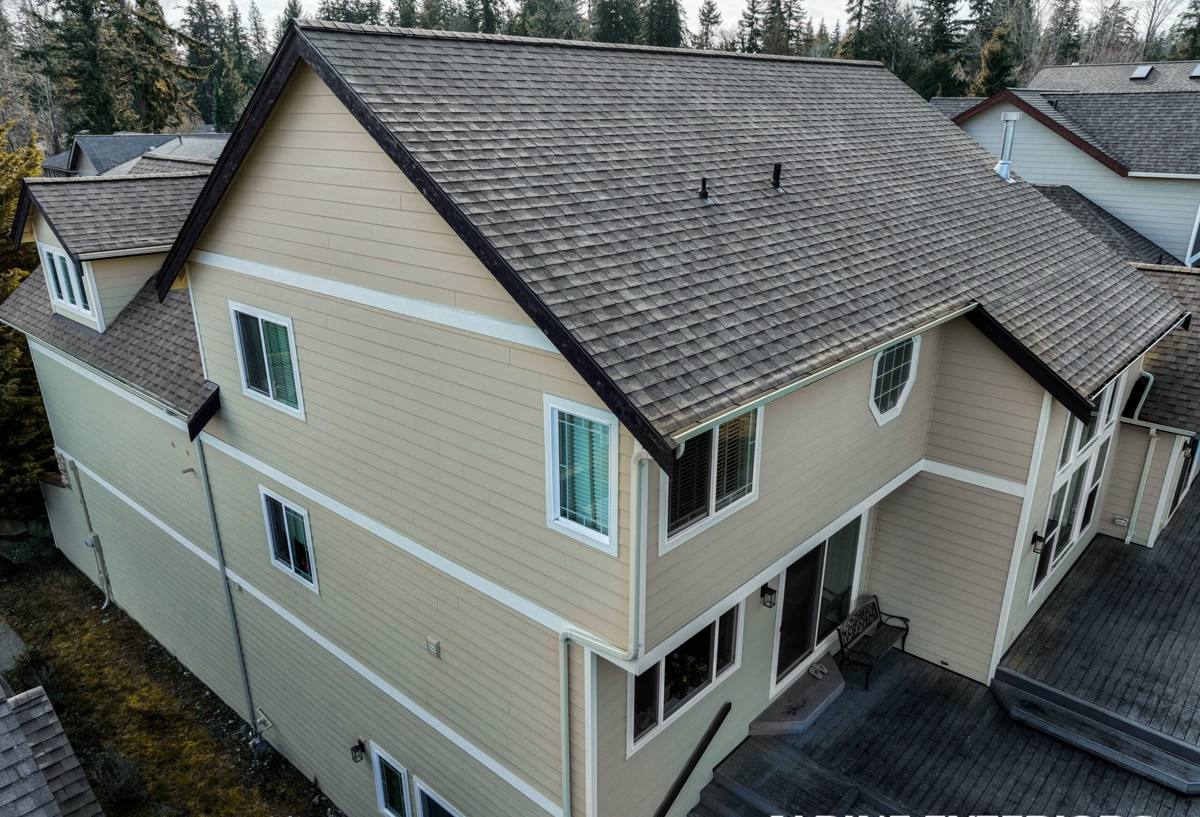
Replacing a deck here means dealing with Bellingham's marine climate — salt-tinged air off Bellingham Bay, rain that comes in sideways as often as straight down, and a moss season that runs most of the year under this neighborhood's tree canopy — on top of the hillside grading that comes with a lot of South Hill lots. This page covers what actually wears a deck out in this specific setting, what a correct replacement involves, and how our process works when we take on a South Hill deck from tear-out to finished build.
What South Hill's Climate and Terrain Do to a Deck
Marine Air and Driving Rain
Bellingham Bay isn't far from South Hill's elevation, and the marine air that moves through the city carries enough moisture and salt to steadily work on exposed metal, finishes, and end-grain wood over time. Combine that with wind-driven rain — storms here don't just fall straight down, they get pushed sideways into railings, ledger connections, and gaps between boards that were never designed to shed water from an angle — and a deck ends up absorbing far more moisture exposure over a year than most homeowners picture when they think about "rain."
A Long Moss Season Under the Tree Canopy
South Hill's mature trees are part of what makes the neighborhood distinctive, and they're also part of why decks here fight moss and mildew for a good stretch of the calendar year. Shaded decking stays damp longer between rain events, and any surface with even slight porosity gives moss something to grab onto. On older wood decks especially, it's common to find moss well established in board gaps and on north-facing sections long before it's visible from the house.
Hillside Grade and Slope
A meaningful share of South Hill properties sit on sloped ground, which changes how a deck gets supported. Footings on a slope often need to be dug deeper or stepped to reach stable, frost-free bearing soil, post heights can vary significantly across a single deck's footprint, and drainage underneath has to be planned so runoff moving downhill doesn't pool against framing or footings. None of that is unusual to deal with, but it does mean a deck replacement here isn't the same job as one on a flat, walk-out backyard lot.
Signs a Deck Has Reached Replacement, Not Repair
Not every aging deck needs a full rebuild, but there's a point where patching individual problems stops making sense. Some signs worth taking seriously:
- Soft or spongy spots in multiple boards, or framing members that give when probed, rather than one isolated bad board
- Corroded fasteners, joist hangers, or post hardware throughout the structure rather than at a single connection point
- A ledger board connection to the house that's shifted, gapped, or shows signs of water intrusion behind it
- Support posts or footings that have settled, shifted, or sit in contact with standing water
- A deck that predates current code requirements for railing height, guard spacing, or structural attachment
- Repeated repairs on the same sections year after year without the underlying problem actually going away
- A layout or size that no longer fits how the household uses the space, independent of the deck's physical condition
When it's one or two of these, repair is often still the right call. When several show up together, especially anything involving the ledger connection or widespread framing damage, replacement usually ends up being the more honest recommendation — and often the more cost-effective one once you account for what repeated repairs would run over a few more seasons.
Choosing the Right Decking Material for This Site
Material choice matters more on a shaded, moisture-heavy South Hill lot than it would on an open, sun-exposed site. The three categories most homeowners weigh are wood, capped composite, and cellular PVC, and each handles this climate differently.
| Material | Moisture & Salt Air Handling | Moss Resistance | Upkeep |
|---|---|---|---|
| Cellular PVC | Excellent — no wood fiber to absorb moisture | Strong; smooth, non-porous surface | Occasional washing |
| Capped composite | Strong — cap layer resists moisture and staining | Good on most product lines | Occasional washing |
| Uncapped composite | Moderate — some moisture absorption at exposed fiber | Fair; more prone to buildup in shade | Periodic cleaning |
| Cedar | Moderate — natural resistance, but needs sealing | Fair when sealed and maintained regularly | Regular oiling or sealing |
| Pressure-treated wood | Weak against sustained moisture over time | Poor without regular treatment | Regular sealing or staining |
On a shaded, tree-covered lot, that moss-resistance column carries more real-world weight than it might on an open site. We'll walk through where a given deck sits relative to sun and shade before recommending a material, rather than defaulting to whatever's cheapest or most popular that season.
What a Correct Deck Replacement Involves
The decking surface is what a homeowner sees and lives with day to day, but the framing, fasteners, and drainage details underneath are what actually determine whether the new deck lasts fifteen years or forty. A replacement done right here includes:
- Full removal of the old structure down to the ledger and posts, so hidden rot or corrosion doesn't get built over and hidden again
- Framing lumber rated for sustained moisture exposure, sized correctly for the span, load, and — on sloped lots — the actual post heights involved
- Stainless steel or coastal-grade corrosion-resistant fasteners throughout, not standard hardware that starts corroding within a few wet seasons here
- Correctly flashed ledger board attachment where the deck ties into the house, since that connection is one of the most common failure points on older decks
- Board gapping sized for drainage and material movement, so wind-driven rain can actually clear the surface instead of sitting between boards
- Footings set to the depth and bearing conditions a sloped site actually requires, not a standard flat-lot spec applied without adjustment
- Grading and airflow underneath the deck so runoff moving downhill drains away from framing instead of pooling against it
- Railing and guard details that meet current code, whether or not the deck being replaced predated those requirements
Skip any of these and the new deck can still look right for a year or two. The shortcuts tend to surface later — a soft joist, a loosening post, or moisture staining that traces straight back to a step that got skipped during the build.
Permitting and Building on a Sloped Lot
Deck replacement in Bellingham generally requires a permit, and that's true whether the new deck matches the old footprint or changes it. On a sloped South Hill lot, the review often pays closer attention to footing depth and post height engineering than it would on a flat site, simply because the structural math is more involved when post lengths vary across the deck. We handle permitting and inspection scheduling as part of the job. If the site's slope, drainage, or setbacks affect what can be built, we'll flag that during the site visit, before any design work goes further, so there are no surprises once permitting is underway.
How Our Process Works
We start with a site visit to look at the existing deck's actual condition, the site's grade and drainage, and how much sun and shade the space gets through the day — all of which shape both material recommendations and structural planning. From there we talk through decking options and any layout changes worth considering, since a full replacement is often the one point where reconfiguring the space actually makes sense rather than rebuilding an old layout out of habit.
Once the design and material are settled and permitting is in place, the old deck comes out completely, including any framing or ledger connections that need addressing. The new structure goes in following the sequence above — footings and framing sized to the site, correct ledger flashing, then the decking surface, railing, and stairs. We finish with a walkthrough covering what your specific material actually needs going forward, since that varies more than most homeowners expect between wood, composite, and PVC.
Caring for a New Deck in South Hill's Climate
Even a well-built deck in the right material benefits from some routine attention here. Worth keeping on a seasonal checklist:
- Rinse the deck surface periodically to clear moss spores, pollen, and organic debris before it works into the surface or cap layer
- Keep board gaps clear of leaves and needles so water and airflow can actually move through as designed
- Trim back overhanging branches where practical to cut down on shade and moisture sitting on the deck longer than it needs to
- Check railing posts and hardware once a year, especially heading into the wettest months
- Address any soft framing or standing water underneath the deck right away — that's a structural issue, not a cosmetic one
Why It Matters That We Already Work South Hill
A crew that mostly builds on flat, open lots can still put a deck together competently, but South Hill jobs come with variables that don't show up as often elsewhere in Bellingham — footing depth on sloped ground, post height variation across a single deck, and moss pressure that runs longer here thanks to the tree canopy that gives the neighborhood its character. Working this hillside regularly means we're not solving those problems for the first time on your project. We've seen which decking materials actually hold up under this specific combination of shade, moisture, and grade, and where the extra time on footings and drainage is worth it rather than an unnecessary upsell.
If your deck is old enough, worn enough, or simply built for a different layout than your household needs now, we're glad to take a look and give you a straightforward read on whether repair or full replacement makes sense — no pressure either way. Reach out below for a free estimate.