 Bellingham Exterior
 Windows in Edgemoor Face a Specific Kind of Weather
Edgemoor sits close to the water on the south side of Bellingham, in the kind of wooded, shoreline-adjacent setting that looks great on a sunny July afternoon and works your windows hard the other nine months of the year. Whatcom County's marine climate means salt-laden air off Bellingham Bay, long stretches of driving rain that comes in sideways off the water, and heavy tree cover that keeps everything shaded, damp, and slow to dry. That combination is rough on window frames, seals, and finishes in ways that inland neighborhoods just don't deal with as much.
Salt air accelerates corrosion on hardware, fasteners, and lower-grade aluminum components. Driving rain off the bay tests horizontal surfaces and sills that a lot of window designs simply weren't built to handle. And moss season — which in this part of Whatcom County can run half the year — means anything with a horizontal ledge, a shaded north face, or a spot that stays damp is a candidate for growth that traps moisture against wood trim and finish. None of this is exotic. It's just steady, cumulative wear, and it means window installation done for Edgemoor has to account for water management first, not as an afterthought.
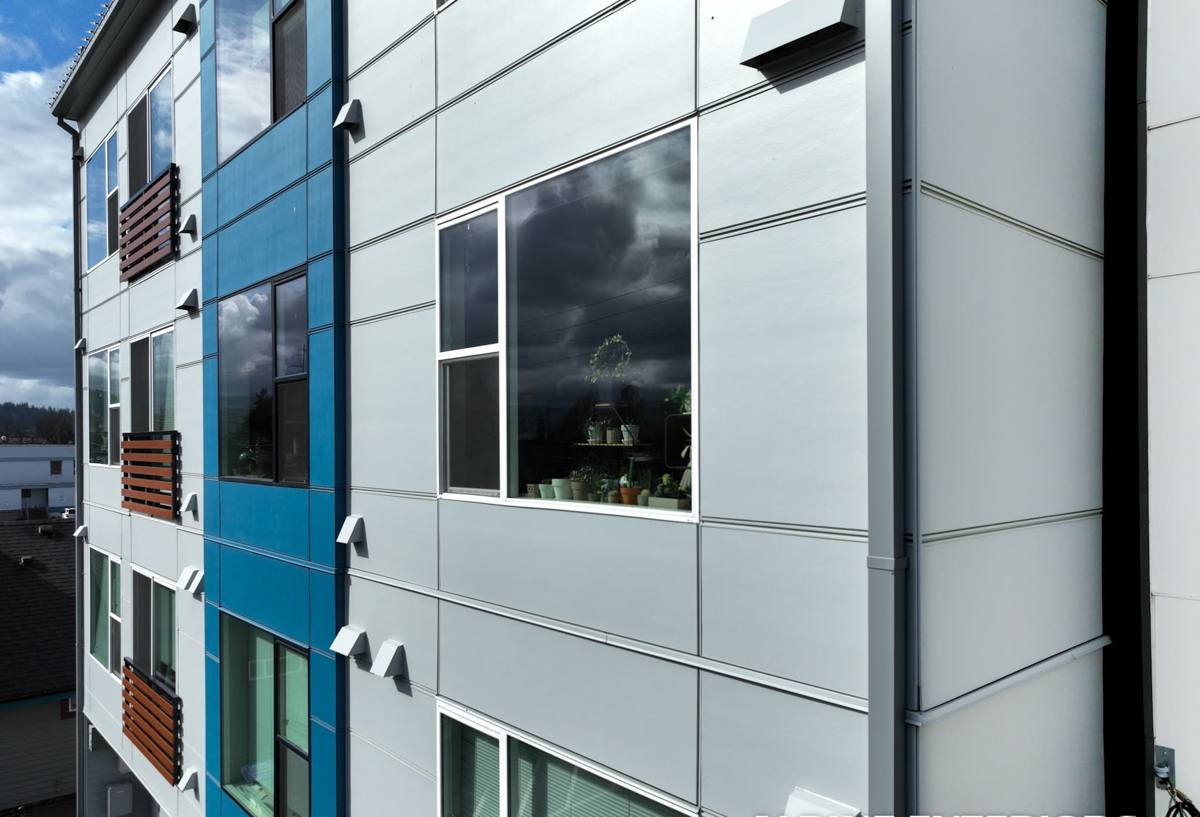
What Correct Installation Actually Involves
A window looks the same whether it's installed right or installed fast. The difference shows up two, five, or ten years later, usually as a soft spot in the sill, a stain creeping down interior drywall, or a window that won't seal tight anymore. Correct installation is mostly about what you can't see once the trim goes back on.
The Water Management Layer
Before a new window ever goes into the rough opening, the opening itself has to be prepped with a proper drainage plane — self-adhered flashing membrane at the sill, jambs, and head, lapped in the right order so water that gets behind the siding or trim has a way out instead of a place to collect. On a home exposed to sideways rain off the bay, sill flashing that's shortcut or skipped is the single most common reason a "new" window starts leaking within a few years.
Sill Pan and Sloped Sill
A dedicated sill pan under the window unit, sloped slightly to the exterior, gives any water that does get past the sash a clear path back outside instead of pooling against the wood framing underneath. This is a small detail that's easy to skip and expensive to fix later.
Fastening and Shimming
Windows have to be shimmed square and plumb at the manufacturer's specified fastening points — not just screwed through the nail fin wherever it's convenient. An out-of-square window binds, won't lock tight, and wears its weatherstripping unevenly, which shortens the life of the seal.
Sealants That Match the Assembly
The right sealant at the right joint matters more than people assume. Some manufacturers require specific backer rod and sealant combinations to keep the warranty valid, and mixing incompatible sealants with certain flashing tapes can actually cause adhesion failures instead of preventing them.
Interior and Exterior Trim Sealing
The interior side needs an air seal, not just a caulk bead for looks — low-expansion foam or backer rod and sealant around the frame keeps conditioned air in and stops condensation from forming inside the wall cavity. The exterior trim then gets sealed and, where called for, back-primed before installation so moss and mildew have less to grab onto.
Common Problems We See on Edgemoor Homes
A few patterns show up repeatedly in this neighborhood, mostly tied to age, tree cover, and proximity to the water:
- Wood sills on north- or east-facing walls that stay shaded most of the day and develop soft spots or moss growth from prolonged dampness
- Aluminum-framed windows from earlier building eras showing pitting or corrosion from salt air exposure
- Single-pane or early dual-pane units with failed seals — visible as fogging or moisture between the panes
- Caulk and sealant that's cracked or pulled away after years of temperature swings and rain, letting water track behind the trim
- Windows original to homes built before current energy codes, which lose a noticeable amount of heat and let in more outside noise than newer units
None of these are emergencies on their own, but they compound. A failed seal lets in moisture, moisture feeds moss and rot, and rot eventually means replacing more than just the window.
How Our Process Works
1. On-Site Assessment
We look at each opening individually — not every window on a house needs the same scope of work. We check the condition of the existing sill and framing, look for signs of past water intrusion, and note anything specific to that wall's exposure (shade, wind direction, proximity to trees or the water).
2. Product Recommendation
We talk through frame material, glass package, and finish options based on that specific window's exposure and your budget — not a one-size answer for the whole house.
3. Removal and Opening Prep
Old windows come out carefully to protect interior and exterior finishes. Once the opening is exposed, we inspect the framing underneath. If there's any rot or water damage, we address it before anything new goes in — installing a new window over a compromised opening just hides the problem for a while.
4. Flashing and Sill Pan Installation
This is the step that matters most for long-term performance, covered above. We don't skip it to save time, even on a straightforward swap.
5. Setting, Shimming, and Fastening
The window goes in square, plumb, and level, fastened per manufacturer spec so the warranty stays intact and the unit operates smoothly for years.
6. Sealing and Trim
Interior air sealing, exterior weatherproofing, and trim work finish the job, with attention to any spots prone to moss or moisture buildup.
7. Walkthrough
Every window gets tested — opened, closed, locked — and we walk you through anything specific to that unit's care before we consider the job done.
Choosing a Frame Material for This Climate
There's no single "best" window frame material — each has trade-offs, and the right call depends on the wall's exposure and your priorities.
| Frame Material | Performance in Salt Air / Driving Rain | Maintenance | Typical Trade-Off |
|---|---|---|---|
| Vinyl | Good — won't corrode or rot, handles moisture well | Low — occasional cleaning | Fewer color/finish options than other materials |
| Fiberglass | Very good — dimensionally stable, resists warping in temperature swings | Low | Higher upfront cost than vinyl |
| Wood (clad exterior) | Good on the clad exterior face; interior wood needs protection from condensation | Moderate — exterior clad is low-maintenance, interior wood benefits from periodic finish care | Higher cost; sensitive installation detailing required at the clad-to-frame joint |
| Aluminum | Weaker in salt air unless specifically treated — prone to pitting and corrosion over time near the water | Higher — needs monitoring for corrosion | Thinner sightlines, but our professional standard is to steer clients away from untreated aluminum on water-exposed walls |
For most Edgemoor homes, especially on walls that catch wind off the bay, we lean toward vinyl or fiberglass for their resistance to moisture and corrosion. Wood-clad is a solid choice for homes where the look matters and the installation detailing gets the attention it needs — it's more sensitive to get right, which is exactly the kind of work where hiring a crew that already understands this climate pays off.
What Drives the Cost
Every job is different, but a few factors consistently move the price up or down. We'll give you a real number after seeing the openings — broad ranges below are meant to help you plan, not to be a quote.
| Factor | Why It Matters |
|---|---|
| Number and size of openings | More or larger windows mean more material and labor |
| Frame material and glass package | Fiberglass and upgraded low-E or triple-pane glass cost more than standard vinyl and dual-pane |
| Condition of the existing opening | Rot or water damage found during removal adds repair scope before the new window goes in |
| Wall exposure | Openings facing direct wind and rain off the bay may call for extra flashing detail |
| Access and height | Second-story or hard-to-reach openings take longer and may need staging |
| Trim and finish scope | Matching existing exterior trim profiles or interior stain-grade wood adds time |
Signs It's Time to Look at Replacement
Not every window needs to be replaced right away. This checklist covers the signals worth taking seriously:
- Fogging or haze between panes of a dual-pane window — the seal has failed and it won't clear on its own
- Visible gaps, drafts, or a noticeable difference in room temperature near the window
- Soft, spongy, or discolored wood at the sill or lower frame
- Moss or persistent green growth building up on the sill or trim that keeps coming back after cleaning
- Windows that are difficult to open, close, or lock, or that don't stay open on their own
- Condensation forming on the interior glass regularly, even in mild weather
- Paint or finish that's cracking, peeling, or bubbling on the exterior trim around the window
If you're seeing one or two of these on an otherwise sound window, a repair or resealing job might be enough. If you're seeing several at once, especially on the same wall, that's usually a sign the water management behind the window has already broken down.
Why It Matters to Hire a Crew That Already Works Edgemoor
Window installation isn't a generic task you can drop into any house in Whatcom County and expect identical results. A crew that's worked this neighborhood knows which walls take the worst of the weather off the bay, understands how moss builds up differently on a shaded, tree-covered lot than it does on an open one, and has seen firsthand what happens when flashing gets skipped on a home this close to the water. That familiarity shows up in the small decisions — where to add extra flashing, which sealant holds up best in this level of salt exposure, how to sequence the work around the rain patterns here — that a crew unfamiliar with the area might not think to make.
It also means we're not guessing about permitting, typical construction in homes of this era in the neighborhood, or what other Edgemoor homeowners have already learned the hard way. That local track record is worth something when you're trusting someone to open up your walls and put them back together correctly.
Get a Free, No-Pressure Estimate
If you've got a window or two showing signs of wear, or you're planning ahead for a full-home replacement, we're happy to take a look and give you an honest read on what your Edgemoor home actually needs. Fill out the form below and we'll get in touch to schedule a free estimate — no pressure, no obligation.