 Bellingham Exterior
 Decks in Happy Valley Take a Different Kind of Beating
Happy Valley sits close enough to the water and the tree canopy that its decks age differently than decks in drier parts of the country. Marine air off the Salish Sea carries salt that works into fasteners and finishes. Bellingham's driving rain doesn't just fall straight down — wind pushes it sideways under railings and against ledger boards where it can sit for days. And the long, mild, damp stretch of fall through spring that Whatcom County residents know as moss season turns any shaded or low-airflow deck surface into a place where organic growth takes hold fast.
None of this means a deck in Happy Valley is doomed to fail early. It means the deck has to be built with those specific conditions in mind — the right fasteners, the right gaps between boards, the right flashing at the house, and a design that lets air and water move instead of pool. A lot of the deck problems we get called out for started as a small, ignorable detail that the wet climate turned into a structural issue over a few winters.
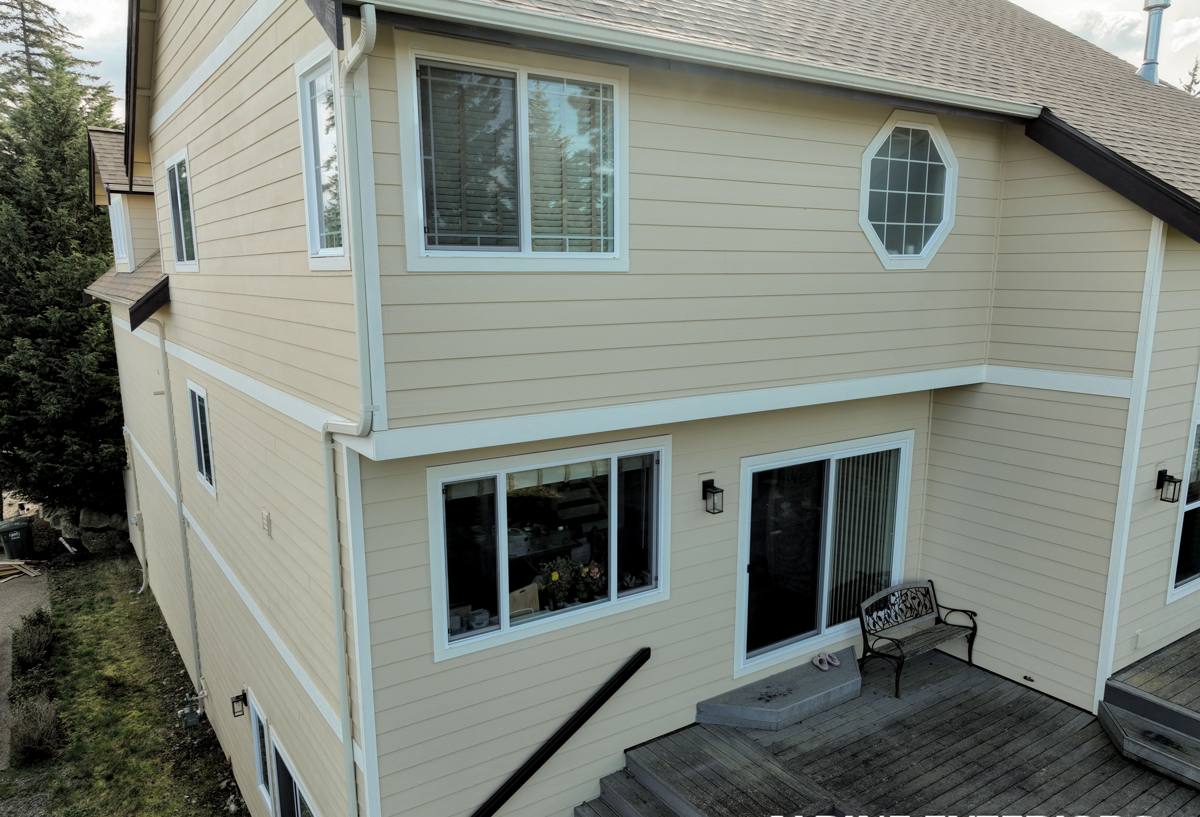
Signs a Deck Needs Replacement, Not Another Repair
Repairing a deck board here and there is normal maintenance. Replacement becomes the honest answer when the problems are in the structure itself, not just the surface. Here's what we look for during an inspection:
- Soft, spongy, or springy spots in the decking or framing when you walk across it
- Ledger board pulling away from the house, or gaps where flashing should be sealing that connection
- Posts or footings that have shifted, heaved, or show visible rot at the base
- Rust streaks or crumbling wood around fasteners and joist hangers
- Persistent moss or algae film that comes back within weeks of cleaning
- A railing that wiggles under hand pressure — this is a safety issue, not cosmetic
- A deck that's more than 20-25 years old and was built before current attachment and flashing standards were common practice
If what you're seeing is limited to a handful of boards or one section of railing, a repair is often the right call and we'll say so. If the issues are in the ledger, footings, or main framing, patching those areas individually usually costs more over time than doing the job right once.
What Actually Happens During a Full Deck Replacement
Tear-Off and Structural Inspection
We remove the old decking, railings, and as much of the substructure as needed to see what's really underneath. This is where hidden rot at the ledger, undersized framing, or footings that were never adequate for the deck's size usually turn up. It's also the point where the scope of a project can shift — a deck that looked fine from the surface may need more framing work than expected, and we'll walk you through that before continuing.
Ledger Board and Flashing
The ledger — the board that attaches the deck to your house — is the single most common failure point on decks in wet climates. Water that gets behind an improperly flashed ledger doesn't just rot the ledger, it can migrate into the house's rim joist and wall framing. A correct replacement uses proper flashing, house wrap integration, and structural connectors rather than relying on nails or lag screws alone.
Footings and Framing
Footings need to sit below frost depth and bear on solid, undisturbed soil — something that matters on the sloped and sometimes fill-graded lots common around Bellingham. Joists get sized and spaced for the actual load and span, not just matched to whatever was there before, and framing hardware should be rated for exterior, corrosion-prone conditions rather than standard interior-grade connectors.
Decking and Fasteners
Board spacing, fastener choice, and orientation all affect how well a deck sheds water and resists moss growth. Hidden fastener systems, proper gapping, and stainless or coated fasteners rated for coastal exposure all reduce the maintenance burden significantly compared to a deck built with whatever hardware was cheapest at the time.
Choosing a Decking Material for Bellingham's Wet Climate
There's no single "best" decking material — there's a best fit for your budget, how much upkeep you want to do, and how much sun or shade the deck actually gets. Here's how the common options compare under our conditions:
| Material | Moisture & Moss Resistance | Maintenance | Typical Lifespan |
|---|---|---|---|
| Pressure-treated wood | Fair — needs sealing to perform well | Annual cleaning and periodic re-sealing | 10-15 years |
| Cedar | Good natural resistance, but surface still needs care | Regular cleaning, occasional oiling | 15-20 years |
| Composite decking | Very good — won't rot, but surface films can still grow in shade | Periodic washing, no sealing needed | 25-30+ years |
| PVC/capped polymer | Excellent — fully moisture-sealed surface | Occasional washing | 25-30+ years |
Shaded, tree-covered lots — common in parts of Happy Valley — tend to hold onto moss regardless of material, so board spacing and airflow underneath the deck matter as much as the decking product itself. We'll talk through what your specific lot and sun exposure actually need rather than defaulting to whatever is trending.
Structural Details That Matter on Whatcom County Lots
A lot of deck problems trace back to decisions made below the decking surface, where they're invisible until something fails. On the sloped and varied terrain around Bellingham, a few things deserve extra attention:
- Footing depth: footings need to be set to the required frost depth and on stable soil, which can vary noticeably from lot to lot in this area.
- Drainage under the deck: low decks with poor grading underneath trap moisture and accelerate rot in the framing above.
- Slope and elevation changes: a deck built on a sloped lot often needs taller posts, additional bracing, and sometimes stairs or landings engineered for the grade.
- Tree proximity: roots near footings and branches overhanging the deck both affect long-term structural stability and how much debris and shade the deck deals with.
Permits and Code Considerations
Most full deck replacements in and around Bellingham require a building permit, especially when the structure, footings, or attachment to the house is being redone. Requirements cover things like guardrail height, stair rise and run, and structural attachment — the specifics should always be confirmed with the local building department rather than assumed from a past project. A contractor who pulls the permit and schedules inspections as part of the job is protecting you, not just checking a box — it means the work gets verified by a third party before it's covered up.
We handle the permit process as part of the job rather than leaving it to the homeowner, and we build to pass inspection the first time.
Our Process, From Estimate to Final Walkthrough
| Step | What Happens |
|---|---|
| On-site estimate | We inspect the existing deck, discuss what you want out of the new one, and give you an honest read on repair vs. replacement. |
| Design and material selection | We walk through decking material, railing style, and layout options based on your budget and how you use the space. |
| Permitting | We prepare and submit what's needed for the local building department and schedule required inspections. |
| Demolition and build | Old structure comes out, new footings and framing go in, then decking, railing, and stairs. |
| Final walkthrough | We go over the finished deck with you, including basic care and what to watch for as it ages. |
Timelines vary with permitting turnaround and scope, and we'll give you a realistic schedule up front rather than an optimistic one.
Why Hiring a Crew That Already Works Happy Valley Matters
Every neighborhood in Bellingham has its own quirks — soil behavior, typical lot slope, how sun and shade fall across a property through the seasons, and which building department steps tend to slow a project down if you're not prepared for them. A crew that regularly works in Happy Valley has already seen how decks in this specific area age, which details cause callbacks, and what actually holds up through a Whatcom County winter versus what looks good on day one. That local pattern recognition is hard to substitute with generic experience from a different climate.
It also means practical things like faster response for estimates, familiarity with the permit office's expectations, and a crew that isn't learning the area's conditions on your project.
Keeping Your New Deck Ahead of the Moss Season
A well-built deck still needs a little seasonal attention to get its full lifespan out of Bellingham's climate. A few habits go a long way:
- Sweep leaves and debris off the deck and out from between boards regularly in fall
- Clean surfaces before moss and algae get a real foothold, rather than after
- Keep gutters and downspouts clear so water isn't dumping directly onto or near the deck
- Check railings and stair connections for movement once a year
- Reseal wood decking on the manufacturer's recommended schedule, not just when it looks dry
If you're weighing whether your current deck needs a repair or a full replacement, we're happy to take a look and give you a straight answer either way. Reach out for a free, no-pressure estimate using the form below.