 Bellingham Exterior
 Building New in Silver Beach: What the Climate Asks of Your Windows
Silver Beach sits in one of the wetter, shadier corners of Bellingham. Mature tree cover, proximity to the water, and Whatcom County's long marine-influenced rainy season mean new homes here deal with more sustained moisture exposure than a lot out in the open sun. Salt-laden air pushing in off Bellingham Bay, driving rain that comes in sideways during winter storms, and a moss season that can run eight or nine months out of the year all put pressure on a building envelope. Windows are one of the biggest penetrations in that envelope, and on new construction, they're also one of the easiest things to get right the first time — or get wrong in a way that doesn't show up for years.
When we install windows on a new build in this neighborhood, we're not just setting a product into a rough opening. We're thinking about how water moves down the wall assembly, how the frame and siding will shed it, and how much humidity the glass and frame will have to tolerate without fogging, sweating, or letting rot start behind the trim. That's a different job than replacing a window in an existing wall, and it's worth understanding the difference before you or your builder pick a product.
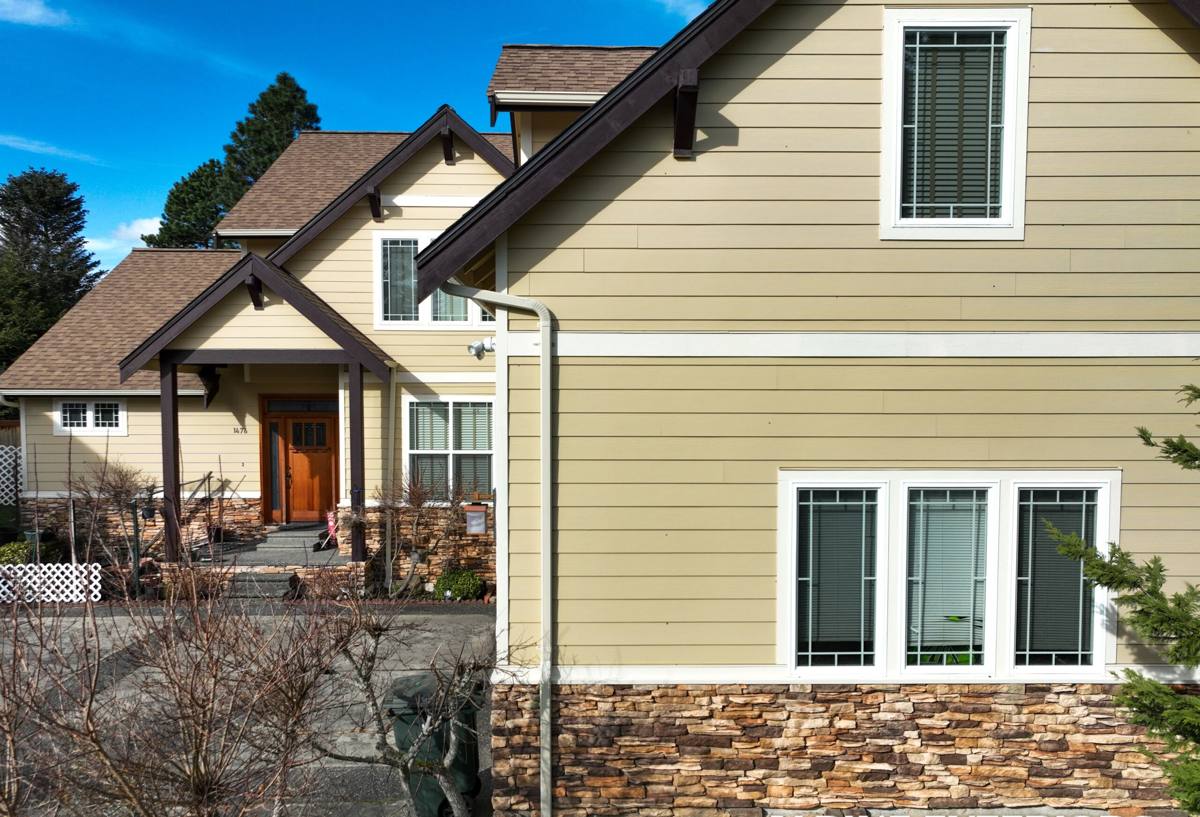
New Construction vs. Replacement: Why This Isn't the Same Job
Replacement windows have to work around an existing wall, existing siding, and whatever flashing (or lack of it) is already there. New construction is the opposite — you get to build the water management system correctly from the studs out, before siding ever goes on. That's an advantage, but only if it's used. A new-construction window with a nailing fin gets integrated directly into the weather-resistive barrier (WRB) and flashing sequence during framing, which means the install has to happen in the right order relative to house wrap, sill pans, and siding prep. Get the sequence wrong and you can end up with a brand-new home that traps water behind the wall the same way a 40-year-old house with failed flashing does.
On a lot like Silver Beach, where shade and humidity slow down drying time after every rain, that sequencing matters even more than usual. A wall assembly that stays damp longer gives mold and rot a longer window to start working.
Where New-Construction Window Installs Go Wrong
Most of the window failures we get called out to fix on newer homes trace back to a handful of repeatable mistakes made during the original install, not a bad product. On new builds specifically, we see:
- Rough openings cut to "close enough" instead of to the manufacturer's specified dimensions, forcing the frame to rack or bind
- Sill pans skipped or improvised instead of installed as a dedicated drainage plane under the window
- Flashing tape applied out of sequence with the WRB, so water gets directed behind the barrier instead of over it
- Nailing fins fastened without enough shims, leaving the frame free to flex under wind load
- No back caulk or backer rod at the head flashing, which is a common source of slow leaks that don't show up for a year or two
- Interior air sealing skipped because "it's new, it'll be fine" — leading to condensation and drafts once the house is occupied
None of these are visible once the siding and trim go on. That's exactly why the framing and rough-in stage is the point where quality gets locked in — good or bad.
Our New-Construction Window Process
1. Plan Review and Product Selection
Before anything goes into the wall, we go over the plans with you or your builder — window sizes, egress requirements, orientation, and which openings will take the most weather. South and west-facing glass on a Silver Beach lot often needs different glazing than a north-facing wall tucked under trees, since sun exposure and shade both affect condensation and fading.
2. Rough Opening Verification
We check every rough opening against the actual window specs before installation day — square, plumb, and sized correctly. Framing tolerances add up fast, and it's far cheaper to fix an opening before the window shows up than after.
3. Sill Pan and Flashing Sequence
Sill pans go in first, sloped to drain outward, followed by the window itself, then flashing tape integrated in the correct shingle-lap order with the house wrap — sides over the sill pan, head flashing over the sides. This is the step that determines whether water sheds away from the wall or finds a way behind it.
4. Shimming, Fastening, and Air Sealing
Frames get shimmed at the manufacturer's specified points, fastened per their schedule, and sealed on the interior with low-expansion foam or backer rod and sealant — not just caulked around the trim and called done.
5. Final Inspection
Before we sign off, we check operation, seal integrity, and that the flashing is ready to be lapped correctly by the siding installer. We coordinate directly with your builder or GC on that handoff so nothing gets covered up incorrectly.
Choosing the Right Window for a Silver Beach Lot
Frame material matters more here than it would in a drier climate, because whatever you choose has to tolerate sustained dampness and shade without becoming a maintenance project. Here's how the common options stack up for a new build in this kind of setting:
| Frame Type | Moisture Tolerance | Maintenance | Best Fit |
|---|---|---|---|
| Vinyl | Good — won't rot, minimal upkeep | Low | Budget-conscious builds, rental or spec homes |
| Fiberglass | Excellent — very stable in wet/humid swings | Low | Long-term owner-occupied homes, larger openings |
| Wood-clad | Good exterior, but interior wood needs protection from condensation | Moderate to high | Homeowners who want a wood interior look and will maintain finishes |
| Aluminum | Poor thermal performance, prone to condensation in humid climates | Low, but condensation issues recur | Generally not recommended for this climate without thermal breaks |
We don't push one brand or material on every job — the right call depends on your budget, the home's design, and how much upkeep you want to take on. What we won't do is recommend a frame material that we know struggles with sustained humidity and shade exposure, because that trade-off shows up as callbacks and repairs a few years down the road, not as a problem on install day.
Glass Package Considerations
For homes with lake-facing or large view openings, low-E coatings and the right gas-fill spec help control both heat loss and interior condensation — a real issue in a shaded, humid microclimate where glass surface temperatures swing more than they would on an open, sunny lot.
Cost Factors on a New-Construction Window Package
Every new build is different, but a few factors consistently move the price of a window package up or down:
| Factor | Effect on Cost |
|---|---|
| Frame material (vinyl vs. fiberglass vs. wood-clad) | Largest single driver of per-unit cost |
| Number and size of openings | More glass and larger units raise both material and labor cost |
| Glazing package (double vs. triple pane, low-E options) | Adds cost but improves comfort and reduces condensation risk |
| Custom shapes or large lake-view units | Custom sizing and structural glazing add lead time and cost |
| Coordination complexity with framing/siding trades | Tighter builder coordination can reduce rework costs later |
We're happy to walk through a realistic budget range once we know the plan set — it depends too much on the specifics to quote in general terms honestly.
Working With Your Builder or GC
On most new builds, we're one trade among several working the same walls — framers, siding crews, and sometimes a separate WRB installer. Miscommunication between those trades is where a lot of window problems start, not with the window itself. We coordinate the flashing sequence directly with whoever's installing siding, so the lap order is agreed on before either crew starts, and we flag any rough opening or framing issue immediately rather than working around it and hoping it's fine.
Why a Crew That Already Works Silver Beach Matters
A window package that performs fine on a dry, open lot in another part of Whatcom County can underperform on a shaded, moisture-heavy lot near the water. Knowing that ahead of time — and building the flashing, sill pan, and glazing choices around it — is the difference between a new home that stays dry for decades and one that needs window-related repairs inside the first five years. We've done enough work in and around Bellingham's shoreline and lake-adjacent neighborhoods to know which details can't be shortcut here, and we bring that same standard to every new-construction opening, whether it's a small bedroom window or a full wall of lake-facing glass.
If you're framing a new home in Silver Beach or planning one, we're glad to walk the plans with you or your builder and put together a straightforward, no-pressure estimate for the window package — just fill out the form below.