 Bellingham Exterior
 Why Ferndale Roofs Wear Differently Than Roofs Inland
Ferndale sits close enough to the water and to Cherry Point that salt-laden air is a real factor in how roofing materials age here, on top of everything else Whatcom County throws at a roof. Add in the long stretch of wet months typical of Western Washington and the moss growth that comes with shaded, damp roof surfaces for much of the year, and you get a combination that ages roofing systems faster than most manufacturer literature accounts for. A new roof installation in Ferndale isn't just about picking a shingle color — it's about choosing materials and installation details that hold up to salt air corrosion on fasteners and flashing, shed driving rain without backing up under the edges, and resist the kind of sustained moss colonization that eats into shingle mat over the years.
We install roofs across Bellingham and the surrounding communities, and Ferndale jobs get the same attention to these local stressors as anywhere else we work. The goal on every install is a roof that's still doing its job correctly in twenty-plus years, not one that looks good for the first five.
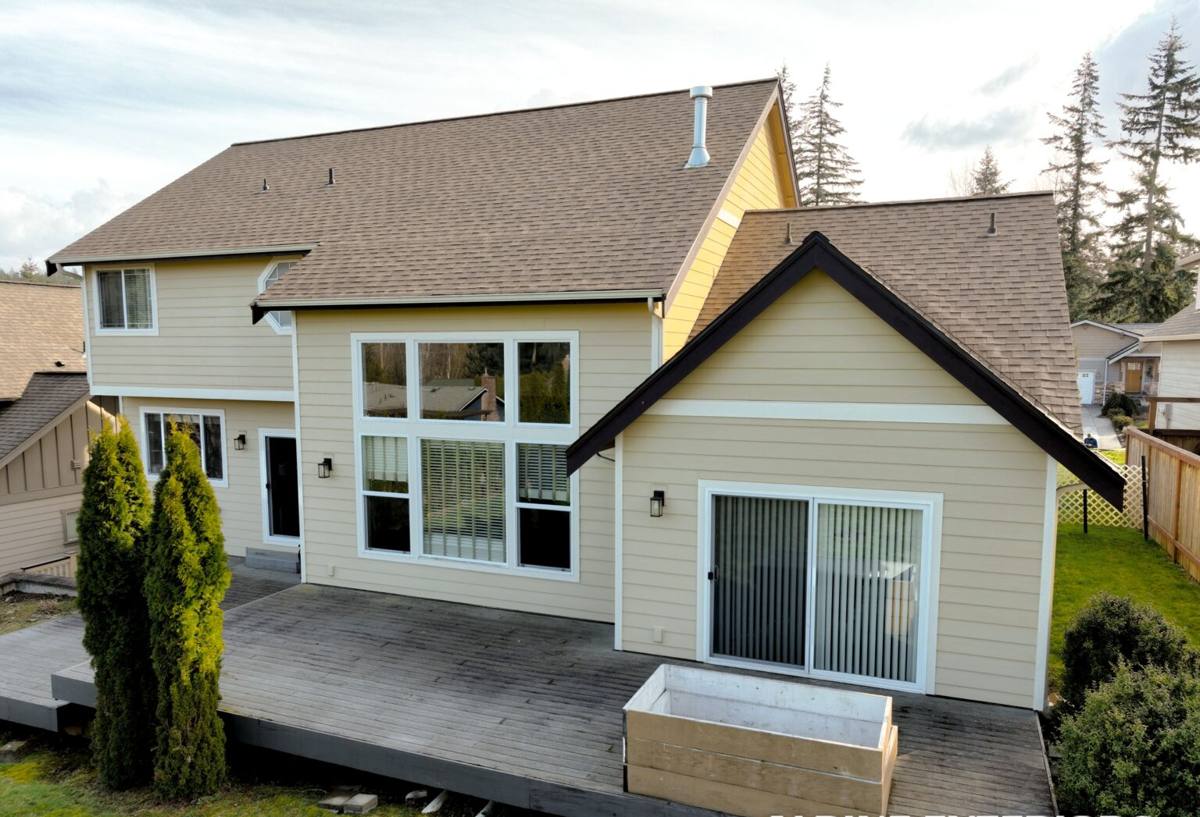
Signs a Ferndale Home Needs a New Roof, Not Another Repair
Plenty of roofs get patched for years past the point where patching still makes sense. Some signals that a full replacement is the honest answer:
- Granule loss heavy enough that you're finding grit in gutters every season, not just after a storm
- Shingles that are cupping, curling, or cracking across multiple slopes rather than one isolated area
- Moss that keeps returning within a year of cleaning, especially on north-facing or shaded slopes
- Soft spots in the decking when walked, or staining on interior ceilings near exterior walls
- A roof already at or past the age range for its material — most asphalt roofs in this climate are realistically 18-25 years, not the 30 printed on the wrapper
- Rusted or heavily corroded flashing, valleys, or fasteners — common where salt air is a factor
If a roof is showing one or two of these in isolation, repair is often still the right call. When several show up together, repair costs start adding up toward what a full, correctly installed system would have cost — with none of the long-term protection.
Choosing the Right Roofing System for This Area
There's no single "best" roofing material for every Ferndale home — it depends on the roof's slope, exposure, budget, and how the house is ventilated. Here's how the common options stack up against this specific climate:
| Material | Performance in Salt Air / Wet Climate | Moss Resistance | Typical Lifespan Here |
|---|---|---|---|
| Architectural asphalt shingle | Good with corrosion-resistant fasteners and flashing | Improved with zinc/copper strips or algae-resistant granules | 20-25 years |
| Standing seam metal | Excellent when properly coated and fastened with matched hardware | Very good — sheds moisture fast, little for moss to grip | 40-50+ years |
| Cedar shake | Requires more upkeep near salt air; can gray and cup faster | Poor without regular treatment — feeds moss readily | 20-30 years with maintenance |
| Composite/synthetic shingle | Good, consistent performance, low absorption | Good, similar to treated asphalt | 30-40 years |
We don't push one product on every home. On a heavily shaded, moss-prone Ferndale roof with mixed exposure, we're often steering people toward architectural asphalt with algae-resistant granules or metal, simply because they hold up with less maintenance than cedar in this specific environment — not because cedar is a bad product, just a higher-upkeep one here.
What a Correct Installation Actually Involves
Full Tear-Off, Not Overlay
We don't install new shingles over old ones. A tear-off lets us actually inspect the decking, catch soft or rotted plywood before it's sealed under a new roof, and start the new system on a flat, sound surface — which matters more in a wet climate where trapped moisture between layers has nowhere to go.
Ice and Water Barrier at the Vulnerable Points
Eaves, valleys, and roof penetrations get self-adhering ice and water membrane, not just standard felt. In a climate with sustained driving rain, wind-driven water can work backward under shingles at these spots — the membrane is what stops it from reaching the deck.
Flashing and Fasteners Rated for the Exposure
Chimneys, skylights, and wall-to-roof transitions get new flashing, not reused flashing bent back into place. Where a home is close enough to the water for salt air to be a factor, we pay attention to fastener and flashing material so we're not setting up a corrosion problem five years out.
Ventilation Sized to the Attic
Balanced intake and exhaust ventilation is what keeps moisture from condensing under the roof deck from the inside, and it plays a direct role in how much moss and mildew take hold on the roof surface from the outside. A roof can be installed perfectly and still underperform if the attic underneath it isn't breathing correctly.
Checklist: What Should Be Included on Any Ferndale Re-Roof
- Full tear-off and decking inspection, with a clear plan for any repaired plywood before it's included in your estimate
- Ice and water barrier at eaves, valleys, and penetrations
- New flashing throughout, not reused
- Ridge and intake ventilation checked and corrected if undersized
- Fastener and flashing materials suited to a salt-air environment
- Manufacturer-specified nailing pattern, not a faster shortcut pattern
- A clear written warranty covering both materials and workmanship
Our Installation Process
The process is straightforward, but every step matters more than it looks:
- On-site inspection and estimate — we walk the roof, check the attic, and give you a written scope, not a verbal ballpark.
- Material selection — we walk through the tradeoffs above based on your roof's slope, shade, and budget.
- Tear-off and deck inspection — old roofing comes off completely and any compromised decking is identified before covering anything.
- Underlayment and flashing installation — ice and water membrane at vulnerable points, synthetic underlayment across the field, new flashing throughout.
- Roofing material installation — installed to manufacturer spec, including nailing pattern and exposure, not shortcuts.
- Ventilation check and correction — intake and exhaust balanced for the attic's actual size and use.
- Final walkthrough and cleanup — magnetic sweep for debris, gutters checked, and a walk-through of what was done and what to watch for.
Ventilation and Moss Prevention Are Long-Term Jobs, Not One-Time Fixes
A new roof buys you a clean start, but moss doesn't stay away permanently in a climate this wet without some ongoing attention. Keeping trees trimmed back so shaded slopes get more light and air, clearing debris from valleys before it holds moisture, and having the roof looked at periodically will do more for the lifespan of a new roof than any single product choice. Zinc or copper control strips near the ridge help slow regrowth on shaded slopes and are worth discussing at the time of installation rather than added later.
What Drives the Cost of a New Roof in Ferndale
| Factor | Why It Matters Here |
|---|---|
| Roof size and number of slopes | More cuts, valleys, and hips mean more labor and material waste |
| Decking condition | Rot from long-term moisture exposure isn't known until tear-off — a realistic estimate accounts for a contingency |
| Material choice | Asphalt, metal, and composite carry different upfront costs and different lifespans in this climate |
| Ventilation upgrades | Correcting undersized intake or exhaust adds labor but reduces moss and moisture issues down the road |
| Roof access and pitch | Steeper or harder-to-access roofs take longer and require more safety setup |
Exact numbers depend entirely on the roof in front of us — anyone quoting a firm price without walking the roof and checking the attic is guessing, not estimating.
Why a Crew That Already Works Ferndale Matters
A roofing crew that works Bellingham and the surrounding Whatcom County communities regularly has already seen how salt air treats fasteners on homes near the water, how moss behaves on shaded Ferndale lots through a wet winter, and which flashing details actually hold up versus which ones look fine on installation day and fail in year six. That's not something a crew traveling in from outside the region gets right on the first try. It also means we're a known, findable local business if a question comes up two years after the install — not a name that only shows up for the original sale.
If you're weighing repair versus replacement, or just want a straight answer on what your roof actually needs, we're happy to take a look. There's no pressure and no obligation — just a clear, honest assessment you can use to make the decision that's right for your home. Use the form below to request a free estimate.