 Bellingham Exterior
 Roofing in Sehome Means Building for Bellingham's Weather, Not Around It
Sehome sits close enough to Bellingham Bay to catch salt-laden air off the water, and high enough on the hillside near Sehome Hill to take wind-driven rain from several directions depending on the season. That combination is harder on a roof than either factor alone. Salt air accelerates corrosion on exposed metal fasteners and flashing. Driving rain finds any weak point in a roof's water-shedding details, not just the shingles themselves. And Whatcom County's long, damp shoulder seasons give moss and moisture months to work on a roof surface that never fully dries out.
A roof installed correctly for this environment isn't dramatically different in appearance from one installed anywhere else — but the underlayment, flashing details, fastener choices, and ventilation are where the real differences live. Those are also the details that are easiest to shortcut and hardest for a homeowner to inspect after the fact. This page covers what a proper new roof installation looks like for a Sehome home, what we actually do on site, and what to check whether you hire us or someone else.
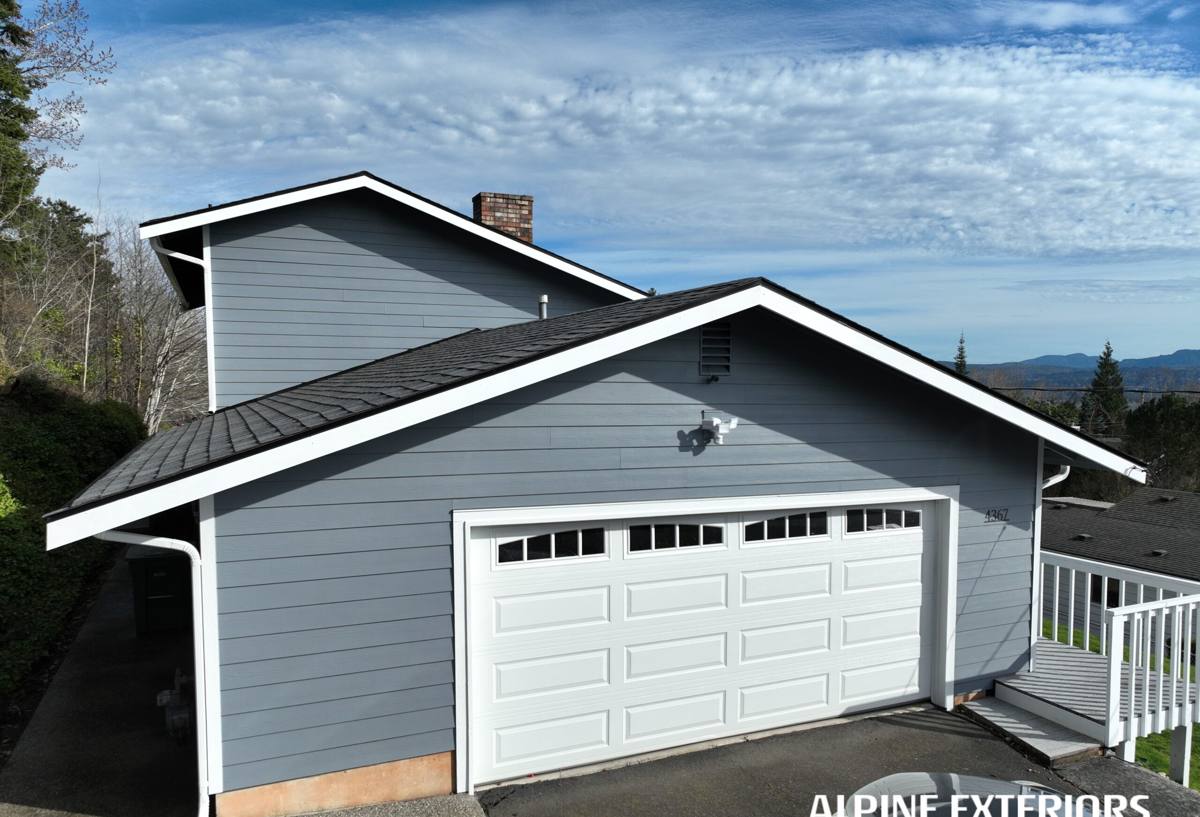
What Sehome's Climate Actually Does to a Roof
Salt Air and Corrosion
Homes within a few miles of Bellingham Bay see accelerated corrosion on unprotected steel — nail heads, flashing edges, and any fastener that isn't rated for coastal exposure. Over years, corroding fasteners can loosen shingles or let small leaks start at nail penetrations long before the shingles themselves look worn.
Driving Rain and Wind-Driven Moisture
Rain that comes in at an angle behaves differently than rain falling straight down. It can work under shingle tabs, around chimney and skylight flashing, and into valleys if those details weren't installed with enough overlap and sealant. A roof that would perform fine in a drier, calmer climate can still leak here if the flashing work is thin.
Moss and a Long Wet Season
Bellingham's moss season isn't a few weeks — it's most of the year on north-facing slopes and shaded sections of roof. Moss holds moisture against the roofing material, works into shingle granules and seams over time, and can lift shingle edges as it grows. A roof design that ignores airflow and shade will grow moss faster no matter what material sits on top.
What a Correct New Roof Installation Actually Involves
A new roof is more than shingles nailed to plywood. The parts you don't see are what determine whether the roof holds up through a normal Whatcom County winter or starts showing problems in year three.
- Deck inspection and repair — the plywood or OSB underneath gets checked for soft spots, rot, and delamination before anything new goes down. Covering a compromised deck just hides the problem.
- Ice and water shield at eaves, valleys, and around penetrations — a self-adhering membrane that backs up the field underlayment in the spots most likely to see standing water or ice damming.
- Synthetic underlayment across the full roof — a water-resistant barrier under the shingles that matters more here than in drier climates, since it's the backup layer when wind-driven rain gets past the surface.
- Metal flashing at all roof-to-wall transitions, chimneys, skylights, and valleys — sized, lapped, and sealed correctly rather than relying on caulk to do a flashing detail's job.
- Corrosion-resistant fasteners appropriate for coastal exposure, not generic hardware.
- Balanced ventilation — intake at the eaves and exhaust at the ridge, sized to the attic volume, so moisture and heat don't build up under the deck.
- Manufacturer-correct installation of the shingle or panel product, since most roofing warranties are voided by installation shortcuts long before the material itself fails.
Choosing a Roofing Material for a Sehome Home
There's no single "best" roofing material — the right choice depends on your roof's exposure, your budget, and how much long-term maintenance you want to take on. Here's how the common options compare for a home in this area.
| Material | Typical Lifespan | Moss/Moisture Behavior | Relative Cost |
|---|---|---|---|
| Architectural asphalt shingle | 25–30 years | Moderate — needs periodic cleaning on shaded slopes | $ |
| Premium/impact-rated asphalt shingle | 30–50 years | Better shedding, still benefits from ventilation and cleaning | $$ |
| Standing seam metal | 40–60+ years | Sheds moisture and moss well; needs coastal-rated fasteners and coatings | $$$ |
| Cedar shake | 20–30 years with upkeep | High maintenance — absorbs moisture, more prone to moss without regular care | $$–$$$ |
Most Sehome homeowners land on architectural asphalt shingle or a premium shingle line — it balances upfront cost, appearance, and performance well for this climate, and it's easy to source, repair, and match later. Metal is worth considering on steeper roofs or homes with heavy shade where moss is a persistent fight, since it gives moss much less to hold onto. We'll walk your specific roof and give you an honest read on which option fits your situation rather than steering everyone toward the same product.
Our New Roof Installation Process
- On-site inspection and estimate. We look at the existing roof, the deck condition where visible, ventilation setup, and any trouble spots like valleys, chimneys, or skylights. You get a written estimate, not a verbal guess.
- Material selection. We go over the options that make sense for your roof's exposure and your budget, including color and warranty terms.
- Tear-off and deck inspection. Old roofing comes off down to the deck, which is then inspected and any damaged sections are replaced before anything new is installed.
- Underlayment and flashing. Ice and water shield goes down first in the vulnerable areas, then underlayment across the field, then new flashing at every transition and penetration.
- Ventilation check. We confirm intake and exhaust venting is adequate and correct any imbalance before closing up the roof.
- Roofing installation. Shingles or panels go on per manufacturer specification, with attention to nailing pattern, exposure, and sealing — the details that keep the warranty valid.
- Cleanup and final walk-through. Site is cleared of debris and old material, and we walk the finished roof with you before calling the job done.
Ventilation: The Detail That Determines How Long Your Roof Lasts
An underventilated attic traps warm, moist air against the underside of the roof deck. In a climate as damp as Whatcom County's, that trapped moisture contributes to premature deck rot, mildew, and — on the outside — faster moss growth, since a warmer roof surface and poor airflow create better conditions for it to take hold. Correct ventilation means balanced intake (usually at the soffits) and exhaust (usually at the ridge), sized to the square footage of the attic space. We check this on every installation, because it's one of the most common things skipped on a fast re-roof and one of the most consequential over a 20-30 year roof life.
Signs a Sehome Roof Needs Replacing, Not Just Patching
- Shingles that are cracked, cupping, or losing granules across large sections rather than one isolated spot
- Moss coverage that comes back within months of cleaning, especially on north-facing slopes
- Daylight visible through the roof deck from inside the attic
- Soft or spongy spots when walking the roof, indicating deck damage underneath
- Flashing that's rusted, lifted, or separated from the roof surface
- Interior water stains on ceilings or in the attic after heavy rain
- A roof approaching or past 20-25 years old, even without obvious visible damage
If you're only seeing one or two of these, a repair may still be the right call. A roof with several of these signs at once is usually more cost-effective to replace outright than to keep patching.
Permits and Working Within Whatcom County Requirements
A full roof replacement in Bellingham typically requires a building permit, and inspections happen at specific points in the process. We handle the permitting on jobs we run, so you're not the one tracking down paperwork or scheduling inspections. This also matters if you ever sell the home — a roof replacement done without the required permit can become a problem during a home inspection or title search down the line.
Why Local Experience in Sehome Matters
A crew that regularly works Sehome roofs already knows how the neighborhood's exposure to salt air and hillside wind patterns tends to show up on a roof — which slopes hold moss longest, which flashing details fail first, and what ventilation setups actually keep up with the moisture load here. That's not something you get from a general spec sheet; it comes from seeing the same climate conditions play out on roof after roof in the same area. It also means we're a short drive away if a warranty question or a storm-related concern comes up after the job is done, not a crew that did one job in the area and moved on.
Keeping a New Roof Performing After Installation
A correctly installed roof still benefits from basic upkeep in this climate. Keep gutters clear so water isn't backing up under the eaves. Have moss growth addressed before it spreads rather than after it's covered a slope. Keep an eye on flashing around chimneys and skylights after major storms. None of this is intensive, but skipping it entirely is how a well-installed roof ends up with preventable problems a decade in.
If your roof is showing its age or you're planning ahead rather than reacting to a leak, we're happy to take a look and give you a straightforward, no-pressure estimate for a new roof installation built for what Sehome's weather actually does to a home. Use the form below to get started.