 Bellingham Exterior
 Windows Built for Puget's Coastal Conditions
Homes in the Puget area of Bellingham sit close enough to the water and the weather patterns that come with it that windows take a harder beating here than they do a few miles inland. Salt-laden air corrodes hardware and finishes faster than dry-climate manufacturers usually account for. Driving rain, pushed sideways by wind off the water, tests every seam and sill for weaknesses that a calm-weather install might never expose. And the long moss season that Whatcom County is known for doesn't stop at your roofline — it creeps into window tracks, sill pans, and any north-facing frame that stays damp and shaded for months at a time.
None of that means custom windows are a bad investment in Puget. It means the products, the flashing details, and the installation sequence all have to be chosen with this specific climate in mind, not a generic Pacific Northwest average. A window that performs fine in a drier inland town can fail early here if it's installed the same way.
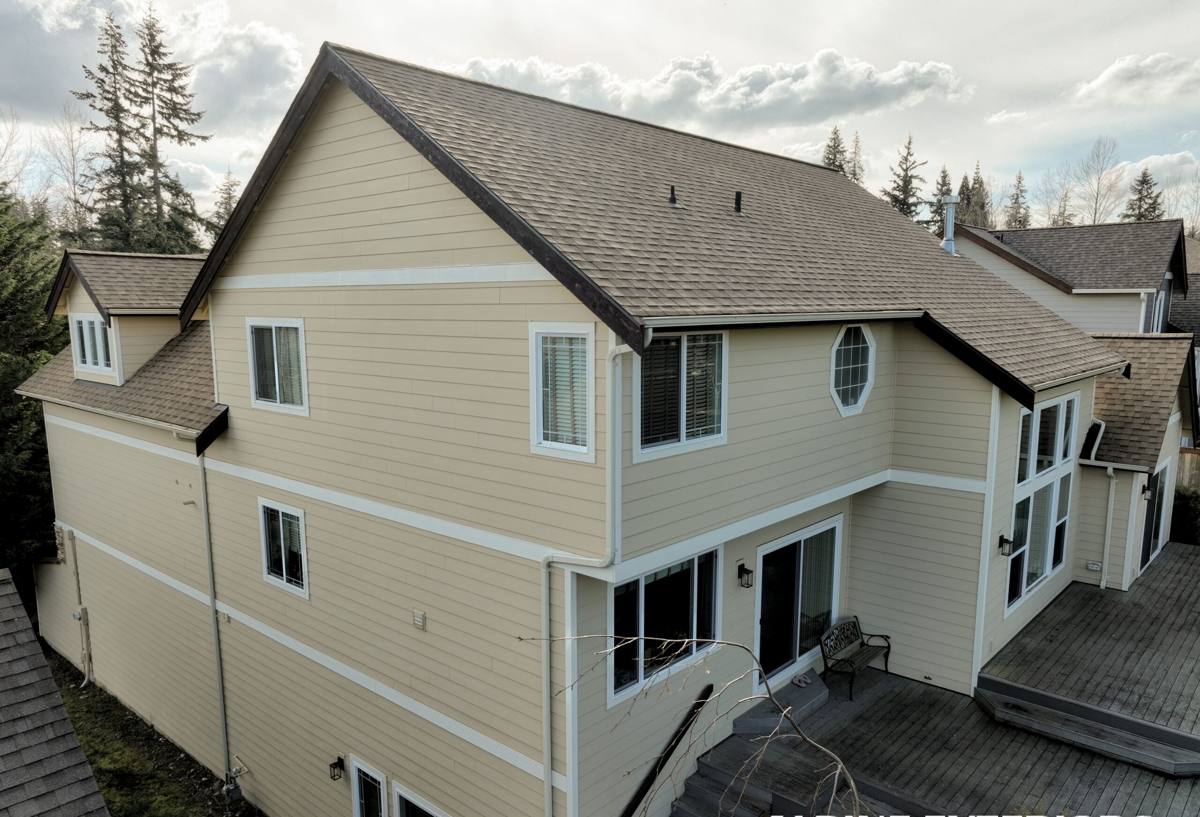
What Local Homes Actually Need From a Window Job
Moisture Management Comes First
Before we talk about glass packages or grille patterns, the more important question is how water gets directed away from the opening. A correct install starts with a sloped sill pan, proper head flashing that overlaps the layer below it, and a drainage path so any water that does get behind the exterior trim has somewhere to go besides your wall cavity. Skip this step, and even a premium window will eventually let moisture into the framing — you just won't see it until there's a problem.
Hardware That Won't Corrode
Salt air is hard on unprotected metal. Locks, hinges, balance systems, and screen hardware all need finishes rated for coastal exposure, not the base-grade hardware that ships standard on many stock window lines. This is one of the details homeowners rarely think to ask about, and it's one of the first places cheaper installs show their age in a Puget-area home.
Track and Weep-Hole Design That Resists Moss and Debris
Weep holes — the small drainage openings at the bottom of a window frame — need to stay clear to do their job. In a long, damp moss season, algae and organic buildup can slowly clog these openings if the frame design doesn't account for it or if the window isn't oriented and detailed to shed water quickly. We look at sill design and drainage path specifically with this in mind, not just glass performance.
Choosing Materials for a Coastal Whatcom County Home
There's no single "best" window material for every house — it depends on your home's exposure, your maintenance appetite, and your budget. Here's how the common options actually compare for a Puget-area install:
| Material | Coastal/Moisture Performance | Maintenance | Typical Trade-Off |
|---|---|---|---|
| Vinyl | Good — won't rot or corrode | Low | Limited color/finish options; can look less premium on higher-end homes |
| Fiberglass | Excellent — very stable in wet, salt-exposed conditions | Low to moderate | Higher upfront cost than vinyl |
| Wood (clad exterior) | Good if detailing is correct; interior wood needs protection from condensation | Moderate to high | Best look for period or high-end homes, but demands more upkeep here |
| Aluminum | Poor without thermal breaks and proper coating; prone to condensation | Moderate | We generally steer clients away from bare aluminum in this climate for residential use |
For most Puget-area homeowners, we recommend fiberglass or a quality vinyl line for straightforward performance, and reserve wood-clad options for homes where the architectural style calls for it and the owner is comfortable with the added maintenance. We'll walk through the honest trade-offs for your specific house rather than push one product line across the board.
Signs Your Current Windows Are Already Struggling
A lot of window replacement calls in this area start after a homeowner notices one or two of these signs. If you're seeing any of the following, it's worth having someone look before the problem spreads into the surrounding wall framing:
- Fogging or moisture between panes of double- or triple-glazed glass (a sign the seal has failed)
- Soft, dark, or discolored wood on the sill or frame, especially on north- or west-facing windows
- Visible green or black growth in the corners or tracks that returns shortly after cleaning
- Windows that stick, won't latch fully, or have become hard to open and close
- Noticeable drafts or a cold spot near the frame even when the window is fully closed
- Paint or trim that keeps peeling around the window opening no matter how often it's touched up
- Hardware — locks, cranks, hinges — that's visibly corroded or pitted
How Our Process Works
1. On-Site Assessment
We start by looking at your home's actual exposure — which walls face the prevailing weather, how the current windows were flashed (or weren't), and whether there's any existing moisture damage that needs to be addressed before new windows go in. Replacing windows over hidden rot just locks the problem behind new trim.
2. Product Selection
Based on that assessment, we go through material, glass package, and hardware options suited to your home's exposure and your budget — not a one-size-fits-all recommendation. Custom sizing means we're not working around stock dimensions, which also gives us more control over how tightly the new unit fits the opening.
3. Removal and Opening Prep
Old units come out carefully so we can inspect the framing, sill, and sheathing underneath. Any soft wood, failed flashing, or prior water intrusion gets repaired at this stage — not covered up.
4. Flashing and Weatherproofing
This is the step that determines whether a window job lasts fifteen years or fifty. Sill pan flashing, house wrap integration, and head flashing are installed in the correct shingled sequence so water always sheds outward and downward, never into the wall.
5. Installation and Sealing
The window is set, shimmed level and plumb, fastened per manufacturer spec, and insulated around the frame without overpacking (which can bow the frame and cause operational issues). Exterior sealant is applied at the right joints — and only the right joints, since sealing every gap can trap moisture instead of releasing it.
6. Final Check and Walkthrough
We test operation, locks, and screens, clean up the work area, and walk the finished job with you so you know what to expect and how to maintain it.
Energy Performance in a Marine Climate
Whatcom County's marine climate means moderate temperatures but near-constant humidity and frequent overcast days, which changes what "energy efficient" actually means here compared to a hot, dry climate. Low-E glass coatings and gas-filled sealed units still matter for keeping heat in during our long, cool, wet stretches, but condensation resistance matters just as much — a window that's efficient on paper but prone to interior condensation can create its own moisture problems on the sill and surrounding trim. We factor both when discussing glass packages, not just the U-factor number on the label.
Maintenance That Actually Fits This Climate
Even a correctly installed window benefits from a little seasonal attention in a salt-air, moss-prone environment. A few habits go a long way:
- Rinse salt residue off exterior frames and hardware a few times a year, especially after storms
- Clear weep holes and tracks of debris and moss buildup before they clog
- Check exterior caulking annually and touch up any cracked or separated joints
- Keep gutters and nearby vegetation clear so water and shade don't sit against the window frame
- Operate locks and hardware periodically so corrosion doesn't set in on parts that go unused
Why Hiring a Crew That Already Works in Puget Matters
Window installation instructions are largely generic — but the flashing sequence, sealant choices, and material selection that actually hold up depend on knowing how weather behaves against a specific type of exposure. A crew that regularly works Puget-area homes has already seen which details fail first in this environment and builds around them from the start, instead of learning it on your house. That local pattern recognition is the difference between a window job that looks right on install day and one that's still performing correctly a decade later.
We also know how this area's homes are typically built — the framing conventions, common siding types, and the kind of prior workarounds we tend to find once trim comes off — which keeps surprises during the job to a minimum.
Get a Straightforward Estimate
If your Puget-area home has windows that are drafty, foggy, hard to operate, or just original to a house that's due for an upgrade, we're happy to take a look and give you an honest read on what's needed. Use the form below to request a free, no-pressure estimate — we'll assess your home's actual exposure and walk you through options that make sense for your budget and your house, not a generic sales pitch.