 Bellingham Exterior
 Why Puget Homes Need a Roof That Handles Marine Weather
Homes in the Puget area near Bellingham sit close enough to the water that salt-laden air is a constant factor in how a roof ages. Add Whatcom County's long wet season, driving rain that comes in sideways off the Sound during winter storms, and the shaded, moisture-heavy conditions that fuel moss growth for much of the year, and you have a climate that is genuinely tough on roofing materials. Asphalt shingles in this environment tend to show granule loss, moss colonization, and edge curling well before their rated lifespan is up. Metal roofing responds differently to all three of these stressors, which is why it has become a serious option for homeowners in this part of Bellingham who want to stop dealing with roof problems every few years.
This page is specifically about metal roofing installed on homes in the Puget area. The fundamentals of a correct metal roof install don't change from neighborhood to neighborhood, but how a roof performs over 20-plus years depends heavily on local conditions — and Puget's conditions are specific enough that they deserve their own explanation.
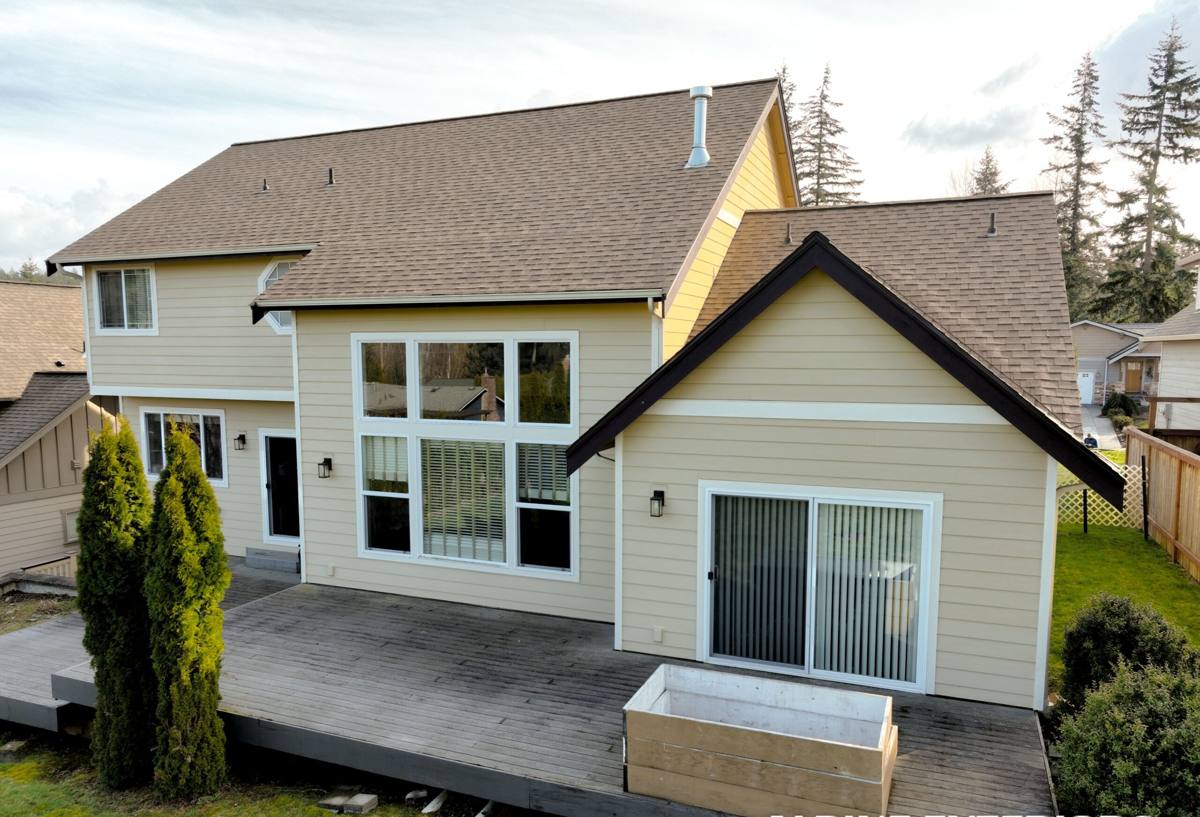
What Salt Air, Rain, and Moss Actually Do to a Roof
Salt Air and Corrosion
Proximity to Puget Sound means airborne salt is present in the environment even on a clear day, and it settles on every exterior surface, roofs included. Salt accelerates corrosion on unprotected or poorly coated metal, and it can also degrade the adhesive strip under asphalt shingle tabs over time. This is one of the main reasons the type of metal and the quality of its protective coating matters so much for homes in this area — not all metal roofing products are engineered the same way for coastal exposure.
Driving Rain
Bellingham's storms frequently bring rain in at an angle rather than straight down, which puts real pressure on flashing details, seams, and fastener penetrations that a calmer climate might never test. A roof that would perform fine in a drier inland region can leak here if the flashing at valleys, chimneys, and wall transitions isn't detailed correctly. This is less about the roofing material itself and more about installation quality — a point we come back to below.
Moss Season
Whatcom County's combination of moisture, moderate temperatures, and shade from mature trees creates a long moss season that can run for much of the year on north-facing or heavily shaded roof slopes. Moss holds water against the roof surface, works its way under shingle edges, and on organic roofing materials it can contribute to premature decay. Metal roofing gives moss a much harder surface to establish on, and what does grow tends to sit on top rather than rooting into the material — a meaningful difference for long-term roof health.
Why Metal Roofing Fits This Environment
Metal roofing isn't a fit for every home or every budget, and we'll say that plainly rather than oversell it. But for Puget-area homes dealing with salt exposure, driving rain, and persistent moss, it offers a few specific advantages worth understanding:
- Non-porous surface: Properly coated metal doesn't absorb water the way asphalt or wood shingles can, which reduces the freeze-thaw and moisture-cycling stress that shortens the life of other materials.
- Moss resistance: Moss struggles to root into a smooth metal surface the way it can into shingle granules or wood grain, making cleaning and maintenance simpler.
- Panel-based water shedding: Standing seam and similar profiles are designed as a continuous water-shedding system, which holds up well against wind-driven rain when installed correctly.
- Long service life: A correctly installed and maintained metal roof commonly outlasts asphalt shingle roofing by a wide margin, which matters when you're weighing the higher upfront cost against decades of use.
- Lower long-term maintenance: Fewer moss treatments, less frequent granule loss inspection, and generally less recurring upkeep than organic or asphalt-based roofing.
The trade-off is cost. Metal roofing carries a higher installed price than asphalt shingles, and it's a material that punishes poor workmanship more than shingles do — a sloppy seam or fastener pattern on a metal roof is more likely to cause a real leak than the same mistake on shingles. That's why installation quality matters as much as material choice, maybe more.
Comparing Metal Roofing Options for This Climate
Not all metal roofing is the same, and the right choice depends on the home's roof pitch, budget, and how visible the roof is from the street. Here's an honest comparison of the main options we install or discuss with Puget-area homeowners:
| Profile Type | Typical Use | Coastal Performance | Relative Cost |
|---|---|---|---|
| Standing seam (concealed fastener) | Most residential roofs, low to steep pitch | Excellent — no exposed fasteners for salt air to attack | Higher |
| Exposed-fastener metal panel | Budget-conscious projects, secondary structures | Good, but fasteners need periodic inspection and re-sealing | Moderate |
| Stone-coated steel shingle/shake | Homes wanting a traditional shingle or shake look | Good, with coating quality being the key variable | Moderate to higher |
| Standard architectural asphalt (for comparison) | Most common baseline roofing | Fair — more vulnerable to moss and salt-accelerated wear | Lower |
For most homes in the Puget area, we lean toward concealed-fastener standing seam because it minimizes the number of penetration points exposed to salt air and driving rain. But the right answer depends on your roof's specific geometry and your budget, which is exactly what an in-person estimate is for.
What a Correct Metal Roof Installation Actually Involves
The material is only part of the equation. A metal roof is a system, and every component in that system needs to be handled correctly for it to perform the way it's supposed to in this climate.
Deck Inspection and Prep
Before any panels go on, the roof deck needs to be inspected for rot, soft spots, or damage — often more common on older Bellingham homes where a previous roof allowed slow moisture intrusion. Metal roofing should never be installed over a compromised deck; doing so just traps the problem underneath a new surface.
Underlayment
A high-quality synthetic or self-adhered underlayment acts as the roof's backup water barrier. In a climate with sustained wind-driven rain, this layer isn't optional — it's what protects the home if wind ever forces water past the panel seams themselves, which can happen in a severe storm regardless of roofing material.
Flashing Details
Valleys, chimneys, skylights, and wall-to-roof transitions are where most roof leaks actually originate, on any roofing material. Correct metal flashing, properly integrated with the panel system rather than just caulked on top, is what keeps these transition points watertight through years of driving rain.
Fastening and Panel Layout
Panel spacing, fastener pattern, and expansion allowance all need to account for how metal moves as it heats and cools. Getting this wrong doesn't usually show up as a problem on day one — it shows up as a leak or a buckled panel a few years later.
Ventilation
Proper attic and roof ventilation prevents moisture buildup underneath the roofing system, which matters in a humid coastal climate where trapped moisture can lead to condensation issues regardless of how good the roofing material is.
Our Process for Puget-Area Metal Roofing Projects
- On-site inspection: We look at your current roof, deck condition, pitch, and any moss or moisture issues specific to your property before recommending anything.
- Honest scope and options: We walk through panel profile options, coating grades, and realistic cost ranges based on your roof's size and complexity — no pressure toward the most expensive option if it isn't the right fit.
- Tear-off and deck check: Old roofing is removed and the deck is inspected and repaired as needed before anything new goes down.
- Underlayment and flashing installation: The water-management layers go in first and are given the same attention as the visible panels.
- Panel installation: Panels are installed to manufacturer spec with correct fastening, seaming, and expansion allowance for our climate.
- Final walkthrough: We review the completed roof with you, including basic care and what to watch for during moss season.
Why Local Experience with Puget Conditions Matters
A crew that mainly installs roofs in drier, inland parts of Washington isn't necessarily thinking about salt exposure, wind-driven rain angles, or moss patterns the way a crew working regularly in Bellingham and the Puget area is. Local experience shows up in small decisions — where extra flashing attention goes, which coating grade makes sense this close to the water, how roof ventilation should be handled given the humidity here — and those small decisions are exactly what determines whether a metal roof performs well for 30 years or develops problems in five. When you're evaluating contractors for a metal roof in this area, it's worth asking directly about their experience with coastal or near-coastal installations in Whatcom County specifically, not just metal roofing in general.
Maintenance: What Metal Roofing Still Needs
Metal roofing is lower-maintenance than asphalt or wood, but "lower-maintenance" doesn't mean "no maintenance," especially in this climate. A simple annual checklist keeps a metal roof performing as designed:
- Clear debris and organic buildup from valleys and gutters, particularly after fall leaf drop
- Check for and gently remove any moss establishing in shaded areas before it spreads
- Inspect flashing around chimneys, vents, and skylights for any sign of separation
- Look for any fastener heads (on exposed-fastener systems) that may need re-sealing over time
- Confirm gutters and downspouts are directing water away from the foundation, especially during heavy winter rain
None of this requires special equipment or expertise for a homeowner to visually check, though we're always available to handle a full inspection if you'd rather not get on the roof yourself.
Get a Straight Answer for Your Roof
Every roof in the Puget area faces the same broad climate challenges, but the right approach for your home depends on its specific pitch, age, deck condition, and exposure. If you're weighing metal roofing against a shingle replacement, or your current roof is showing the wear that salt air and moss season tend to cause, we're happy to take a look and give you a straightforward assessment — no pressure, no inflated urgency. Fill out the form below to schedule a free, no-obligation estimate.