 Bellingham Exterior
 Why Silver Beach Homes Are Hard on Siding
Silver Beach sits close enough to the water that homes here deal with a combination most inland Whatcom County neighborhoods don't: salt-laden air, wind-driven rain that gets pushed sideways into wall assemblies, and a moss season that can stretch for most of the year in our marine climate. None of those three things is dramatic on its own. Together, over ten or fifteen years, they're what separates a siding job that ages well from one that starts failing quietly behind the paint.
Salt air is corrosive to exposed metal fasteners and trim, and it accelerates the breakdown of lower-grade paints and coatings faster than inland exposure does. Driving rain finds every gap in flashing, caulking, and butt joints that wasn't detailed correctly the first time. And moss and algae don't just sit on the surface — on the wrong material, in the wrong assembly, they hold moisture against the wall long enough to start rot underneath before anyone notices a problem from the street. A siding system for Silver Beach has to be chosen and installed with all three of those working against it at once, not just one.
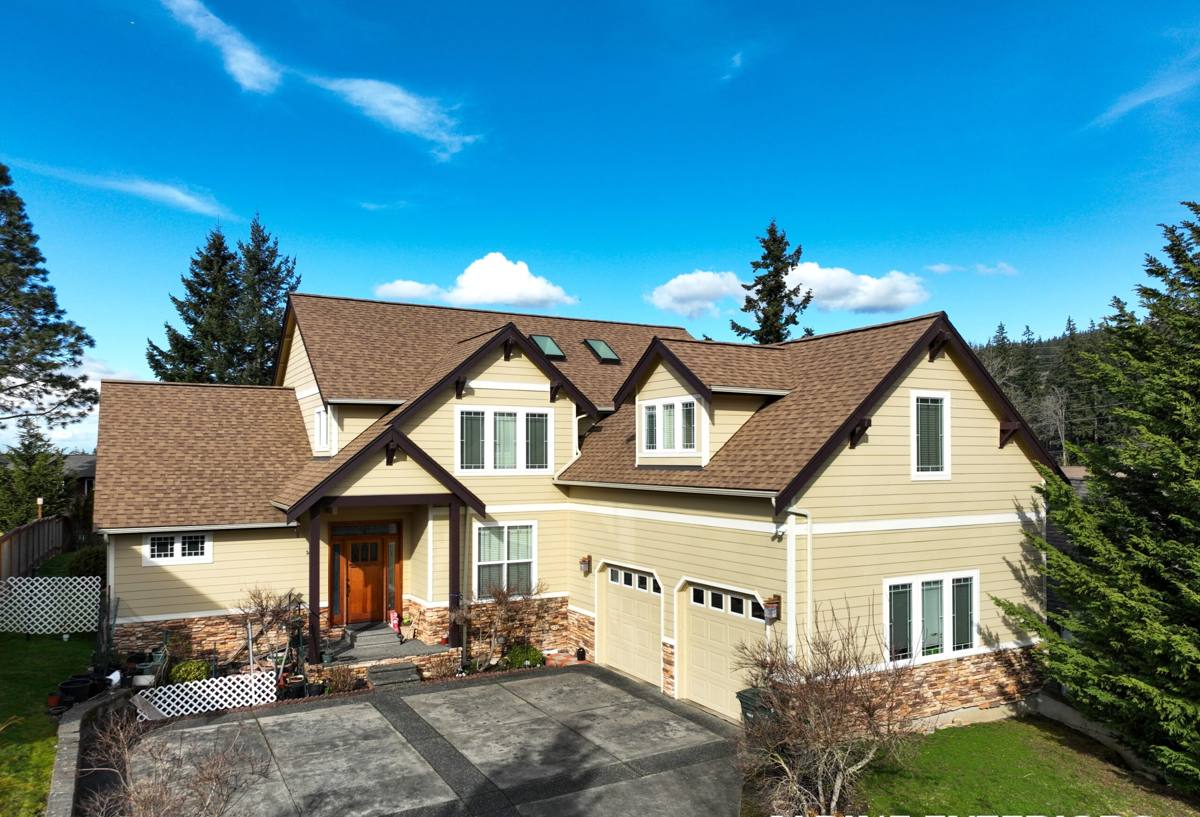
Why We Only Install James Hardie
We made a decision years ago to install James Hardie fiber cement siding exclusively — no vinyl, no LP SmartSide, no Cemplank or Allura, no primed spruce or cedar. That's not a marketing position, it's a standard we hold because of jobs like the ones we do in Silver Beach. Fiber cement is non-combustible, dimensionally stable in wet-dry cycling, and doesn't feed moss and mildew the way wood-based products can when moisture gets trapped against them. James Hardie's ColorPlus factory finish is also baked and cured under controlled conditions, which holds up to UV and salt exposure noticeably better than field-applied paint on wood siding or trim.
We're not going to tell you every other product is unusable — plenty of homes around the country wear vinyl or engineered wood siding without major issues. But for a coastal-influenced climate like ours, with the specific combination of salt air, sustained rain, and moss pressure Silver Beach sees, we've settled on Hardie as the one product we're willing to put our name behind and warranty our labor on.
Choosing the Right Hardie Product for This Neighborhood
HZ5 Engineering
James Hardie makes climate-specific versions of its siding, and the Pacific Northwest falls under the HZ5 category — engineered for higher moisture exposure and freeze-thaw cycling compared to the HZ10 product sold in hot, dry climates. Every Hardie product we install on a Silver Beach home is the correct regional formulation, not a generic version shipped to every market.
Lap Siding vs. Panel Siding
HardiePlank lap siding is the most common choice for Silver Beach homes and works well on most traditional and craftsman-style exteriors in the area. HardiePanel (vertical) siding shows up more on accent walls, gables, or homes going for a more modern look. The choice is mostly aesthetic — both perform the same structurally when installed correctly — but plank profile, exposure width, and texture (smooth vs. cedar-shake style) should match the home's architecture, not just be picked off a sample board.
ColorPlus vs. Field Paint
We push clients toward ColorPlus factory-finished siding whenever the budget allows. The finish is cured onto the board before it ever reaches the jobsite, which means better color consistency, better fade resistance, and a coating warranty backed by the manufacturer rather than dependent on field application quality. In a salt-air environment, that factory cure matters more than it would somewhere drier.
What a Correct Installation Actually Involves
Fiber cement siding is only as good as the assembly behind it. Most siding failures we get called out to inspect — regardless of brand — trace back to installation shortcuts, not the material itself. On a Silver Beach home, we pay particular attention to:
- Correct starter strip placement and consistent bottom clearance off grade, decks, and patios so wicking moisture doesn't sit against the board
- Weather-resistant barrier (housewrap) installed and lapped correctly, with all penetrations flashed before siding goes on
- Proper flashing at windows, doors, and every horizontal trim transition — this is the single biggest defense against driving rain intrusion
- Manufacturer-specified fastener type and spacing, set to the correct depth to avoid cracking or overdriving
- Butt joints staggered and either flashed or sealed per Hardie's published details, not just caulked and left
- Minimum gaps maintained at all trim, corners, and dissimilar materials for expansion and drainage
- Caulking used only where specified — Hardie's install guide is explicit about where sealant helps and where it traps water
Any one of these done wrong can cause a problem years down the road, even though the siding looks fine on installation day. This is also exactly where James Hardie's product warranty and workmanship expectations intersect — the manufacturer warranty assumes installation to their published specs, so cutting corners here can put both durability and warranty coverage at risk.
Comparing Siding Materials Against This Climate
Homeowners in Silver Beach sometimes come to us already comparing quotes for other materials. Here's an honest side-by-side of how the common options hold up against the specific conditions this neighborhood deals with.
| Material | Salt air / corrosion resistance | Moss & moisture behavior | Maintenance burden | Typical lifespan (installed to spec) |
|---|---|---|---|---|
| James Hardie fiber cement | Strong — non-metallic substrate, factory finish holds up well | Doesn't feed moss; sheds moisture if detailed correctly | Low — occasional wash, repaint decades out | 30-50+ years |
| Vinyl siding | Fair — panels don't corrode but can fade and warp faster near salt exposure | Moss grows on the surface but rarely causes rot itself | Low, but panels aren't repairable/repaintable like fiber cement | 20-30 years |
| LP SmartSide (engineered wood) | Fair — coating quality matters more here than with fiber cement | Wood-based substrate is more vulnerable if moisture gets behind it | Moderate — coating maintenance is important | 25-30 years with good upkeep |
| Cedar / primed wood siding | Weaker — bare or primed wood needs consistent recoating in salt air | Most susceptible to moss-related moisture and rot over time | High — regular painting/staining and moss treatment | 15-25 years, heavily maintenance-dependent |
Every material on that list can perform acceptably if installed well and maintained. The gap widens over time, though — and in a neighborhood exposed to salt air and a long wet season, that gap tends to show up sooner than homeowners expect.
Our Process, Start to Finish
1. On-Site Assessment
We walk the exterior with you, check the condition of the existing siding and sheathing where visible, and look specifically for moisture damage around windows, deck ledgers, and grade-level trim — the spots that fail first in this climate.
2. Scope and Estimate
You get a written scope covering product line, color, trim details, and whether the job is a re-side over sound sheathing or a full tear-off. We explain the difference in cost and what drives that decision on your specific home.
3. Prep and Weatherproofing
Before a single board goes up, we address housewrap, flashing, and any rot or damage found once old siding comes off. This step gets skipped by rushed crews and it's the one most likely to cause problems later.
4. Installation
Hardie boards are cut, fastened, and finished to manufacturer spec — correct fastener pattern, gapping, and joint treatment throughout, not just on the visible elevations.
5. Final Walkthrough
We walk the finished exterior with you, check caulking and trim lines, and go over basic care so the siding performs the way it's designed to for decades.
What Drives Cost on a Silver Beach Project
| Factor | Why it matters here |
|---|---|
| Tear-off vs. re-side | Homes with existing moisture damage behind old siding need sheathing repair before new siding goes on — common in older waterfront-adjacent homes |
| Home size and story count | More elevation, more scaffolding/staging, more linear feet of trim and flashing detail |
| Trim and architectural detail | Corner boards, window/door trim, and gable detailing all add labor beyond flat wall area |
| ColorPlus vs. field-painted product | Factory finish costs more upfront but removes a maintenance and warranty variable long-term |
| Site access | Tight lots, slopes, or limited staging area near the water can add setup time |
Caring for Hardie Siding in a Moss-Heavy, Salt-Air Environment
Correctly installed Hardie siding is genuinely low-maintenance, but "low" isn't "none." A few habits keep it performing for the long haul in this specific environment:
- Rinse siding periodically (garden hose pressure, not a pressure washer aimed at joints or trim) to clear salt residue and organic buildup before moss gets established
- Keep gutters and downspouts clear so overflow doesn't run down the wall face repeatedly
- Trim back vegetation and tree cover that keeps siding shaded and damp longer than the rest of the house
- Inspect caulking at trim and penetrations every couple of years — it's the one component that ages faster than the siding itself
- Address any soft trim, staining, or bubbling paint promptly rather than waiting — early findings are simple fixes, delayed ones aren't
Why a Crew That Already Works Silver Beach Matters
Siding installation isn't uniform across Whatcom County. A crew used to installing in a dry inland subdivision doesn't necessarily flash, gap, and detail the same way a crew that works waterfront-adjacent neighborhoods does — and it shows up years later, not on install day. Working in Silver Beach regularly means we already know what moisture patterns and salt exposure do to a wall assembly here, and we detail every job assuming those conditions rather than treating it as a standard install.
If you're planning a siding project on a Silver Beach home, we're glad to walk the exterior with you, look at what's there now, and give you a straight assessment of what a correct James Hardie installation would involve — no pressure, no obligation. Reach out below to schedule a free estimate.