 Bellingham Exterior
 Roof Repair for Silver Beach Homes
Silver Beach is one of Bellingham's older lakeside neighborhoods, and that means a lot of the housing stock has rooflines that have been through decades of Whatcom County weather. Mature tree cover, a long wet season, and the humidity that sits over the water all put a specific kind of wear on a roof that you don't see in drier inland climates. A roof here doesn't usually fail all at once — it fails in one spot first: a flashing detail, a valley, a section under overhanging branches. Catching that one spot early is the difference between a repair bill and a replacement bill.
This page is about roof repair specifically — patching, resealing, replacing damaged sections, and fixing the details that cause leaks — for homes in and around Silver Beach. We service the full Bellingham area, but this neighborhood's mix of tree canopy, older roofs, and steady moisture has its own repair patterns worth knowing before you call anyone out.
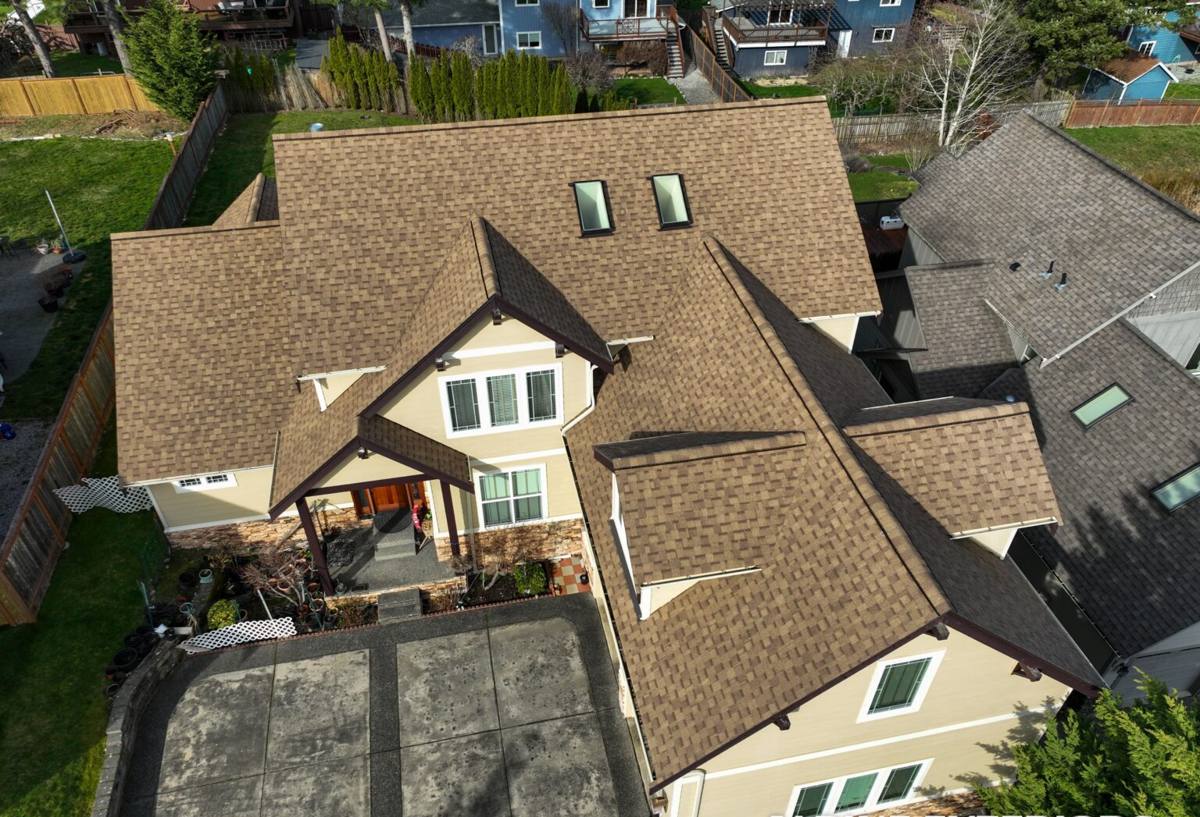
Signs Your Roof Needs Repair, Not Just a Look
Most roof problems give warning signs well before there's a leak inside the house. Homeowners in this part of Whatcom County should watch for:
- Dark streaking or green-black growth on shingles, especially on north-facing slopes that stay shaded and damp
- Granules collecting in gutters or at the bottom of downspouts — a sign the shingle surface is wearing thin
- Shingles that are curling, cupping, or lifting at the edges
- Soft or spongy spots when the roof is walked, which usually means the decking underneath has absorbed moisture
- Rust staining or visible gaps around flashing at chimneys, skylights, or roof-to-wall transitions
- Daylight visible through the attic roof boards, or damp insulation and musty smell in the attic
- Sagging in the roofline itself, even a slight dip
- Debris buildup in valleys where moss and needle litter trap water against the shingles
Any one of these is worth a look. Several at once usually means the roof has been quietly losing ground for a while.
Why Silver Beach Roofs Take a Particular Kind of Beating
Moss and Algae Season Runs Long
Bellingham's damp, mild climate means moss doesn't just show up in a short window — it's a near year-round concern on shaded or north-facing roof sections. Moss holds moisture directly against the shingle surface, and over time that moisture works its way under tabs and into fasteners. Left unaddressed, it accelerates granule loss and can lift shingles enough to let water underneath. Roof repair in this area often starts with a moss and debris situation that's been left to grow rather than a single dramatic failure.
Driving Rain and Wind-Driven Moisture
Storms off the Sound don't just drop rain straight down — wind pushes it sideways, up under shingle edges and into flashing laps that are designed for gravity, not pressure. That's why so many roof leaks in this region trace back to flashing and transition points rather than open holes in the field of the roof. A repair that only patches the visible shingle damage and ignores the flashing underneath tends to leak again in the next storm.
Tree Cover and Constant Shade
Established trees are part of what makes Silver Beach a nice place to live, but they also mean roof sections that rarely see direct sun, slower drying after rain, and regular limb and needle debris collecting in valleys and behind chimneys. That debris holds water in place exactly where it can do the most damage.
What a Proper Roof Repair Actually Involves
Diagnosis Before Patching
The most common mistake in roof repair — whether it's a homeowner patch job or a rushed contractor — is fixing the symptom instead of the cause. A stain on a ceiling doesn't always sit directly under the roof leak; water travels along decking and framing before it shows up inside. A correct repair starts by tracing the water back to its actual entry point, usually by inspecting the attic from the inside and the roof surface from the outside, not just caulking whatever looks bad on top.
Flashing and Transition Details
Flashing around chimneys, skylights, vents, and where roof planes meet walls is where most repairable leaks originate. Fixing it correctly means removing and reinstalling the flashing with proper laps and underlayment integration, not smearing sealant over the top and calling it done. Sealant-only fixes are a short-term patch at best — they degrade in UV and temperature swings and tend to fail again within a season or two.
Matching Materials, Not Just Colors
When we replace a damaged section of shingles, we match not just the color but the shingle profile and weight where possible, and we make sure new material ties into the existing underlayment correctly. A visible patch that doesn't integrate with the surrounding roof is a cosmetic problem now and often a leak point later, once the seam ages differently than the rest of the field.
Common Roof Repair Types and What Drives the Cost
| Repair Type | Typical Scope | What Affects Cost |
|---|---|---|
| Flashing repair | Chimney, skylight, or wall-transition flashing removed and reinstalled | Roof pitch, number of penetrations, access |
| Shingle section replacement | Localized area of damaged or missing shingles replaced | Size of area, shingle availability/match, layer count |
| Valley repair | Valley metal or shingles replaced where debris and water concentrate | Valley length, extent of decking damage underneath |
| Decking repair | Rotted or soft plywood/board sheathing cut out and replaced | Size of rotted area, framing condition, access |
| Moss and debris treatment | Manual removal, low-pressure cleaning, and preventive treatment | Roof size, moss severity, pitch and steepness |
| Gutter and edge repair | Fascia, drip edge, or gutter reattachment tied to roof edge leaks | Linear footage, wood condition behind gutters |
Most straightforward flashing or small shingle repairs on a typical residential roof run a few hundred to around a thousand dollars. Jobs that involve decking replacement or multiple problem areas cost more, since they take more time and materials. We give a firm number after we've actually looked at the roof — not a phone estimate — because the difference between a surface patch and a repair that includes rotted decking is significant, and we don't want to surprise anyone mid-job.
Repair or Replace? How We Help You Decide
Not every roof problem needs a full replacement, and not every roof problem should be patched forever. As a rough guide: if the roof is under 15-20 years old, the damage is isolated to one or two areas, and the decking underneath is sound, repair is usually the right call. If the roof is older, has multiple problem areas showing up across different slopes, or the decking is soft in more than one spot, that's often a sign the whole roof is nearing the end of its service life and repairs are becoming a pattern rather than a fix. We'll tell you plainly which situation you're in — our goal is a roof that actually stops leaking, not repeat visits.
Our Roof Repair Process in Silver Beach
Inspection and Estimate
We walk the roof and check the attic where accessible, identify the actual source of the problem, and put together a written estimate that spells out the scope — what's being repaired, with what materials, and why. No guesswork, no vague line items.
The Repair Itself
We protect the surrounding landscaping and gutters, remove damaged material back to sound decking, and rebuild the area correctly — proper underlayment, correct flashing laps, matched shingles fastened to manufacturer spec. If we find additional damage once we open things up, like rotted decking that wasn't visible from the surface, we stop and tell you before proceeding, not after the invoice.
Cleanup and Follow-Up
We clear debris, run a magnetic sweep for stray fasteners, and leave the property the way we found it. If the repair is under warranty terms we've discussed, we stand behind the work — a repair that leaks again in the next storm isn't a finished job.
Why Hiring a Crew That Already Works Silver Beach Matters
Roof repair is a trade where local knowledge actually changes outcomes. A crew that regularly works Bellingham roofs knows which flashing details tend to fail first in this climate, how aggressive the moss growth gets under mature tree canopy near the lake, and what a normal amount of storm-driven wear looks like versus a bigger structural issue. That familiarity means faster, more accurate diagnosis and fewer callbacks. It also means we're a known, reachable business in this community — not a crew that showed up after a storm and moved on to the next county.
Keeping a Repaired Roof Healthy
Once a repair is done, a little upkeep goes a long way in this climate. Clear valleys and gutters of needle and leaf debris at least twice a year, keep overhanging branches trimmed back so shaded sections get more airflow and sun, and have the roof looked at after any major windstorm. Catching a lifted shingle or a small flashing gap early is a much smaller job than waiting for it to become a ceiling stain.
If you're seeing any of the warning signs above, or just want an honest read on a roof's condition before it becomes a bigger problem, we're happy to take a look. Fill out the form below for a free, no-pressure estimate — we'll tell you what we actually find, not just what sells a job.