 Bellingham Exterior
 Decks in South Hill Face a Different Kind of Wear
South Hill sits up above much of Bellingham, which means more exposure to wind-driven rain off Bellingham Bay, heavier tree cover on many older lots, and long stretches of shade that never fully dry out between storms. Add Whatcom County's extended moss season, and a deck up here ages differently than one on a flat, open lot across town. The framing, the ledger board, and the fasteners all take on moisture in ways that aren't always obvious from the surface.
We've worked on enough decks in this neighborhood to know the pattern: homeowners notice a soft board or a wobbly rail, but the real damage is usually a step or two ahead of what's visible. A deck repair done right here has to account for that — not just patch what you can see, but check what's happening underneath.
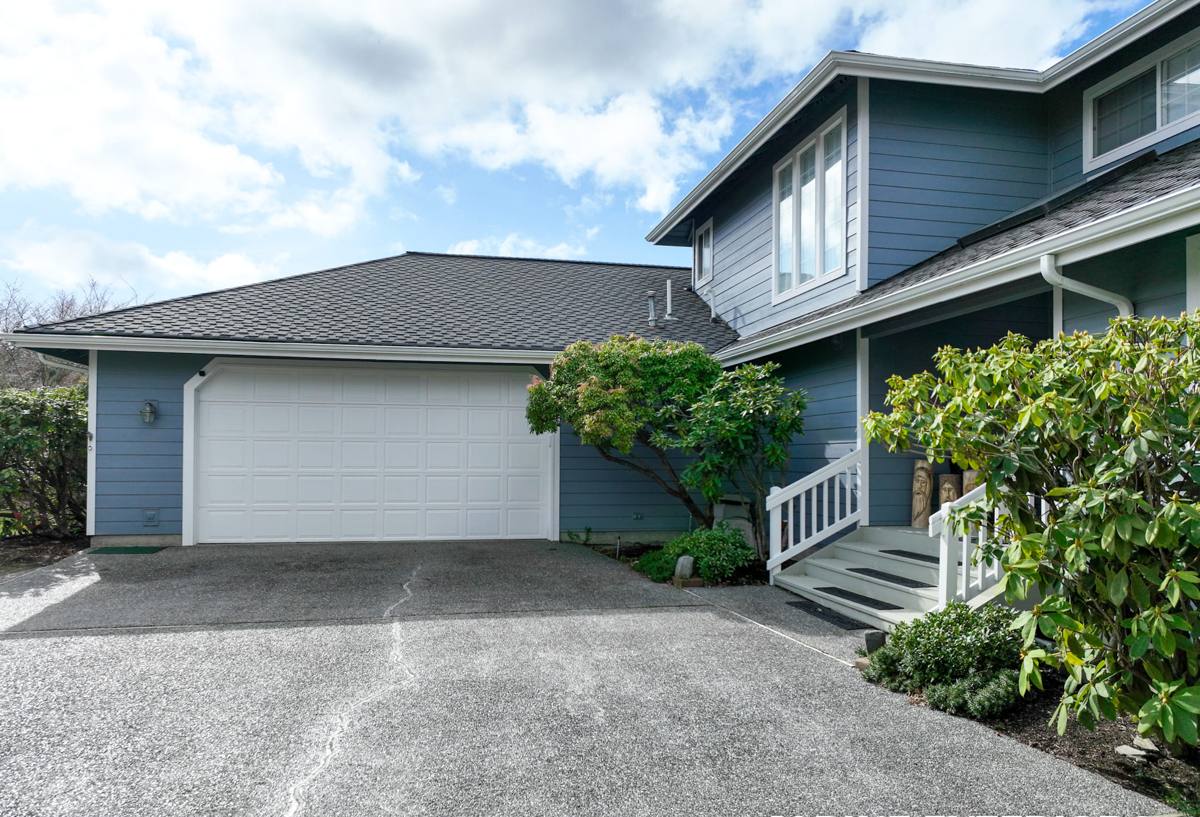
Why the Local Climate Matters for Deck Repair
Three conditions do most of the damage to South Hill decks:
- Salt-laden air off the bay accelerates corrosion on fasteners, joist hangers, and any exposed metal hardware — even hardware rated for outdoor use has a shorter working life here than in drier inland climates.
- Driving rain pushed sideways by wind gets under flashing, behind ledger boards, and into end grain that isn't sealed, which is where rot almost always starts.
- Moss and algae hold moisture against wood and composite surfaces for months at a time on shaded lots, especially decks tucked under mature trees or on the north side of a house.
None of these are dramatic on their own, but stacked together over a Bellingham winter and spring, they wear down a deck faster than most homeowners expect. That's why a deck that looks "10 years old" in a drier climate can have real structural issues here by year six or seven if it hasn't been maintained.
Signs a South Hill Deck Needs Repair
Some problems are obvious. Others take a trained eye or a screwdriver test to find. Here's what we look for and what you can check yourself before calling anyone out:
- Soft or spongy decking boards, especially near the house or in shaded corners
- Rust streaks below fastener heads or joist hangers
- Gaps or separation where the ledger board meets the house
- Wobble in the railing when you push on it firmly
- Visible moss or dark staining that keeps coming back after cleaning
- Stair stringers that feel spongy or flex underfoot
- Cracking or checking in support posts near ground contact
If you can press a screwdriver tip into a board or post an eighth of an inch without much resistance, that's decayed wood, not just weathering. That distinction matters, because weathering is cosmetic and decay is structural.
Repair vs. Replacement — How We Make the Call
Not every problem deck needs to come down. A lot of South Hill decks have solid framing under boards that took the brunt of the weather and failed first. The goal of a repair visit is to figure out honestly which category your deck is in.
| Condition Found | Usually Means | Typical Fix |
|---|---|---|
| Surface graying, minor moss, no soft spots | Cosmetic weathering only | Clean, brighten, reseal |
| A few soft boards, framing feels solid | Localized decking failure | Board replacement, hardware check |
| Soft ledger board or gap at the house | Water intrusion at the attachment point | Ledger and flashing repair — priority item |
| Multiple soft joists, post rot at ground line | Structural framing failure | Partial rebuild of framing, often not full replacement |
| Widespread rot through posts, beams, and decking | Deck has reached end of service life | Full replacement recommended |
We'll always tell you straight if a repair is a temporary patch versus a lasting fix. Sinking money into cosmetic repairs on a deck with failing structure isn't a service we're willing to sell — it's not honest, and it isn't fair to a homeowner trying to budget.
What a Correct Deck Repair Actually Involves
Structural Inspection First
Before any board gets pulled or replaced, we check the framing underneath: joists, beams, posts, and — most importantly on older homes — the ledger board connection to the house. This is the single most common failure point we find on decks in this area, because it's the hardest spot for water to drain away from and the easiest to overlook during routine cleaning.
Fastener and Hardware Condition
Salt air corrodes standard fasteners faster than people expect. Part of a proper repair is checking joist hangers, structural screws, and post bases for rust and pitting, not just the visible screws in the decking boards. Corroded hardware gets replaced with fasteners rated for exterior and coastal-adjacent use — this is a small cost during a repair and an expensive mistake to skip.
Moisture Management
A repair that doesn't address why water got in will just fail again. That means correcting flashing at the ledger board, checking that boards have proper gapping for drainage, and making sure nothing is trapping water against end grain or framing.
Matching Materials Responsibly
When we replace individual boards on an older deck, we match species and dimension as closely as possible and treat cut ends before installation — end grain that isn't sealed is one of the fastest paths for rot to restart in a repaired area.
Materials We Use and Why
Most South Hill deck repairs involve pressure-treated framing lumber, and either wood or composite decking boards depending on what's already installed. A few standards we hold to on every repair:
- Ledger board flashing gets replaced, not just caulked over, whenever the ledger is opened up for repair
- Fasteners and structural connectors are matched to the corrosion resistance the coastal-influenced climate here calls for, not just the cheapest code-minimum option
- Cut ends on treated lumber are sealed before installation — this is a step that's easy to skip and expensive to skip
- We don't recommend capping over rotten framing with new decking boards just to make a problem look solved; it isn't
Composite decking has real advantages for moss resistance and lower maintenance, which we're glad to walk through, but it isn't a fix for a structural problem underneath. Good decking on bad framing is still a bad deck.
Our Deck Repair Process
- On-site assessment. We walk the deck, check soft spots with a probe, inspect the ledger and framing from underneath where accessible, and check hardware condition.
- Honest scope and estimate. You get a clear breakdown of what's cosmetic, what's structural, and what your real options are — repair, partial rebuild, or replacement — with reasoning, not just a number.
- Repair work. Damaged boards, framing members, or hardware are removed and replaced to match the existing structure, with moisture correction addressed at the source, not just patched over.
- Final check. We test the repaired areas — railings, stairs, and any structural work — before calling the job done.
Maintaining a South Hill Deck Between Repairs
A little seasonal attention goes a long way toward avoiding repeat repairs in this climate. A simple checklist we give South Hill homeowners:
- Sweep leaves and debris out of gaps between boards regularly through fall, when tree cover here sheds heavily
- Clean moss and algae before it builds up thick — a light annual cleaning is far cheaper than the damage moss causes if left for years
- Check the ledger board area at the house once a year for gaps, staining, or soft spots
- Reseal or restain wood decking on the manufacturer's recommended cycle, not just when it looks faded
- Look at fastener heads periodically for rust streaks, especially anything within closer range of the bay's salt air
Why Hire a Crew That Already Works in South Hill
Deck problems here follow patterns that a contractor unfamiliar with the neighborhood might not catch on a quick look. A crew that's already worked on homes in this part of Bellingham knows which framing details tend to fail first on houses of a certain age, how far moss damage typically travels before it's visible, and how the driving rain off the bay finds its way into places a homeowner wouldn't expect.
That local familiarity means less guesswork and a more accurate first estimate — we're not learning the neighborhood's quirks on your project. It also means we're not far away if a question comes up after the work is done.
Get a Straight Answer on Your Deck
If your deck has a soft board, a wobbly rail, or you just want an honest read on whether it needs repair or replacement, we're happy to take a look. The estimate is free, there's no pressure, and you'll get a clear explanation of what we find — use the form below to get started.