 Bellingham Exterior
 South Hill's Siding Takes a Different Kind of Beating
South Hill sits up above downtown Bellingham with some of the best bay views in Whatcom County — and that elevation and exposure come with a cost. Homes on South Hill catch weather that flatter, more sheltered neighborhoods don't see as directly: salt-laden air rolling in off Bellingham Bay, driving rain that hits siding sideways instead of straight down, and a long, damp shoulder season where moss and algae get a real foothold on anything north-facing or shaded by mature trees. It's a beautiful place to live and a tough place to be exterior siding.
A lot of the housing stock on South Hill is older, which means a lot of the siding up there is original or close to it — wood lap siding, old cedar shingles, or a first-generation vinyl or composite replacement that was never really matched to the site's exposure. When we get called out to look at failing siding in this neighborhood, the pattern is almost always the same: moisture got behind the cladding, stayed there because of poor drainage or shade, and did its damage from the inside out before it ever showed on the surface.
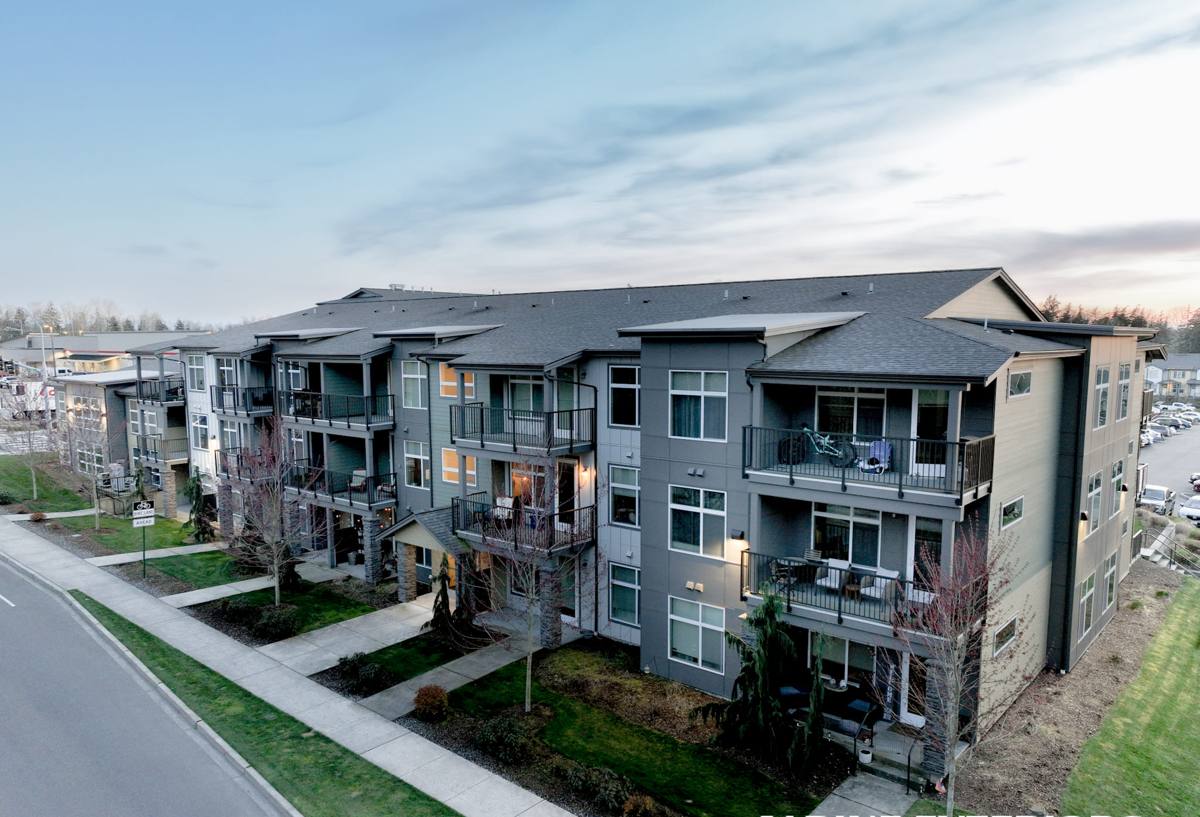
What South Hill Homes Actually Need From Their Siding
Before talking about products or install methods, it's worth being specific about what a South Hill home needs siding to do, because it's a slightly different job than siding on a sheltered lot on the valley floor.
- Resist salt-air corrosion on fasteners, trim, and any exposed metal — this is a real factor for homes with bay-facing exposure.
- Shed wind-driven rain without letting water track sideways under laps and around penetrations.
- Resist moss and algae growth on shaded, north-facing, or tree-covered elevations, which are common on this hill's wooded lots.
- Hold paint and color through repeated wet-dry cycling without the chalking or peeling that shortens repaint intervals.
- Tolerate temperature swings between damp mornings and warm afternoons without excessive expansion and contraction that opens up seams over time.
None of that is exotic — it's just what marine-influenced Pacific Northwest exposure demands of an exterior. The problem is that a lot of siding products, and a lot of installations, aren't built with that specific combination in mind.
Why We Install Only James Hardie Fiber Cement
We standardized on James Hardie fiber cement siding for every home we side, including here on South Hill, and we don't install vinyl, LP SmartSide, or other composite or wood alternatives. That's not a marketing position — it's a decision based on what holds up under the exact conditions this neighborhood produces year after year.
Fiber cement is non-combustible, dimensionally stable, and doesn't feed mold or moss the way wood-based products can once moisture is present. Hardie's ColorPlus factory finish is baked on under controlled conditions rather than field-applied, which matters a great deal in a climate where you rarely get more than a few consecutive dry days to paint in. And Hardie's HZ5 product line is specifically engineered for regions with more moisture and freeze-thaw exposure — a better match for a bay-influenced hillside than a general-purpose product line.
We're not going to tell you every other product on the market is worthless — vinyl and engineered wood siding both have legitimate uses. But we've made a professional call that on South Hill's exposure, the maintenance burden, moisture sensitivity, and shorter realistic service life of those alternatives isn't a trade-off worth making on a home we're putting our name behind. Hardie is what goes on the house.
What a Correct Siding Installation Actually Involves
Siding failures are rarely about the siding material itself — they're almost always about what's underneath it, or how it was cut in around windows, trim, and penetrations. On a South Hill home, where wind-driven rain is a regular occurrence, these details aren't optional extras. They're the difference between siding that lasts decades and siding that fails from behind in five or ten years.
The Layers Behind the Siding
A correct install starts with a properly lapped weather-resistive barrier, careful flashing at every window, door, and penetration, and a rainscreen or drainage gap where the site conditions call for it — which is common on shaded, moisture-prone lots like many on this hill. The siding is the last line of defense, not the only one.
Fastening and Clearances
Hardie siding has to be fastened per manufacturer spec — correct nail type, spacing, and penetration depth — to hold up to wind exposure and avoid the loosening that lets water intrude at fastener points. Proper clearance from grade, roof lines, and decks keeps the bottom edge of the siding from sitting in standing moisture, which is one of the most common failure points we find on older homes in this area.
Joints, Caulking, and Finish
Butt joints, corners, and trim transitions need to be sealed and detailed correctly — not just caulked over gaps. On a home that takes rain sideways, a sloppy joint is a guaranteed leak path eventually, even if it looks fine the day the crew leaves.
Our Process on South Hill Homes
| Step | What Happens | Why It Matters Here |
|---|---|---|
| Site assessment | We walk the exterior, check current siding and sheathing condition, note shade patterns, drainage, and exposure by elevation | South Hill lots vary a lot elevation to elevation — bay-facing and shaded sides often need different detailing |
| Tear-off and inspection | Remove existing siding, inspect sheathing and framing for hidden moisture damage before covering anything up | Older homes on this hill often have decades of moisture history behind the original cladding |
| Weather barrier and flashing | Install or correct the water-resistive barrier and flashing at every penetration | This is the layer that actually stops wind-driven rain, not the siding itself |
| Hardie installation | Install fiber cement siding, trim, and accessories to manufacturer fastening and clearance specs | Correct fastening and grade clearance prevent the moisture intrusion points we see most often |
| Detailing and finish | Seal joints, finish trim, confirm paint/color consistency where field touch-up is needed | Clean detailing at joints and corners is what keeps water out for the long term |
| Final walkthrough | Walk the finished job with the homeowner, point out anything to watch for | You should understand your own siding, not just have it installed and walked away from |
What Affects the Cost of a South Hill Siding Job
Every home is different, so we won't quote a number without seeing the house, but these are the real factors that move the price up or down:
| Factor | Why It Matters |
|---|---|
| Existing siding removal | Tear-off of old wood, aluminum, or multiple layers of prior siding adds labor before installation even starts |
| Sheathing repair | Hidden moisture or rot damage found during tear-off has to be repaired before new siding goes on — common on older South Hill homes |
| Home shape and trim detail | Dormers, bay windows, and cut-up rooflines add labor for cuts, flashing, and trim work |
| Access and site conditions | Steep or narrow lots, common on this hill, can affect staging, scaffolding, and material handling |
| Siding profile and accessories | Lap width, trim style, and accent details (shakes, board-and-batten sections) affect material and labor cost |
| Color and finish | Factory ColorPlus finishes carry a cost premium over field-primed siding but eliminate a repaint cycle |
Why It Matters That We Already Work This Neighborhood
A crew that's worked South Hill before isn't guessing at how a house up here is going to behave. We've seen how shaded lots hold moss longer into the season, how exposure changes from one side of the hill to the other, and how older Bellingham homes were typically built and where their weak points tend to show up. That's not something you can fully substitute with a generic estimate walk-through — it comes from having actually done the work on comparable homes in this specific setting.
There's also a practical side: permitting and inspection expectations through the City of Bellingham, working around narrow or sloped driveways for material delivery, and knowing which times of year give the best install windows before the wet season sets in. A local crew factors all of that into scheduling and planning from the start, instead of finding out mid-project.
A Few Signs Your South Hill Home May Need New Siding
- Persistent moss or dark streaking on north-facing or shaded walls that returns soon after cleaning
- Soft spots, bubbling, or visible warping in wood or composite siding
- Paint that's chalking, peeling, or failing faster than it used to
- Visible gaps opening up at seams, corners, or trim joints
- Musty smells or interior moisture signs on exterior-facing walls
- Siding that's simply original to an older home and has never been replaced
Any one of these is worth a look. Several together usually means moisture has already been working behind the siding for a while.
Let's Take a Look at Your Home
If you're on South Hill and dealing with tired, failing, or original siding, we're glad to come take a look and give you an honest read on what's going on and what it would take to fix it right. There's no pressure and no pushy sales pitch — just a straight assessment from a crew that installs Hardie siding on homes like yours. Use the form below to request a free estimate.