 Bellingham Exterior
 Why South Hill Windows Wear Differently
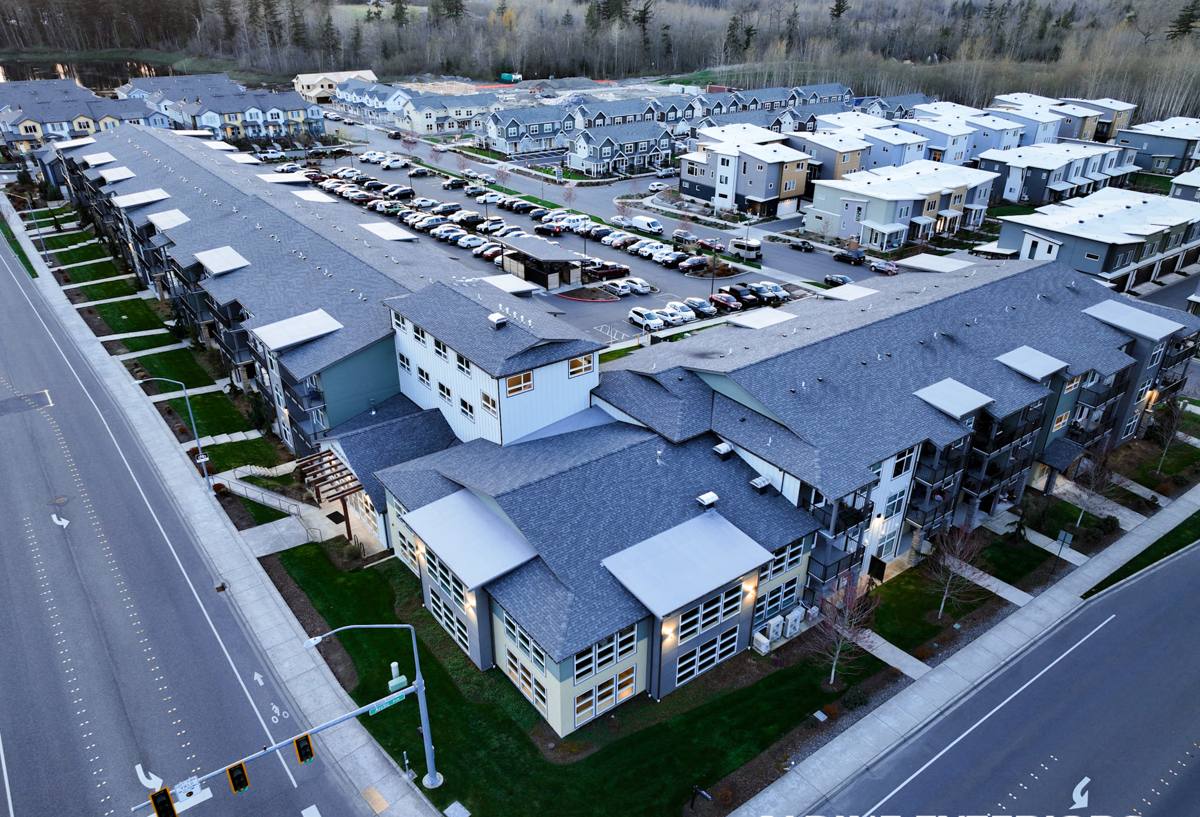
South Hill sits up and open, above much of the surrounding city, which means homes there catch wind and weather that lower, more sheltered Bellingham neighborhoods don't see as directly. That elevation is part of what makes the area desirable, but it also means window frames, seals, and sills take a harder hit year after year. Add in the age of a lot of the housing stock on the hill — plenty of homes with original or first-generation replacement windows — and you get a neighborhood where window failure tends to show up earlier and more visibly than it does in newer subdivisions closer to sea level.
We're not describing a crisis. We're describing normal wear that happens faster in an exposed spot, in a marine climate, on a building envelope that's doing more work than it was originally built for.
What Whatcom County Weather Actually Does to a Window
Salt Air
Bellingham sits on Bellingham Bay, and homes on higher ground with open exposure get a steady, low-level dose of salt-laden air carried up off the water. Salt air accelerates corrosion on metal hardware — hinges, cranks, balance systems, and screws — and it degrades exterior finishes faster than an inland climate would. It's not dramatic on any single day, but it compounds over a couple decades.
Driving Rain
This isn't a light-drizzle climate. Wind-driven rain hits window assemblies at an angle, which means it's testing the flashing, the sealant, and the way the window unit was actually fitted into the rough opening — not just the glass and frame. A window that's watertight in a straight-down rain can still leak in a sideways storm if the installation details weren't done right the first time.
Moss Season
Whatcom County's long wet season is exactly the environment moss and mildew need. On windows, that shows up as green growth in corners, on sills, and in track channels where moisture sits and doesn't fully dry out between storms. Beyond looking bad, sustained moisture and organic growth around a window opening is often a sign that water is getting in and staying somewhere it shouldn't — which is how wood rot and interior damage start.
Signs a South Hill Home Needs Window Replacement
- Visible fog or moisture between panes (failed seal on a double- or triple-pane unit)
- Soft or spongy wood at the sill, jamb, or exterior trim
- Windows that are hard to open, close, or lock, or don't sit flush anymore
- Persistent moss, mildew, or dark staining around the frame that keeps coming back after cleaning
- Noticeable draft or cold spot near the window in winter
- Condensation on the interior glass or frame during cold, wet stretches
- Paint or finish that's peeling specifically around the window opening, not the whole wall
- Rising heating bills with no other explanation
Any one of these on its own might just mean routine maintenance. Several of them together, especially on a home that's had its original windows for 20-plus years, usually means it's time to replace rather than keep patching.
What a Correct Window Replacement Job Actually Involves
The window unit itself gets most of the attention when homeowners shop for a replacement, but in a wind- and rain-exposed spot like South Hill, the installation details matter as much as the product. A window is only as good as the opening it's set into.
Removal and Opening Inspection
Once the old window is out, we check the rough opening for hidden rot, damaged sheathing, or old flashing that failed and let water in behind the wall. This is often where a "just replace the window" job turns into something more useful — catching a problem before it's sealed back up behind a brand-new frame.
Flashing and Weather Barrier
Proper flashing directs water down and out, away from the framing, using a shingled, overlapping sequence at the sill, jambs, and head. In a driving-rain climate, this step is not optional trim work — it's the actual waterproofing system. A window can be expensive and still leak if the flashing underneath it was rushed or skipped.
Setting, Shimming, and Sealing
The unit has to be set level, plumb, and square, shimmed correctly so it isn't stressed or bowed, then sealed with the right sealant in the right locations — not just a bead of caulk around the outside trim. Over-sealing the wrong spots can trap moisture inside the wall; under-sealing the right spots lets water in. Both mistakes look fine on install day and show up as problems years later.
Interior and Exterior Finish
Trim, casing, and touch-up work should match the rest of the house and leave no gaps where drafts or moisture can enter. This is also where hardware finish matters for homes with salt air exposure — we talk through corrosion-resistant hardware options rather than defaulting to whatever's cheapest.
Choosing a Window Type for South Hill Conditions
There's no single "best" window material for every home — it depends on the home's age, exposure, and how much upkeep an owner wants to do. Here's how the common options generally compare for a wind- and moisture-exposed South Hill property:
| Material | Moisture Performance | Maintenance | Typical Fit |
|---|---|---|---|
| Vinyl | Good — won't rot, handles moisture well | Low | Most homes; strong value for the climate |
| Fiberglass | Very good — dimensionally stable in temperature and moisture swings | Low | Higher-exposure spots, longer-term ownership |
| Wood | Requires diligent upkeep to resist rot in this climate | High | Historic or character homes prioritizing original look |
| Wood-Clad (wood interior, metal/composite exterior) | Good, if the cladding and seals are installed correctly | Moderate | Homes wanting a wood interior look with better exterior durability |
We install what fits the home and the homeowner's priorities. For homes with solid wind and rain exposure, we're generally steering people away from bare, unclad wood exteriors unless they're committed to regular maintenance — not because wood is a bad material, but because it demands more attention in this specific climate than most owners realistically want to keep up with.
Our Process for South Hill Window Replacement
- On-site assessment: We look at the actual windows, the openings, and any signs of past water intrusion — not just take measurements over the phone.
- Honest recommendation: We tell you which windows genuinely need replacing now, which can wait, and why — including where we found rot or flashing issues that weren't visible from inside.
- Clear estimate: Product options, install scope, and pricing laid out before any work starts, no surprise add-ons sprung on you mid-job.
- Removal and opening repair: Old units out, any hidden damage addressed before anything new goes in.
- Proper install: Flashing, shimming, sealing, and finish work done to hold up against wind-driven rain, not just to pass a quick visual check.
- Walkthrough and cleanup: We go over the finished work with you and leave the site clean.
Why the Installing Crew Matters as Much as the Window
Two identical windows, installed by two different crews, can perform completely differently five years later. The window itself is a manufactured product with a warranty; the installation is a judgment call made on-site, in real weather conditions, on a rough opening that's never quite standard. A crew that regularly works South Hill and similar exposed parts of Bellingham has already seen how flashing details, sealant choices, and hardware hold up — or fail to — in this specific combination of salt air, wind, and sustained rain. That's not something a manufacturer's install guide fully covers.
It also matters for follow-up. If a window ever does develop an issue, working with a local crew that knows the home and the neighborhood's conditions makes diagnosing and fixing it faster and more straightforward than starting from scratch with someone unfamiliar with the area.
What Affects the Cost
| Factor | Why It Matters |
|---|---|
| Number of windows | Per-window cost typically drops with a full-home or multi-window project |
| Window size and type | Larger units, custom shapes, or specialty operating styles cost more than standard sizes |
| Material | Vinyl, fiberglass, and wood-clad options carry different price points and long-term maintenance costs |
| Condition of the opening | Hidden rot or old flashing failures add repair scope beyond a straight swap |
| Access and height | Second-story or hard-to-reach windows on a hillside lot can add labor complexity |
| Trim and finish work | Matching existing interior/exterior trim adds time versus a simple insert replacement |
Exact numbers depend on what's actually on your house, which is why we assess in person rather than quoting sight unseen.
Questions Worth Asking Before You Hire
- Will you inspect the rough opening for rot or moisture damage before installing, not just after I mention a concern?
- What flashing method do you use, and how does it handle wind-driven rain specifically?
- Are you licensed and insured to do this work in Washington State?
- What's covered under the manufacturer's warranty versus your workmanship warranty?
- Can you walk me through why you're recommending this material for my specific house and exposure?
- How do you handle cleanup and disposal of the old windows?
If your South Hill home has windows that are drafty, fogged, slow to open, or showing moss and staining that won't go away, we're happy to take a look and give you a straight answer about what's actually going on — no pressure, no upsell. Reach out using the form below for a free estimate.