 Bellingham Exterior
 Storm Damage in Sunnyland: A Whatcom County Reality
Sunnyland sits close enough to Bellingham Bay that salt-laden air reaches every roof in the neighborhood, and it's tucked among mature trees that shed limbs and debris during winter windstorms. That combination — salt air, driving rain off the water, and a long moss season under the tree canopy — wears on roofing systems in ways that homeowners further inland don't deal with as often. A roof in Sunnyland isn't just fighting gravity and age; it's fighting corrosion, wind-driven moisture intrusion, and biological growth all at once.
Storm damage here rarely looks like the dramatic wind event you'd see on the news. More often it's a handful of lifted shingles after a gusty November system, a chimney flashing that worked loose during a wind-and-rain combination, or a section of moss-softened roofing that finally gave way under a heavy downpour. Repairing it correctly means understanding not just what broke, but why it broke in this specific climate.
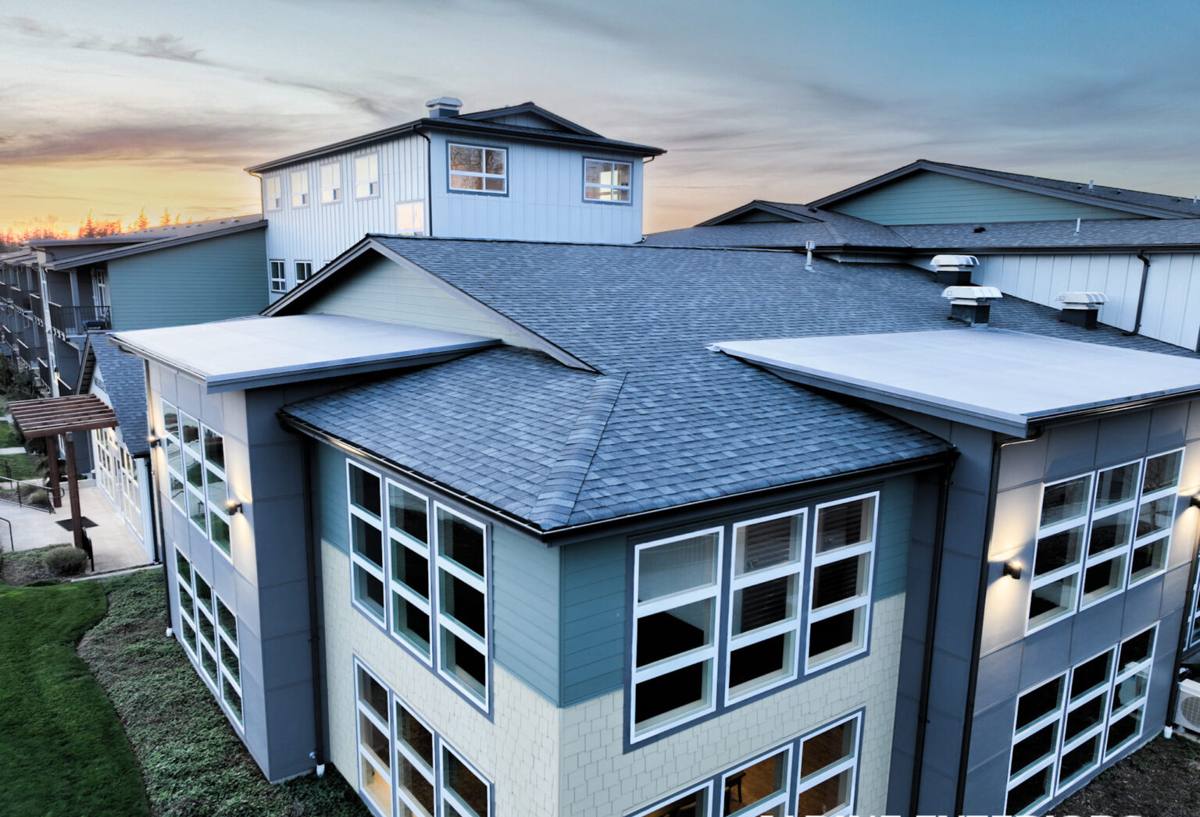
How Storms Actually Damage Roofs Around Sunnyland
Wind and Wind-Driven Rain
Whatcom County storms typically bring sustained wind with gusts rather than tornado-force events, but that's enough to lift shingle tabs, loosen ridge caps, and drive rain sideways under flashing that's otherwise intact. Wind damage is often invisible from the ground — a shingle can be lifted and re-seated by the wind itself, leaving a torn seal that won't show a gap until the next rain finds it.
Moss and Trapped Moisture
Bellingham's long wet season gives moss months to establish itself, and moss doesn't just sit on top of a roof — it holds water against the surface and works into shingle laps and butt joints. When a storm adds volume on top of an already moss-compromised roof, that's when leaks show up. The moss didn't cause the storm damage, but it set the stage for it.
Salt Air and Metal Fatigue
Flashing, fasteners, and metal roofing components near the bay corrode faster than the same materials would inland. A storm that would be a non-event for a healthy flashing detail can be the thing that finally breaches one that's already thinned from years of salt exposure.
Signs Your Sunnyland Home May Have Storm Damage
- Shingles that look curled, cupped, or creased, especially on slopes facing the prevailing wind
- Granules collecting in gutters or at downspout outlets after a storm
- Water stains on ceilings or in the attic that appeared after a specific weather event
- Flashing around chimneys, skylights, or roof-wall intersections that looks bent, lifted, or gapped
- Missing or displaced ridge cap shingles
- Soft or spongy spots underfoot in areas with heavy moss buildup
- Debris — branches, needles, moss mats — sitting in valleys where water should be draining freely
Some of these are easy to spot from the ground with binoculars; others only show up on a proper roof walk. That's part of why a professional inspection after a significant storm is worth doing even if nothing looks obviously wrong.
What a Correct Storm Damage Repair Actually Involves
A rushed storm repair — a tarp, some roofing cement, and a quick patch — solves the emergency but often doesn't solve the underlying problem, especially in a climate where the same wind-and-moss combination will return next season. A correct repair addresses three things:
1. The Immediate Breach
Whatever let water in gets properly repaired or replaced: torn shingles pulled and replaced (not just re-glued), damaged flashing removed and re-flashed rather than caulked over, and any compromised underlayment replaced in that section.
2. The Surrounding Material
Storm damage rarely stays confined to a single shingle. We check the surrounding courses, the fasteners, and the flashing laps adjacent to the damage, because a storm strong enough to tear one section usually stressed the material around it too.
3. The Root Contributor
If moss or trapped debris contributed to the failure, that gets addressed as part of the repair — not left to cause the same failure again next storm season.
Our Process: From Call to Finished Repair
- Assessment: We walk the roof (not just look from a ladder) and document the actual extent of damage, including areas that look fine but are adjacent to the failure point.
- Honest scope: We tell you plainly whether this is a spot repair, a larger section replacement, or something that points toward the roof nearing the end of its service life. We don't pad small repairs into big ones, and we don't undersell a repair that's really a symptom of a bigger issue.
- Temporary protection if needed: If there's an active leak and the full repair can't happen immediately, we get the area weathertight first.
- The repair itself: Matching materials as closely as possible, correct flashing technique, and proper fastening for wind exposure — not just enough to pass a glance from the driveway.
- Final check: We confirm drainage, flashing laps, and fastening are correct before calling the job done, and clean up debris from the repair.
Repair vs. Replacement: How We Decide
Not every storm-damaged roof needs full replacement, and not every roof that "just needs a patch" should get one. The honest answer depends on the roof's age, how widespread the damage is, and what condition the rest of the roofing system is in.
| Situation | Typical Approach | Why |
|---|---|---|
| Isolated wind damage, roof under 15 years old, otherwise sound | Targeted repair | Surrounding material still has service life; a clean repair holds up fine |
| Storm damage plus widespread moss and granule loss | Larger section replacement | Repairing one spot ignores a roof that's already failing elsewhere |
| Flashing failure at chimney or wall intersection | Re-flash the detail, not just seal it | Sealant over bad flashing fails again within a season or two |
| Roof near or past expected lifespan, storm exposed the weak point | Repair now, plan replacement | Avoids paying twice for the same section within a couple of years |
Materials and Methods We Use — and Why
For storm repairs in a salt-air, high-moss environment, we lean toward materials and details that hold up specifically to those conditions rather than whatever is fastest to install:
- Corrosion-resistant flashing and fasteners near the bay side of the neighborhood, since standard-grade metal fatigues faster in salt air
- Proper underlayment at repair sections, not just surface shingle replacement, so the repair has a second line of defense
- Matched shingle profiles where possible, so a repair doesn't leave an obvious patch that ages differently than the rest of the roof
- Ventilation checks during any larger repair, since poor attic ventilation accelerates moss growth and shortens shingle life from underneath
We're upfront when a homeowner asks about a lower-cost material or shortcut method: our standard is to install what holds up in this specific climate, even if that means a slightly higher material cost than the cheapest option. That's a maintenance and longevity trade-off we'll walk you through, not a sales pitch.
Working With Insurance After Storm Damage
Many storm repairs in Sunnyland are handled through homeowners insurance, particularly for wind damage or a specific storm event with a documented date. We provide clear, itemized documentation of the damage — photos, scope of work, and honest cause-of-damage assessment — that homeowners can submit to their carrier. We don't inflate scopes to match a deductible or claim damage that isn't storm-related; an honest assessment holds up better under adjuster review than an inflated one, and it's simply the right way to do the work.
Why Local Experience in Sunnyland Matters
A crew that works Whatcom County regularly knows which storm patterns hit which slopes hardest, how fast moss re-establishes on a north-facing roof under tree cover, and which flashing details tend to fail first in salt-exposed areas near the bay. That knowledge shapes how we inspect and repair — we're not guessing at what "normal wear" looks like here, because we see it on roofs throughout Bellingham and the surrounding county every storm season.
It also means faster response. After a significant wind event, being local and already familiar with the neighborhood's roofing stock lets us prioritize genuine emergencies and get to active leaks quickly rather than starting from scratch on an unfamiliar roof.
A Practical Storm-Season Checklist
- Walk your property after major storms and look for granules in gutters or downspouts
- Check the attic for new water stains after heavy wind-and-rain events
- Have moss removed before it accumulates thickly enough to trap moisture
- Keep gutters and valleys clear of debris going into the fall storm season
- Get flashing around chimneys and skylights inspected every couple of years, since these are the first points of failure in wind-driven rain
- Don't ignore a small leak — in this climate, small breaches get worse fast under repeated storms
Get an Honest Look at Your Roof
If a recent storm has you wondering whether your Sunnyland roof took damage, we're happy to take a look and give you a straight answer — whether that's a simple repair, a larger fix, or reassurance that everything held up fine. Fill out the form below for a free, no-pressure estimate.